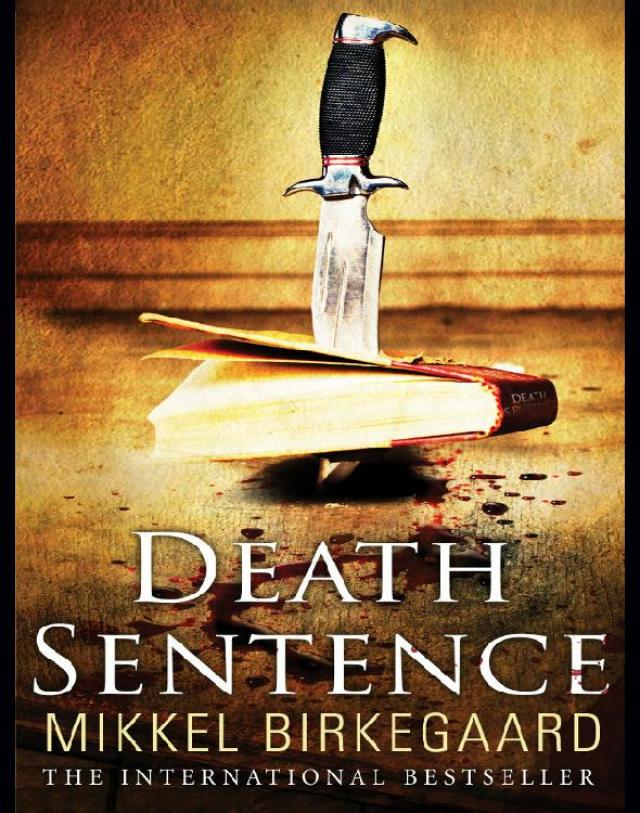
Death Sentence, page 27


Outside I watch the birds pecking at the breadcrumbs I have scattered. It’s almost as if I can hear their beaks split open the seeds in the bread. When they spread their wings and take off, I see them in slow motion and I tell myself I could catch them quite easily. I would be able to anticipate their every move and there is a suppleness in my muscles that convinces me I’m faster, better controlled than they are. A sudden urge makes me run around the garden. I feel the wind against my face and the grass under my bare feet. The exertion doesn’t affect me. My breathing is under control. I can hear the air pass in and out of my lungs and airways in a steady rhythm, like mechanical bellows.
When I go back inside, the stuffy air in the house nearly suffocates me. The air feels viscous and slows down my movements. I open all the windows and doors for fifteen minutes before the air is tolerable again. A faint scent of pine from the trees outside remains after the windows have been closed. I empty the bin, which smells of the fry-up I had yesterday. The fridge is empty, but that’s all right. Even though I’m hungry, I know that my taste buds won’t allow themselves to be touched by any old food and there is no prospect of a major gourmet experience in this area. Besides, I can’t leave the house.
I’m expecting guests.
The items we will need are laid out on the dining table. I pick up the scalpel and test the blade, even though I did so earlier this morning. It’s incredibly sharp and makes a small cut in my thumb. The blood seeps out in an evergrowing drop. I swear briefly, replace the scalpel and stick my thumb in my mouth as I head to the bathroom. I get the first-aid kit from the cabinet above the sink and find a plaster. Before I attach it, I run cold water over my thumb until it feels almost numb. When the plaster is in place, I study it closely to see if the blood is still running, until the absurdity of the situation dawns on me.
I start to laugh. I can’t stop. My laughter grows louder and louder and I have to leave the bathroom to find enough room for the sound of my merriment. The whole house resounds and dust is lifted by my outburst. I start to gasp for air and have just about managed to control myself when I happen to glance at my thumb and start laughing all over again.
At last I stagger, still laughing, back to the dining table to make myself stop. The sight of the objects has the required effect and my laughter fades. I wipe the tears from my eyes and blow my nose in a piece of kitchen towel. My throat feels raw again and I drink more water.
My gaze lingers on each item on the table. I have collected them from all over the house, the kitchen, the bathroom and a locked shed outside, which I broke into with the poker from the cast-iron stand next to the wood burner. Ordinary things and tools you would find in most holiday homes. This is what I do, this is my strength: turning everyday objects into something that can wipe the smile off anyone’s face.
The light outside is fading. The days are short in December. It occurs to me that it’s nearly Christmas. The television hasn’t been on since my first night here, but now I turn it on and I see that the whole world is excited about the holidays. They’re showing the old Christmas movies, and advertising breaks are packed with colourful promotions for must-have plastic toys waiting to gather dust in children’s bedrooms. My eyes spurn the flat television image. I switch it off.
During the short time I have watched television, the last of the daylight has died away. I’m annoyed at having missed it and turn on the lights in the house. The final light I switch on is the outdoor lamp, which signals I’m ready. Then I chuck more logs on the wood burner. A large stack of logs from the shed outside is piled up next to it. More than enough.
It’s nearly time.
I listen out, but all I can hear is the roaring in the wood burner and the wind in the trees outside.
The knock on the door startles me. It’s a loud, insistent knocking on the glass window in the front door. My heart races and I think I can hear the blood rush around my veins as I go to answer it. My hand grips the cold metal handle, I push it down and open the door. A cold wind slips past the figure standing outside.
You’re wearing an overcoat and in one hand you’re holding a white plastic bag with the items I was unable to get hold of and the script. Your other hand is buried in your coat pocket. It may be holding a pistol, but you have no intention of letting me know. The hand I can see is covered by a tight-fitting black leather glove.
This time you’re not wearing sunglasses. There is no need for disguises or guesswork any more. All masks are off. Only the writer and the reader are left, ready for the final act.
You look down at my hand and the thumb with the plaster. A smile forms around your lips and you might have quipped something like ‘Have you started without me?’, but I have decided there will be no dialogue.
What is there to say?
I step back so you can enter. You close and lock the door behind you, then you follow me. Your eyes scan the living room as we proceed through the house. I’m four or five steps ahead of you until we reach the dining room. My legs are trembling slightly, but I try to conceal it and sit down on the chair at the end of the dining table. It’s a solid wood chair with armrests and I place my arms on them and look at you apprehensively. You take a roll of gaffer tape from your bag and toss it to me.
I find the end and tear off a long section, which I use to tie my ankle to the leg of the chair. Then I tie my other ankle to the other chair leg. In the meantime, you’re standing some distance from me, watching my efforts closely. I tie my right arm to the armrest with difficulty. When I have done that, I place the tape on the table. You nod and feel safe enough to leave me while you check the other rooms in the house. You find nothing and return to the dining room.
From your bag, you pull out the bottle. It’s a 21-year-old Spring Bank whisky, drawn directly from the cask and almost impossible to get hold of.
With my free hand, I push the two glasses that I have set out earlier towards you. You fill my glass generously, pour a more moderate amount for yourself and sit down on the chair opposite me. We take our glasses, raise them and study the golden liquid before we drink. My taste buds welcome the whisky. I close my eyes and savour the taste. It’s round and mild and the aftertaste lasts for several minutes.
When I open them again, our eyes meet. You nod with approval before you take another sip. I follow your example and before long we have both emptied our glasses.
You get up abruptly, take my free hand and press my wrist against the armrest. You hold it in place with your knee while you tie my lower arm to the chair. Then you check the other bindings by pulling the tape, but find that you’re satisfied with my work.
You seem to relax more now that I’m tied up and you put your coat on one of the other chairs. You take out the script from the plastic bag, put it on a chair a bit further away and open it somewhere near the ending. See here is my guess. Then you go to the dining table and inspect the tools. I have arranged them in the order in which they will be used, the scissors first. You pick them up and start cutting away my right sleeve. It’s drenched in sweat and that makes it difficult for the scissors to cut through, but after some minutes my upper arm is exposed.
The tattoo has become a little blurred in time, like ink on poor-quality paper, but the ISBN number is still legible.
You toss the scissors aside and take the scalpel from the dining table. Kneeling on my lower arm and with a hand on my shoulder, you hold me down while you sink the blade into my flesh, just above the tattoo.
The pain is like an electric shock that shoots through my whole body. I grit my teeth and clench my fists until the pain starts to subside. You take a step back without removing the scalpel and observe how it sits quivering at an angle of 90° from my upper arm. Surprisingly little blood is running from the cut, but then it’s only half a centimetre wide, so far.
You step forward again, place your knee as before and take hold of the scalpel. With a slow sawing movement, you extend the cut round my arm above the tattoo. It hurts, it hurts like hell, but it’s no longer a surprise, so I endure the agony without screaming.
When the cut reaches all the way round, I look down. The blood is running from the long incision and covers the tattoo and most of my arm down to my elbow. You take a cloth from the table and clean away the blood, but it keeps dripping so your efforts are futile.
The scalpel is sticky with blood and you wipe it on kitchen towel before proceeding to cut number two. The blade sinks in below the tattoo this time and you perform a parallel incision all the way round my arm. You use the cloth to mop up enough blood so you can check that both cuts are unbroken. They form a ribbon around my upper arm.
With an almost casual movement, you cut across the band and let the blade curve under one end which now dangles like a piece of tape. You throw the scalpel on the table and pick up the pincers lying ready.
I close my eyes while the jaws of the pincers grip the skin flap. I feel your hand on my shoulder and how you push your foot against the seat of the chair between my legs.
Then you pull.
Though I have closed my eyes, I’m blinded by a sudden explosion of light and my body arches. I can’t suppress the scream and I howl out into the living room, a prolonged primal scream that carries on until I run out of air. Then I gasp for breath, greedily sucking in the air around me, and the scream is replaced by moaning.
A moment later, I open my eyes. They are full of tears and sting with sweat dripping from my forehead, but I see you standing in front of me, studying the skin flap hanging from the jaws of the pincers. Blood is dripping from it and you drop the flap on the tiled floor, where it lands with a squelch.
My eyes can’t resist returning to the cut on my upper arm. A two-centimetre-wide piece of skin has been torn off, including the subcutaneous layer, so I can make out the contours of the muscles through the blood. To my horror, I see that less than half the ribbon has gone. Again, I gasp for air and avert my eyes. You come back and force me to lean forward as far as I can, so you can reach the last piece.
I hold my breath when I feel the pincers grip and wait for the explosion. It follows soon and I fling myself back. The chair would have fallen over if you hadn’t been standing there. Again, I scream the place down. My head and torso slump forwards and I shake all over. My breathing has become a hissing and saliva has gathered at the corners of my mouth.
I’m aware of you walking past me and stopping in front of me again. The wound burns as if a red-hot iron ring is gripping my arm, but it’s a constant pain and I can cope with it. You drop the pincers with the remaining skin flap on the floor between my feet.
I see that the whole tattoo has now gone and experience a kind of relief. Not only because no more yanking will be required, another kind of relief emerges. By losing the proof of my inauguration, I have been freed of the burden of being a writer. In the Dead Angle has been undone.
The ring around my arm is still smarting, but I try to keep calm. I hold my fingers in a cramped, crooked position and they look like gnarled twigs. The smallest movement tugs at the arm and makes the pain soar.
You pour another glass of whisky. I hear you take a sip and express your appreciation. Then you fling the remains at the open wound. My body stretches as far as the tape will allow and I yell at the ceiling. When I’m sitting down again, wheezing and panting, you show me the lighter. It’s a cheap yellow disposable lighter that I found in a kitchen drawer, but it works, and you demonstrate this a couple of times in front of my half-open eyes.
The whisky ignites reluctantly. The flames are small and move drowsily across the wound and down my arm. It takes a moment before I feel the heat. It begins as an almost pleasant sensation, but quickly grows hotter until it becomes unbearable. My body reacts instinctively by trying to get away from the fire. I struggle under the tape, throwing myself from side to side in the chair, but I can’t get out. The smell of burned hair and flesh reaches my nostrils and I cry out in despair.
You beat out the last flames with the cloth. My arm still feels as if it’s ablaze and I have to look to check the fire really has been put out. The hairs have been singed off and my lower arm is red. The wound is covered by a black crust, which has cracked in a few places where the blood has seeped through. But the bleeding has practically stopped.
My face is drenched in sweat. Snot hangs from my nose and tears fill my eyes. I want to spit all the time and rising nausea makes me take quick, deep breaths. My fingers have started to tingle and I feel woozy. My head lolls from side to side. I try to get my breathing under control. I breathe through my nose and spray snot on to my chest, which heaves and lowers at a manic pace.
The dizziness subsides and my fingers stop tingling. I hear you pick up something from the dining table and go over to the wall, where you insert a plug into a power point and flick a switch. You put the iron on the floor near the chair. I can see the red light that indicates it isn’t hot enough yet.
My heart starts to beat faster. Not because of the iron, but because of what will precede it.
I shake my head and cry. A dry sobbing fills my chest and leaves my mouth in spasms that make my whole body convulse.
You’re standing by the chair with the script, flicking a couple of pages ahead as you nod with satisfaction. Everything is going according to plan.
The red light on the iron goes out.
I try to push the chair backwards, but you place a foot on the seat between my legs to prevent it from moving. You have picked up the garden shears from the table without me noticing and you grab hold of my right hand. I clench it as hard as I can and thrash around in the chair. You let go of my hand and take a step back. I relax and glare at you with hate through my tear-stained eyes. You wait with your hands on your hips. Your eyes radiate disgust. There is no pity. And why should there be? I have asked for this, I have written this.
It’s no use. There is no way out.
I nod and spread my fingers. When you approach, I turn my head away and close my eyes. Again you place your foot on the chair and grip my wrist. My hand is shaking, but still I keep my fingers extended, straining as if I’m trying to catch a ball. You force the jaws of the shears around the inner joint of my index finger. The metal feels cold against my skin. You tighten your hold of my wrist and press down hard against the armrest. I grit my teeth and hold my breath.
The sound is no different from when I cut branches in the garden at the cottage. A quick snip. Something falls on the floor with a thud. It could be an apple core or a carrot, but in this case it’s six centimetres off my right index finger.
My hand contracts as if it has been electrocuted. The pain shoots up my arm, hurtles through my shoulder and drills into my spine, which straightens up with a jerk that sends the excess energy like a whiplash out through my mouth in the form of a long, high-pitched wail. My brain seems to expand and press against the inside of my skull. The howling dies out when I have no more air left in my lungs. My teeth are clattering as if from cold, but the rest of my body is on fire.
Slowly, I turn my head back and force myself to open my eyes. I straighten out my fingers. They’re twitching and beads of sweat sit in the tiny hairs on every one of them. When I see the stump of my index finger, I scream again, not from pain, but from terror. There is one centimetre left below the knuckle, and the cut is unnaturally clean. The blood drips on the floor at a steady pace. In the puddle, I can see the severed finger. It looks unreal, as if it had been transformed into a papier mâché copy as soon as it was liberated from my body.
You seize the chance to grip my open hand and twist the stump upwards. With your other hand, you take the iron and, without hesitation, you press it against the stump. It hisses and a little puff of grey smoke rises from under the sole plate. My hand contracts, but you have a firm hold and you press the iron firmly against the cut. The red light comes on and you return the iron to the floor.
The smell of burned flesh finds my nose and I can no longer suppress my nausea. I fling myself forwards and throw up on the floor between my feet. You step back a little while my stomach forces its contents up through my throat in powerful spasms. I nearly choke. It feels as if there isn’t enough room for my lungs to expand and that’s the reason I can’t breathe. You slap my face and the shock makes me gasp. I cough and splutter and my breathing is jolted back into action like an old tractor.
My finger is no longer bleeding. A black crust covers the cut and the heat has formed blisters on the rest of the stump so it looks as if my finger has melted from the end right down to the knuckle. I try to throw up again, but only produce a sensation of choking and eerie noises in my throat.
I didn’t notice where you put the shears while you cauterized the wound, but suddenly you’re standing there holding them again. The jaws open and shut in front of my eyes.
You have to use both hands to sever my thumb. I can’t help clenching my hand, but you force the shears around the thumb so I can do nothing to prevent the blades from sinking into the flesh and crushing their way through the bone until it gives in. I don’t hear the stump falling – I’m too busy screaming.
You’ve got fed up with the noise, perhaps you’re also concerned that someone might hear me, so you tear off a piece of gaffer tape and press it across my mouth. Breathing through my nose is difficult for me so you make a cut in the tape to enable me to breathe, but not scream very loudly.
When you have finished, I look at my hand. I must have pulled my hand back hard while you cut. A couple of centimetres of skin have been scraped off and the cut is at the outer joint. The exposed bone stump glows white against the blood. The tip of my thumb is lying on the floor, still displaying the plaster I stuck on it some hours before. I’m reminded of my earlier fit of laughter and I grin hysterically before the pain makes me clench my jaw.