

Scream, page 4
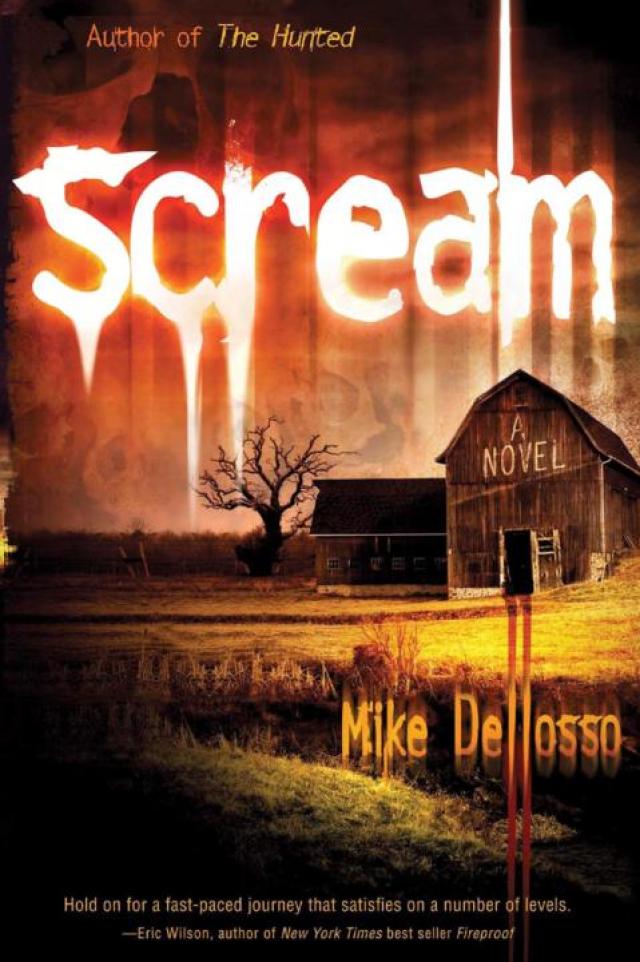


She climbed to her feet, ignoring the pounding headache that only intensified whenever she was upright. The lumps on her head had gone down but were still very tender. She'd concluded the first day that she probably had a concussion, and all kinds of images of blood clots and slipping into a coma swam through her cloudy mind. When she was sixteen, her brother fell from the loft of their barn and landed on his head. He was in a coma for three weeks, then in rehab for three months. The doctors said the only thing that saved his life was the fact that he was only eighteen and his brain was still pliable enough to adapt and compensate for the injured areas.
She was thirty-one and doubted her brain was very pliable. That sent a wave of panic over her. She could easily slip into a coma here and nobody would know. Who knows how long she would last. How long can a person survive without water? Just a few days, she thought. At least she would die in her sleep. Better than being fully aware of the fact that her body was gradually wasting away and life was slowly oozing out of her.
But since the coma, the most attractive option, was no guarantee, she had to try to escape. It really was the only way. She walked over to the wall, stretching her aching back and legs, and leaned against it, scanning the countryside for any sign of the dogs. She then went to the other three walls and peered through them. No dogs. They had to have gone off in search of food. Now was her time. Now or never.
She walked over to the cutout door and placed her hand on the latch. It was locked, but she'd expected that. She jiggled the latch, pushed against the door, rammed it with her shoulder, but it didn't budge. Something was blocking it at the bottom. Looking between the planks, she saw a large cinder block sitting on the ground, snug up against the door. She tried pushing it, lying on her back and kicking at it with both feet, then sticking the heel of her pumps through a one-inch gap between the planks and rocking it, but it didn't move.
Looking around the interior of the barn, she was once again reminded of the futility of her situation. The structure had been gutted, the loft removed. It was literally four walls, a roof, straw, bats, and her. And the mice. A cloud of doom settled over her, and she sat on her haunches and cried. For the first time since waking in this prison two days ago she let the tears flow. And flow they did. Sobs shook her shoulders and burned in her throat for what seemed at least twenty minutes.
When she had wiped her tears with her shirt, she rocked back on her hands and stared at the rafters. A thought suddenly entered her mind. A thought from somewhere deep in her past, her childhood. From where it came she had no idea since she hadn't entertained such a thought in over two decades. When she was a child, her mother had taken her and her brother to a Nazarene church until her father had finally forbid it.
The thought came again: she should pray.
It was a silly thought, she had to admit. A childish thing to be thinking at a time like this. Or was it? She remembered her Sunday school teacher saying that God listened to our prayers. That He cared. But did He care about her? Did He even know who she was?
She wrestled with the thought a few more moments, then settled the matter. If God was God, then of course He knew who she was. Whether He actually cared about her or not remained to be seen.
God, I know I haven't talked to You in some time.
Praying after so many godless years felt awkward. Maybe she should say it out loud. "I'm sorry I sorta forgot about You. That wasn't right." She looked around the barn again, nothing but wood and straw. "I, uh, could really use some help right now. Please show me a way out of this. I want to live." There, it was done. Not the most eloquent prayer He'd hear today, of that she was sure, but it was sincere. She meant every word.
She waited a few minutes for some great revelation to appear, a flood of light, a booming voice, an angel in bright array, something, but nothing happened.
Standing to her feet, she took a step toward the door again when her toe caught on a warped board. Bending low to the floor, she pushed straw out of the way and inspected the board. A chill buzzed down her back. Of course! The trapdoor for shoveling straw and hay to the animals below. Why didn't she think of it earlier? In a barn like this, built on a small hill, there was a basement of sorts where the animals were kept. Feed and bedding were stored on the first floor, animals below. She wiped the rest of the straw from the door and checked the latch. It was open!
Just then the low whine of an engine broke the silence. Amber jumped up and ran to the wall, pressing her face against the boards. A white sedan was bouncing down the dirt lane, a cloud of dust in its wake. She kicked the boards and cursed. Her mind began to race. She looked through the crack again. The car was almost there. It had to be the maniac. Judge. Quickly, she ran to the trapdoor, pushed a thick layer of straw over it, and sat in her corner.
Moments later the engine shut off and a car door slammed. A figure appeared outside the barn door, rolled the cinder block away, fiddled with the lock, and swung open the door.
"Well, well, awake are we?" Judge said, stepping through the cutout doorway. He had a brown paper bag in his arm, but his face remained in the shadows.
"I brought you some things. Water, apples, toilet paper." He set the bag on the floor and stepped toward the door. "Are you finding your accommodations cozy?"
Amber did not answer, did not even attempt to look at him. She had a stubborn streak that ran through her like a vein of cold iron ore, forged from years of withstanding her father's psychological abuse.
"Well, you won't be here long, my dear. And tonight you'll be getting some company." Then he stepped through the doorway, pushed the door closed, locked it, and shoved the cinder block back in place.
Amber dropped her head into her hands.
Outside, judge began hollering. "Buck! Duke! Get over here!"
In the distance the faint sound of barking echoed over the pasture. The dogs were back. The barking grew closer until it was just outside the barn.
"Hey! Where've you been?" Judge was hollering. He cursed loudly then grunted, and one of the dogs yelped. Then another curse, another grunt, another yelp.
"Do your job and keep watch!"
The car door closed; the engine revved to life, and the sound of wheels rolling over packed dirt ground through the barn. Amber got up slowly, walked to the wall, and watched as the white sedan disappeared over the horizon, leaving a tan trail of dust billowing into the still air.
The Dobermans were circling the barn, noses to the ground, hungrily searching for a morsel of food.
Judge liked the light dim when he meditated. The single bulb hanging from the ceiling gave no light. Instead, an oil lamp, resting on the top shelf of the metal bookcase, cast an orange undulating glow around the small room.
He leaned back in his desk chair, stroked his soul patch, and studied the wall before him. The pictures of Amber had been removed, and a new face had taken their place.
Virginia. Friends call her Ginny.
Now only three walls were adorned with photos-in front of him, to his right, and to his left. Three to go. But the other two would remain nameless until their time came. That was his way. One at a time. Focus on one guilty soul at a time.
Virginia. He was no friend.
He'd already found out all he needed to know about her. Twenty-five. Five-three. Brown hair. Brown eyes-eyes like deep pools of dark chocolate. Single. Drove an '02 Ford Focus. Silver. Plates ABD-6488. Employed for the last three years with Just For You Salon. Cosmetologist. She worked the afternoon/ evening shift, got off at 9:30, walked to her car with a friend, took twenty minutes to drive home, and arrived at 42 Broad Court by herself at precisely 9:55. Give or take.
He'd wait for this one at home. Nice and dark, secluded area, and plenty of shade. It had taken him almost two weeks to find her. She'd be easy.
Virginia. He let her name resonate through his mind, focusing on her face, her quick gait, perfect posture, shoulders back, chin up, pelvis tilted just so. He envisioned a hardwood gavel dropping on the bench. The sound of wood on wood echoing through the still courtroom. Guilty! Sorry, Virginia, but the long arm of the law eventually catches up to all of us. You did the crime, now you must pay the time.
He knew full well she didn't do the crime. Well, she must have committed some crime in her life for which she had yet to pay. Speeding violation. Tax fraud. DUI. Something. But she hadn't committed the crime. Those girls were long gone. He'd kept track of them for a good many years, following their movements around the country, their multiple marriages, multiple families, multiple name changes, but they'd scattered too far, become too obscure. With his other responsibilities it was too much to keep up with, and too risky. Someday, though, justice would find them, in its own way, in its own time. For now, for him, it wasn't so much the need to render justice on them as it was the need to render justice for justice's sake. For Katie's sake. Someone had to pay.
Katie. He closed his eyes, rested his hands on his lap, and let his mind replay the events of so many years ago.
1974
Katie McAfee was a tomboy who lived on a small family farm in western Garrett County. Her strawberry blonde hair was shoulder length and always parted into two perky pigtails. Her nose was spattered with light brown freckles (sprinkled is how she used to put it), her mouth permanently bent into a smile, and her blue eyes were brighter than the afternoon sky on a cloudless day.
The first time judge met Katie, she was hoisting bales of hay into an old '59 Ford farm truck. Rust dotted the side panels, the paint had long been faded, and the front bumper was cockeyed, like it was smirking. Katie later told him, "My dad tried to move the bull with it, but ole Otis just pushed back. And Otis won."
His dad knew Katie's dad through some mutual friend, and they had arranged it so judge could work the summer at the McAfee farm. He wasn't too thrilled about the idea at first, but after one look at Katie in those worn jeans with the hole in the seat, he was a card-carrying farm boy. Loved it so much he even volunteered to show up on Saturdays and help out for free. "I got nuthin' better to do, anyway," he said, trying to sound casual. But everyone knew the real reason a twelve-year-old boy would volunteer to spend his Saturday mucking out horse stalls had nothing to do with priming his work ethic or an inbred love of animals and everything to do with a certain twelve-year-old girl.
That summer, he and Katie saw each other every day except Sunday. That's when he would attend Heritage Baptist Church with his parents and sit and stand when he was supposed to, say "Amen, brother" and "Praise the Lord" and "God is so good" when it was appropriate, and joyfully place exactly seventy-five centsone-tenth of his weekly pay-in the felt-lined offering plate.
Yes, Sunday was the Lord's Day, and no work was permitted. They wouldn't even think of going out for lunch after church because his dad said them going out made the people at the restaurant work, and that was "displeasin' to the Lord." Though he never could figure out why it wasn't displeasin' for Mom to spend an hour in the kitchen preparing Sunday dinner. It was just one of those things he never would understand. Like why it was so important to have his hair trimmed short enough that it didn't touch his collar or ears, or why he could never go to the matinee over in Spicerville like so many of his friends, or why he couldn't wear shorts in the summer, even when it was so hot you could fry an egg on the hood of Mr. McAfee's old Ford pickup.
He spent eleven weeks that summer working side by side with the prettiest girl he ever saw, and when the last week finally arrived, a knot had twisted itself somewhere in his stomach and made it hard to even eat. Katie commented on his lack of appetite every day at lunchtime, but he would just shrug his shoulders and say he wasn't feeling well, maybe it was the heat. If she only knew how he really felt about her. Soon, he would only see her on Saturdays if Dad allowed it. That thought made the twist grow tighter, so tight he actually thought he would vomit.
Finally, the last Saturday of the summer arrived. School started Monday. If he remembered right, which of course he did-he would never forget that day-it was a warm, clear day, with a light breeze that rustled the treetops and blew straw around outside the barn. The smell of freshly bailed alfalfa was thick in the humid air. They had spent the day cleaning out the two horse trailers and refilling the water troughs for the cows. At four o'clock on the dot (he remembered it was exactly four because he had been waiting all day for the hour to strike) he looked around and asked Katie to go to the barn with him ...
"There's something I need to tell you," he says, his voice wavering.
Katie's permanent smile widens, and her eyes sparkle as if she knows exactly what he is up to. (Is there a more beautiful girl in all the good Lord's creation?) "Sure. What is it?"
He shoves his hands in his pockets and kicks at some straw on the hard-packed dirt. "Just something I need to tell you is all."
They walk to the barn in silence, he with his hands buried in his pockets to hide the trembling (this cursed trembling, and I probably have red blotches all over my neck too), she with her hands clasped behind her back, head turned skyward, watching the clouds as she likes to do.
When they arrive at the barn, they step inside, and he walks to the far corner, where a wall of barley bales stands over ten feet high. He faces her, slips his hands out of his pockets, and wipes his sweaty palms on his jeans. "Um-"
Unexpectedly, the moment judge opens his mouth a lump rises in his throat, and for a second he thinks he is going to cry. (Cry! In front of Katie! Don't you dare.) He swallows hard and tries to continue. He has to say this.
"Um, there's something I been wanting to tell you."
He looks around the barn nervously. The breeze has swung the door shut, and the only light comes from a thick shaft of sunlight pouring in from a missing board in the loft. Dust floats lazily through the ribbon of light, sparkling like glitter. A sparrow flits around up in the rafters, its tiny wings beating against the still air. Judge is suddenly very aware of his heart banging in his ears and the sound of his own breathing.
Katie reaches out and takes his hands in hers. It's the first time they've ever held hands, and it makes his pulse spike. She smiles again (an angel's smile), her perfect teeth glowing in the muted light. "It's OK. You can tell me anything."
He swallows and shifts his weight. "Um, well, I just wanted to say that-" His palms are sweating like a spigot. (Why can't I make them stop?) She has to be grossed out. And his heart feels like it's in his throat. (This is not going well at all, I should bail now.) For some reason, he glances over at the sunbeam and finds the glitter floating carelessly through the air. Oddly, it seems to calm him just enough that he can continue without making a complete fool of himself. "-this summer has been great and, well, and, um-"
Katie gives his hands a squeeze and leans just an inch closer. He can smell her now, all flowers and farm. "Just say it. It's OK."
He forces a nervous smile. "O-OK" It is at that moment, the moment when he determines to just say it, that the world stands still. He swears the earth has stopped spinning on its axis, clocks have stopped ticking, the sun stands still, that floating glitter has frozen in space, and the sparrow has hushed its beating wings. Even his pulse seems to stop. It's a moment that will change his life. (Nothing will be the same again.) He will never be the same again. He looks her right in those foreverblue eyes and the words just ease out. "Katie, I love you."
Judge stroked his soul patch slowly, aware that his hand was shaking and his breathing rate had increased. The words sat in his mind like a lump. Katie, I love you. He'd really said it, hadn't he? At least she knew how he felt. At least he'd had one chance to speak his mind ... his heart.
I'm not a monster.
Here he was again, at another funeral. Jeff's was just days ago and still so fresh in his mind. He didn't have to come to Jerry's; no one expected it of him. Heck, he barely knew the guy, except to buy auto parts from him. Jerry seemed nice enough, though. Always willing to go out of his way to make a delivery. And for that, Mark had given him all his business. Even when that chain store moved into town last year and Jerry lost a ton of patrons, Mark made it a point to let the older man know he'd never lose Stone Service Center's account.
Now Jerry was dead, and Mark would have to go to the chain store. He hated the thought.
The minister was going on about what a religious man Jerry was. What did he know? Just a few months ago, while delivering a carburetor, Jerry had gotten Mark on the subject of religious fanatics and had admitted to not setting foot in a church in over fifty years. Said he was born and baptized Episcopalian, and that's all he needed. Mark had agreed with him, but deep in his heart, where a man really knows what's what, where the soul communicates with the mind, Mark knew he was wrong. There was more to it than that. But who was he to say anything? He was no theologian and definitely no Bible scholar. Unless eighteen years of Sunday school qualified one for Bible scholar status. And he hardly thought it did.
Reverend Wutsisname was still spouting off. ..... an honest businessman, a devoted family man, a loyal husband... "
That made Mark flinch. Loyal husband. If it were him lying in that brown box, and his loved ones and friends standing around dabbing at their eyes, that part would have to be left out. Mark was a lot of things, mostly positive, but loyal he was not. And it killed him to admit it. But it had killed Cheryl even more.
-Cheryl, when are you coming home? We-
-You don't get it, do you? I'm not coming home, Mark. Not now, not soon, not ever.
-We need to talk about this sometime. You can't just throw our marriage away.


