

The French Baker's War, page 1


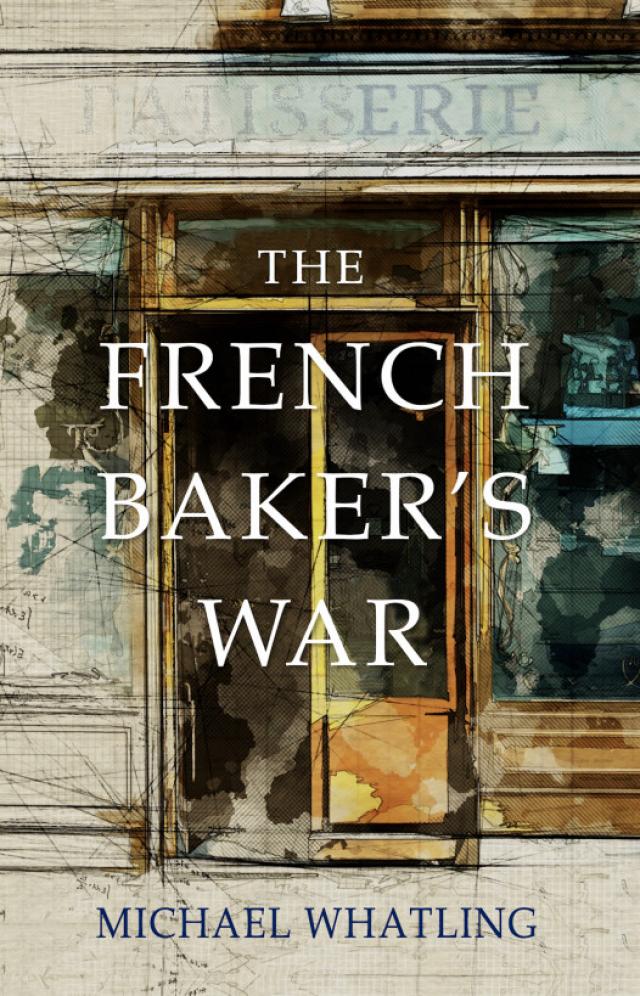
The
French Baker’s
War
MICHAEL WHATLING
THE FRENCH BAKER’S WAR
Copyright © 2021 by Michael Whatling
All rights reserved. No part of this book may be used or reproduced by any means without written permission except in the case of brief quotations embodied in critical articles and reviews.
This is a work of fiction. All characters, names, events, incidents,
organizations, and dialogue in this novel are either products of the author’s imagination or are used fictitiously.
Excerpt from Le Petit Prince by Antoine de Saint-Exupéry, 1943.
Spot a typo? Send it to:
Typo@MortalCoilBooks.com
ISBN 978-1-7775699-3-8 (ebk.)
ISBN 978-1-7775699-2-1 (pbk.)
ISBN 978-1-7775699-4-5 (hbk.)
FIRST EDITION
9 8 7 6 5 4 3 2 1e
“The guilty one is not he who commits the sin, but the one who causes the darkness.”
– Victor Hugo
Inspired by a true story.
Table of Contents
Part I § A Disappearance
ONE: Tuesday, October 19, 1943 Early Morning
TWO: Same Day Late Morning
THREE: Same Day Afternoon
FOUR: Same Day Evening
FIVE: Wednesday, October 20, 1943
SIX: Thursday, October 21, 1943
SEVEN: Friday, October 22, 1943
EIGHT: Saturday, October 23, 1943
NINE: Sunday, October 24, 1943
TEN: Monday, October 25, 1943
ELEVEN: Tuesday, October 26, 1943
TWELVE: Wednesday, October 27, 1943
THIRTEEN: Thursday, October 28, 1943
FOURTEEN: Friday, October 29, 1943 Day
FIFTEEN: Friday, October 29, 1943 Night
SIXTEEN: Saturday, October 30, 1943
SEVENTEEN: Sunday, October 31, 1943
EIGHTEEN: Monday, November 1, 1943
NINETEEN: Tuesday, November 2, 1943
TWENTY: Wednesday, November 3, 1943
TWENTY-ONE: Thursday, November 4, 1943
TWENTY-TWO: Friday, November 5, 1943
Part II § The Return
TWENTY-THREE: Thursday, November 18, 1943
TWENTY-FOUR: Friday, November 19, 1943
TWENTY-FIVE: Saturday, November 20, 1943
TWENTY-SIX: Sunday, November 21, 1943
TWENTY-SEVEN: Monday, November 22, 1943
TWENTY-EIGHT: Tuesday, November 23, 1943
TWENTY-NINE: Tuesday, November 23, 1943 Continued...
THIRTY: Wednesday, November 24, 1943
THIRTY-ONE: Tuesday, November 30, 1943 Six Days Later
THIRTY-TWO: Wednesday, December 1, 1943
THIRTY-THREE: Thursday, December 2, 1943
THIRTY-FOUR: Friday, December 3, 1943
THIRTY-FIVE: Saturday, December 4, 1943
THIRTY-SIX: Sunday, December 5, 1943
About the Author
Part I
A Disappearance
ONE
Tuesday, October 19, 1943
Early Morning
Ever the optimist, Mireille Albert believes a beautiful day or two can still be squeezed out of a season already spoiled by rain. She sits on the windowsill, face tilted towards the sun, body swaying in its warmth. How wonderful it is to push aside the blackout curtain and discover an unblemished sky.
A low rumbling draws her eyes down, but the street’s empty, too early for shops with little to sell to be open, or for customers in threadbare overcoats to be lining up, clutching ration books. The sound rises from somewhere behind the buildings across the way, but Mireille can’t pinpoint what’s making it.
“Come back to bed for a few more minutes,” her husband groans.
There’s a flash at the top of the street. The indistinct shape of a man looms inside Saint-Joachim’s bell tower. Mireille’s eyes narrow. Another flash, a signal with a mirror to someone at the edge of town. Who’d be so foolish in daytime? It can’t be Père Blais, he never risks going up there. “I’m close enough to God,” she overheard him say once after Easter mass. Then she recognizes the shock of blond hair catching the sunlight. Mireille scans the windows opposite, and when she looks back, he’s gone. She can’t repress a shiver. What started as a pebble in a shoe, soon will be the size of a rock under the surface of a calm sea waiting to cause shipwrecks.
Mireille shuts the window and joins André in their narrow bed. Tiny hands push down the covers to reveal their son, his face wide with excitement.
“Oh! This isn’t your bed!” She exaggerates her playful rebuke, knowing how much it pleases the boy. She gnarls her fingers into the claws of an imaginary creature and tickles him. Frédéric lets out a whoop and hides again. Giving her one of his boyish grins, André shifts to make room for her on the horse-hair mattress. He peeks under the blankets and calls Frédéric’s name as though trying to find him in a black cavern.
Before slipping in beside her family, Mireille glances at the window.
•
Mireille puts a record on the gramophone, and music flows down the stairs and fills the pâtisserie with a cheerful song. Today she’s chosen Charles Trenet’s whimsical “Ya d’la joie.” When the first notes begin, she pictures André downstairs humming along for a few bars, before returning to his baking. Fond as she is of teasing him for being a slave to habit, routine’s what keeps their shop open. Every morning, André rolls up the sleeves of his white shirt, dons a white apron, and meticulously marshals his soldiers for battle: pans, sheets, bowls, utensils, and ingredients.
She dresses their son in a sailor’s suit he insists on wearing, the why of which baffles her, and carries him into the shop. He holds up a red ball with two hands in veneration. André covers something on the worktable with a cloth, then takes Frédéric, gives him a twirl to the music, and sits the four-year-old on the floor. The boy offers the ball to his father.
“There’ll be time to play later, mon fils.”
Frédéric’s lip quivers, so André sets a large pot in front of him, averting impending tears. They’ve learned the hard way it’s better to placate the child than endure one of his tantrums.
André examines the thermometer on the oven door. Concerned, he taps its glass face. Mireille has asked him what good that does dozens of times, but he always shrugs. Ironic it’s one of his rituals she finds comforting as lying in his arms.
At the worktable, he breaks and separates two eggs, then whisks the whites until they form peaks, adding sugar as he goes. To check for stiffness, he holds the bowl upside down above his head. Only then does he allow himself a satisfied smile.
Mireille ties on a white apron, takes flour from deep in a large burlap bag sitting on the floor, and adds and removes some on one side of a scale until it matches the iron weight on the opposite side. Hopefully, there’ll be enough for the next few days—there’s never been so little. When she plops the last of the butter in a bowl, André raises an eyebrow, so she takes half out and carefully covers it again in its brown paper wrapping. He’s right—they have to stretch it far as they can. But how long can they realistically go on like this? She presses her lips together with resolve.
André fills a metal piping syringe with meringue and makes perfect disks on a baking sheet. He puts the macarons aside to rest so a skin can form. He pulls out a tray of biscuits au sucre from the oven and lays it on the table to cool. There’s the satisfying aroma of sugary edges starting to caramelize.
Checking to see if Frédéric is still playing, André removes the cloth to reveal a tiny marzipan creation: an almond paste boy and fox on an almond paste asteroid. Hands steady, eyes unblinking, he adds a last touch—a smile to the boy’s face.
Mireille holds out two bowls. “Which one?”
André covers the figures again and points to the bowl on the left. He moves aside so she can shroud three petits fours in pink and pipe small delicate buttercream roses on them. Finished, she snaps to mock attention.
“Sous-lieutenant Mireille Albert, ready for inspection, mon capitaine.”
“Beautiful!” André gently nudges her arm, and she gives her head a shake as though exasperated with their little game. With reverence, he carries the petits fours to the display case.
The rumbling returns, now accompanied by the metallic clanking of some awful machine. Mireille meets André at the display, and they exchange looks. A tank lumbers into view, a swastika emblazoned on its side. They’ve seen plenty of their cars, and trucks, and jeeps, but this is a first.
The Alberts stand silently as the behemoth clatters out of town. Thankfully, Frédéric doesn’t look up until it has rolled past. His fascination with all things military is the one thing that disturbs them about their son.
André goes back to positioning plates of pastries on the shelves, but Mireille doesn’t move. “André,” she says, but he doesn’t hear her. She opens her mouth to say it again, but stops. How does he deserve what she’s about to confess? She balls her hand into a fist and presses it against her abdomen, her thumb rubbing a knuckle.
Frédéric gives out a squawk, and Mireille looks around with a great sweep of her head and pretends to be surprised when she finds him hiding under the worktable. The boy giggles and covers his eyes. Her heart becomes lighter.
When they’ve made all the pastries they can for the day, André puts on his baker’s whites. He fastens the last button and his back st
Mireille and André take a last look around—the final inspection.
Their pâtisserie is typical of the pastry shops found in towns across France, simple and clean, but past its prime. Whenever customers comment on its décor, good or bad, Mireille always says, “It’s exactly how we like it.” The truth is, she doesn’t have the heart to change anything from when her parents owned it. A customer from back then could walk in after all these years and not spot a single difference. It isn’t the sweet smell of pastries Mireille breathes when they’re baking, but memories of her childhood.
André goes to the front door and turns the sign in the window to ouvert. Without looking, Mireille knows it can’t be more than a hair before ten o’clock.
She uses the corner of her apron to wipe away the tinniest of smudges from the display’s glass. With its dark cherry wood frame and thick beveled glass, the display case dominates the shop. This is where neighbours used to meet to share news, whether or not they were buying. But now with no jobs or money, not as many people come in. The scarcer the supplies, the fewer pastries the Alberts make, resulting in even less customers. Everyone’s trapped in a vicious whirlpool as commerce withers.
When there is talk, it’s dominated by war, food shortages, and Germans—les maudits boches. Where once those who gathered in their shop were certain the Nazi occupation wouldn’t last long, these days they don’t believe it will ever end.
TWO
Same Day
Late Morning
Mireille steps out the side door, and music follows her into the alley. When the song becomes muted, she smiles. André has stuffed a rag in the gramophone’s horn, a compromise between it being as loud as she likes and his desire for quiet.
She pours out a bucket of water she used to mop the floor and watches it snake away. So few customers, and still the floors don’t stay clean. She goes back inside, returning a moment later with a broom.
On her way up the alley towards the street, she stops to pick up a discarded sardine can. The trace odour brings back the sea air where she and André spent a day for their honeymoon. There they relaxed in their love for the first time, as their meeting, courtship, and wedding had happened so fast. In stark contrast, when Mireille and André came home from their day away, all they had was time to be alone together—it took three interminable years to conceive Frédéric.
She peers inside the can, tips it, and jiggles it clean of a spider that scuttles away along the line of slate-grey water. She puts the can in her apron pocket and continues on.
The Alberts’ shop stands on a street lined by trees dropping their colours. One of its windows proudly proclaims its name: pâtisserie saint-léry. At the top of the street, a church bathes in the morning light. So familiar are their neighbours with Saint-Joachim, most having grown up nearby, few have noticed the gargoyles hunched on its roof glowering down at them, demanding piety.
Across the road, Monsieur Hébert, the florist, arranges tansies and asters in a basket outside his shop, although Mireille can’t imagine who’s still buying flowers. He waves; she waves back. She hasn’t much to do with the man, but she appreciates how he sends over a rose on her birthday, and how he complains boisterously and with wild facial expressions to André about the weather and his daughter who left with her new husband to live in Paris. Idle talk exasperates André, but he doesn’t do a thing to avoid it. “Manners cost nothing.” Mireille chuckles. Easy for him to say when he seldom has to deal with people.
How little the street changes. She knows every cobblestone, every crack and chip and the ones that are missing. André wouldn’t notice, let alone care, if they were ripped up and replaced with cabbages, as long as it doesn’t prevent customers from coming into the shop.
Monsieur Lussier puts a few thin, gristly chops in the window of his boucherie. Already there’s a long line outside anxious to buy them. He, too, gives Mireille a wave, and she returns it.
“Hello.” The whispered word barely reaches her. Mireille looks around and doesn’t see anyone except a passerby she doesn’t know, more intent on not stepping in horse manure than offering greetings to strangers.
“Madame Albert, up here.”
Mireille tilts her head. Madame Bujold, an old woman confined by her infirmities to a wheelchair and her second-floor flat, waves from a window, and Mireille obligingly nods. Only last week the shut-in had lamented her life was no different than being stranded on a desert island the size of a postage stamp. She’s notorious for being the street’s busybody—judge, jury, and executioner—blunting any sympathy her situation should elicit.
Pleasantries over, the two women resume their chores: Mireille to sweeping, and Madame Bujold to scrutinizing the street.
The music becomes loud again. André pulling the rag from the gramophone means only one thing. A moment later, the door opens with a tinkle of its bell, and he steps out, his baker whites and toque gone, a jacket and a hat in their place. Not one for shows of affection in public, he gives her a quick kiss on her temple. She smells vanilla. Before he can rush off, Mireille stops him. She unties the foulard from around his neck and stuffs it in his pocket.
“Bon courage.”
“I’ll bring back something.” André jerks his head towards the window and Frédéric on the other side watching them. In better times, André liked to surprise her with little gifts, too, each one somehow more thoughtful. This memory prompts her to kiss him on the cheek.
“What’s that for?” He arches an eyebrow as if it was the oddest thing she could’ve done. Mireille shoos him away with a flick of her hand.
André looks to see if anyone is watching, then leans in to kiss her again, this time on the lips, and she impishly turns at the last moment so it lands next to her mouth. Dejected, he starts walking away. When she laughs, he looks back and winks.
Mireille watches him go, worry and awe warring inside her at how doggedly persistent her husband is despite all reason. She absently rubs the cross hanging from her neck between her fingers. Her mind’s made up—she’ll speak with him tonight.
With a quick shake of the broom as if warding off misfortune, she returns to sweeping.
Her mood sours when she spots a tiny shard of glass at her feet. She looks at the shop next door: one window boarded up, the other blackened by fire except where “Samuel” is still legible. A sign with a line drawing of a cobbler sways in the breeze above a door defaced with “JUIF” and a crude Star of David.
Mireille gnaws on her lower lip. Never underestimate how reprehensible people can be. How naïve for her to have thought the war was far away.
A distinguished, bespectacled older gentleman in a suit and hat walks up.
“Good morning, Mireille.”
She greets him with a respectful “Monsieur Durand” as he kisses her on both cheeks. She looks back at the Samuels’ shop. The smell of soot and leather closes her nose. The old man follows her gaze to the vandals’ work.
“A terrible mess. Those poor souls were treated like vermin.”
“Who would do such a thing?” Mireille lowers her voice. “The Germans?”
Monsieur Durand shakes his head and, taking the hint, speaks more quietly. “One of them.”
They watch people pass and shopkeepers go about their business. The florist snips the bottoms of stems off flowers; a customer exits the boucherie, followed by the crisp chop of a cleaver; and the bread baker stomps on the cobbles outside his shop to scare off pigeons feasting on crumbs his customers drop when they leave with a baguette under their arms.
“Abraham and his family were well-advised to leave. It could only become worse for them.” Monsieur Durand’s glasses slide down his nose, and he peers at her over them.
“So we’ll never know.”
“This street can be mute if it wants. Silence is one way to survive.” He scrubs his hands together as though cleaning them of disgust.


