The Mouth of the Crocodile, page 1


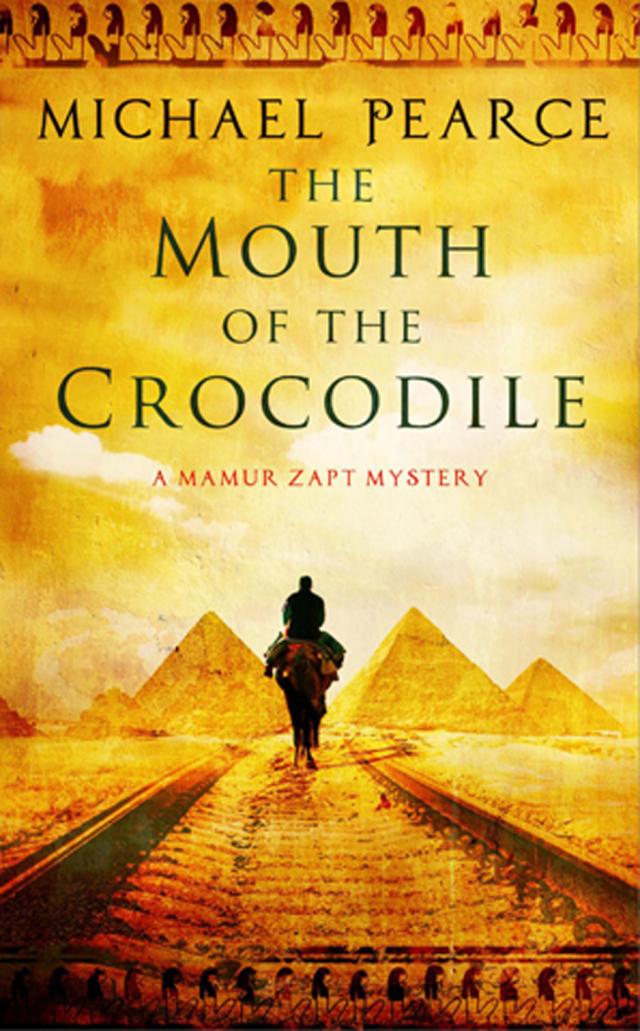
Table of Contents
Cover
Recent Titles in the Mamur Zapt Series by Michael Pearce
Title Page
Copyright
Chapter One
Chapter Two
Chapter Three
Chapter Four
Chapter Five
Chapter Six
Chapter Seven
Chapter Eight
Chapter Nine
Chapter Ten
Chapter Eleven
Chapter Twelve
Chapter Thirteen
Chapter Fourteen
Recent Titles in the Mamur Zapt Series by Michael Pearce
A COLD TOUCH OF ICE
THE FACE IN THE CEMETERY
THE POINT IN THE MARKET
THE MARK OF THE PASHA
THE BRIDE BOX *
THE MOUTH OF THE CROCODILE *
* available from Severn House
THE MOUTH OF THE CROCODILE
Michael Pearce
This ebook is copyright material and must not be copied, reproduced, transferred, distributed, leased, licensed or publicly performed or used in any way except as specifically permitted in writing by the publishers, as allowed under the terms and conditions under which it was purchased or as strictly permitted by applicable copyright law. Any unauthorised distribution or use of this text may be a direct infringement of the author’s and publisher’s rights and those responsible may be liable in law accordingly.
This first world edition published 2014
in Great Britain and 2015 in the USA by
SEVERN HOUSE PUBLISHERS LTD of
19 Cedar Road, Sutton, Surrey, England, SM2 5DA.
Trade paperback edition first published 2015 in Great Britain
and the USA by SEVERN HOUSE PUBLISHERS LTD.
eBook edition first published in 2015 by Severn House Digital
an imprint of Severn House Publishers Limited
Copyright © 2014 by Michael Pearce
The right of Michael Pearce to be identified as the author of this work has been asserted in accordance with the Copyright, Designs & Patents Act 1988.
British Library Cataloguing in Publication Data
Pearce, Michael, 1933- author
The mouth of the crocodile. – (A Mamur Zapt mystery)
1. Owen, Gareth Cadwallader (Fictitious character)–
Fiction. 2. Murder–Investigation–Sudan–Atbarah–
Fiction. 3. Egypt–History–British occupation,
1882-1936–Fiction. 4. Detective and mystery stories.
I. Title II. Series
823.9’14-dc23
ISBN-13: 978-0-7278-8463-3 (cased)
ISBN-13: 978-1-84751-566-7 (trade paper)
ISBN-13: 978-1-78010-614-4 (e-book)
Except where actual historical events and characters are being described for the storyline of this novel, all situations in this publication are fictitious and any resemblance to living persons is purely coincidental.
This ebook produced by
Palimpsest Book Production Limited, Falkirk,
Stirlingshire, Scotland.
ONE
All night the drums had been beating in the village across the river.
‘Someone must be dead,’ said Pollock.
In the morning they learned that the death had occurred on this side of the river. A man had gone into the water to wash his face, as many of the Sudanese usually did. The water was cool and the river more convenient than the wells and pumps which were the townspeople’s only other source of water. Jamie saw them on his early-morning walks with Bella, their big Alsatian dog. He would throw dom nuts into the river and Bella would retrieve them. The nuts were as big as pears and had a hard shell, but inside there was a cotton-like material which made them float easily.
But he didn’t throw the nuts just where the man had died and the people were washing. He preferred to walk along the dry, dusty bank, past where a herd of goats was tethered, and throw them there. Pollock, whom he sometimes met on his walks, said that the Sudanese didn’t like to wash where the dog had been. But the water would have moved on, wouldn’t it, by the time the men were washing, so what was Pollock on about? All the same, Jamie kept downstream to do his throwing.
The men – it was always men washing in the river, never women, so what did the women do? Get water from the pumps, probably; he had seen them carrying their wooden buckets into their houses. And sometimes they put water into their big clay pots and carried them home on their heads. Jamie had tried carrying a pot on his head but it wasn’t as easy as it looked.
But why didn’t they wash in the river, as the men did? Pollock said that they preferred to wash in private. It was more decent that way. But why should that matter for the women and not for the men? Pollock said he would understand when he grew up. Jamie did not think that was a satisfactory answer.
Anyway, the women washed at home and the men came down to the river. They would walk out into the water – the river was shallow at this point – and splash water over themselves. That’s what the man must have been doing that morning. He must have gone out too far and stepped over the side of the bank. It fell away steeply after a few yards. Jamie had been out there himself with his father when the swimming pool was out of action. They had been careful not to go too far, even though Jamie could swim.
In fact, he was a good swimmer, better than most of the Sudanese, who splashed around but did not really swim. However, Jamie’s dad was quite sticky about his swimming in the river. Crocodiles sometimes came to this side and Dad said you had to be careful.
Once, looking down into the water, Jamie had thought he had seen a crocodile, a big dark shape, quite close in. But his dad had said that they didn’t come over to this side, so it was probably something else – um suf, perhaps, a bundle of floating reeds. Although, thought Jamie, usually they floated on top of the water.
But that morning Jamie was not the only one who thought of the possibility of crocodiles. A group of Sudanese huddled anxiously at the edge of the water peering down into its depths, not even going in to wash. Some sort of debate was going on. Pollock said that they were talking about recovering the body. Apparently, you had to do that for legal reasons as well as religious ones. The religious ones were the most important to the Sudanese, Pollock said, but if there was a question of inheritance, the legal ones became pretty important, too.
‘How are they going to get the body up?’ asked Jamie.
‘In the end someone will have to dive for it,’ said Pollock. ‘But no one’s keen to do that. Especially the dead man’s brother. On whom the duty in the end falls.’
Some of the Sudanese were poking about in the water with long poles.
‘I don’t think that will do much good,’ said Jamie.
‘No, it won’t,’ agreed Pollock. ‘They’re waiting for some fishing lines with hooks on them. Then they’ll go up and down in a boat.’
Jamie didn’t think that was very promising either.
‘No,’ Pollock agreed. ‘In the end someone is going to have to go down there.’
Jamie would have liked to stay and watch that bit but he had to get home for breakfast. Already he was late and there would be trouble. And it might take hours, Pollock said, while the brother plucked up courage.
‘It seems a bit daft,’ said Jamie, ‘to just walk over the edge. I mean, if you’re doing it every day … Surely you would know the ground falls away?’
‘That’s what they’re saying,’ said Pollock.
‘Then …’
‘They think he must have been pushed,’ said Pollock.
Actually, Jamie found this quite believable. Sometimes when the men were washing themselves they fooled around, splashing each other, playing games and generally larking about. When they were milling around like that it would have been only too easy for a push to go the wrong way. Only the week before, Jamie had himself been pushed. Quite deliberately, he felt. He had nearly fallen over. And not very far from the dangerous edge, either. But when he had looked up angrily to find the culprit, everyone was looking the other way.
It had been serious enough, however, for him to make the mistake of telling his parents.
His mother had flown off the handle and told him to keep well away from the river in future when the banks were crowded with people washing.
Jamie had demurred, saying what about Bella’s walks?
His mother had hit the roof and had come pretty close to banning the walks altogether.
‘That’s hardly necessary,’ his father had objected mildly. ‘It was obviously an accident.’
‘Was it?’ demanded his mother.
‘Of course it was!’
‘An English boy?’
‘Come, Jane. It’s not like that. You know it’s not like that.’
In the end Jamie had had to agree to keep well away from the water’s edge in future when the bank was crowded. And, since he couldn’t face the prospect of his mother blowing her top yet again, he had kept religiously to his promise, staying high up on the river bank, far, as Pollock put it, from the milling crowd.
Which was why he couldn’t quite make out what the people down by the water were saying and he had to ask Pollock.
Pollock would probably have gone on for ever but at the top of the steps Jamie could see Mohammed signalling agitatedly.
‘You’ll be in trouble!’ he said, when Jamie got there. ‘They’ve been waiting for you for ages!’
Jamie
The guest shook hands with Jamie and said his name was Gareth.
‘Gareth?’ Jamie repeated.
‘It’s an unusual name, I know,’ the man said. ‘That’s because it’s Welsh.’
‘You can call him Mr Owen,’ his mother said.
The man waved a deprecating hand.
‘I’m going to call you Jamie,’ he said. ‘Not Master Nicholson. If that’s all right with you.’
Jamie said it was. People didn’t go in for master or mister much in the Sudan. They usually called men like his father ‘Effendi’. Sometimes when Jamie went down to the market they called him Effendi, too. More often it was ‘the young Effendi’.
‘What brings you down here, Gareth?’ his mother asked.
‘Escort duties.’
‘Escort duties?’ said his mother, wrinkling her nose. ‘That sounds a bit lowly for you!’
‘Special request from the Khedive.’
‘Are you allowed to tell us what it’s all about?’
‘No. But I will. A Pasha was attacked on the train coming south.’
‘Can’t the police handle it?’
‘He was a very special Pasha. A Royal Pasha. And a member of the Khedive’s household. Not to mention his Cabinet.’
‘Oh, I see.’ She hesitated. ‘Even so …’
‘He was on his way to Khartoum. Probably to a meeting. They tried to snatch his briefcase, but he hung on to it. It was empty anyway.’
‘Well …’
‘They obviously thought it wasn’t.’
‘Was he hurt?’
‘Dreadfully. He says.’
‘But you don’t think …’
‘I think he’ll survive. But he’s making the most of it.’
‘But why are you involved? It’s a bit late, isn’t it?’
‘He thinks they might try again on the way back. And it might not be empty this time.’
‘Oh, I see. And it’s even worth sending you down …?’
‘It was an important meeting. And the papers could be important.’
‘Very. If they’re sending you down …’
‘I don’t think they quite intended that. They just asked for an escort. And they were a bit taken aback when the Old Man insisted on sending me. “A member of the Royal Household?” he said. “We can’t have that. We must see that you get home safely.” They weren’t too pleased.’
‘I would have thought they’d have been flattered!’
‘But who knows what I might get up to on the way? I might even like a peek into the briefcase myself.’
Jamie’s father laughed.
‘I would not be surprised,’ he said.
Jamie was quite shocked.
‘Are you a sort of … spy?’ he said.
‘Not exactly.’
‘He’s the Mamur Zapt,’ said Jamie’s father.
‘Gosh!’ said Jamie. The Mamur Zapt. Head of the Khedive’s Secret Police. Here!
‘It still sounds like spying,’ he said.
‘Well, in a way it is. But it’s not just that. More intelligence work in general.’
‘I know,’ said Jamie. ‘Like Kim.’
He had just been reading this new book about a boy in India, at that time still a major part of the British Empire. The book had only just got to Egypt. His grandmother had sent it on to him, thinking, correctly, that he would enjoy it.
‘Are you like Kim?’ Jamie demanded.
‘More like Creighton,’ said the Mamur Zapt.
Jamie was impressed. He even knew the book.
‘Finish your breakfast, Jamie!’ his mother directed.
Jamie took up his knife and fork again. This was big. The Mamur Zapt in his house! He would have to tell the fellows at school. But then he thought: perhaps he shouldn’t tell the fellows at school. This was obviously top secret.
But he had to tell someone. He had a flash of inspiration. He would tell his grandmother! He would put it in a letter. He still hadn’t, he thought guiltily, thanked her for the book. He would write to her now and mark the letter Confidential. If he could remember how to spell it.
He was mulling this over when he heard shouts in the yard.
A man suddenly rushed in. He was an Egyptian, an Effendi wearing the pot-like red hat that government employees wore in Cairo and in a posh silk suit that people certainly never wore down here in the Sudan. His face was sweating and he seemed very worked up about something.
‘Captain Owen! Captain Owen!’ he cried agitatedly.
The Mamur Zapt rose from the table. ‘Why, Pasha, what’s happened?’
‘Another one!’ he almost screamed.
‘Another …?’
‘Attack!’
‘Outside?’ said the Mamur Zapt crisply. And in a moment he was gone.
‘No. Not outside. At least … Yes, I suppose it was outside!’
‘Are you hurt, Pasha? Whereabouts?’ said Jamie’s father. Because, as Jamie told himself, and everyone else who would listen later, there was no sign of blood anywhere.
The Pasha put his hand on his heart. ‘Water!’ he gasped dramatically.
Mohammed, watching all this with goggle eyes, rushed off to fetch some.
‘Sit down, Pasha. Do sit down.’
Jamie’s mother drew up a chair.
‘Sit down, Pasha. You’re all right, now. You’re safe!’
The Pasha gulped down some water.
‘Some coffee?’ asked Jamie’s mother, pushing a cup in front of him and pouring the coffee pot.
‘Please, yes!’
He drank thirstily. He smacked his lips and held out the cup for some more.
‘Would you like to lie down, Pasha?’ said Jamie’s mother solicitously. ‘Shall I call a doctor?’
‘No, thank you. That will not be necessary.’
The Pasha looked around and seemed to realize where he was. He got up hastily. ‘You must be Madame Nicholson.’
He bowed formally and then, to Jamie’s amazement, kissed his mother’s hand. ‘I beg your pardon! Rushing in here in such an unmannerly way.’
‘Not at all, Pasha. Glad to be of assistance.’
‘I was just coming to your house, to find Captain Owen, when …’
‘You were attacked?’ said Jamie eagerly.
The Pasha noticed his existence for the first time. ‘Well, not exactly,’ he admitted. ‘At least, not quite exactly. I was coming along the river bank, that seemed the shortest way, when, suddenly, people were shouting. Someone had been attacked!’
‘But not – not you?’ said Jamie’s father.
‘It was meant for me,’ said the Pasha darkly.
‘But how …? You’re sure?’
‘Quite sure. They’d tried before. On the train. But I fought them off.’
‘Good heavens!’
‘And then they attacked you again on the river bank?’ asked Jamie’s father.
‘Not me. One of my people. But it was meant for me.’
‘You know that?’
‘Oh, yes. They were out to get me. There can be no doubt about it. They had tried before, and now they were trying again.’
He looked around.
‘The Mamur Zapt,’ he said. ‘He was supposed to be protecting me. I was expecting to meet him here. Where is he?’
‘He was here, Pasha. He was here all the time. Don’t you remember? He went out when you walked in. To see if he could catch the people.’
‘Locking the stable door after the horse has gone!’ said the Pasha bitterly.
‘But you are safe, Pasha,’ said Jamie’s mother soothingly.
‘Just,’ said the Pasha. ‘It was a close thing.’ He sat down beside his chair. ‘Where is it?’ he said, panicking. ‘Where is my case? I had it with me. They told me to always keep it with me. They even wanted to chain it to me. To me! To put a chain on me! “I am not a slave!” I said. “Of course not, Pasha,” they said. “The briefcase is the slave. If it is chained to you it will be safe.” “But suppose they steal me with it,” I said. No, no. No chain, please! It is unbecoming to a Pasha. “All right then, but guard it with your life,” they said. “You can count on that,” I said. But now it has gone!’