Emperor of Rome, page 36
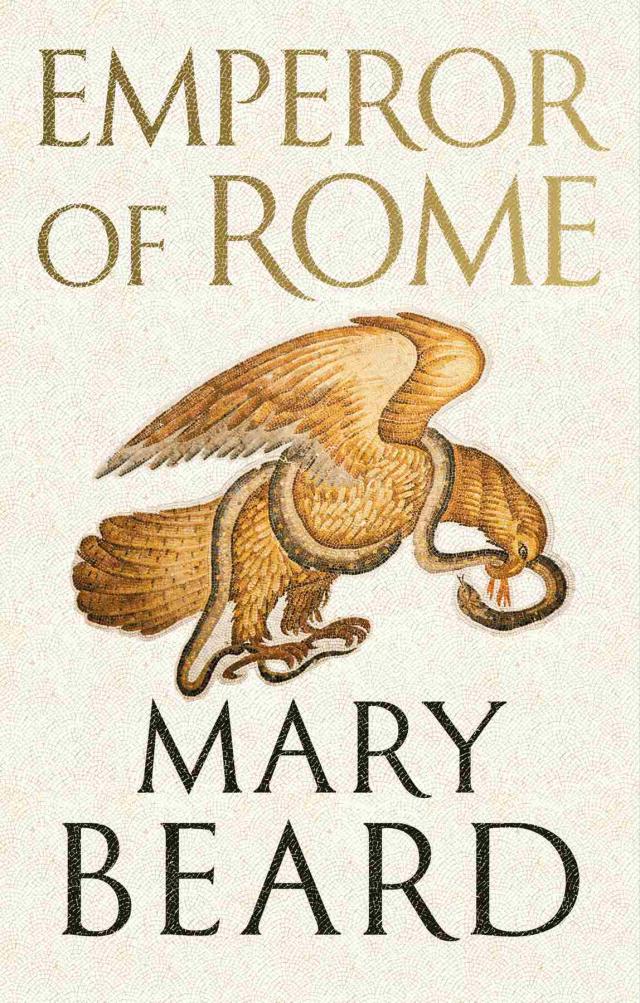


Whether anything like that was contrived for baby Claudia we do not know, but the eagle was said to have performed at the cremation of Augustus. It gave Robert Graves in his novel I, Claudius an irresistible opportunity for his own satire. In imagining the scene of the emperor’s funeral, he says that the grieving widow Livia had hidden an eagle in a cage at the top of the pyre, with a string attached that was to be pulled at the right moment to let the bird free. But it didn’t work. So ‘the officer in charge’, instead of letting the poor thing burn to death, was forced to climb up the blazing pyre and open the cage by hand. But other aspects of the ‘apotheosis’ raised ancient and modern eyebrows too. According to Cassius Dio, among others, there were sometimes witnesses who were prepared to swear on oath that they had actually seen the soul ascending to heaven. It was one way to get rich. Livia was said to have paid a small fortune to the man who claimed he had witnessed the ascent of Augustus.
Whoever masterminded the deification on each occasion, the result was that between Julius Caesar and Alexander Severus – who, thanks to the efforts of his successor but one, was belatedly deified in 238 CE, three years after his assassination – a total of thirty-three members of the imperial family became gods or goddesses (divus, for the men, diva, for the women, being their new official title). These included seventeen emperors themselves (counting Julius Caesar), plus a range of wives, sisters and children, and in Trajan’s case, his natural father and his niece. Some of these – what we might perhaps call the ‘vanity deifications’ – made hardly any impact on religious worship. Nero’s divine daughter seems to have been forgotten almost as soon as she was made a goddess. And, although Roman writers list the divine honours given to Caligula’s dead sister, diva Drusilla (including twenty priests, both men and women, and an annual festival dedicated to her on her birthday), there is hardly a trace of her divinity in any other evidence we have.
97. A section of the religious calendar from the army base at Dura Europos. Some of the information is still fairly clear to make out. The Roman numerals at the left edge of the papyrus are parts of the dates of the festivals. Ob natalem (‘on account of the birthday of …’), legible in the second, fourth, fifth lines and more, indicates ceremonies to mark the birthdays of members of the imperial family, living and dead.
Some of them, however, clearly were treated as immortal gods, with worship continuing over decades or centuries after their death. These included Claudius, who – despite the ending of Seneca’s satiric fantasy – was not actually demoted or thrown out of heaven and, like many others, had his own prominent temple in the city of Rome. (The temples of divus Julius (Caesar), divus Vespasian and divus Antoninus (Pius) and his wife diva Faustina still dominate the Roman Forum.) What is more, inscribed records give us the names of numerous priests of these emperors, while also listing occasions when that central act of ancient worship – the sacrifice of an animal – was performed for divi or divae. On his birthday, on 23 September, divus Augustus could expect to have an ox slaughtered in his honour. Livia (or diva Augusta, to use her divine name) would have received a cow – following the usual Roman religious rule that male animals were offered to male gods, and female ones to goddesses.
These forms of worship were practised a long way outside the city of Rome too. Throughout the provinces – whether on their own initiative, or with a gentle nudge from the provincial governor, or following instructions handed down from someone in the palace itself – local communities honoured the emperors, not only the dead and officially deified, but occasionally also treating the living ruler as a god. Bigwigs often competed with one another to be provincial priests of the emperors. New temples dedicated to them went up everywhere. The building at Aphrodisias, which displayed that panel of Nero and Agrippina (fig. 84), was only one of many of these, and they included the temple dedicated to Augustus, still standing in modern Ankara, on whose walls the main surviving text of his What I Did was found inscribed. It was following one of those nudges from the governor that in 9 BCE the eastern province of Asia, part of modern Turkey, rearranged its calendar so that the year began on Augustus’s birthday, with a month called ‘Caesar’. This was all part and parcel of what is now often known (though it sounds misleadingly creepy) as ‘the imperial cult’.
We can see exactly what this meant for one Roman army unit stationed at the base of Dura Europos on the river Euphrates, in what is now Syria, where a surviving papyrus – discovered in excavations there in the 1930s – opens up the world of the religion of the soldiers. It is one of those bureaucratic military documents that reveal much more than they seem to do at first sight: a calendar, dating to the 220s CE, listing the religious rituals to be carried out officially by the unit, month by month throughout the year. What is especially striking is that the great majority of these rituals are focused on the emperor and the imperial family in some way. Major anniversaries in the life and reign of the current ruler, Alexander Severus (his accession to the throne, the first time he was consul, and so on) are marked with various rituals in his honour, which stopped short of the full sacrifice of animals that was offered only to those who were officially gods. His deified predecessors, however, are honoured with a full sacrifice, to mark their birthday or their accession. The long-forgotten ‘vanity deifications’ do not feature, but Septimius Severus, Caracalla, Commodus, Antoninus Pius, Faustina, Hadrian, Trajan, Claudius, Augustus and more are all given their due, right back to Julius Caesar. That is to say, almost three hundred years after his assassination, divus Julius, the first god in the imperial family, was still regularly receiving an ox on his birthday, from a group of soldiers at the far eastern edge of the empire. Their religious calendar was a calendar of emperors, dead and alive.
This imperial cult could sometimes rebound. Tacitus claimed that the temple of divus Claudius in the main town of Roman Britain partly sparked the rebellion under Boudicca, in the 60s CE during Nero’s reign, because it was seen as a symbol of oppression (not to mention provoking the anger of the local British elite, who found that the ‘distinction’ of being a priest came at more expense than they could afford). But, in general, it was another way of putting emperors centre stage in the empire, but this time as a divine presence.
When is a god not a god?
So, was the Roman emperor really a god, or – to be more precise – did some of them (and their families) become gods after their deaths? The answer obviously depends on what we mean, or the Romans meant, by a ‘god’.
From a modern perspective the imperial cult can look like a very cynical set of manoeuvres. I am not thinking so much about the trickery on the pyre. There are few religions that do not occasionally pull such tricks. Whatever illusion, or hoax, lies behind the miraculous liquefaction of the dried blood of the third-century saint Januarius three times a year in modern Naples does little to dent his reputation, still less that of the Catholic Church. So too, the ruse with the caged eagle (intended, perhaps, not to be taken literally but as a symbol of transformation) would not necessarily have dented the authenticity of the consecration as a whole. More problematic is the blatant political convenience that now seems to lie behind this transformation of human emperor into heavenly immortal.
As with many aspects of Roman imperial succession, whether a dead emperor was made a god depended not so much on his worthiness but on how useful his deification was to the man who came after him. For many rulers, being able to add the phrase ‘son of a god’ to their names was a welcome extra among their badges of power, and it was often proudly displayed from the very beginning of one-man rule. ‘Augustus, son of a divus’ (divi filius), referring back to his adoptive father, Julius Caesar, was an important part of the ‘signature’ of the first emperor. And the reason that the emperor Tiberius was not made a divus on his death in 37 CE was presumably because it held no particular advantage for his successor and great-nephew Caligula, who based his own right to rule, back through his father and mother, to Augustus himself. Besides, whatever sympathies we might now have with the rebellious Britons in their reactions to the intrusion of a large temple of divus Claudius, emperor worship in the provinces often looks as if it were encouraged, or imposed, as a useful focus of political loyalty more than anything else. There were, it is true, a few occasions on which an emperor made a show of modestly refusing a request from citizens of some provincial town that they be allowed to erect a temple in his honour. But such refusals, you might argue, were a good way of ensuring that the currency of deification was not devalued.
It is inconceivable that there was no hard-headed cynicism or political calculation on the part of emperors and their advisers in promoting the worship of the divi and divae, and in presenting imperial power in divine terms. But it was not quite as simple as that. The imperial cult makes more sense, or at least looks less manipulative or absurd, if we put it back into the context of the principles that governed Roman religion more generally. For some of those aspects of the worship of emperors that make it most difficult for us (as for ancient Jews and Christians) to take seriously fit much more comfortably into traditional Roman assumptions of what gods were and how their power worked in the world.
For a start, Roman religion generally welcomed new gods. In all its different versions – and there was never a single orthodoxy across the Roman world – it was a polytheism. Not only were there many gods rather than just one, but the total number of them was not fixed, or even known. New ones were recognised all the time, while others were quietly forgotten, even if not actually abolished. Roman antiquarians enjoyed digging up weird time-expired deities, who may not have had much longer public recognition than Nero’s diva Claudia. More important, though, in the context of divine emperors, some of these gods, both old and new, were said to have originally been human beings. Hercules, for example, after his life as a mortal strongman, was only deified on his funeral pyre. Romulus, Rome’s founder, was also said to have become a god after his death.
To put that another way, for Romans, the boundary between the categories of human and divine was crossable and could be blurred in significant respects. Some mortals were thought to have had gods among their direct ancestors. The family of Julius Caesar famously traced their descent back to the mythical Trojan hero Aeneas and, through him, to his mother, the goddess Venus (it’s no coincidence that Caesar inaugurated a new temple in Rome to Venus Genetrix – the ‘ancestor’ of the Roman race and of his own family). But they were not the only ones. Suetonius claimed that the family tree of Galba, who briefly ruled after the death of Nero, made Jupiter his ancestor on his father’s side and, on his mother’s side – in what might have seemed a dangerously ill-omened inheritance – the divine Pasiphae, who gave birth in Crete to the monstrous half-bull, half-human Minotaur.
Even outside this world of myth, extraordinary human power and success at Rome had often been presented, and understood, in divine terms. The costume of Jupiter, which the Roman general had traditionally worn in his triumphal procession, is the clearest example of this. It is as if, at the height of his renown, he was a god, or on the cusp of becoming a god, or looking the part of a god – even if it was only just for a day. In the Greek world, too, divine status was permeable. Long before the Romans appeared on the scene, one of the ways in which the old city states came to terms with the dominance of the kings who controlled the Eastern Mediterranean in the aftermath of the conquests of Alexander the Great was to treat them (and worship them) more or less as gods. It was part of established religious traditions that notable humans could be redefined as divine.
Those are among the coordinates that lie behind the deification of emperors. Some elements of the imperial cult in the east almost certainly derive directly from the treatment of those earlier kings. Encouraged by the Romans or not, local communities were in a way acting towards emperors as they had acted towards the Greek monarchs who had previously ruled over them. And when the funeral ceremonies of Augustus were designed partly on the model of a triumph, with the waxwork of Augustus himself dressed in triumphal costume, the point must have been to exploit the associations of the triumphing general with the gods. Much the same is true for Commodus’s appearance, in real life and in statues, in the guise of Hercules (fig. 56). Megalomania it might have been, but Hercules, as ‘man-turned-god’, was an absolutely appropriate template for a Roman emperor on the cusp of divinity.
The strongly political character of emperor worship was entirely traditional too. Some of the very features that make the imperial cult look so un-religious to us, were what made it typically religious in Roman eyes. For in Rome there was never a division between ‘church’ and ‘state’, and religion was not founded on personal devotion, individual faith or tenets of ‘belief’. It was founded instead on the simple axiom that Rome’s military and political success depended on the gods being properly worshipped. Or, to put it the other way round, if they were not properly worshipped, the state would be in danger. Personal piety hardly came into it.
98. A scene of sacrifice from an arch in honour of Septimius Severus put up by a group of silversmiths or moneychangers in Rome. The emperor, his head covered, as was usual when performing a sacrifice, makes a preliminary libation over an altar loaded with fruit (the actual sacrifice of the animal is depicted on the panel below). Julia Domna is at his side, and the figure of Geta, once standing to the right, has been erased (see pl. 3).
That was one of the reasons why Augustus was so insistent in his What I Did that he had restored eighty-two temples in the city (the message was that, after the civil war that brought him to power, he was repairing Rome’s relations with the gods). It was one of the reasons why Elagabalus’s rumoured replacement of Jupiter with his own Syrian god would have seemed so dangerous. And it suggests an underlying logic behind what would eventually become the persecution – or ‘punishment’, to give it a Roman perspective – of the Christians. There must have been a lurking fear among the authorities that wholesale Christian rejection of the traditional gods would put the state in peril. More generally, however, the axiomatic connection of politics and religion provides a context in which the links between the emperor and the gods would not seem so contrived and cynical as they almost inevitably do to us.
Another aspect of that connection was that the people who handled the state’s relations with the human world also handled its relations with the world of the gods. The Vestal Virgins – the priestesses charged with keeping alight the sacred flame of the goddess Vesta in the Forum, while also remaining virgins (of course, there were all kinds of rumours and scandals) – were the one significant exception. Otherwise, all the major groups of priests in Rome were made up of senators. They had their own particular responsibilities, for dealing with signs sent from the gods, for example, or for the worship of individual deities. But they were not exclusively religious practitioners, not full time, and had no pastoral responsibilities for any congregation. Romans did not go to a priest for personal advice or spiritual counselling.
As a member of all those priestly ‘colleges’, as they were called, the emperor himself was effectively the ‘head of Roman religion’ and the chief priest. That is how we often still see him, depicted in sculpture on public monuments, conducting a sacrifice, displaying his piety. Alongside all the begging letters and governors’ reports, the regular contents of his in-tray would have included religious matters too: requests for permission to move someone’s great-uncle’s coffin according to the terms of divine law, or to fill vacancies in any of the priestly groups. One other important aspect of the emperor’s power was that it was through him, more than anyone else, that human relations with the gods were properly maintained. And some emperors moved relatively seamlessly at their death from that role to being gods themselves.
The impossible conundrum
Nevertheless, the harder you look at the imperial cult, the more slippery it becomes and the more puzzles, contradictions and uncertainties there are. The women and other family members are one obvious problem. A clear Roman logic lay behind the power of the emperor being understood in divine terms, but did that really extend to the wives and baby daughters (even if they did clutch cornucopias and other attributes of goddesses in their sculptures)? There were also all kinds of doubts and reservations about, for example, how far deified emperors were gods in exactly the same way that the other, ‘regular’ immortals were. They might all have had temples, priests and sacrifices, but we find strong hints that there was a line to be drawn between the ex-emperors and the gods proper. They were not even called by the same name. For while divus was the usual term for a ‘promoted’ emperor, deus was the term for a traditional god. The rules were not absolutely hard and fast (Vespasian’s deathbed phrase was actually ‘I think I am becoming a deus’). But that difference between divus and deus suggests that divine emperors were not so much gods, as god-like. Seneca’s joke, that divus Augustus had never once opened his mouth in the divine senate until the would-be divus Claudius turned up, points in that direction too. Compared with the other residents of Mount Olympus, Augustus was of a distinctly subordinate status.
Even the apparently basic principle that emperors did not (or should not) become gods until after their deaths is not quite so basic as modern historians have sometimes assumed. It is true that we can detect a range of seemingly nit-picking details in religious rituals that appear to have reinforced the boundary between living and dead rulers. That is exactly what is spelled out in the military calendar from Dura Europos, in its precise specification of what was to be offered to emperors in different categories: animals might be sacrificed to the traditional gods ‘on behalf of’ the living emperor, but sacrifices made directly ‘to’ an emperor, as they were made ‘to’ a god, were reserved exclusively for those who had been officially deified after their death. And it was one of the clichés of the ‘bad’ emperor that he insisted on being treated as a god while he was still alive. Domitian, for example, was ridiculed for his megalomania in wanting to be addressed as a full-blown ‘deus’ (not just ‘divus’).