

Easy Keto Cooking, page 1


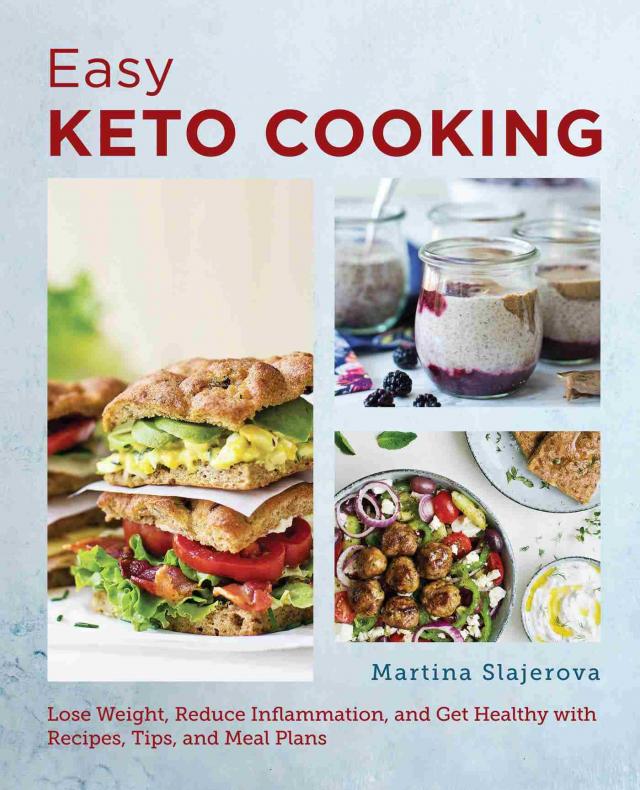
EASY KETO COOKING
Lose Weight, Reduce Inflammation, and Get Healthy with Recipes, Tips, and Meal Plans
MARTINA SLAJEROVA
Contents
CHAPTER 1
Escape the Diet Dogma:
The Science Behind the Ketogenic Lifestyle
CHAPTER 2
Keto Break-the-Fast Dishes
CHAPTER 3
Light Dishes and Appetizers
CHAPTER 4
Quick and Easy Lunchbox Dishes
CHAPTER 5
Energy-Boosting, Fat-Fueled Dinners
About the Author
Acknowledgments
Index
CHAPTER ONE
Escape the Diet Dogma
The Science Behind the Ketogenic Lifestyle
We Westerners have been harming our health for decades. How? By following dietary recommendations based on bad science. We’ve been avoiding saturated fat and cholesterol for fear of increasing our risk of heart disease. We’ve been told that eating five small meals a day is better for you than eating three regular meals. We replaced saturated fats with carbohydrates, and we’ve started eating breakfast cereals instead of eggs in the mornings. And you know the rest of the story: we ended up with an obesity epidemic, plus an increase in diagnoses of type 2 diabetes, cardiovascular disease, lipid problems, inflammation, and hypertension—all of which are symptoms of what is known as the metabolic syndrome.
But the good news is that times are changing. Up-to-date research, including a review of studies from 2015 published by the British Medical Journal, shows that saturated fat and dietary cholesterol are not our enemies. In fact, they actually help maintain healthy cholesterol levels and balanced hormones. Instead, sugar and processed foods that are high in carbohydrates and inflammatory oils are our true adversaries. And I’m not just talking about obviously unhealthy foods, such as white sugar, pizza, and fries. The culprits include all those “good-for-you” cereals, whole-grain granola bars, low-fat yogurts, and even tropical fruits, which are often marketed as “health foods” that will keep your heart fit and your body trim.
The truth is that eating high-sugar foods such as these creates a vicious cycle: if you eat high-sugar foods like these regularly, it’s likely that you’ll need to eat five times each day because you’re always hungry. The more sugar you eat, the higher your blood sugar and insulin become, and the result is inevitably a sugar crash—which makes you crave sugary snacks even more. This can cause chronically high blood sugar levels, which eventually leads to insulin resistance and other health issues.
But what if there were a simple solution to the sugar spiral? Well, there is. By limiting the amount of carbohydrates we consume and replacing them with healthy sources of fat, we can stabilize our blood sugar and manage our cravings. It’s time to take control of our diets and start eating real food again!
My Story
I changed the way I ate in 2011, when I was diagnosed with Hashimoto’s, an autoimmune disease that affects the thyroid. I had no energy, and I found it more and more difficult to maintain a healthy weight. Even though I was taking prescription medication to help control my condition and I was hitting the gym almost every day, I was gaining weight, not losing it. The irony was that, like so many other people, I used to follow what I believed to be a healthy, balanced diet. I avoided most fatty foods in fear of clogging my arteries and putting on weight. I based my diet around whole grains and vegetables, and I limited my intake of animal products. I did exactly what the general dietary recommendations advised: I exercised more and ate less. Still, nothing worked. Finally, I got tired of dieting all the time, and I was determined to regain my health by following a different approach.
That’s when I decided to quit sugar, grains, and processed foods, and I started following a whole foods–based ketogenic approach to food. After we witnessed the incredible benefits of low-carb eating firsthand, my partner and I created KetoDiet, a tracking and planning application with hundreds of low-carb recipes. It is now one of the best-selling apps on the App Store and Google Play. Then, in 2012, I launched my KetoDiet blog, which helps more than two million monthly visitors follow a whole foods–based, low-carb, ketogenic lifestyle.
Switching to a keto lifestyle wasn’t easy at first. It took some time for me to get used to eating fat and to give up carbs: after all those years of dieting, it was only natural that I was having trouble eating more fat without worrying about consuming all those calories. And to make things even more complicated, there was too much conflicting information available, and I didn’t know if I was doing the right thing. But I figured it out for myself.
When I started to eat keto, my cravings went away after just a few weeks. I didn’t feel hungry, and I had loads of energy to devote to my busy lifestyle. Best of all, for the first time in years, I didn’t even think about food. It was so liberating! So these days, when people ask me which “diet” I follow, I simply reply, “It’s just the way I eat every day.” That’s because—for me, at least—keto isn’t a diet: it’s a lifestyle. The word “diet” suggests a pattern of eating that’s both temporary and difficult to stick with, and that’s definitely not the case for my approach to eating keto.
I hope this book will give you some clarity about what a truly healthy diet is, and that you’ll be motivated to keep learning, do your own research, and listen to your body. I truly believe that a whole foods–based keto diet that reflects your individual needs has the potential to help you achieve your goals—whether that’s long-term weight loss, dealing with certain health conditions, or simply improving your overall well-being.
What Is the Ketogenic Diet?
To understand what the ketogenic diet is and how it works, we need to understand how our bodies use carbohydrates. All carbohydrates from the foods we eat are broken down into glucose, which, in non-keto-adapted individuals, is the body’s primary source of energy. If you eat more carbohydrates than your body can use immediately, it will store the excess glucose in the liver and muscles as muscle glycogen, which can be used for energy. But when your glycogen tank is full, your body stores extra glycogen as body fat.
Wait a minute, though. Don’t our bodies need carbs? Not really. It’s a common myth that we need carbs in order to produce glycogen. While it’s true that a small amount of glucose is still needed for some basic metabolic functions, our bodies prefer using ketones as an energy source, according to Jeff Volek, Ph.D., R.D., and Stephen Phinney, M.D., Ph.D., best-selling authors of The Art and Science of Low Carbohydrate Living. Compared to our “glycogen tank,” which is limited to about 2,000 calories, the capacity of our “fat tank” is more than 40,000 calories. Once you become keto-adapted, your body will shift from glucose metabolism to fat metabolism, and you will experience improved energy levels, enhanced satiety, and reduced cravings. Besides, our bodies can produce glucose on demand for the basic metabolic functions that require it through a process called gluconeogenesis, and this process is fueled by non-carbohydrate sources, especially protein.
And let’s not forget about insulin and its role in fat loss. Here’s how it works: when you eat a high-carb meal, your body has to produce more insulin in order to keep up with the increased levels of glucose in your bloodstream. Raised insulin levels “lock” fat in the cells and block fat burning—until your insulin drops again and you use fat for fuel. When you are insulin-sensitive, this process works perfectly well, and allows you to maintain balanced blood sugar levels. But with a consistently high carbohydrate intake, it can eventually lead to insulin resistance, high LDL cholesterol, low HDL cholesterol, higher triglyceride levels, increased inflammation—and, in some cases, type 2 diabetes. One 1989 study named insulin resistance as one of four cardiovascular risk factors: a “deadly quartet” including hypertension, hypertriglyceridemia, and low HDL cholesterol.
All of this means that any carbs you consume raise your insulin level, which normally leads to increased energy levels or to storing fat. But when you eat fewer carbs, your body requires less insulin to regulate your blood sugar levels: as a result, it uses more fat for energy and stores less of it.
Three Phases of a Whole Foods–Based Ketogenic Diet
Phase 1: Induction Phase (3 to 4 weeks)
Keto induction refers to the initial phase of the ketogenic diet, which occurs after you significantly reduce your carbohydrate intake to 20 to 25 grams of daily net carbs (that is, your total carbohydrate intake minus fiber), or even less, in order to enter a metabolic state known as ketosis. The exact amount of carbohydrates required to enter ketosis is different for each person, but the presence of ketones in your body, which shows that your body is burning fat for fuel, typically takes 1 to 3 days.
A successful induction phase will significantly increase your chances of achieving your goals, so this phase is an especially important one.
Tips for Success
Switching to keto can be quite challenging, but it’ll take just a few weeks for you to become keto-adapted and to enjoy the (many!) benefits of low-carb eating. Here are some tips for a successful keto induction:
1. Keep it simple. It’s normal to feel overwhelmed when you start following a keto diet. To minimize failures, you’ll want to keep your diet simple. Stick with foods that are naturally low in carbs. Prepare recipes with just a few common ingredients, and avoid getting bogged down in making complicated meals. Once you get used to low-carb eating, you can start experimenting—and having fun!—with more challenging recipes.
2. Be sure to get enough protein and fat. If you don’t eat enough protein and fat, you’ll end up hungry, and that’ll stall your progress. For more on protein intake, see Protein on a Keto Diet (here); for more on fat intake, see The Filler Concept.
3. Avoid foods that may trigger cravings and/or overeating. Before you introduce low-carb sweeteners, your aim is to get your palate used to low-carb eating. You should avoid potential triggers such as low-carb treats (see Eating Too Much Of . . .). Other foods that may trigger cravings are keto substitutes for breads (Garlic & Herb Focaccia), crackers (Multiseed Keto Crackers), and nuts and cheese, especially if you’re using them as snacks. High-fat treats such as fat bombs are usually well tolerated, provided you can stop at one piece. Some people may need to avoid nuts and dairy altogether, while others can use them as an ingredient in a main dish. You’ll need to experiment to see what works best for you. I’ve marked the recipes throughout this book that are most suitable for the induction phase of the ketogenic diet.
4. Minimize or avoid snacking. Instead, keep hunger at bay by sticking to three main meals with adequate protein and fat. Needing to snack may be a sign that your last meal wasn’t nutritious enough. Also, people with hypoglycemia issues may need to introduce small, high-fat, moderate-protein snacks between meals.
Ketosis and Measuring Ketones
Nutritional ketosis is achieved when your blood ketones clock in between 0.5 and 3.0 mM. There are several ways to measure ketones. If you choose to do so, the most reliable way is to use a blood ketone meter, which measures the level of beta-hydroxybutyrate—the first ketone body produced in the liver during the fasting state—in the bloodstream. You don’t necessarily need to measure your ketones if your goal is to lose body fat or maintain a healthy weight, but if you’re following a restricted ketogenic diet in order to deal with health conditions such as epilepsy or cancer, measuring ketones is recommended in order to experience the full benefits of the diet.
Or, if you’re new to the ketogenic diet, tracking your ketone levels may help you understand how the foods you eat affect you. Because I’ve been following a low-carb diet since 2011 and I know what to eat and avoid, I rarely measure my ketone levels. Besides, there are other ways to determine whether you’re becoming a fat burner. As you get keto-adapted, the symptoms of keto flu—that is, the result of carbohydrate withdrawal, symptoms of which include headaches, muscle cramps, and fatigue—will dissipate. You won’t need to snack; you’ll stop craving carbs; and eventually you’ll find it easy to skip meals (see Intermittent Fasting). If you exercise, you’ll notice an improvement in your performance—even without carb-loading.
If you do decide to measure your ketone levels, keep in mind that they fluctuate throughout the day. (They are typically higher in the evening and lower in the morning.) To ensure comparable results, be sure to measure your ketones consistently at the same time and under the same circumstances (e.g. 2 hours after a meal) each day. Apart from what you last ate, ketone levels can also be affected by the type of physical activity that you do prior to measuring. For women, fluctuations in hormone levels throughout the month will affect ketone readings, too.
Don’t Confuse Ketosis with Ketoacidosis
While nutritional ketosis is perfectly safe, ketoacidosis is an indicator of serious health issues such as type 2 diabetes and alcoholism. In ketoacidosis, your body’s ketone levels are three to five times higher than when you’re in ketosis as a result of following a ketogenic diet. Plus, ketoacidosis is accompanied by high glucose levels.
Phase 2: Keto Adaptation (Duration depends on your individual goals)
Ketosis vs. Keto Adaptation
While it takes about 1 to 3 days to enter ketosis, it can take up to 4 weeks for your body to become keto-adapted, because it’s a complex process and involves most of the body’s systems. The major adaptations occur in the body’s tissues, especially the brain, liver, kidneys, and muscles. That’s why you may feel tired or have symptoms of “keto flu” (see Keto Flu and Electrolytes) during the first few weeks of following a ketogenic diet. This is because your body is becoming accustomed to using fatty acids and ketones as its main sources of energy. This switch from glucose to fatty acids and ketones will take at least 3 to 4 weeks—or it may even be months before your body learns how to use ketones effectively. It’s worth it, though: once you become keto-adapted, your primary source of energy will shift from glucose toward fat and ketones, and your energy levels will be restored.
Initial Weight Loss
Your hormone levels change during this phase, and as a result of depleted glycogen levels, your body retains less water. So quick weight loss isn’t uncommon in the first few days of keto adaptation. Some of this is water weight, because your body loses glycogen during the first few days of the diet. This is because one molecule of glycogen attracts three to four molecules of water, so your body excretes water as it loses glycogen. After you have depleted your glycogen stores, the process of ketosis begins and you’ll start to lose body fat.
How to Beat Common Keto-Adaptation Issues
Keto adaptation is a lengthy process, and you might encounter a few bumps along the road. Here are some tips for beating a few of the most common ones.
1. Keto flu. During the induction phase, your body will need more electrolytes (that is, foods high in sodium, potassium, and magnesium), or you may experience flu-like symptoms. To ease these symptoms, eat foods high in electrolytes (see Keto Flu and Electrolytes), and take magnesium supplements (see here).
AVOID CONSTIPATION
Eat foods high in both soluble and insoluble fiber, such as nuts and seeds, leafy greens, and avocado. If you eat psyllium, flax, and/or chia—all of which are sources of insoluble fiber—make sure you drink plenty of liquids with them. Try the PB & Jelly Chia Parfaits. Add medium-chain triglycerides (MCTs) oil to your drinks and smoothies: MCTs have laxative effects.
2. Digestive issues. When switching to low-carb eating, some people experience digestive issues. Although they are temporary, they can be quite unpleasant. In case of diarrhea or constipation, stay hydrated by drinking plenty of water or herbal tea and increase your electrolyte intake. Supplementing your diet with probiotics (see Recommended Supplements), and eating probiotic-rich foods such as sauerkraut and kimchi may also help.
PREVENT DIARRHEA
Eat foods high in soluble fiber, such as non-starchy vegetables. Limit your consumption of foods high in insoluble fiber, such as nuts and seeds.
Watch out for foods or supplements that may be causing loose stools, such as magnesium supplements. The upper limit for magnesium supplements is 350 mg per day.
Consume less than 80 percent of your calories from fat if you experience digestive issues. If you use MCT oil and coconut oil, avoid them altogether until the issues go away, and then reintroduce them in small amounts, such as 1 teaspoon/5 ml per day.
Avoid coffee and other sources of caffeine for a few days. Caffeine is a stimulant and has a diuretic effect, which will make the symptoms worse.
Be sure to avoid dairy if you are lactose intolerant.
3. Cravings. First of all, make sure you’re getting enough protein (see here) and electrolytes (see above): a lack of protein in your diet will make you hungrier. If you’re still hungry, a good way to beat cravings is to have a high-fat snack, such as half an avocado.
4. Hypoglycemia. Follow the same tips for beating cravings, above. Also, try splitting your three daily meals into five smaller meals to keep your blood sugar stable.
5. “Keto breath.” Fruity “ketogenic breath” doesn’t affect everyone who follows a ketogenic diet, but if it does, drink lots of water and mint tea and make sure you eat plenty of foods rich in electrolytes. Avoid chewing gum and mints, though: they may kick you out of ketosis due to hidden carbs. And remember that keto breath isn’t forever: once you get keto-adapted, it’ll go away.


