Cyborg, page 12
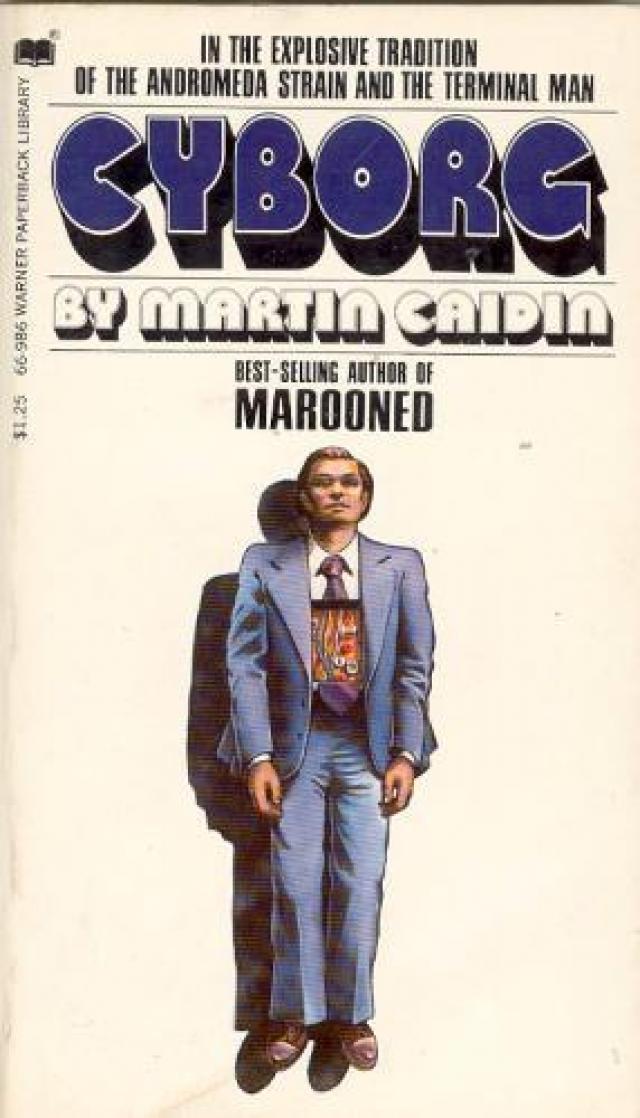


"We could have replaced your arm with a human graft, could have effected nerve and other connections, regained circulation. Aside from the rejection factor, of course, but that's really the least of it. The point is that we would remain within far more unknowns than are presented by the bionics systems. At this point, to add this on to the other factors, whatever we could do would be partial. I said we could have restored circulation, but not full circulation. The arm has thousands of tubal connections beyond our capacity to handle. We can't match millions of years of evolution. We're talking about billions of living cells, an extraordinarily complex venous and arterial network, capillary action, of interfacing tendons and bones, of assuring red blood cell manufacture, of natural articulation and sensitivity of arm and hand hairs for kinesthetic sensing, of temperature measuring devices nature prepares for all parts of the body. We would have had to assure the proper functioning of thousands of intricate nerve sensors in the fingertips, of the ability to perspire or to close off pores as internal and external conditions allow. Success would have been partial. Dr. Killian and his staff are extraordinary. They are not supermen."
Wells pushed aside a thick manual before him. He was nearly exhausted; the mental strain had been far worse on him than the others, and he had found little time for sleep or physical rest in recent days. But it was essential that he get these points down to Steve before the next several days, which would be the most critical hours in his "rebirth."
"At the same time, when we consider everything we've discussed for the past several weeks, Steve, it is vital to remember you are an adult human being with the most extraordinary computer ever known—your brain. You have, also, the values of experience, and logical paths to pursue based on that experience. All these factors, everything we have talked about," Wells gestured to include the paraphernalia piled about the room, "combine to make possible a living limb created by artificial means." He pointed to the left arm that had not been there six weeks ago.
"That limb will not do all the things which your own arm could do. It will never be able to match the extraordinary flexibility given you by nature. At the same time, because of our advances in bionics, because of your intelligence and experience, because of adaptability, it provides enormous compensations. In some ways it can be a superior limb. Let's try an example."
He paused long enough to drain cold coffee from a cup before him, then went on. "For example. Let's say you study a flat, white-paneled sheet with several dark objects placed on that sheet. Let's look at what nature has enabled you to do, when you decide to do it."
He looked at Steve, who nodded slowly.
"The light falling on that sheet is absorbed or reflected in the pattern formed by the objects. This reflection is what your optical system detects. Your eye is both a biological sensor and an electrochemical transducer. The system generates a barrage of nerve impulses through the optical network, passing it into a specific area of your brain."
Steve gestured to interrupt and Wells waited. "How is this message, the nerve impulses, passed on?"
Wells turned to a man at his left, an electronics-systems expert. Steve had come to know Art Fanier well in the past several months. Fanier knew Steve even better. He had created the nerve networks for his bionics limbs. "Art, you want to handle that?"
Fanier spread out his hands, palms up. "We don't know, Steve. No one really knows. We all know that the system works, but we can't tell you how."
"We can follow the process all the way through the system, but its specifics still elude us," Wells said, and motioned to a technician. "Let me have the optical system chart, Harry. Here, Steve, you can see how the pattern works. When the message arrives at its destination, the brain cells immediately trigger a feedback. New nerve impulses go out, here," he tapped the chart with a pointer, "and they direct your eye muscles to focus on the pattern of objects placed on the sheet before you."
"How does the brain trigger the feedback?"
"That's the part that we don't know," Art Fanier broke in. "We've measured the electrical output, the pathways followed, the speed of signals. But how all these messages go back and forth is still a mystery."
"Okay," Wells said, "we're at that point where your eye muscles have been told to focus on the objects. We now have a secondary feedback, a constant feedback system that now triggers the computer part of your brain to carry out an immediate search of your memory banks. Do you recognize this pattern you're studying? Is it familiar to you? If it's not familiar, can you correlate it with some other experience? Can you determine what it is?
"The feedback that continues throughout all this activity is electrical. You have now determined what you're seeing. It is not familiar. But there's enough associative memory here for you to figure out what it is. By now you have studied, researched, computed and decided. What has been an incredible, complicated, coordinated effort is to you but a single instant thought.
"Now," Wells said, tapping the chart, "it's time for your brain to shift into another gear. Do you want to pick up one of those objects for closer study? This triggers a vast chain reaction within your brain, which in itself directs a flurry of orders and institutes a vast system of electrical impulses through your nerve system. You commit. You make the decision to pick up one of those interesting objects."
Steve waited in silence. "This is where we get into the ball game, Steve," Art Fanier said. "Until this time your own system has done everything. But yours is no longer the same system we all have. You lost that, and we've brought it back to you, we hope, in a new way." Fanier looked troubled. "If things work out, if the theories are true…"
"We'll find out soon enough, Art," Steve told him. He didn't like the sudden turn of conversation. He would be activated, which was a hell of a word to use about a human, and yet it was the only word that applied. He'd be activated and they'd find out if theory would work. He turned to Wells who was waiting to continue.
"It's decision time," said the doctor. "The brain sends out a new wave of signals. This is the implementation of your decision. The electrical signals flash down a tremendous splay of nerve networks." The pointer in Wells's hand moved along the body pathways on the chart. "All this time, of course, you're burning energy to produce electricity—this is the electrochemical process—and the electricity is causing muscles to react on command. By react, well, perhaps I should use the term, selectively contract. The muscles in your forearm tighten. This in turn stretches and contracts the tendons of your wrist and your fingers. Your fingers send back their own messages— this is the steady feedback operating—relating to sensitivity and the grasping pressure necessary for you to overcome gravity, the mass of the object, by lifting that object."
The pointer dropped on the table. Wells rubbed his forehead. "As you pick up the object the signals rush back and forth. You bend your arm, twist your wrist, bring the object closer to you, change your optical focus, relate what you see and feel to past memories and new impressions, and all this time you're storing away data in new memory banks."
Wells paused again, motioning to an assistant for a fresh pot of coffee. "We can't duplicate this system. We wouldn't even try. But what we can do, what we have done, in fact, is to use this science of bionics. We've reduced to mathematical symbols the events we just discussed. The engineers converted those symbols into tools and they produced the bionics limbs. But it's much more than building an arm or a leg that looks like the original. Everyone in this project has worked on the miniaturization level and below. A few years ago all of this would have been impossible. What these people have done under Dr. Killian," Wells gestured to take in the group in the room, "is to carry out a many-faceted process. It's a matter of connection, fusing—fusing is the best word I can think of, really—the bionics system with the same elements that existed where your arm was amputated. This is the real key to everything, Steve. When you look at an object, and decide to pick up that object, the signals that leave your brain must transfer to the bionics limb as if it were your own."
Steve glanced to his left where the bionics limb—the living arm, they called it—was strapped to his side, waiting to be tested. He heard Wells's voice as if from a distance. "The processes must duplicate what went on before. The operations of your optical system, brain input and output, sensory signals, feedback… they must all work as if there had never been any gross alteration to the limb."
Wells had a new chart brought to the table and started using the pointer again. "Let's follow this routing, Steve. Your brain sends down its signal in the form of electrical impulses. These travel through the nerve network of your body. While your arm remained a stump…" Wells paused, decided against any niceties, and went on, "the signals terminated where the limb was severed. But now the wires in your bionics limb are connected directly— fused, as I said—with those of the stump. They have literally become a single unit. And the elements of the bionics limb have been programmed to respond in direct proportion to the electrical signal that is sent out by your brain. They are also programmed to respond in the same manner as did your entire arm. This is the computer aspect of the bionics system. It's basically the same system for man or machine."
"A good analogy, Steve," Art Fanier said, "would be the power-control system of an aircraft. The brain sends out a signal for a right turn. Your right arm and leg move the proper controls. When you move the controls you send a signal to a system that detects what you want, and moves the controls through hydraulic boost. So long as your hands and feet are on those controls you're a bionics system, with feedback and the rest of it." Fanier glanced at Dr. Wells.
"It's a good comparison," Wells said. "When you think to pick up an object, what happened before with your original arm is repeated. The electrical impulses generated by your brain command everything. The electrical current—call it voltage or resistance or anything that fits— works the same way. The artificial muscles—Art, let me have that model there, please. The muscles, which in this case are silastic and vitallium pulleys, then contract, twist, and tighten. Everything your own arm did. You can even sense with your fingertips." Wells tapped the model fingers. "Your arm, your new fingers, have vibratory sensors. They detect pressure; they send the pressure signals back to the brain, precisely as before. The feedback system is the same. We can't quite match the flexibility of wrist and forearm and fingers that nature gave you, but where you lose you also gain.
"Your arm should have—and we'll find out soon enough now—on the order of ten times the gripping and handling strength you once had. The same applies, of course, for your fingers. Objects you could never dent with your natural fingers before, well, now you should be able to crush them like an eggshell. Your brain, Steve, will carry through every function with which you're familiar, except pain."
He paused, an instinctive reflex. How could he forget what Steve had said when he regained consciousness after the long weeks while his new limbs fused to his body? My feet hurt …
He looked up to see a bemused smile on Steve's face. "I had some thoughts about that," Steve said.
"Some people call it psychological carry-over," Wells told him. They had discussed it before.
"I know," Steve said. "It's a familiar syndrome. Man loses his legs, he still feels pain. His brain is really lying to him. You can also call it psychological compensation. A way for the ego to refuse reality. But that's not what happened to me, is it?" It was more statement than question.
"No," Wells said. "We're in an unknown area here. One can argue the very existence of pain. It doesn't exist, if you take one particular viewpoint. Pain is simply a survival message, instinctive protection signals transmitted with tremendous energy from the brain."
"That's bullshit and you know it, Rudy."
Their audience remained absolutely silent. To the bionics and cybernetics teams the exchange was critical. Steve Austin at this moment was the only true cybernetics organism living. Cyborg, they called him in the laboratories. And whatever his reaction, it was a measure, successful or otherwise, of their theories and labors. Whatever they heard in this room from this man, whatever he did in the following weeks and months and, they hoped, years, was the beginning of that new science of theirs come to life.
"It is not, as you say," Wells mildly protested, "bullshit to me. It is an area open to question. Subjectively, pain is real. So long as the nerve endings are functional there can be pain. When the nerve endings are blocked, physical damage results but there is no signal sent to the brain. Instinctive protection no longer exists. In your case you now have nerve endings of some sort. Whether or not the brain will accept the signals as they did before is open to question."
Steve said no more, waiting for him to go on to the legs. Wells looked at Steve.
"The legs are simpler than the arm. The articulation is less complicated. The knee itself has minor sideways articulation. Fore-and-aft movement is mechanically simple." The pointer moved along the chart. "The ankle fits in the same category. The fore-and-aft articulation is much the same. Both elements, of course, have some sideways motion, but this is restricted by the limitations built into freedom of the ball-socket, or hinge, joints. In terms of opting for greater strength, we restricted the artificial tendons to provide the limited elasticity needed for, as an example, rounding through a running turn."
Steve gestured impatiently. "Let's get to the power amplification, Rudy."
Wells nodded, shifted to new charts. "All right. The energy for articulation—the electrical impulse sent along the nerve network by brain command—isn't great enough to cause the bionics limb to react through muscle contraction and movement. The voltage is far too low, and we can't avoid the fact that we're working with different systems. Different materials, in fact. The body provides electrochemical reaction throughout the entire system. That's impossible with the bionics elements.
"So we compensate for this." He held up a model of a leg section. "What the electrical impulse originating from the brain must do, then, is to trigger another energy source within the bionics limb. In this case we provide additional energy. The best way to do this is not through solenoids, which could result in a staccato or jerking movement, but through the latest advances in electrical motors. Art?"
Fanier moved closer to Steve and held up a metal cylinder barely an inch long by a half inch in diameter. "This came directly from the stabilization system of a military-reconnaissance satellite TV system, intended for long life. Necessary to maintain a specific attitude over the earth's surface for the cameras. There's nothing else in the world like it. Once it's brought to speed, it spins at better than thirty thousand revs per minute. The sealed environment is as close to being free of friction as you can get. Of course, we've got to be able to sustain the inertia of spin and we use a plutonium isotope, but with something less than the half-life of ninety years. The cardiac pacemakers that have been used for a couple of years now use the longer-lived isotope. We needed to alter the system and, well, you can break down the details later if you want, Steve, but the main point is that we have this tremendous frictionless spin. There's enough inertia in this system to provide immediate translation of the energy to what we need to move. In your case, the bionics limb. I mean, this provides energy for articulating whatever part of the limb is involved."
Fanier moved the small motor housing into a breakaway model of the bionics arm that was now a part of Steve's body. "This has a pressure-sensing system, of course. When the message is received to grasp or to pick up an object, the motors apply energy to the pulley system of the arm. This makes rigid certain areas of the limb, applies pressure to the fingers—"
"How?"
"Well, the amount of pressure is decided by the electrical impulses that originate from the brain. These are fed the pressure from the sensory pads in the fingertips— the pressure is converted to an electrical signal, the intensity of which varies with the situation—and we have a constant feedback. The result of this feedback is exactly the same as with a natural arm. It's translated into energy demand, energy supply, and motion.
"This means," Fanier said, "that the body itself isn't being called upon to provide the constant energy. It couldn't do it. We could implant dissimilar metals in tissues of your body that contain salt water and the metals would function as batteries. A lifetime source, I guess you could call it, since the body provides a natural source of fresh electrolyte. But the body produces only about one-half volt, and even the simplest instruments implanted in the body, such as the pacemakers, need at least one and a half to two volts. But the nuclear sources change everything. With these power sources, Steve, a man can run— a steady, pacing run—just so long as he remains conscious and his other body systems are working. If his heart and circulation and brain and respiration are working, a man could run for days and nights. His legs are—your legs— are motivated simply through the miniscule electrical charges of the brain's impulses. But the key, the driving energy, comes from these internal power systems. Internal to the bionics limb, I mean. It's… it's really incredible."
He came to with his heart pounding, the perspiration streaming down the sides of his face. What a dream… Something almost psychedelic. He saw a figure silhouetted against a horizon. The foreground absolutely dark, above the horizon line a gleaming, pale orange, intensely bright glow, and that running figure stark against the orange. The figure was running, a methodical pounding beat, breathing deeply and evenly. Tremendous breath control…
"You've been having a nightmare," Jean said quickly, to bring him back to the moment. "You're strapped down, Steve. You must have been trying to turn and you had this nightmare."
He sank back in the pillow, nodding. It was cold, soaked from his sweat. He was already back into the dream.
Nightmare? Or wish fulfillment? He didn't know. If the legs worked. He laughed at himself. If the legs worked as advertised… the key to long-distance running is breath control. Enriching and keeping the system saturated with as much oxygen as possible. What had Rudy Wells told him? "Your legs won't be consuming chemicals, electricity, or oxygen. Your blood flow is reduced because the circuitry has been so drastically altered. Where you need oxygen now you'll get it, far more than you ever had. There isn't even any way for us to guess what your endurance will be. You'll be a superior man, a super normal man. You may even be the start of a whole new breed…"