

Breakwater, page 1


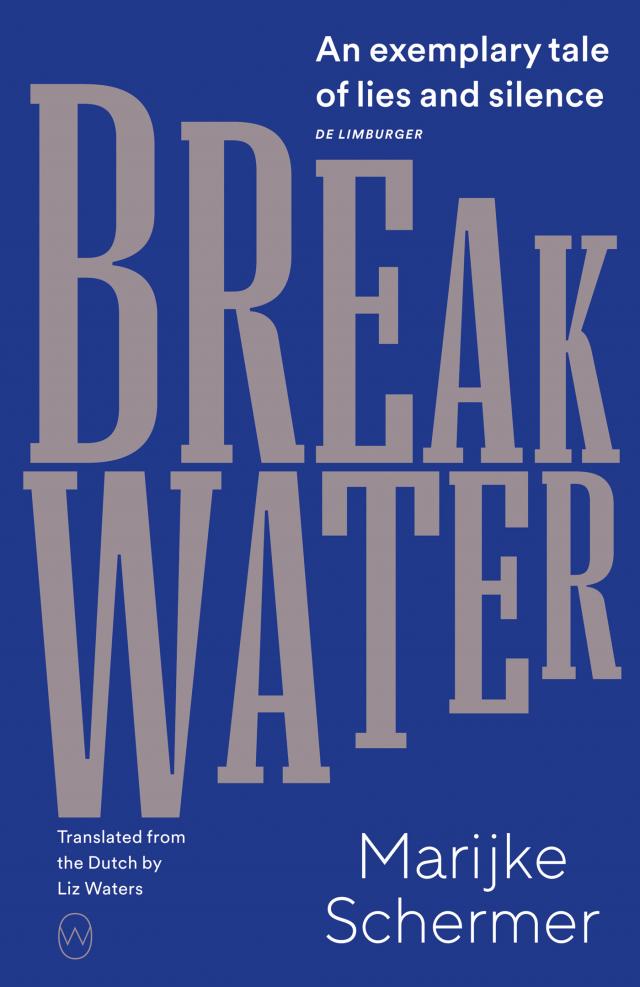
Marijke Schermer
Breakwater
Translated from the Dutch
by Liz Waters
WORLD EDITIONS
New York, London, Amsterdam
Chapter 1
“Are we taking your car?”
“We’re hopelessly late.”
He comes out of the kitchen: tall, thin, a face that’s markedly handsome. He’s wearing an elegant suit. The saucepan in his hands and the tea towel over his shoulder testify to husbandly devotion. He puts the pan on the table and tosses the cloth back towards the draining board, narrowly missing. Leo lets out a high, ringing laugh. Alicia, the neighbour’s daughter who’s come to babysit, ties Osip’s bib. In a matter of weeks she’s changed from an androgynous child into a fairground attraction. Her cheeks and lips are plastered with red and she’s wearing ridiculous, far too skimpy clothing. Emilia has to resist stroking the girl’s head too. She kisses the children goodbye.
“You’re driving. We’ll make it.”
She hurtles out of the driveway onto the road. The first part of the journey takes them along the dike, across the rolling river delta and onto a narrow two-lane road between poplars. There’s a low summer sun with barely any strength left and a stiff wind. Sheep stand in the meadows to their right. A little later, on the highway, she can drive flat out, which she loves. They don’t talk much. Into the car blows a memory of long trips south, singing, bare legs out of the window. Just short of Amsterdam they quarrel briefly about the best route to Leidseplein.
“You’re probably right,” she says, putting her own plan into effect. She gambles on finding a free spot, wins the gamble, and parks close to the theatre. They decide that paying takes exactly the time they don’t have. They run and cross over, skimmed by a passing cyclist. Bruch calls out that next time they must take a hotel; for a moment they’re seized by an urge to be swallowed up by the life of the city, instead of soon, no doubt again in a hurry, having to return to the silence.
They run into the Schouwburg, up the stairs to the auditorium, arriving last before the doors around it shut. He folds their coats together under his seat and pinches her in the ribs.
After the applause, as they’re leaving the auditorium, they lose track of each other. Emilia searches for a while. Bruch isn’t near one of the doors or waiting for her at the top of the stairs. She wanders the corridors. She looks at her phone. No messages. She decides Bruch must have found Vincent, director of the play and an old friend of his. She orders a glass of beer in the foyer. The actress playing Blanche redeemed the whole prissy production. She made every line of Tennessee Williams count, word for word. You seemed to be gentle—a cleft in the rock of the world that I could hide in. She summoned despair that erupted inside her like an unbreakable wave. Somewhere, through a chink in the evening, Emilia felt an emptiness she associates with profound meaning. It has made her melancholy.
She goes out onto the Ajax balcony. It’s empty and desolate, making her wonder whether she’s actually allowed to be there. Stacks of crates keep company with two parasols, blown at an angle. It’s been raining. She searches her bag for cigarettes and finds none. She yawns. Then suddenly somebody grabs her from behind. A firm grip fastens on her shoulder. A big warm hand smelling vaguely of cumin envelops her face, pressing her eyes shut, fingers diagonally across her lips with fingertips on which her skin detects callus. Her back lodges against a solid body. Behind her eyes an explosion takes place. An immense flash of panic. Immediately after that, all strength and all shape go from her body and she slides, with no trace of a fight-or-flight reflex, utterly limp, out of his grasp and onto the hard rain-wet paving slabs.
“Hey, Emilia! What are you doing?” The delayed voice cuts through the thrumming silence. It’s Frank, often enough a guest at their table. A buffoon, absolutely, and indeed in retrospect the possessor of that cumin-like bodily odour; she could have identified him by it.
“You’re joking, right?” he shouts from above. At least twenty seconds pass, in which the damp of the concrete slabs soaks into the fabric of her clothes, in which she wonders whether a remark could undo her reaction. Only then does Emilia rediscover her muscles and bones and get up.
“I didn’t mean to frighten you.” He stammers on, saying it was only a joke, saying he wanted her to guess who he was, she knows that, doesn’t she? His tufted black eyebrows give him a dishevelled look. He says he did it on impulse, and by the time it struck him as inappropriate it was already too late. She takes a cigarette from him, accepts a light, inhales. They smoke and look at the square below, at the nightlife crowd drifting between the trams. She shivers in her thin blouse.
“Must be scary as hell,” she says, “to have impulses like that.”
Again he says he regrets it.
If you say that one more time, Emilia thinks, I’ll hit you.
In the mirror she sees how pale she is. She leans on the sink. A memory creeps up into her larynx of a summer’s evening, a memory she’d successfully put into sleep mode and filed away in a corner of her system. The door behind her opens and they come chirping in, girls. She goes into a toilet cubicle and carefully shuts the door. Inside she drops her bag, gasps for air, strokes her throat. Then she puts her hands flat against the cold tiles of the wall. She’s breathing again, but too shallow, too fast. She thinks she’s about to vomit. She sits down. You’re not going to die; it’s breathing itself that’s suffocating you. This is now. You’re safe. On the other side of the door, the girls address the question of whether or not to go to a party. Their voices are clear and melodious. As she listens, she slowly gets her breathing under control, then slaps the blood back into her cheeks. She waits for the washroom to empty before leaving the toilet cubicle. She walks back along the semicircular corridor with its actor portraits, then down the softly carpeted staircase, passing Frank halfway, who is standing talking to someone, holding his tie with both hands like a lifeline. He winks at her, as if they share a secret. In the circular foyer below, somebody is playing records. Dance music, but no one is dancing. She orders another beer. Bruch comes to stand next to her and puts a hand on her naked back inside her blouse.
“You were here? All this time? I’ve been looking for you.”
“Here I am, Bruch. Here’s where I’ve been, all this time.”
“Let’s go, before anyone starts doing Brando.” He hands over her coat. She drains her glass and they walk outside. It’s raining again.
“There are two kinds of people,” Bruch says under the portico. “People who can resist Marlon Brando when he yells up to Stella and people who can’t.” They turn the corner. He stops at the door to a bar. They’ve been inside before. She remembers he was wearing a green shirt. She remembers she’d had her hair cut that day and kept touching her head to feel how short it was. She remembers how clearly she could sense that she loved him, and how she drank a glass of wine before pulling the pregnancy test she’d urinated on shortly before out from under a napkin. And that Bruch cried. With emotion. She’d been on the point of telling him everything.
The bar has changed, although she couldn’t say exactly how; it still has the wall with antlers and cuckoo clocks that she was looking at then. They order wine and sit down side by side on a sofa.
“What did you think of it?” she asks.
“I thought it was terrible. You?”
“It’s such an amazingly beautiful play …”
“Yes! Exactly!”
“I just love that play so very much.”
“Yes, you already said that.”
“Am I only allowed to say it once?”
“No, but once tells me enough.”
“Yes.”
“So it’s unnecessary.”
“Anyway, the first time I said it was beautiful. The second time I said I loved it.”
“Minor distinction.”
“Vital difference. I don’t love everything that’s beautiful.”
“No, but you do think everything you love is beautiful.”
“Do I?”
“Don’t you?”
“I don’t know. What is beautiful?” She hopes he doesn’t say you’re beautiful. He says nothing. She thinks of the game they used to play in bars. Dreaming up a life for everyone. Why did they stop doing that?
“Remember sitting here? It was here that we found out I was pregnant with Leo.”
“That wasn’t here.”
“Yes it was here.”
“No it wasn’t. It wasn’t here. It definitely wasn’t here.” He looks suspicious, as if she’s craftily trying to smuggle this memory into the evening.
“Where was it then?”
“I don’t know.”
“So how do you know it wasn’t here?”
“I just do. Simple as that. Hey, look, over there. Vincent. Vin!” Bruch sticks an arm in the air. Vincent walks over to them. He tosses his coat, his bags, and his bouquets of flowers onto a chair and plops down as if they’ve arranged to meet here and he’s finally arrived. In his own inimitable way, as a variation on confidentiality, he leans forward.
“I’ve fled. Nothing to be done about it anyway. It is what it is. Can’t change anything now. I know what I’m like. I’ll go around explaining all the misunderstood moments to everyone. They’ll tear me apart in the papers tomorrow in any case. I don’t know why I keep doing it. First it’s my idea, then it becomes my responsibility, and in the end it’s my fault. Unless everybody thinks it’s good, of course. Then they take all the credit. Actors. Untrustworthy lot. I don’t know why I didn’t just become a doctor or something respectable like that. Like you, Bruch. A doctor! Great! So valuable! Jesus! Which reminds me, talking of doctors, I’m going to do Chekhov, in The Hague. But guys! Hey! It’s been ages! What did you think of it? Or no, never mind, don’t say anything. Unless it’s something nice. I’ll have what they’re drinking. Make it a bottle. I really got to the bottom of that play, believe me, I’ve got Blanche and Mitch and Stella and Stanley in here.” He slams his fist hard against his chest. “In my heart. I am them. I understand them. In the end they all want to feel that they matter. In the end the search for love is what drives them. What drives all of us. Drives me. Drives you, too.” Emilia avoids looking at Bruch. Under the table he puts his hand on her leg.
“It was extraordinary, Vin. Truly extraordinary.”
“Yes, wasn’t it? Yes, it was extraordinary. I discovered things in that play that I honestly can’t believe I didn’t see before, things other people have always failed to bring out properly. Once you know, it’s crystal clear. Once you know something, you can’t comprehend how it could ever have escaped your attention. Emilia, darling. How are things with you? What did you think of it?” Bruch pinches her leg.
“Blanche was good.”
“Christine, yes. Christine was good. She drove me round the bend. That woman only acts when there’s an audience, in rehearsals she never does a thing, but tonight she gave it all she’s got, that’s true, tonight she was good. It’s possible Christine is so good because she’s in the same kind of thorny position as Blanche. Her husband’s left her and she’s on her own, and she’s too old, just that bit too old, and she knows it. Cheers. Great to talk to you again. Finally people who say something valuable.”
“Too old for what?”
“Too old for a beautiful new young love. Once she turns forty-five a woman needs to think three times before jettisoning what she has.”
“But he jettisoned her, if I understand correctly?”
“Never mind, I’ll spare you the whole story.” He shuts his eyes and goes on in a tone intended to imply that he’s jesting. “And I’m not in the mood for a debate about whether I’ve just said something insulting about women. Far as I’m concerned it’s a neutral observation. I can’t help it; saying something isn’t what makes it true. The ending! What did you think of the ending?” He fills their glasses. They clink. Bruch comes up with a few charitable generalities about the ending, all of which Vincent interprets in his favour while drinking the wine at a furious rate. Emilia and Bruch eventually stand up and wait for Vincent to stop talking, which he doesn’t. Emilia pays. Bruch interrupts him to say goodbye. At the door he calls after them that he’ll come round soon when he has a day free, which he never has, dammit, because the bloody theatre always summons him back to the arena.
They walk to the car in silence. In a different mood Emilia would mimic Vincent. But it was too dispiriting, that monologue, the caricature he made of himself. Bruch sits at the wheel and starts the engine before she’s even shut her door. He’s drunk too much to be driving. In the silence of the car, along roads that grow increasingly deserted, she thinks about her confrontation with Frank. She wonders whether Bruch saw him. Wonders where he was when she was in the toilet. Wonders what he’s thinking about. He takes the turning for their house and shuts off the engine. The road runs downhill, so they maintain their speed. Almost a minute goes by before they come to a halt. The silence sinks into the car.
“Vincent talked as if the whole rape scene was his own invention. A new insight or something,” Bruch says.
“And actually it wasn’t even a rape.”
“What do you mean?”
“He staged it like something more or less pleasurable.”
“Really?”
“To me that was the worst thing about it.”
“I thought you said it was beautiful.”
“I said I thought the play was beautiful.”
“Oh.”
“The play. By Williams.”
“Yes, yes, I know who wrote it.”
When she opens the front door, the kitchen door shuts with a tremendous bang. The boiler is roaring and all the lights are on. There’s an opened bottle of single malt from the year of her birth next to the sink and the remains of ice cubes melting in their mould. The French windows are open and the curtain is blowing out like a sail. The tea towel that Bruch threw at the draining board earlier in the evening is still in the same place on the floor. Alicia is nowhere to be seen. Emilia calls her name. No answer.
This kitchen has been left abruptly and in haste. The air catches in her throat and panic breaks out as goose bumps on her skin. She drops her bag and coat on the kitchen floor and runs up the stairs. She flings open the door to Osip’s room and in the shaft of light falling in she immediately sees he’s in bed. She puts her hand to his head to check he’s alive. He makes a slight sound. Warm, sleeping, whole, she concludes as she quietly closes his door and opens Leo’s. The smooth white rectangle of his bed lights up in the darkness of the room. No blanket, no cuddly monkey, no Leo. She slams her fist against the switch, and the light makes the sight of the untidy empty room utterly ordinary for a moment: toys scattered across the floor; felt-tip pens with their tops next to them on the little table; clothes hanging out of the wooden wardrobe. On a stool lies a headless doll. For a second she instinctively looks for the head, without finding it. A collection of stones and shells and twigs is piled high on the windowsill. The curtain is open, the window ajar. She sees herself reflected in it, a smudge. She should shout, she thinks, as she walks soundlessly out of the room and sees Bruch coming up the stairs.
“What’s going on? What are you doing?”
“Leo’s gone,” she says.
“What do you mean, gone? What are you talking about?” But she rushes past him on the stairs on her way back down. She goes to the kitchen, drops to her knees next to her coat and bag, and hunts for her phone. In a kidnapping every second counts, every hour a person is missing halves the chances of a good outcome. Why isn’t Bruch running out of the door into the garden, why isn’t he shouting, why doesn’t he do something? She sees Leo before her, rolled into his duvet, carried off on somebody’s shoulder. She sees him being hit, hurt, abused. She sees him being murdered in various ways. She sees his body in the river, in a hole in the ground, stuffed into bin bags. Through the open French windows, where the curtain is being hurled back and forth, leaves have blown in. She shakes everything out of her bag—tissues, tampons, sweets, pencils, a crust of bread, a USB stick, hair grips, notebooks, a newspaper, Playmobil figures, cash, loose membership cards, cigarettes, mascara, and a dummy.
Why do they live here? In the middle of fucking nowhere.
Chapter 2
They kept discovering new things: a third and fourth plum tree, a spiralling circle of stones once carefully selected by someone and laid out that way, gooseberry bushes, a heart carved into the trunk of the lime tree, roses, a dried-up well, a patch of mint and lemon balm which they christened the tea field. They found out that the hillock at the far end wasn’t a hillock but an overgrown heap of rubble. If anything was ripe, they picked it. They made mirabelle jam. Cake mix combined with plums produced a gooey pink and crumbly sweet-and-sour pie. They made apple sauce and apple tart. A neighbour came round and pointed out the rampant ground elder everywhere. Bruch discovered online that as well as a plague it’s an ingredient for soup or pesto. They were determined: they weren’t going to tame nature; they’d turn things around and let nature tame them.
Autumn changed the entire look of the garden at a tempestuous rate. The prospect of further effects of the seasons, how momentous they’d be here, filled them with awe. They saw it would take ages to feel completely at home in this place. They took walks around their own land with Leo in the sling. Eighty metres from the house was a rickety jetty, the river flowing past from left to right, always left to right; like a line of poetry, Bruch said, on the evening they realized it.
At first they bought lifestyle magazines and visited kitchen showrooms. They made drawings and thought up variations. They wanted to knock out walls, move the staircase, line the attic. After a week they decided to leave the yellow 1950s Bruynzeel kitchen the way it was, and in the weeks that followed they abandoned their other plans too, one by one. The house, no matter how dated and run down, was perfect. For now her favourite place was the conservatory. The glass had a barely detectable discolouration that did something unbelievable with the daylight that shone in. She lay in the warm yellow dusty light with Leo on her belly and slept through the afternoons.


