

Little Thieves, page 1


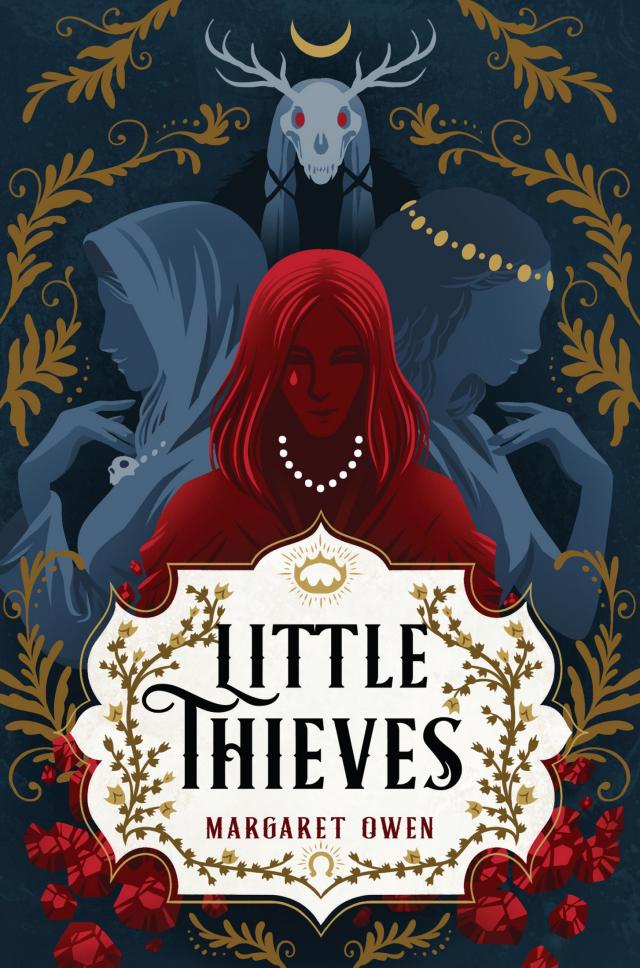
Begin Reading
Table of Contents
About the Author
Copyright Page
Thank you for buying this
Henry Holt and Company ebook.
To receive special offers, bonus content,
and info on new releases and other great reads,
sign up for our newsletters.
Or visit us online at
us.macmillan.com/newslettersignup
For email updates on the author, click here.
The author and publisher have provided this e-book to you for your personal use only. You may not make this e-book publicly available in any way. Copyright infringement is against the law. If you believe the copy of this e-book you are reading infringes on the author’s copyright, please notify the publisher at: us.macmillanusa.com/piracy.
To the gremlin girls,
I would like to tell you something inspiring,
but the truth is,
when life closes a door for us,
it doesn’t always open a window.
The good news is:
That’s what bricks are for.
AUTHOR’S NOTE
This is a story about many things, beautiful and ugly, painful and true. There are discussions of child abuse and neglect, navigating abusive environments, and trauma from a past attempted assault. For many of us, these are wounds, and I have tried to give them air here without tearing at the hard-won stitches. Still, I trust you to know your scars.
The little thief steals gold, but the great one steals kingdoms; and only one goes to the gallows.
—Almanic proverb
PART ONE:
THE CURSE OF GOLD
THE FIRST TALE
GOD-MOTHERS
Once upon a time, on the coldest night of midwinter, in the darkest heart of the forest, Death and Fortune came to a crossroads.
They stood tall and unfathomable in the glass-smooth snow, Death in her shroud of pyre smoke and shadows, and Fortune in her gown of gold and bones. More than that cannot be said, for no two souls see Death and Fortune the same way; yet we all know when we meet them.
On this night, a woman had come to do just that: meet them. Her dull carrot-colored curls twisted from under a woolen cap, her wind-burnt red face as worn as the threadbare cloak over her shoulders. One hand clutched a dimming iron lantern, which smoldered just bright enough to catch the snowflakes flitting by like fireflies before they melted back into the dark.
Her other hand was locked around the ragged mitt of a little girl beside her.
“Please,” the woman said, shivering in snow up to her shins. “We’re stretched thin to feed the twelve other mouths already, and this one—she’s ill luck. Wherever she goes, the milk spoils, the wool tangles, the grain spills. Whatever she touches falls to ruin.”
The little girl said nothing.
“She’s only…” Fortune tilted her head, and the wreath of coins about her brow shimmered and flipped, changing from copper to coal to silver to gold. “Three? Ten? Forgive me, I never know with you humans.”
“Four,” Death said in her soft, dark voice, for Death always knew.
Fortune wrinkled her nose. “Young. The proper age to be spilling grain and breaking things.”
“She’s the thirteenth,” the woman insisted, shoving the lantern higher as if to drive her point home like a stubborn cow. Weak firelight caught on Fortune’s coin wreath, on the wispy hem of Death’s hood. “Like me. That makes her the thirteenth daughter of a thirteenth daughter. Her luck’s rotten to the core.”
“You told your other children you’d take her into the woods to seek her fortune.” The Low God plucked a coin from her wreath and let it dance about her fingers, flashing copper and silver, gold and black.
“In truth, you were seeking me,” Death finished in her dark-velvet voice, and the woman’s features crumpled with shame. “Yet here you have found us both. You have come far, through the dark and through the frost, to ask our favor.”
“Asking a blessing of the Lady of Luck. Risky. No way to know what that would be.” Fortune’s face slipped between cruelty and sympathy as her coin slipped through quick fingers, flashing day and night, red and white.
Death, on the other hand, did not stir. “You know my gifts, and so you know though there is plenty I can take, little can I give. But I will tell you: Only one of you will go home.”
The woman drew a sharp breath.
Fortune smiled, and her coin flashed like the sun and the snow, like shadow and like blood. “You sought Death in the woods. Did you think the way back would be easy?”
The woman said nothing. The flame in the lantern burned lower.
“Ask,” Death commanded. “What will you have of us?”
The lantern shook in the woman’s hand, her knuckles cracked with callus and cold. “I want what’s best for—for everyone.”
“Choose,” Death commanded again. “Which of you will return?”
The woman let go of her daughter.
Fortune lifted the girl’s chin. She found two eyes of sharpest black in a pale, freckled face, two braids the color of the lantern’s flame tied off in bits of rag.
“What is your name?” Death asked as the woman turned and fled the crossroads, stealing away the last scrap of firelight.
“Vanja” was the first thing I said to my godmothers, “my name is Vanja.”
CHAPTER ONE
CARD GAMES
It has been nearly thirteen years since Death and Fortune claimed me for their own, and I have come far enough through winter and cold that almost no one calls me Vanja now.
Thump-thump. Two raps of gloved knuckles against the carriage roof. The driver’s muffled voice carries down to me inside. “Almost there, Prinzessin.”
I don’t reply. I don’t have to; I learned long ago that princesses don’t owe their servants answers.
And for most of the last year, that’s the face I’ve worn: the princess.
Or to be precise: Gisele-Berthilde Ludwila von Falbirg of the Sovabin Principality, Prinzessin-Wahl of the Blessed Empire of Almandy. Soon to be Markgräfin Gisele you-get-the-idea von Reigenbach of the empire’s largest territory, the border march of Bóern, once its margrave gets around to a wedding.
Though not if I can help it.
(We’ll come back to that.)
I squint out the gilt-trimmed carriage window, studying the timber-and-plaster blocks of Eisendorf Manor as the horses draw us closer. Shadows pass behind the first-floor windows, turning them to rosy eyes winking into the frosty twilight gloom. It looks crowded already, even for a Sunday-night party. Good—a princess ought to be the last of the von Eisendorfs’ guests to arrive. There was a reason I dawdled in my bedroom at Castle Reigenbach: to make sure we hit peak Minkja traffic when we left an hour ago.
But I have more motive to survey the manor’s scenery than just making sure the Prinzessin arrives fashionably late. Lit windows are fewer on the third floor, but I still spot two bracketing the double doors where the master bedroom lets out onto its telltale grand balcony.
The real question tonight is whether it’s the only balcony.
It is not. Balconettes frame it on either side. Lamplight gilds only one of the balconettes, spilling from an adjacent room that looks to share the fat main chimney with the master bedroom.
That chimney is currently chugging smoke into the dimming sky. One might wonder why the von Eisendorfs would keep a fire going up in their bedroom when they’ll be busy entertaining guests downstairs all evening.
I’d bet three solid gilden that they’re heating the guest chambers next door instead, in case I—well, in case the prinzessin needs a respite. An opportunity to suck up to the margrave’s bride-to-be can’t be missed.
One also might wonder why I care about chimneys, balconettes, and suck-ups. It’s because tonight, the von Eisendorfs are handing me an entirely different sort of opportunity.
And I would loathe for either of those opportunities to go to waste.
The faint reflection of my grin cuts across the glass. A moment later it vanishes as my breath clouds the pane in the late-November chill.
I should play it safe, settle back into my seat, resume the serene, graceful façade of the prinzessin.
Instead I size up the remaining distance between us and the first guard we’ll pass, and quickly draw a simple, distinct set of curves in the fogged glass. Then I sit back and smooth my grin down to a placid smile.
When we pass the first guard, I see him do a double take. He elbows the guard beside him, pointing to the carriage window, and I’m pretty sure I hear: “… an arse!”
“And no one will ever believe you,” I hum under my breath as the fog melts from the glass.
The jingle-stamp of the horses stops when we draw even with the manor’s stout oaken front door. I sneak a look under the opposite seat and confirm my satchel, an unassuming toilette bag, is still stowed away. For now, it will stay there.
Then I close my eyes, swaying with the carriage as the footman jumps off, and think of three playing cards dancing facedown across a table. It’s time to begin my oldest game, Find the Lady.
There are many tricks to running the game, but the absolutely ironclad one is this: Only one person should know where the Lady is at all times. That person is me.
I run my fingertips over the string of heavy, perfect pearls around my neck. It’s habit more than anything; I would know if they were unclasped. I would know.
The carriage door opens. In my mind, I flip the first card faceup.
The Prinzessin. Silver eyes, pale-golden curls, pristine pearls under glacier-blue velvet and burgundy brocade, a gentle smile with a hint of mystery. Even the name Gisele is an intrigue, shunning sturdy Almanic for the Bourgienne pronunciation, with its honeyed vowels and a butter-soft G. It’s just the sort of pretentious affectation Dame von Falbirg loved to dish out, knowing people like the von Eisendorfs would eat it up.
This is how the game begins, you see. Step one: Show them the card they’re looking for.
The prinzessin descends from the carriage like a vision. Ezbeta and Gustav von Eisendorf are hovering in the entrance hall, faces lighting up when they see me finally gliding toward their open door. It’s not just about arriving on my own schedule, of course. It’s about making sure the other guests see Ezbeta and Gustav waiting for me.
I alone see the surest sign that this night is going to go off without a hitch, for when Fortune is your godmother, you can always see her hand at work. Faint, dull clouds like coal dust are coalescing around the von Eisendorfs as they flutter in the hall. It’s an omen of the ill luck I’m about to bring upon their house.
The Count and Countess von Eisendorf are celebrating their twentieth anniversary tonight—well, commemorating, at least. “Celebrating” may be too strong a term. All I’m saying is that there’s a reason Komtessin Ezbeta is already ruddy-cheeked and stashing a goblet behind an urn on the entrance hall’s credenza.
Something about her always puts me in mind of a stork, though I’ve never put my finger on why. She’s pale-skinned like much of the Blessed Empire, with middling brown hair and angular features—aha. That’s it. Ezbeta has a habit of pointing with her chin, and with her long neck and a tendency to cock her head, it gives the impression that she’s scouring the area for a frog to snap up.
She’s dressed to impress, at least, her wrists and throat gleaming with a small fortune in gold and emeralds. It’s almost certainly the most expensive jewelry she owns. My fingers fairly itch: It’s another opportunity, perhaps.
“Oh, Markgräfin Gisele, how good it is of you to come!” Her voice carries like a trumpet, and I hear a fleeting hush of anticipation dart through the crowd inside as the countess sweeps her forest-green samite gown into a curtsy.
“It was ever so kind of you to invite me,” I reply, extending a hand to Gustav.
He mashes his lips to my doeskin-gloved knuckles. “We’re absolutely delighted.”
Komte Gustav is a withered ghoul of a man in a tunic pricey enough to feed Eisendorf Village through Winterfast, and yet incredibly it does nothing to help the piss-puddle where his personality should be. Nor does the wet smudge he leaves on my glove.
I pull free and bounce a teasing finger against the tip of Ezbeta’s nose. “I’m not the markgräfin yet, you know. Not until my darling Adalbrecht returns and makes me the happiest woman in the Blessed Empire.”
My darling betrothed, Adalbrecht von Reigenbach, margrave of the sprawling march of Bóern, has spent the entirety of our year-long betrothal at his share of the southern and eastern borders of the Blessed Empire of Almandy. He’s been instigating skirmishes like your garden-variety invade-a-kingdom-because-Papi-didn’t-love-me-best nobleman, all while I wait in his castle. And for all I care, he can stay there.
“Well, you’re already the most generous,” Komtessin Ezbeta simpers as a servant takes my cloak and gloves. “The cushions you sent are positively divine!”
“I could hardly let such an occasion go by without gifts. I’m just glad they arrived safely.” It isn’t even a lie, I am glad. Just not for the reason they expect. “Was the spiced mead also to your liking?”
Gustav clears his throat. “Indeed,” he says with a faintly strained air. “I thought to serve it tonight, but my wife took a … significant liking to it, in fact.”
“I can’t help it if Princess Gisele has impeccable taste.” Ezbeta winks. Saints and martyrs, if she’s already soused enough to be winking at me, she might just hand me that absurd necklace herself before the party’s over. “Come, come! Everyone’s waiting for you!”
I let her lead me into the manor’s main parlor, which is overflowing with minor nobility. Much of the crowd are knights and landed gentry who serve the counts, but the von Eisendorfs have also managed to attract a handful of Adalbrecht’s vassals equal to their own rank. I see Komte Erhard von Kirchstadtler and his husband, and Lady Anna von Morz in a plum satin atrocity that could charitably be called a gown. Even Minister Philippa Holbein has traveled into Boérn from the nearby Free Imperial State of Okzberg.
I scan for one particular face and find it thankfully missing. Godmother Fortune may have tilted the odds in my favor, or maybe Irmgard von Hirsching thinks she’s too good to get drunk with the von Eisendorfs. Either way, that’s one less problem to deal with tonight.
“I hope the guards didn’t give you too much trouble, Prinzessin,” Lady von Morz cackles, sauntering up to me with a goblet of glohwein in each hand. She tries to pass one off to me and fumbles a bit until I steady her grip. “Really, Gustav, even the margrave doesn’t post this many soldiers at his front door.”
Gustav gives a disgruntled wheeze. “No such thing as too cautious these days. They say the von Holtzburgs lost nearly fifty gilden to the Penny Phantom.”
We all gasp. That’s no trifling sum; a skilled tradesman would be lucky to amass fifty gilden over one season. “I’d no idea the Pfennigeist struck them too,” I say, wide-eyed.
Ezbeta nods, leaning in closer. “Oh, yes. Holtzburg Manor was robbed back in January, but they didn’t know what the red penny meant until Dowager von Folkenstein said they’d found one after their burglary. We think the von Holtzburgs may have been the first victims.”
“How dreadful,” I murmur. “And their bailiff never found anything?”
“No. He swears only a ghost or a grimling could have broken in without a trace.” The delight-tinged pity on the countess’s face congeals into syrupy comfort. “But never fear, Princess Gisele. We’ve taken every precaution, just as we promised you. The Pfennigeist won’t get so much as a button off your gown.”
Lady von Morz snorts into her glohwein. No one has ever caught the Penny Phantom. No one has even seen the Penny Phantom. Not even my betrothed could keep the devil from Castle Reigenbach, where Marthe the maid found my jewelry box cleaned out, with a single red penny left behind as a calling card.
And if even the margrave’s walls can be breached, what chance do the von Eisendorfs have against such a creature?
I make my rounds through the crowd, clasping hands and admiring outfits, discreetly emptying my goblet into a vase when the coast is clear, only to make sure everyone sees me flagging down servants for many, many refills. Komte von Kirchstadtler wants to know when the wedding will be (not until Adalbrecht returns), newlywed Sieglinde von Folkenstein natters my ear off about how poorly she’s felt in the mornings (I make a note to commission a baby rattle), and Minister Philippa Holbein offers apologies for her husband’s absence.
“Kalsang fell behind on paperwork over the sabbath,” she sighs, absently thumbing the tassels of a pair of white silk cords twisted together and draped over her shoulders. Congregants of the House of the High typically just wear the cords for their sabbath prayers, but those among the public officials tend to keep theirs on day and night.
I suspect it’s for the same reason her husband, a soft-spoken Gharese tea merchant who’s much happier at home with their two little apso hounds, is avoiding this party. Dealing with a bunch of red-faced, competitively self-important Almanic aristocrats would make anyone pray for divine intervention.
His absence is fine by me. I like Kalsang and Philippa. I know exactly what’s about to befall Eisendorf Manor, and I’d rather their part in it be minimal.
I spend the rest of the hour making small talk and seemingly chugging glohwein like it’ll cure boils. (Not that Princess Gisele ever gets blemishes. The pearls see to that.) All the while, I keep an eye on Komtessin Ezbeta.
At last, I see my opportunity and start moving toward the parlor door.


