

Jane's Country Year, page 1


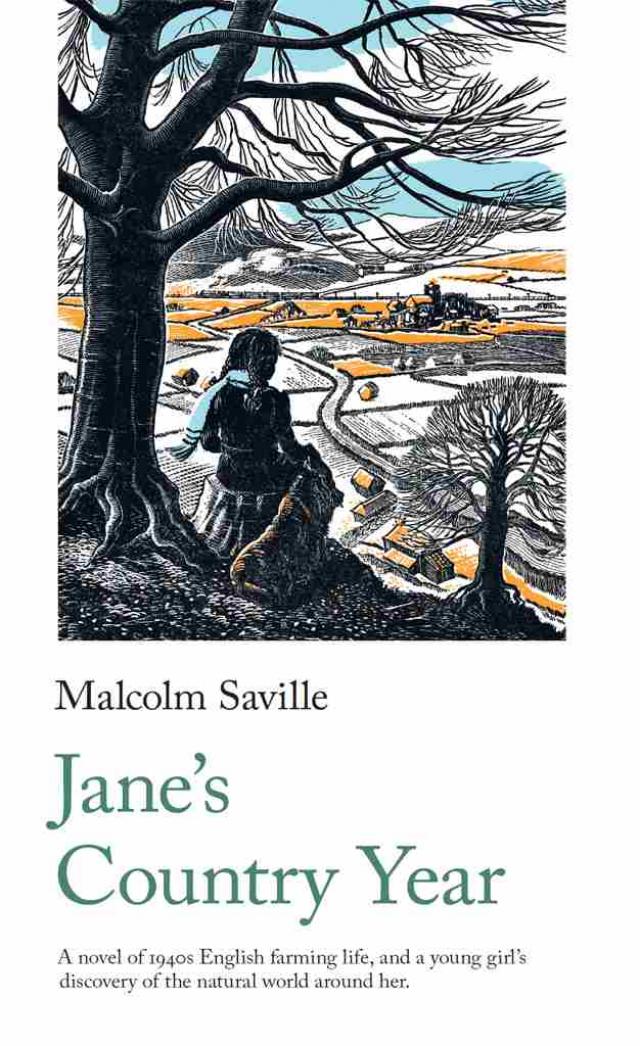
Jane’s Country Year
Also published by Handheld Press
Handheld Classics
1What Might Have Been. The Story of a Social War, by Ernest Bramah
2The Runagates Club, by John Buchan
3Desire, by Una L Silberrad
4Vocations, by Gerald O’Donovan
5Kingdoms of Elfin, by Sylvia Townsend Warner
6Save Me The Waltz, by Zelda Fitzgerald
7What Not. A Prophetic Comedy, by Rose Macaulay
8Blitz Writing. Night Shift & It Was Different At The Time, by Inez Holden
9Adrift in the Middle Kingdom, by J Slauerhoff, translated by David McKay
10The Caravaners, by Elizabeth von Arnim
11The Exile Waiting, by Vonda N McIntyre
12Women’s Weird. Strange Stories by Women, 1890–1940, edited by Melissa Edmundson
13Of Cats and Elfins. Short Tales and Fantasies, by Sylvia Townsend Warner
14Business as Usual, by Jane Oliver and Ann Stafford
15Non-Combatants and Others. Writings Against War, 1916–1945, by Rose Macaulay
16Potterism. A Tragi-Farcical Tract, by Rose Macaulay
17British Weird. Selected Short Fiction, 1893–1937, edited by James Machin
18Women’s Weird 2. More Strange Stories by Women, 1891–1937, edited by Melissa Edmundson
19There’s No Story There. Wartime Writing, 1944–1945, by Inez Holden
20Where Stands A Wingèd Sentry, by Margaret Kennedy
21Personal Pleasures, by Rose Macaulay
22The Villa and The Vortex, by Elinor Mordaunt
23The Gap in the Curtain, by John Buchan
First published in 1946 by George Newnes Ltd.
This edition published in 2022 by Handheld Press
72 Warminster Road, Bath BA2 6RU, United Kingdom.
www.handheldpress.co.uk
Copyright of Jane’s Country Year © The Estate of Malcolm Saville 1946
Copyright of the illustrations © The Estate of Bernard Bowerman 1946
Copyright of the Introduction © Hazel Sheeky Bird 2022
Copyright of the Notes © Kate Macdonald 2022.
All rights reserved. No part of this publication may be reproduced, stored in or introduced into a retrieval system, or transmitted, in any form, or by any means (electronic, mechanical, photocopying, recording or otherwise) without the prior written permission of the publisher.
The moral rights of the authors have been asserted.
ISBN 978-1-912766-55-0
1 2 3 4 5 6 7 8 9 0
Series design by Nadja Guggi and typeset in Adobe Caslon Pro and Open Sans.
eBook conversion by Bluewave Publishing
Contents
Introduction, by Hazel Sheeky Bird
Jane’s Country Year
January
February
March
April
May
June
July
August
September
October
November
December
Notes, by Kate Macdonald
Hazel Sheeky Bird is a research associate at the University of Newcastle. She is the author of Class, Leisure and National Identity in British Children’s Fiction, 1918–1950 (2014). She is researching and cataloguing the papers of Aidan and Nancy Chambers, held by Seven Stories, the National Centre for Children’s Book, Newcastle.
Introduction
BY HAZEL SHEEKY BIRD
Malcolm Saville: Setting the Scene
Jane’s Country Year (1946) is a perfect example of the many children’s books about the British countryside that were published in the first half of the twentieth century. It begins with a key trope of children’s books from the 1930s: a train journey. Following a long illness, we meet eleven-year old Jane who is put on a train in London by her parents and travels alone to Shropshire, to stay with her Aunt Kate and Uncle William on their farm to regain her health. Supported by friendly well-wishers, including the local rector, Mr Herrick, and his son Richard, George the stockman and Frank the shepherd, Jane, and the reader, are gently initiated into the ways of the countryside. Equally concerned with husbandry, rural life and heritage as well as nature observation, for many Jane’s Country Year is the best of Malcolm Saville’s many children’s books.
Saville (1901–1982) was a prolific author, producing 80 books for children while also working in the publicity departments of major London publishers, Cassell and Company, Amalgamated Press and George Newnes. Writing warmly about both Jane’s Country Year and Saville generally, the progressive children’s author Geoffrey Trease observed that Saville was an author with ‘an intense feeling’ for the English countryside and that the novel contains the ‘essential’ Saville (Trease 1949, 56). The book was certainly roundly praised, both at the time of its publication and in the many children’s books surveys, aimed at parents, librarians and teachers, published in the 1950s and 1960s. With its believable plot, strong sense of place and detailed observation of the natural world and country life, Jane’s Country Year is an intensely realistic book, a quality that was increasingly praised in writing for children by the mid-twentieth century.
By and large, Saville is not greatly remembered as a nature writer for children. His reputation is rooted in the many series of adventure books that he wrote between 1943 and 1978 and is most associated with his Lone Pine novels. Beginning in 1943 with Mystery at Witchend and closing in 1978 with Home to Witchend (published in paperback by Armada) the Lone Pine books (eventually running to 21 titles) epitomise a particular type of book that was perennially popular from the mid-1930s to the 1970s: the holiday adventure novel. The first book introduces the Morton family: David, the eldest, Dickie and Mary, the twins, accompanied by their mother and Scottie dog, MacBeth, move to Witchend in Shropshire due to the war (Mr Morton is in the RAF). The Morton children spend the first part of the novel exploring the countryside, establishing the Lone Pine club, under a particularly large pine tree, and making friends with two other children who would become key figures in the series: Petronella Sterling, or ‘Peter’, who loves horses and lives nearby, and Tom Ingles, who is an evacuee from London now, like Jane, also living on his aunt and uncle’s farm. As with many other titles in the series, and indeed as with many other series of novels by different authors, notably Enid Blyton, the children become embroiled in a mystery, in this case a spy plot. Subsequent novels would introduce other characters and the action would shift to other fully realised locations, including Rye, Hereford and North Yorkshire, but the basic formula remained the same.
By working within the adventure genre and by writing about the countryside, Saville was an astute judge of the mid twentieth-century children’s book market. Both genres were highly popular during this period and Saville was adept at writing them. Saville’s writing, however, along with that of Arthur Ransome, David Severn and Henry Williamson, for example, who all wrote diverse books, actually belongs to a wider canon of children’s countryside writing. This predates the twentieth century; one that looked back beyond the Edwardian river bank of Kenneth Grahame’s The Wind in the Willows (1908), encompassing fiction and non-fiction, dipping deep into Romantic, pastoral and Georgic poetry, and came to rest in the writing of the Victorian ruralist Richard Jefferies. Two of Jefferies’ novels, Wood Magic (1881) and Bevis (1882), which refashioned memories of his boyhood on Coate Farm in Wiltshire, were foundational books for later children’s authors. The first is a work of rural fantasy, the second recounts the adventures of two friends, Bevis and Mark, as they build rafts, make maps, wage war on other children, and explore the surrounding countryside. When Bevis was reissued in 1932 by Jonathan Cape, replete with illustrations and maps by EH Shepherd, illustrator of A A Milne’s Pooh books from the late 1920s, it became a landmark book in children’s literary culture. As for many children’s authors of the time, Bevis was an enormously important book for Saville. We see Saville return to it time and again, either intertextually (Richard Herrick gives Jane a copy for her birthday, and Petronella Sterling is shown reading a copy in Seven White Gates [1944]) or through direct recommendation in his Country Scrap-Book for Boys and Girls (1944). Reading Bevis was a barometer for rightmindedness, which Saville encouraged through his own very different books.
It is useful to place Saville’s work within the broader trends in early twentieth-century British children’s publishing, because these impacted so significantly on both his critical reception and long-term reputation. As might be expected, there is no consensus view on the state of British children’s publishing in the first half of the twentieth century. For many years, the period 1920–1950, in which Saville began writing, was largely viewed as a fallow period: an ‘age of brass’ sandwiched between the first and second ‘golden ages’ of children’s books, running from 1850–1920 and 1950–1979 respectively. It has been argued that many children’s books produced between the world wars were lacking in quality, often prized for their bulk rather than their contents. Certainly, children’s publishing was hard hit by both paper rationing and the departure of creative and technical expertise in the war; it was not until the 1950s that children’s publishing began to recover. The absence of realism in writing for children was also lamented by critics and Marcus Crouch’s view in 1962 that this was a period in which children’s reading was remote from the realities of everyday life has held sway until very recently. Kimberley Reynolds (2016), for example, has uncovered a canon of progressive and left-wing books for children published between 1910–1949. However, what is certain is that the quality of children’s books was increasingly prioritised in discussions about what children should and should not be encouraged to read.
Spurred on initially by developments in children’s book publishing in the USA and fuelled largely by increased advocacy for improved standards from librarians and teachers, British publishers began to give serious consideration to producing high quality children’s books (Eyre 1952). Two events mark this shift in Britain: the founding of The Junior Bookshelf, a critical review journal, in 1936 and the foundation of the Carnegie Medal for children’s books in 1937. From this point on, there were clear ways by which the ‘best’ children’s books could be celebrated and shared, resulting in ‘better’ books reaching their readers. By the 1960s, newly increased public funding for libraries and schools helped British children’s publishing reach new levels in quality, imagination and experimentation (Pearson 2013). Consequently, the literary quality of books aimed at children became increasingly important, at least to the adult gatekeepers who tended to buy them.
The issues of quality and reputation are complicated for Saville because he is best known for his many series of holiday adventure stories, which immediately set him in comparison with Arthur Ransome. The publication of Ransome’s Swallows and Amazons in 1930 was a landmark in children’s publishing, and Ransome is widely credited with creating the holiday adventure genre. Set largely in the Lake District and the Norfolk Broads, the Swallows and Amazons novels recount the gentle holiday adventures of three families of middle-class children: the Walkers, Blacketts and Callums. While three novels in the series are arguably fantasies, the novels essentially focus on realistic depictions of the children’s sailing, camping, hiking and exploring. It is this low-key realism that sets Ransome’s novels apart from the work of many authors, including Saville and Enid Blyton, who engineered thrilling spy plots and criminal gangs for their children to contend with while holidaying in the countryside. There was a clear preference in the reviewing press for stories that tended toward realism rather than sensation, with reviewers in The Junior Bookshelf tending to divide holiday adventure stories into two types: believable, and far-fetched. Time and again, commentators lamented authors’ tendency to add far-fetched elements to holiday stories, the best-known example of this being Enid Blyton’s Famous Five and Adventure series. It was, and remains, as Victor Watson notes, ‘easy to ridicule’ (Watson 2000, 103) the holiday adventure novel formula: as Eileen Colwell would famously ask of Blyton, ‘But what chance has a gang of desperate criminals against three small children?’ (quoted in Eyre 1952, 53). The formula was, however, solidly popular for most of the century and Saville apparently received 3,000 letters a week from young readers. We are told that Saville, ever the publicist, answered all his fan mail personally (quite a feat if true) and he certainly sent out regular newsletters to his fans (Doyle 1978). The popularity of Saville’s books may have been partly due to their serialisation for radio broadcast. Many of his books were dramatised for the BBC’s Children’s Hour. Broadcast daily between 1922 and 1964, the Children’s Hour, presented by a series of ‘Aunties’ and ‘Uncles’, was made for children aged between five and fifteen years, and offered listeners a mixture of commissioned plays, dramatisations of novels, short stories and music.
Despite Saville’s popularity with readers and listeners, reviewers at the time often chose to overlook his books. For example, Kathleen Lines’ influential survey Four to Fourteen. A Library of Books for Children (first published in 1950 and again in 1956), makes no mention of any of Saville’s titles. Consequently, not only has there has never been a consensus view of Saville’s work, opinion is often divided. Writing in 1970, children’s author Rosemary Manning noted that Saville could not be regarded as a classic writer, but strongly disapproved of public librarians refusing to stock his books. For Manning, children’s literature is ‘surely what children read and enjoy’, and that, as such, ‘Malcolm Saville’s work should have an honourable place in it’ (Manning 1970, 90). Saville’s writing was, then, frequently set outside the ‘gold standard’ of children’s books epitomised by Carnegie-winning authors such as Ransome, with his later books rarely being reviewed. Like many authors of genre fiction, Saville has always occupied an uneasy position – beloved by his readers, but frequently criticised by those who were not his intended audience.
Jane’s Country Year
Despite Saville’s reputation resting largely on his more thrilling holiday adventure stories, genuine engagement with the English countryside and rural traditions was actually central to his writing and personal life. Saville would publish thirteen non-fiction books on the countryside, the seaside, exploring woods, growing food, as well as observing plants, flowers and wildlife throughout his career. The first, Country Scrap-Book for Boys and Girls, was published in 1944 and the last, The Seashore Quiz, in 1981, appeared a year before his death. Jane’s Country Year adopts an unusual form. Geoffrey Trease described the book as ‘didactic fiction’ (Trease 1964, 56) because Jane’s year-long convalescence at Moor End Farm is a framing narrative that gives Saville the space to teach children about nature, rural life and the workings of a farm. The book is divided into twelve chapters, one for each month of the year, and each chapter allows the reader to follow Jane’s experiences through her eyes. In the second, expanded edition the chapters were followed by a short summary of all that Jane had observed in the natural world that month; in these sections Saville addresses his readers directly, using an overtly adult, didactic tone.
Jane, arguably, is not the main character of the novel, rather, it is the countryside that holds the reader’s attention. By sending Jane to her relatives’ farm, and focusing on farming life, Saville establishes a rooted, permanent connection between Jane, who is initially a city child, and the countryside. In doing so, he avoids a common trope of much countryside writing for children, including in some of his own novels, of the idea of the countryside as a tranquil and empty playground for the professional middle classes. In general, the lived experiences of British children in the countryside, particularly during the Second World War, including the many thousands of school children who worked on the land as evacuees or on school harvest camps (Mayall & Morrow 2020), are absent from writing for children. Saville, unlike many ‘realistic’ authors such as Ransome, did address the experience of being an evacuee in the countryside. Lone Piner Tom Ingles is evacuated to the countryside from London, and Saville shows that he neither likes working the land nor being forced to part with his family. Saville tells his readers that Tom is lonely in the countryside and Tom himself tells the Morton children that ‘he didn’t think much of it up here (Saville 1943, 31). His Uncle Alf also says that Tom sometimes ‘wishes he was back in […] ”them blitzes’’’, but ‘his house has gone and his mother’s somewhere else with the baby and his Dad’s somewhere else in the war’ (30). Jane’s Country Year is different as it was written and set after the war. Certainly, there are very few mentions of it and Jane has not been evacuated: she is convalescing. However, as we will consider shortly, Jane’s County Year explores the emotional impact of long enforced separations on children, parents and surrogate parents, even if the image of urban children working the land is entirely absent from Moor End Farm.
Although the form of Jane’s Country Year is unusual, it is not without its forebears. In the first chapter, Saville sets up a gentle teacher/pupil dyad between Jane and her slightly older and better-informed friend Richard. Richard Herrick is the middle-class son of the local rector and a day-pupil at a local school, with many opportunities to roam the local area birdwatching and so on. In using this personable pupil-mentor dynamic, we again see Saville’s astute understanding of his readers’ tastes and the contemporary children’s book scene. Saville was drawing upon an earlier and highly popular series of children’s books about the countryside by George Bramwell Evens, known as ‘Romany’, with titles such as Out with Romany (1937) and Out with Romany by the Sea (1941). These books used a similar pupil-mentor pattern as a means for writing about nature observation. Generally, they involved Bramwell Evens, accompanied by his dog, Raq, and a boy, Tim, who is about the same age as Jane, rambling around various parts of the countryside and chatting about what they saw. The popularity of these books with children led to copycat series, by figures such as Norman Ellison, or ‘Nomad,’ with both authors having extremely popular programmes on the BBC’s Children’s Hour. Romany and Nomad were benevolent, paternalistic figures, very similar to the narrator of the chapter summaries in the later edition of Jane’s Country Year, who shared British country lore and natural history through a series of conversations with apprentice naturalists, usually boys. Nomad was accompanied on his rambles by a boy called Dick, again of a similar age to Jane. Both series, easily comparable to Jane’s Country Year, are noteworthy for their unsentimental observations of both farming and the natural world.


