

Dragonfruit, page 1


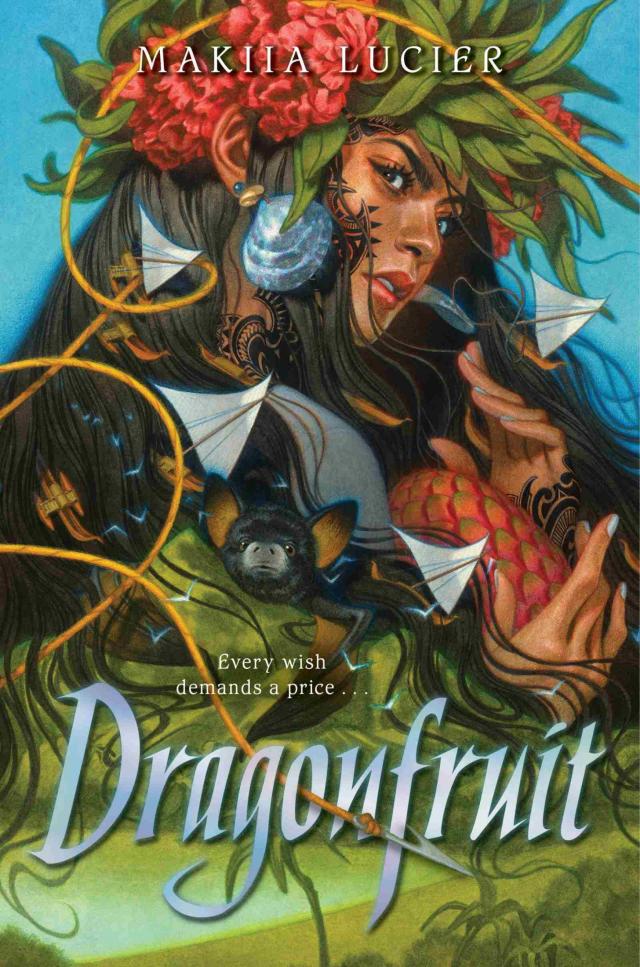
Dedication
For the island kids.
Hafa Adai.
Epigraph
In the old tales, it is written that the egg of a seadragon, dragonfruit, holds within it the power to undo a person’s greatest sorrow. An unwanted marriage, a painful illness, an unpaid debt . . . gone. But as with all things that promise the moon and the stars and offer hope when hope has gone, the tale comes with a warning.
Every wish demands a price.
Contents
Cover
Title Page
Dedication
Epigraph
Chapter 1
Chapter 2
Chapter 3
Chapter 4
Chapter 5
Chapter 6
Chapter 7
Chapter 8
Chapter 9
Chapter 10
Chapter 11
Chapter 12
Chapter 13
Chapter 14
Chapter 15
Chapter 16
Chapter 17
Chapter 18
Chapter 19
Chapter 20
Chapter 21
Chapter 22
Chapter 23
Chapter 24
Chapter 25
Chapter 26
Chapter 27
Chapter 28
Chapter 29
Chapter 30
Chapter 31
Chapter 32
Chapter 33
Chapter 34
Chapter 35
Acknowledgments
About the Author
Books by Makiia Lucier
Back Ad
Copyright
About the Publisher
1
BY THE TIME HANALEI TURNED EIGHTEEN, FIVE hundred dragoners roamed the Nominomi Sea, ships built to hunt the seadragons that called the waters home. Every part of the creatures commanded a high price: their scales for armor; their oil for lamps; their eyes, chopped and stewed, or their tongues, dried and powdered, to preserve youth and beauty. And their eggs, most precious of all, though no one had laid eyes on dragonfruit for years.
Five hundred dragoners to capture and kill. And then there was Hanalei.
“Sixty feet, would you say?” Hanalei crouched beside a wild, bushy fern, careful not to be seen. “The blue one there?”
“Sixty feet, yeah, looks good.” Her guide’s name was Moa, and his response came after much neck craning as they peered from high above the grotto into the watery cavern below. The trouble with seadragons was that they had to be observed at a distance. Unless one was willing to risk death or dismemberment, which Hanalei was not. And so practical matters: measuring their length from snout to tail, or determining eye color and approximate age, these were all things that had to be done from afar.
Three seadragons frolicked in the waves. One red, one gold, one the milky white of pearls. Two more sunned themselves on a massive stone ledge above the water’s surface. The larger one lay flat on its belly, sixty feet long, a deep blue in color. The seadragon sprawled beside it was the green of limes. Smaller by ten feet, Hanalei guessed, with a mane, or frill, that was also green. She watched its mouth open in a tremendous yawn, red tongue lolling, and felt her lips curve. It had been a long time since she had seen a pod of seadragons look so at ease, so utterly without guard.
“They are magnificent,” she said.
“They are a menace,” Moa replied, far less enchanted.
Hanalei took her eyes off the seadragons. Moa appeared to be her age. Neither short nor tall, and wiry, with skin the color of koa wood, smooth and brown. He wore loose trousers and old, comfortable sandals. The tunic he had started the day with had long been shucked off, rolled into a band and tied around his forehead to keep off the sweat. Hanalei wished she could do the same. The air was heavy and damp, perfectly still in a way that hinted at a storm coming. Even the ferns drooped. She was dressed similarly, though her white tunic remained in place and not on her head. A banana leaf hat kept the sun from her eyes, the green blending seamlessly with the surrounding jungle. She tugged the brim low and asked, “Have they hurt anyone?”
Moa nodded grimly. “Two fishermen. The first day. They were supper.”
Hanalei sobered. It was a reminder she needed sometimes, of their danger. These were not only beautiful creatures to admire and study.
She had followed the pod west, sailing past the Strait of Salamasina and along the ancient waterways. For six months, she had tracked their migration. A sighting here, a shipwreck there, the hull cracked and splintered, toothmarks along the mast. Definite signs of seadragon. Today, she found herself on an island just south of Kalama, one too small to warrant a formal name or speck on any map. Everyone just called it Little Kalama. The landscape was hilly, thick with trees that twisted and spread around man-sized ferns. Home to colorful, screeching birds: fruit doves and kingfishers, parrotfinches and lorikeets. A village lay at the southern end. It was there that Hanalei had disembarked the night before, lured by rumors of a pod sighting.
Hanalei said, “I saw twenty dragoners docked at Kalama. One word from you, and they’d be here.” With their harpoons tipped with poison and their enormous four-person saws, made especially for slicing through dragon skin. The thought sickened her.
Moa’s lips twisted. “They’d come quick, yeah. Twenty dragoners, five seadragons. What’s worse?”
Hanalei smiled. She liked this guide. With dragoners, one did not have to worry about being eaten. But the sailors on those ships often brought with them a different sort of catastrophe: an oversea disease, typhoid and the pox, or violence mixed with drink, or an overfondness for island women. Exotic was a word Hanalei knew well and despised dearly. It was not uncommon to hear of a stolen daughter or sister or mother. She had even heard of a grandmother of twelve who had vanished and gone, dragged away by sailors. What’s worse? Moa had asked. “The dragoners,” she answered.
“Yeah.” A mosquito had taken an interest in Moa’s nostrils. With one quick swat, it became a black smear on his palm. Absently wiping his hand on his trousers, he added, “Yesterday, the green one, it eats a whale. All by itself. My cousin saw.”
Hanalei’s skin prickled. She eyed the green seadragon drowsing on the ledge. That was plenty, just for one. Why did it eat so much? Grabbing a fistful of fern for balance, she leaned as far over the grotto’s edge as she could, until Moa’s warning drew her reluctantly back. Watching from here was no longer enough. She needed a closer look. She rose to a half crouch, taking care to stay hidden behind the ferns and trees.
“Hey.” Moa hissed. “Where are you going?”
Hanalei pointed to the steps behind him. They had been carved into the grotto walls and led directly to the water. “Down.”
Moa stared at her. “Why? From here is good. Don’t be crazy.”
“I’ll hide behind those rocks. They’ll never see me.” A satchel hung by her side, crafted of waxed hibiscus bark to protect her belongings from rain and seawater. She rummaged around inside, and as she did, what looked to be a whistle hanging from a cord around her neck swung free. It was made of bamboo, four inches long. A pair of intertwined seadragons had been carved along the wood.
The sight of it distracted Moa from his warnings. He goggled. “Is that a soundcatcher? A Tamarindi soundcatcher? I’ve only seen drawings.” He rose, casting a furtive glance at her hands and the scars that covered them. “I thought you were from Rakakala.”
“I never said I was.” He had seen her scars and drawn his own conclusions. She had let him. Hanalei tucked the soundcatcher away beneath her tunic, pressed against her heart.
Moa heard the change in her tone. Less friendly. She could see it on his face. It did not stop him from asking the question that was always asked, eventually. “Then who are your people?”
She had none. She was her father’s daughter, an exile. And her father was gone. Hanalei pulled a silver squid from her satchel and held it out. “Thank you for bringing me here. I’ll find my way back.”
Moa looked at the coin she offered. He looked at her closed expression. And finally took the hint. Waving away the silver, he said with a sigh, “Nothing for you, sister. Be careful.”
At his words, the longing for home came sharp and sudden, for this was the way of the islands. They had not met before yesterday. But Moa was an islander and she was an islander and likely, thousands of years ago, their forefathers had been cousins. So she got a bargain.
Her fingers closed around the silver squid, and her quiet “thank you, Moa” came only after swallowing past the lump in her throat. He pretended not to notice. She returned the squid to her satchel and left him there with a quick wave. The steps were steep and crumbling. Her descent was a slow one, hard on the nerves. She flailed when a parrotfinch flew past her nose, shrieking and flapping and knocking her hat askew. Curse you, finch. She tugged the brim back into place and waited for her heart to settle before continuing on. Two thirds of the way down, she stopped at a flat bit of stone, one large enough for her to sit on and observe through a crevice in the rocks. If she sneezed, they would hear her. When she breathed, she could smell them. The unmistakable aroma of kelp. It was the closest she had been to seadragons in years. Free dragons, she corrected. Living ones. The dead she had seen plenty of, all of them up close.
Hanalei studied the green one. An entire whale to itself, Moa had said. She sifted through the possibilities. The dragon might have recently emerged from a deep sleep. She had come across an obscure reference to seadragon hibernation patterns, burrowing in underwater caves for months, sometimes years, at a time. It would have woken ravenous. In which case, bad luck for the whale and any other creature it came across. Or the dragon might be recovering from an illness and was simply making up for a lost appetite. Hibernation and poor health. Two perfectly reasonable conclusions.
Common sense returned, reminding her that if she did not work, she did not eat. There was a school on the island of Rakakala, or Raka, that specialized in all living things beneath the Nominomi. The scholars there would pay generously to see, on parchment at least, what she saw now. From her satchel she retrieved a wooden tablet to draw on, a sheet of parchment, and a stick of charcoal, freshly sharpened. She positioned herself so that she sat cross-legged with the crevice directly before her. Time weighed upon her. There was no telling how long the seadragons would remain, napping and frolicking. She had to work quickly.
Hanalei sketched the blue seadragon first. Its long, whiskery feelers were silver, so too were its tail, frill, and horns. Horns curled like a ram’s, not pointed like a devil’s. Like the green one, it had a pair of stunted legs in the front, none in the back. How very interesting. She leaned forward, sticking her head into the crevice. Legless seadragons were much more common, but sometimes, when the Nominomi was at its clearest, dragons like these were visible walking along the seafloor. Could they travel on land, she wondered? And if so, how far? How fast? Could they climb walls, like giant geckos? Uneasy, she eyed the surrounding stone and drew a little farther back behind the rocks.
The pearl seadragon shot straight into the air, spinning and spiraling, before falling into the water with a splash. Hanalei shook water droplets from the parchment, smiling. A smile that faded when the red seadragon called out to the others, the sound high and pure. Dragonsong. The sound sent shivers down Hanalei’s neck.
A moment’s hesitation before she reached for her soundcatcher. A soundcatcher was precisely that. It captured something that could be heard: a child’s laughter or the sound of the sea, or music. It had been a gift from Sam when they were children, Hanalei eight and Sam nine, carved during an afternoon spent at the beach. She had watched the seadragons come to life in his hands as he whittled the wood away with his father’s knife. “You love them so much,” Sam had said, tossing it to her with a quick grin. “Keep it.” A casual offering, one he had likely long forgotten. It was her most prized possession. She held it to her lips and breathed in, not out, knowing it would come to nothing. Tamarindi magic, no matter how small, only showed itself on Tamarind—
Hanalei caught herself. Why was she like this today? Nearly weeping when Moa called her sister, thinking too much of home. She knew better. The past was the past, unchangeable. Most days, she kept Tamarind tucked down and buried deep, where hard memories belonged.
Hanalei sketched the green seadragon next. A long, sinuous body covered in scales, along with legs and claws, and as she finished its feathery tail, the seadragon lifted its head. The frill rose, like hair blowing in the wind, though the wind was still, and by the time it resettled upon the scales, it had changed color. From bright green to a deep rose. The precise shade of dragonfruit.
Of a seadragon’s egg.
The charcoal slipped from Hanalei’s fingers, rolling across the stone and falling into the water. Her skin felt cold, then hot. It burned. Hibernation and illness, yes, but there was a third reason for so large an appetite, one she had not dared consider.
The green seadragon was female. When a dragon carried eggs, her frill changed to an unmistakable shade of rose. Always. And an egg, once laid, was no simple egg.
Every child of the Nominomi knew the story, taught by the elders through song and art and dance: In the old tales, it is written that the egg of a seadragon, dragonfruit, holds within it the power to undo a person’s greatest sorrow. An unwanted marriage, a painful illness, an unpaid debt . . . gone. But as with all things that promise the moon and the stars and offer hope when hope has gone, the tale comes with a warning. Every wish demands a price.
Hanalei knew all about the prices to be paid.
A shadow above broke through her racing thoughts. She looked up, shocked to see not cloud cover as she had expected, but people, dozens upon dozens, gathered around the top of the grotto. Quietly watching. They wore black, dark against the light of the sun. So many, and she had heard nothing. Worse, someone had flung an enormous net into the air and it came drifting down, silent and sure, toward the unsuspecting dragons.
A dragoner’s net.
Hanalei rose from her hiding place, heart in her throat. The past was the past, unchangeable. And yet that was not always true. Her eyes darted from net to dragons and dragons to net. And then she put her fingers to her lips and whistled.
It moved fast. The blue seadragon, head whipping around to meet Hanalei’s gaze across the water . . . a distance that suddenly felt far too narrow. From here is good, Moa had said. Don’t be crazy. Why had she not listened? She pressed her back against the stone, neither blinking nor breathing. Pure black dragon eyes shifted from her to the falling net. A growl emerged; Hanalei felt the rumble of it in her bones. And then it was gone, biting its green companion on the back of the neck and flinging it, her, into the water. As the net came down on the three other seadragons, the pair swam off, keeping close to the grotto walls before disappearing beneath the waves. Safe for now.
Not these dragons. Their fate would be different. Hanalei clamped her hands over her ears as they thrashed in their netting and the grotto echoed with the sound of snarls and screams. No more dragonsong. I am sorry, she thought, flinching as a harpoon pierced one through the neck. Instantly, its frill changed color, from red to black. The harpoon was tall as a man and had come not from above but from a ship sailing in through an arch. It was black, with a massive, bulging hull that marked it as a dragoner. A white flag with a red cypress flew high on the mainmast. Painted along the side, in gold, was the Anemone. A figure stood at its prow, gripping another harpoon. Hanalei had time enough to think, Of all ships, before she realized the weapon was pointed directly at her.
With a yelp, she flung herself to the ground as the stone above her shattered, sending down a rainstorm of rocks and pebbles. She threw her arms up to protect her head. Gritting her teeth through the cuts and stings, she thought, Of all ships, and of all captains. The harpoon clattered beside her.
She had been recognized. This she knew because her name was being shouted from the Anemone, along with words like damn that girl! and far worse. Behind her, more curses erupted as boots tripped along crumbling steps. There would be no escape that way. Dread filled her. She wondered if it would be better to slip into the Nominomi and take her chances there, with the sharks and stingrays, other monsters of the deep, but by the time the thought had fully formed, it was too late.
2
IN THE ROYAL MENAGERIE OF TAMARIND, ONE could see beasts of all kinds: panda and python, kangaroo and goruda, an endless variety of bird, from the ill-tempered cassowary to the far more agreeable fruit dove. The menagerie had been built generations ago by the reigning queen. But it was not until recent times, around the month of Hanalei’s birth, that a pair of seadragons was presented to the Tamarindi Queen Maga’lahi, gifts from a neighboring kingdom.
The queen was reluctant to accept such an offering, for it had long been said that dragons of the deep belonged to the gods. But she had no wish to insult the gift giver, a friend. After much prayer, during which the gods remained quiet, she took their silence as approval. And when years later one of the seadragons produced dragonfruit, three perfect, rose-colored eggs, Queen Maga’lahi very deliberately did not pray, or ask the gods for permission. Because by then tragedy had struck her family.
Her daughter, Princess Oliana, was the mother of a young son and widow of a fallen warrior. Heir to her mother’s throne. Tamarind was a matriarchal society. There, the women ruled.
The island kingdom of Tamarind was an archipelago, ten islands dotting the Nominomi Sea. If one were to look down on the islands from up high, like a bird or a wind god, one would see them strung about like a smile, with the main island, Tamarind, on the eastern edge and Isle Garapan on the west. The smaller islands were governed by men and women who paid homage to the royal house. It was on a visit to Garapan that Princess Oliana fell ill, poisoned by crushed utu seeds stirred into her evening soup.


