

The Irish Convict (Jayne Sinclair Genealogical Mysteries Book 10), page 1


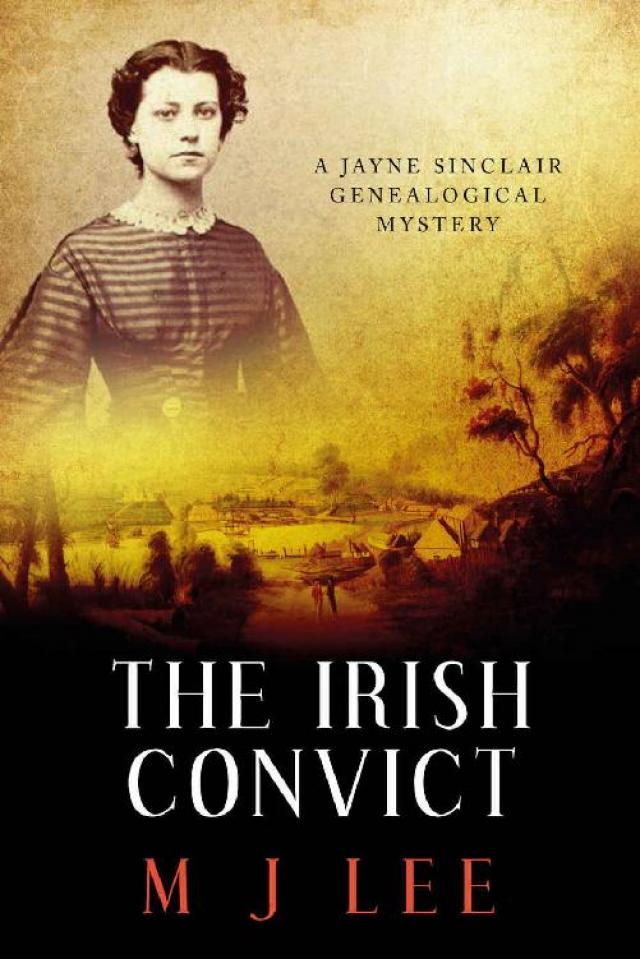
The Irish Convict
A Jayne Sinclair Genealogical Mystery
M. J. Lee
About M. J. Lee
Martin Lee is the author of contemporary and historical crime novels. The Irish Convict is the tenth book featuring genealogical investigator, Jayne Sinclair.
The Jayne Sinclair Series
The Irish Inheritance
The Somme Legacy
The American Candidate
The Vanished Child
The Lost Christmas
The Sinclair Betrayal
The Merchant’s Daughter
The Christmas Carol
The Missing Father
The Inspector Danilov Series
Death in Shanghai
City of Shadows
The Murder Game
The Killing Time
The Inspector Thomas Ridpath thrillers
Where the Truth Lies
Where the Dead Fall
Where the Silence Calls
Where the Innocent Die
When the Past Kills
When the Evil Waits
When the Guilty Cry
When the Night Ends
What the Shadows Hide
Other Fiction
Samuel Pepys and the Stolen Diary
This book is a work of fiction. Names, characters, organisations, places and events are either a product of the author’s imagination or used fictitiously.
Any resemblance to actual persons, living or dead, events or locales is entirely coincidental.
Copyright © M J Lee 2023
Look for more great books at writermjlee.com
In the end, we’ll all become stories.
Margaret Atwood
Chapter ONE
October 07, 1836
Kilkenny Assizes, Ireland
The smoke hung over the crowded courtroom like a shroud. The bailiff banged his gavel forcefully on the desk in front of him, making an even deeper indentation in the false oak.
‘The court will come to order. Order. Order. ORDER,’ he shouted, producing little effect on the crowd gathered to see the petty sessions.
As usual, the gentry were in the best seats in front of the witness stand, to better see the anguish of the prisoners. The gentlemen of the press were arrayed to the left of the judge, to catch the words of his sentencing and ensure his bon mots were preserved for posterity. The prosecuting and defence barristers were sitting nearby, directly beneath his podium. His Honour was famous for being extremely short-sighted, once sentencing one of the court sergeants to be hanged instead of the prisoner.
The rest of the hoi-polloi were scattered around the court, eating, smoking and drinking, waiting for the afternoon’s entertainment to begin.
His Honour, Mr Justice McLaglen took a long gulp of claret from the glass in front of him, indicating to his attendant to fill it once again. He belched loudly and then drawled in a bored, distracted voice, ‘Bring in the next prisoner.’
The bailiff shouted once more. ‘Order in the court. Bring in the next prisoner.’
The hubble and bubble of the court died down for a few seconds as the crowd examined the latest miscreant to appear in the witness box, her arm held firmly by the sergeant-at-arms.
The bailiff read from a charge sheet held up before him. ‘Annie Kelly, you are charged with stealing three baskets of apples, the property of Lord Ashbrook. How do you plead?’
The defendant tried to stand taller in the dock but failed. Her short size meant she could only just see over the wooden rail in front of her. ‘I plead not guilty, your honour,’ she whispered.
‘What? What did the woman say?’ His Honour asked the question directly of the bailiff.
‘She said she pleads not guilty, your honour.’
Mr Justice McLaglen’s eyes flared red. ‘Not guilty? Does she not realise she has been charged by the constabulary for this heinous act?’
‘I think she does, your honour.’
‘And she still wastes the court’s time by pleading not guilty?’
‘She does, your honour.’
With a loud harrumph, the judge took a long swallow of claret before saying, ‘Bring in the first witness.’
The bailiff repeated the words and a small mouse-like man was led sheepishly to the witness box.
The prosecuting barrister adjusted his wig as the judge finished his second glass of claret and indicated that the glass be filled up once more.
‘Is your name Michael O’Flaherty?’
‘It is, your honour,’ the man whispered, all the time looking down at his old-fashioned hat held in his dirt-rimmed fingers. It was a tricorn, a hat that had fallen out of favour well before the king’s reign and was now worn by only the very worst of Irishmen.
The judge cupped his ear. ‘What? What did he say?’
‘He agreed that his name was Michael O’Flaherty, your honour,’ said the bailiff.
‘Tell him to speak up. I will not have silence in my court.’
The prosecuting barrister asked another question. ‘And are you the owner of the premises on 7 George Street in the town of Durrow in Queen’s County?’
‘No, sir.’
The prosecutor frowned.
‘I’m the tenant of that place, not the owner. The owner is Lord Ashbrook, I pay him rent every half-year.’
The prosecutor’s eyes rose in his head and he sighed loudly. ‘Do you know the woman in the witness stand?’
‘Of course, she is the daughter of the healer, Liam Kelly.’
Annie glanced at her father and mother, sitting amongst the rest of the crowd in the gallery. Neither of them looked at her.
‘She’s my neighbour and often helps her father in the making of his balms, elixirs and lotions. Very good they are too. Despite being so young and a woman, she can write. Letters, poems, anything she puts her mind to.’
The man said this almost in awe at the prodigious ability to put pen to paper.
‘On September twenty-third in the sixth year of His Majesty’s reign, did you see the woman in the dock in her garden?’
‘I did, your honour.’
‘And what was she doing?’
‘She was carrying the baskets of apples to her outhouse, your honour.’
‘And did you recognise these apples?’
‘I did.’
The prosecutor sighed, asking the next question slowly. ‘How did you recognise them?’
‘Very easily, your honour.’
‘But how, man? Tell the court how,’ the prosecutor snapped.
The man fiddled with his hat. ‘Well, they were round and green with just a blush of red. They were definitely apples, your honour.’
The prosecutor glared at the witness. ‘I know what an apple looks like. Who did they belong to?’
‘They were Lord Ashbrook’s.’
‘And how did you know this?’
‘They had his mark on the baskets. His orchard man, Mr Mungovan, always marks his baskets as he fills them with the crop of the year.’
‘This mark was what?’
‘A blue circle, your honour. Everybody knows Lord Ashbrook’s mark.’
‘Thank you, Mr O’Flaherty.’ The prosecutor sat down.
‘Next witness,’ said the judge.
The bailiff leant in and whispered in his ear, ‘There is no legal representation for the defence, your honour, they haven’t the money.’
‘Good, it will save time and all that bleating from barristers.’
‘But she must be allowed to cross-examine this witness.’
‘Must she? I suppose she must. Miss Kelly, do you have any questions for this witness?’
Annie’s head came up for the first time. ‘I have just a few questions, your honour. Mr O’Flaherty, did you fall out with my father over the supply of balms for your mother’s consumption?’
‘Falling out is a strong term, miss. Your father refused to supply my mother with the medicines she needed. He said she was past help and the only person she should look to was the Good Lord.’
‘So you had an argument with him?’
‘Young lady,’ the judge interrupted, ‘whether or not your father and this man argued has no relevance to the charge of theft of three baskets of apples. Please keep your questions relevant.’
Annie looked down as she was admonished by the judge.
‘Do you understand?’ he added.
She nodded.
‘Have you any more questions?’
‘Just the one, your honour. Did the witness see me steal Lord Ashbrook’s apples?’
‘I saw them in your garden and you were hiding them,’ O’Flaherty said.
‘I was not. I was putting them in an outdoor shed to keep them safe. It was raining heavily that day and I didn’t want them to rot.’
‘The jury will ignore that last remark from the prisoner as it was not a question to the witness. Next.’
Mr O’Flaherty shuffled out of the witness box, glanced up once at Annie’s father in the gallery and smiled.
A police sergeant took his place, swearing on the bible to tell the truth and nothing but the truth.
The prosecutor stood up, adjusting his wig once more. ‘You are Sergeant Miles of the Royal Irish Constabulary.’
‘I have that honour, sir.’
‘Can you tell us what happened on the afternoon of September twenty-third?’
‘I was called by Mr O’Flaherty to go to the house of the defendant’s father.’
‘Liam Kelly?’
‘That is correct.’
‘And how did you know where this house was?’
‘Everybody knows Mr Kelly’s house. It’s next to the schoolroom. He’s well known in the area, proper trouble-maker he is, teaching the children about Ireland and the Irish language and Brehon Law.’
‘Not the King’s Law?’ asked the judge.
‘No, your honour. He says the old laws of Ireland were better and fairer.’
‘Does he? And is he one of the Whiteboys?’
‘I am not,’ shouted Liam Kelly from the gallery. ‘I am a healer, nothing more, nothing less.’
The bailiff rapped his gavel on the wooden desk. ‘Silence in the court.’
The judge stared up at Annie’s father. ‘One more outburst like that and I will have you arrested and thrown into gaol for contempt of this court. Please continue giving evidence, Sergeant Miles.’
‘Like I said, on receipt of this intelligence, I proceeded immediately to the Kelly house, where I found three baskets of apples hidden in an outhouse.’
‘And who did these apples belong to?’
‘They had the mark of Lord Ashbrook on them.’
‘So you arrested this young woman for theft. Why did you not arrest the owner of the house, Liam Kelly?’
‘Because he was not there, sir, the rest of the family had gone to the fair in Abbeyleix. This woman was the only person in the house.’
‘So she was the only person who could have stolen the apples?’
‘That is correct, sir. On further investigation, I discovered that Mr Mungovan had left the apples in the baskets for collection on the road outside his cottage.’
‘What time did he leave them out?’
‘At seven o’clock in the morning, sir.’
‘And does Miss Kelly live close to this man’s cottage?’
‘She does, your honour, less than one hundred yards away.’
‘How did she move the apples?’
‘She used a donkey and cart, sir.’
‘Mr Mungovan didn’t stop her?’
‘He was at the fair in Abbeyleix too, sir. In fact, he gave Liam Kelly, his wife and their other children a lift to the fair.’
A buzz of excitement ran through the courtroom, which was swiftly stopped by the bailiff banging his gavel.
‘So the defendant knew that Mr Mungovan wasn’t at home?’
The policeman glanced at Annie standing in the dock. ‘She did, sir.’
The prosecutor sat down, smiling, confident he had proven his case.
Annie asked the next question. ‘Did I not explain to you, Sergeant Miles, that nobody had collected the apples by noon so I took them to my house for safekeeping? The rain had come and they would rot if I didn’t.’
‘You did.’
‘But you did not believe me?’
‘I did not.’
‘Why?’
The man looked flustered, his lips flapping open and closed without making a sound.
‘It was because the woman had made no attempt to inform Lord Ashcroft’s agent or Mr Mungovan that the apples were with her. Isn’t that true, sergeant?’ said the judge helpfully.
‘It is, your honour. Plus, I found she had already taken some apples and was cooking them on her stove when I went into the house.’
‘That is not true, I already had those apples. I was cooking them with mint and thyme to make a stew to feed young children. It is one of my father’s herbal recipes. They weren’t the apples belonging to Lord Ashbrook.’
The judge banged the table in front of him. ‘I have heard enough. Thank you, Sergeant Miles.’
‘Am I not allowed to argue the case for my defence?’ asked Annie.
‘Not in my court, no. You may question the witness but this is a Court of Law, not a debating chamber.’
Annie stood there for a few moments before turning to the witness. ‘Have you seen me before, Sergeant Miles?’
‘I have.’
‘On what occasion?’
‘At the Easter celebrations.’
‘And did I not turn down your advances on that day? Advances that were as unwelcome to me as they were unbecoming of you.’
The judge banged his gavel. ‘You will not impugn the character of this witness, Miss Kelly. You are excused, Sergeant Miles.’
‘But I have not finished cross-examining him.’
‘But I have finished listening to you, Miss Kelly. Prosecutor, sum up and make it brief. I have five more cases to get through today and this one has taken far too much time already.’
The prosecutor stood up. ‘I will be brief, m’lud. You have heard the witnesses who said they saw Miss Kelly hiding the baskets of apples belonging to Lord Ashbrook with intent to keep them. She is guilty of theft.’
The man sat down again, adjusting his wig as he did.
‘Very brief, Mr Boone, and very convincing. Miss Kelly, it’s now your turn but let us not hear any of your Irish speechifying, I am late for my lunch.’
‘I am not guilty of theft. I took the apples to keep them safe, otherwise they would have rotted in the rain. I was merely looking after them until Mr Mungovan returned. I had no intention of stealing them.’
‘But that’s what you did, Miss Kelly, when you placed them out of sight in your outhouse. And you convicted yourself out of your own mouth when you used the word “took”.’
‘It was just to keep them safe, your honour, until Mr Mungovan returned.’
The bailiff’s gavel banged loudly.
‘Enough, enough, Miss Kelly,’ said the judge. ‘You have gone on too long. Has nobody ever told you Irish that brevity is the soul of any argument? Anyway, I am ready to give my judgement.’
‘But I have not finished speaking in my defence.’
‘You have, Miss Kelly. Gentlemen of the jury, have you reached your verdict?’
The jury talked amongst themselves for twenty seconds. The foreman stood up, announcing, ‘We have, your honour.’
‘And what is that verdict?’
‘Guilty as charged, your honour.’
A buzz of excitement ran through the court. In the gallery, Annie’s mother was weeping loudly.
The bailiff banged his gavel for the last time and continued until the court quietened down again.
‘Annie Kelly, you have been found guilty of the charge. However, thanks to the swift action of the authorities, the apples were returned to their rightful owner, Lord Ashbrook. Given these extenuating circumstances, I am prepared to be lenient this time.’
Annie Kelly held her breath, hoping for a light sentence.
‘The sentence is transportation for seven years to the colony of Australia. As for your family and particularly your father, he should not be in charge of healing sick people if he has a daughter who is a felon. Bailiff, make my views known to the relevant authorities.’
‘I will, my lord.’
‘What is my next case?’
‘Sedition, my lord, a Mr Isaac Devereux.’
‘We will see to him after luncheon.’
Annie stood in the dock, silent and unmoving. A large hand grasped her around the top of her arm. ‘This way…’
The court officer pulled her down the steps and into the cells beneath the court.
As she went down, she took a last look at her parents sitting all alone in the emptying courtroom.
Her mother was crying and her father had his face buried in his hands.
She didn’t know it then, but she would never see them again.
Chapter TWO
Monday, September 14, 2020
Perth, Australia
Jayne Sinclair took off her sunglasses and stared over the still waters of the swimming pool. At the far end, areca palms stretched their long green arms to the azure blue sky. Beside them, a lemon tree, its branches festooned with fruit, provided shade and a delicious scent. A gentle breeze wafted from the coast, brushing against her suntan-oiled skin.
The only noise was the slurp of the little machine that swam along the top of the water removing dead leaves and other bits of twig that had been blown in by the gentle breeze.
What was the machine’s name? She would have to google it later.
She smiled to herself.


