The Deep End of the Sea, page 1


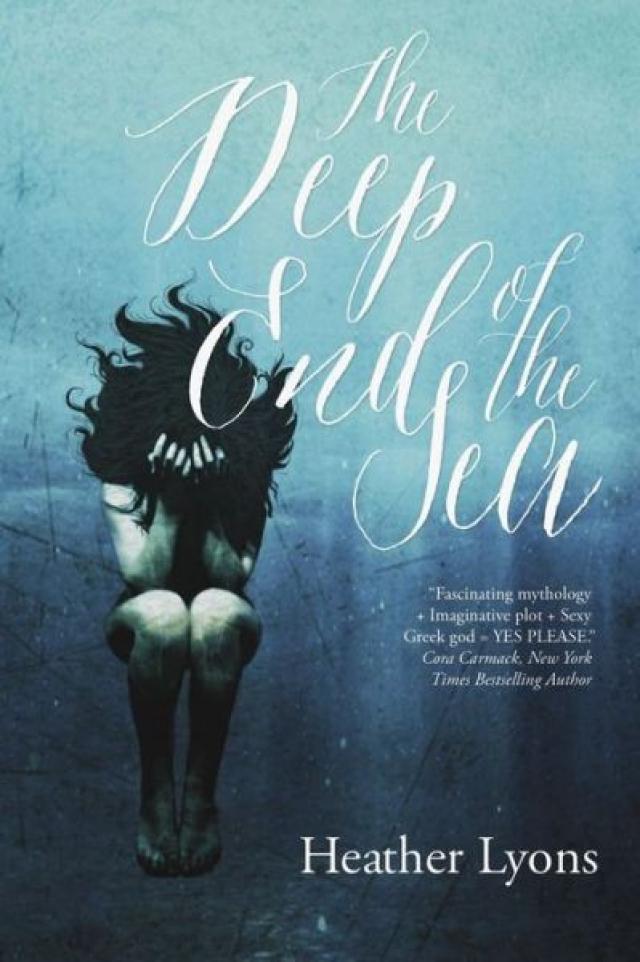
**Kindle Edition**
The Deep End of the Sea
Copyright © 2014 by Heather Lyons
http://www.heatherlyons.net
Cerulean Books
ISBN: 978-0-9858653-2-0
First Edition
Cover design by Carly Stevens
Cover art by Kelsey Patton
Book formatting by Self Publishing Editing Service
Without limiting the rights under copyright reserved above, no part of this publication may be reproduced, stored in or introduced into a retrieval system, or transmitted, in any form, or by any means (electronic, mechanical, photocopying, recording, or otherwise) without the prior written permission of the above author of this book.
This is a work of fiction. Names, characters, places, brands, media, and incidents are either the product of the author's imagination or are used fictitiously. The author acknowledges the trademarked status and trademark owners of various products referenced in this work of fiction, which have been used without permission. The publication/use of these trademarks is not authorized, associated with, or sponsored by the trademark owners.
Table of Contents
gorgóna
Chapter One
Chapter Two
Chapter Three
Chapter Four
Chapter Five
Chapter Six
Chapter Seven
olympus
Chapter Eight
Chapter Nine
Chapter Ten
Chapter Eleven
Chapter Twelve
Chapter Thirteen
Chapter Fourteen
Chapter Fifteen
Chapter Sixteen
Chapter Seventeen
Chapter Eighteen
jackson
Chapter Nineteen
Chapter Twenty
Chapter Twenty-One
Chapter Twenty-Two
Chapter Twenty-Three
Chapter Twenty-Four
Chapter Twenty-Five
Chapter Twenty-Six
Chapter Twenty-Seven
paris
Chapter Twenty-Eight
Glossary
Acknowlegements
About the Author
To my grandmother,
who I spent countless hours stargazing with,
and from whom my love of mythology stems from,
I miss you.
This one’s for you.
I let it happen again.
The temple settles into that stagnant silence I’ve long learned to loathe, and these are the most cohesive series of words I can string together for many long, desolate minutes. I let it happen again. Resolutions apparently mean nothing, even if crafted under the best of intentions. Had I not, just this very morning, recited a daily pledge held dear to my heart: I shall not let myself be used for death?
And yet, a man is dead, and I was the weapon that slayed him.
I move closer to where he now stands, forever frozen in terror, and press my shaking hand against his outstretched stone one. “I’m sorry,” I whisper, though he cannot and never will be able to hear my words. “So, so sorry.”
His eyes, wide and mercifully detail free, offer me nothing in return. Once I commit his features to memory, I construct a life history with a name worthy of his sacrifice. Walt was single (I can’t bear the thought of spouses and children, thus my collection of singletons) and a bit of a daredevil when he wasn’t volunteering to teach literacy to adults in poverty stricken urban areas. He’d gone spelunking at least a half-dozen times, sky diving twice, and bungee cord diving off some crazy bridge in Colorado just once, on his thirtieth birthday. Walt liked to write poetry; how could he not, when his now-deceased parents had named him after one of the greats?
Walt liked to talk about poetry, too, which means he needs to be with others like him. I strip off my flannel work shirt, down to a tank top, and get to work. Shoving stones around when half of one’s body is reptilian isn’t the easiest of tasks, requiring a great deal of precision and care.
As I always tend to do when placing a new statue, I can’t help but flash back to the one and only time I’d broken one of my victims. I’d been tired—he’d snuck upon me when I’d been sleeping—and an overestimated shove sent poor Nikolaos face first against the temple floor. I’d spent most of that night collecting the pieces which once made a whole man, blubbering in misery. As penance, his head, missing an ear and part of his nose, still sits on a shelf in my bedroom. Treat us gently, I like to imagine him telling me nightly before I sleep. We deserve your care.
I have not failed Nikolaos since. Over the ages, I’ve developed a routine to transfer the statues around the island that includes wrapping the bodies in a thick quilt before putting them up on casters. It takes a painstaking amount of time to shift them short or long distances, but each person deserves nothing less from me.
Walt’s group sits just outside the temple. They are the philosophers of our island; it only seems natural they would find much to appreciate in both the sun and the stars. I struggle with his body over the stairs—they are tricky to maneuver for me even without hauling a two hundred pound statue—but eventually, I get him exactly where he’ll fit in best.
“Ladies and gentlemen, this is Walt,” I tell the still faces forming a cluster near a non-functioning fountain. “His poetry is as beautiful as his namesake’s.”
I angle Walt so his eyes face theirs. It’s late afternoon, and there is soft orange light filtering down upon their features. It’s a beautiful sight, which only saddens me, because all of that talk about death and beauty being intertwined is one of the biggest loads of crap I’ve ever heard. Death isn’t beautiful. Too often than not, it’s messy and brutal; even when done in sleep, there’s still that theft of breath, that failure of a heart. Death is an act of violence.
I should know. I am one of the most prolific murderers in history. And I think about death constantly.
I often wonder what my own death will be like, if I am ever blessed to embrace it. I’m not too picky in my imaginings; I’ll take any sort by this point. Logically, I’d prefer a less painful exit, but, knowing my luck, it’ll be as ruthless as once reported and still widely believed.
It ought to be noted I have some of the most wretched luck to ever be doled out, so there is that.
The sound of waves crashing against the shore sends my eyes to the horizon. I’ve tried to drown myself in those waters more times than I ought to admit over the years, but the sea always spits me back out. I’ve also tried overdosing on pharmaceuticals, stabbing myself in the chest and eyes (which was just as painful as you’d imagine), and throwing myself off a cliff. Melodramatic, yes, and all ineffective for an immortal cursed with impenetrable skin and a digestive system apparently filled with acid.
Death is not my friend. At least, not yet.
I greet Nikolaos when I bolt my bedroom door shut. I had the locks installed after one too many people suffered poor Niki’s fate after stumbling upon me at night. Even still, I sleep fitfully, terrified of being caught unaware. “We have a new resident,” I explain to him, throwing my flannel shirt in a nearby hamper. “His name is Walt. He’s kind of cute.”
Niki sneers a bit over that. He’s a bit of a xenophobe and dislikes anyone who isn’t of Greek descent. And Walt is most definitely not Greek. Or, at least, the kind of Greek Niki and I grew up with.
“It was stupid,” I tell the bust. “I was planting seeds at my potting table in the outer temple—the new hybrid dahlias that Mikkos brought me a couple of weeks ago? And I had my gloves on and there was dirt everywhere, and I’d taken off my sunglasses to wipe the sweat off my brow. The Girls tried to warn me, but it was too late.”
Niki’s flat eyes hint at disappointment.
“I know. Believe me, nobody hates me more than myself at this moment.”
The snakes on my head hiss in sympathy; a couple stroke my cheeks lovingly. They aren’t Nikki’s biggest fans, but they tolerate his presence in our bedroom for my sake.
I wish they could talk. Just to answer me, to let me know my words aren’t useless. That the vestiges of humanity I desperately cling to aren’t in vain.
As I shower later, I watch the lingering dirt from gardening swirl around the drain. Just that morning, I’d been planting seeds to cultivate new life. By the end of the day, I’d taken yet another that no amount of seeds could make up for.
I am a monster. The worst kind of monster. The kind that people have told stories about for thousands of years. The kind that daredevils like poor Walt seek out, even though many believe I’m nothing more than a myth.
I am the Gorgon Medusa. And my eyes can turn anything living to stone.
Once upon a time, there was a girl who lived in Athens. She didn’t excel at anything; in fact, she was rather average in every way except one: she was beautiful. The old saying is that beauty is in the eye of the beholder, but it was universally acknowledged that this girl’s beauty was nearly unparalleled. If anyone had ever bothered to ask the girl if she treasured her beauty, she would have told them no—she would have much preferred a more useful attribute, such as weaving or singing or the possession of an artist’s hand. Determined to be more than just a pretty face surrounded by coveted hair, though, she persuaded her parents to allow her to become a handmaiden at the goddess Athena’s temple. It was here that the girl truly flourished, as the other handmaidens cared not a whit about her looks. Duty and intelligence were prized, and these were qualities the
One day, a sickly stranger appeared at the temple, begging for mercy. The girl was assigned to care for him; over the next few weeks, they grew to know one another. He was charming and handsome, and the girl and the stranger would converse for hours about any topic under Apollo’s sun that suited their fancies. He was the perfect foil for her in debates, always weathering her arguments good-naturedly while maintaining his own firm convictions. But the thing she grew to value most about the stranger was that he never fawned over her looks. If he paid her a compliment, it was for her character or mind, and this pandering to her secret sensibilities made her weak to his charisma.
“Come away with me,” he’d begged after his health had improved. “Let us be together forever from this moment on.” And while she was tempted to agree, as her heart had grown soft to his presence, she had also made a vow to serve Athena.
“I cannot,” she told him. They then parted: the stranger off to where it was he once came from and the girl to her responsibilities as a handmaiden. She mourned this loss egregiously, doubting herself and her commitments deep into the night.
She was heartbroken until the stranger came back, five nights after he’d left. “I cannot stop thinking of you,” he’d whispered to her in Athena’s temple. “You have stolen my heart.” He’d taken her hands then, the first time they’d ever dared to touch, and the girl noticed his fingers were wrinkled, as if they’d spent much time in water.
“Come away with me,” he told her once more, and in the dim lamp light she saw storms brewing in his eyes. “You will be my queen. Anything you want, anything—it will be yours as long as you agree to be mine, pretty girl.”
Taken aback by his sudden reference to her looks, she insisted, “I cannot. I am sworn to Athena.”
This was not good enough for the stranger. His touch grew rough, his temperament irate. He was so close she could smell salt water in his hair. “She cannot have you. I claim you as mine. Do you hear that, pretty girl? Mine.”
The soft feelings she’d harbored for the stranger quickly transitioned to fear and disgust. She beseeched him to let her go, yet he refused. His hands grew rougher still until they turned to violence. Her clothes were ripped, her body thrown to the ground. “Do not make a sound,” he grunted as he tore her innocence away. “I promise I’ll gift you an experience you’ll never forget. One that will endear you to me for the rest of time.”
As she lay weeping afterward, the stranger pressed hot kisses against her wet face. “We must part tonight, I’m afraid; there is work for me to do to ensure our future. But be assured, by this time tomorrow, we will never be parted again. You’ll never need to fear for your future again.” And then he left her, broken and bloody on the floor.
The goddess Athena was livid to discover one of her handmaidens was no longer chaste. “You dared to defile my temple,” the goddess of Wisdom had seethed to the poor girl. “You must pay the price for your foolish, unclean ways.” No matter how much the girl pleaded with the goddess to understand she had not willingly given herself to the stranger, in the end, there was nothing she could do to stop the curse.
The girl whose beauty was once fabled became a horrifying monster.
Her legs twisted together into a reptilian beast. Her hair, so envied by women and the subject of many an ode by men, transformed into a nest of vipers. And her eyes became weapons that offered any beings who looked into them certain and quick death. Coupled with the trauma from her experience with the stranger just hours before, the girl quickly prayed for death from the gods above.
“Poseidon will never touch you again, not when you personify monstrosity,” Athena had sneered to her as she writhed on the ground, sobbing. Even the goddess would not look at her now, as her eyes could slay the immortal.
Wrecked and alone, the beastly girl was banished to a tiny, enchanted isle off the coast of her beloved Greece, aptly named Gorgóna. Surrounded by her tormentor’s waters and left with a heavy heart and a steadily growing collection of statues, she’d long given up on salvation.
This is my fairy tale. It’s definitely not a happy one, much like those the Brothers Grimm wrote a few hundred years back. And for a long time, I had a hard time accepting it all, like any sane person would. I am a normal girl. Normal girls do not become monsters who kill dozens of poor souls. It just wasn’t done. Even in Ancient Greece, when the gods and goddesses were active and meddlesome, it just didn’t happen to normal girls like me.
Or, I guess it did. If I’m being honest, I’ve heard way too many stories of people getting the short end of the stick simply due to the fickle nature of the gods. I don’t personally know these fellow victims, being trapped on my little isle and all, but I do think of them often and pray that they managed to escape their fates better than I did.
But there’s no way around it. I am, in fact, a monster. A hideous one, to be precise, but as I don’t have any mirrors on Gorgóna, I can’t verify that one for certain. I rely on the fact that every single person I’ve frozen over the ages boasts abject fear on their face, which makes me believe they find me pretty horrifying. And it sucks. It genuinely, truly, absolutely, unequivocally sucks. I hate stealing lives.
Thus, not only am I a monster, I’m a really lousy one. A lonely, classic Five Stages of Grief following, insecure, shut-in of a pathetic beast who talks to the snakes on her head and the statues on her island.
I sometimes wonder if this is what Athena meant for me to be. As her handmaiden, she must have known my character to some degree. I wasn’t an aggressive sort, nor was I a leader. I was a docile girl who thrived on routine. I loved helping people. I was not one to yell at others. I had trouble killing insects or rodents that infiltrated her temple. I cried when my father butchered sheep for us to eat. Maybe this is why she chose to mold me into a killer; maybe she knew that my heart, too often called soft by those who knew me well back when I was human, would not be able to handle the actions I had no control over.
Obviously, I no longer worship Athena. I prayed faithfully to her for the first dozen years of my exile, begging her to reconsider her decision, to understand I’d not willingly defiled her temple, yet an answer never came. To make matters worse, I could never escape from Poseidon, either, as his waves batter my island constantly. So here I am, stuck in a never-ending nightmare, thanks to the gods, and no matter how many times I ask myself, “Why me?” I am never given an answer.
Gorgóna, which can be traversed from one end to the other in approximately ten minutes, is enchanted, but I am not cut off entirely from the rest of the planet. Parts of my temple have been upgraded, such as the bathroom and kitchen. I have books and magazines delivered regularly. I have a laptop (sans webcam), WiFi, and a smartphone that keep me abreast of anything I want to know, ranging from politics to fashions to music and trends. I have taught myself countless languages over the years alongside mastering accents, and I am a sucker for absorbing any and all slang that weaves in and out of popularity. It makes me feel connected to the world, like it hasn’t kept spinning while I stand still. I order clothes (well, mostly shirts, tunics, and dresses, as pants and serpentine bodies do not go well together) and jewelry (you’d be surprised how pretty jewelry can soothe a girl when she’s feeling down in the dumps about her looks) often.
I know it is shocking, but I even have a couple of friends, ones who provide me these upgrades that maintain my sanity. One of them, Mikkos, is an eighty-seven-year-old blind Greek sailor who discovered my island in his teenage years. I’d found him before he saw me, and it’d given me a chance to warn him off. He’d left that first day, dutifully following my command to not gaze at me, not if he wanted to live, but came back ten years later after a hereditary disease robbed him of his eyesight. “Figured it’d be alright for us to meet formally,” he’d said to me, and later I cried because I could look at his face and know that there was no way for my eyes to deprive him of his breath. Since then, he comes to visit me once a month, bringing with him a plethora of items, including food, toiletries, and packages from a post office box he’d set up for me on the mainland years before. In return, I send with him various items from the temple, such as urns and art, so he can sell them and deposit the funds in my bank accounts. Since I am an instrument of death, I try to balance my karma by donating money to worthy causes across the globe. My current favorites are Doctors Without Borders, shelters for the abused and poor, disaster relief funds, rape survivor networks, and animal and nature conservancy funds. Mikkos teases me about how I waste so much of the money I’ve amassed over the years, but he’s put some of his money in the pot more times than not.