

The Shark Boats, page 1


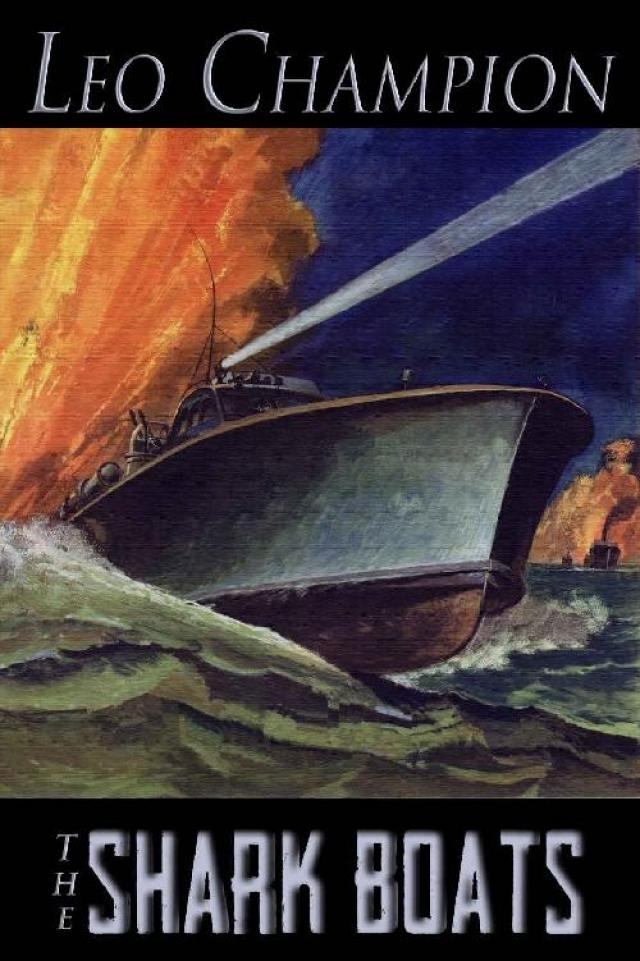
The Shark Boats
by
Leo Champion
The Shark Boats copyright 2013 Leo Champion
Cover image copyright 2013 Leo Champion
Published by Argilla Tabula
This is a work of fiction. All the characters and events portrayed in this book are fictional, and any resemblance to real people or incidents is purely coincidental.
ISBN-13: 978-1-927933-020-2
Dedication
For my mother, Kilmeny Niland, 1950-2009.
I wish you could have lived to see this.
Acknowledgements
I’d like to thank my first readers Joseph Capdepon, Jason Cordova, Joe Danhauer, Leon Jester, Michael Massa, Roger ‘Rhino’ Ross and especially Rob Thompson, for providing me with immediate feedback, thoughts and error-correction through and immediately after the writing process. Without you guys, it would be a much poorer story - especially you, Rob, whose intelligence background really shows.
Karen Ahle deserves her usual immense credit for keeping me sane and functional, both through the process of writing and of publishing this thing. Not to mention the rest of the time.
Mark Schierbecker handled the cover design and much of its production; the story is my work, but adapting the cover art (which began life as a US government WW2 propaganda poster) was his, and he did a fine job.
Wayne Borean is another person it wouldn’t have gone to press without; a book needs a publisher, and Wayne is a good one.
All typos, research errors, formatting screwups and other infelicities are, of course, my own.
Prologue
From the fourth floor of the Academia Militar de Cajamarca’s second-year dormitory, you could look west and see squalor. The Academy itself was the most prestigious on the continent and arguably the planet; its elegant greystone buildings and well-manicured parade grounds were a training ground for the Cajamarcan military elite and the most promising young officers from half a hundred other nations across the continent. But on the other side of a stone wall no more than eighty well-mowed yards from the dormitory, ragged peasants worked rice fields.
Cadet Second-Year Amadeo de Ramirez lit a cigarette and inhaled, slowly turning away from the window. He passed his gold lighter over to Cadet Third-Year Enrico Stavrenis.
“This is wrong,” he said flatly.
The other five young men in the room murmured their agreement. Three of them – now four, as Stavrenis lit his – were smoking. The cigarettes were the same as Ramirez’; Southern-made Texas Golds. Northern had its own tobacco production, but if you could afford to smoke a Southern brand then you did.
Not many could.
“There was a riot in Valle Ciudad in February,” said Cadet Second-Year Antonio Collado. Collado was a heavyset young man and the only cadet in the room not from an old military family. His father had been a corporal and the posthumous winner of the Republic of Cajamarca’s highest battlefield decoration.
“Factory workers who wanted better wages,” Collado went on. “Fueled by a couple of union agitators who’d skipped out of Southern just ahead of some company detectives over there. A battalion of the Presidential Guard met them on the Concourse and opened fire without warning. Two hundred and eighty dead, I hear. Then they found the Southerners and hanged them.”
“Good,” said Prevada. “Southerners dying, that is.”
“Who the hell are you pretending to kid?” asked de Ramirez, looking at Stavrenis. Then at each of the others in turn. A couple of moments into the attentive eyes of each of them. Four of them and himself were from some of the continent’s finest families. Collado was from the gutter, and he was three years older than his second-year classmates because he’d had to attend a special pre-Academy school so he could learn to read.
The irony was that the battle Collado’s father had died in had been against the same military that slender, fair-skinned Cadet Third-Year Ramon Prevada would join upon graduation. After seven years, a war in which nine thousand had died was irrelevant enough that the most promising Costa Verdeans were again studying at their old enemy’s academy. It was likely that Collado was the only man in this room who knew or cared what that war had been fought over, anyway. de Ramirez didn’t.
“Who the damned hell are you pretending to kid?” he asked again, softly. “Two men from Southern died here. Meanwhile, the United Southern Colonies grew last year by another colony. By peaceful integration, and there’s been perhaps twenty wars between the filthy English-speakers in the last four hundred years.”
His voice began to rise, with the agitation and the passion of a nineteen-year-old idealist:
“While we are lucky if we only have that many wars happening at once! The Southerners have wealth and a middle class! They have tens of thousands of farmers and ranchers who own their own land. We have peasants and patrons in the districts – we have bosses and workers in the cities. Young men like us die, of starvation, because their patron sold their rice crop to buy a new car from some Southern industrialist. Young women who could be our sisters sell themselves into whoredom because their fathers were sacked from a factory for looking at a manager the wrong way! And nothing has changed!”
“There was a young maid on my family’s estate,” said Prevada. “She was fifteen. My brother raped her; he forced her to go with him, or she’d have been dismissed. She became pregnant and was sacked for it. I saw her near the docks as I was leaving for here. She was waving a red handkerchief and looked like an old woman.”
“There was–” Ramirez began.
“We all have our stories,” said Collado. “Which we’ve discussed enough times.”
They must hurt him, thought Ramirez. For himself, this was merely sympathy for a lower class that deserved better. But these were Collado’s people.
No. They’re all people, Ramirez made himself think. Even the ones who seemed more like animals, the dirt-grubbing peasants and the whores with their red handkerchiefs and the arthritic-figured forty-year-old seamstresses. They were people too, and as their superior he had a duty to them.
“We’re not here,” de Ramirez agreed, “for that kind of discussion. We’ve had it many times. The time has come for action. All of us here trust each other, no?”
There were nods, a couple of quiet murmurs. Stavrenis stubbed out his cigarette and lit another.
“Gentlemen, the peasants cannot improve themselves. They’re unable to; they’re not educated. They’re treated little better than pigs in pens. If they are to accomplish anything, they will need literate people. They will need direction. The reason the working men on Southern are rising, are complaining, are demanding better treatment, is that they have a middle class who can explain to them what must be done and how to do it. Northern has nobody like that.”
“Northern has us,” said Prevada.
“Northern has us,” Ramirez agreed. “The Academy teaches us about duty to our nations. I say that duty to our nations comes second, third, fourth, last, after our duty to the people. Our duty to” – what was the term he’d read in the pamphlet? – “social justice.”
More nods and murmurs.
“We are being trained to fight,” Ramirez said. “To lead men. Why should we lead them into pointless carnage? Why can’t we lead them towards peace – peace and brotherhood? If we stopped killing each other, stopped exploiting each other, there would be equality. There would be – there would be so much more to go around. Peoples’ lives would be better.”
I could be hung for treason occurred to Ramirez. But it was an abstract thought, as abstract to his nineteen-year-old mind as the notion of dying heroically with a raised sabre as cannon boomed.
As abstract a notion, and as glorious. He drew his knife, an ivory-hilted silver blade that his father had given him on his eighteenth birthday.
“It is time we stopped talking,” he continued, “and began to plan. Action. The revolution must happen, it will happen, it has to happen. It will need – it will depend upon – men like us. It will not happen without men like us, with the education and the background to understand what to do. And we must trust each other. As brothers.”
Flinching hard with the pain, Ramirez made a shallow cut diagonally across his right palm. Blood immediately began to well. Stavrenis, always quick to catch on, had his own knife out. Ramirez gave his blade to Collado, who deserved to cut himself with a proper weapon, and the others opened their own hands.
Ramirez smeared blood from the cut all aross his palm, then shook Stavrenis’ equally bloody hand, holding the grasp for a few seconds so that the blood would flow into each others’ cuts. Then he shook Prevada’s hand, then Collado’s, then each of the others’. One by one, each cadet did the same, shaking every other’s hand. Solemnly and slowly.
Blood brothers, thought Ramirez, trembling slightly. This was the most serious thing he had ever done. What could a man do that was more serious and more noble than this?
From this, great things will emerge. From these handshakes, the oppressed masses will rise in freedom. We have seen the problems and the unfairness, and we are decisive. We are six men from three colonies and this may be the start of one – of one great nation. Based upon fairness and equality.
“We are now brothers,” Ramirez said slowly. “Of liberty. Of—”
“Of the dirt,” said Stavrenis.
There were one or two half-smiles. One of the drill officers had used that phrase a lot, ‘brothers of the dirt,’ on a recent field exercise.
“We are brothers of the dirt,” St
“Yes,” said Ramirez. Brothers of liberty would have been like something out of a story in one of those childish Southern pulp magazines.
“We are now brothers,” he agreed. “The brothers of the dirt. Los hermanos del suelo.”
“And los hermanos del sangre,” Stavrenis murmured, but only Ramirez heard him.
Twenty years later
“San-gre! San-gre!”, the mob outside was chanting unsteadily. There were a hundred thousand of them on the square outside the Presidential Palace of Cajamarca, gathered to celebrate today’s victory.
Ramirez could hear some of the civilian Committee members trying to give speeches. Their imported loudspeakers squealed and fritzed under the strain of maximum power.
A young man came in from the balcony, dressed in good civilian clothes with a large revolver stuck into his belt. His name was Max, Ramirez recalled, and his father was one of the Committee men out there.
“They want more blood,” Max said to the military officers in the Presidential throne-room. He didn’t look at Ramirez.
“Of course they want more blood,” said Lieutenant-General Brother Enrico de la Stavrenis, who stood slouched against one wall in plain khakis that lacked even rank insignia. He looked like a fastidious enlisted man or a discreetly-wealthy civilian; for the past three years he’d been chief of intelligence for the People’s Army of Liberation.
“More bosses,” Stavrenis said. “More rich peoples’. Each other’s. Ours.”
Ramirez leaned back in his chair. His boots were crossed over on the late President’s desk, their brown leather tinted slightly by the blood he’d had to wade through to get here. The President and most of his inner circle had been trapped in the palace, and had died here. His head rested, on the back of this chair, against a damp spatter that had a few hours ago been somebody’s brains.
Twenty years ago he might have found that repulsive. Eighteen years of military service had inured him somewhat. In the three years since the revolution had started in earnest, and Lieutenant-Colonel de Ramirez became People’s General Brother Ramirez, he’d become much more than somewhat inured to these things. If you wanted omelettes, eggs had to be broken.
“They’re not going to get it,” he told Max flatly.
“We have to give them something. They’re getting angry,” said Max. “And they’ve earned it! The people have triumphed!”
He’s what, nineteen? thought Ramirez. Could I ever have been that stupidly melodramatic when I was his age?
“Most of those people,” he said, “have been drinking since before the street fighting was completely over. They want to celebrate their victory, and I’m sure they’d appreciate it if those intellectuals out there would shut up and let them.”
Those idiots out there, Ramirez wanted to say. But no – let the Committee dig its own grave. They might understand revolutionary theory – whatever the hell that was – but they didn’t know a damn thing about winning hearts, or battles.
Good.
“The Committee members have just as much right to speak as you generals do,” said Max. “And my father said to tell you that we have three hundred prisoners who sided with the ruling class. The Committee wants you to take them out and detail a platoon to have them machine-gunned.”
“We have three hundred engineers and mechanics,” said Ramirez. “And I’d gladly allow you to shoot these ones if you’ll tell me exactly how I’ll magic up three hundred more tomorrow.”
“Brother General, these people were traitors to their class. They built the factories that exploited the masses. They were wilful mercenary lackeys of the ruling class.”
“And without them,” said Ramirez, his tone getting cold, “we’re going to have a hard time building what we need.”
Damnit, I shouldn’t even still be here. Not given those reports about loyalists beginning to regroup in the Notre Maria Valley.
“Building new factories,” he informed Max. “Rebuilding what was destroyed in the fighting. Bringing our country forwards again. In fact, it might not be such a bad idea to announce an open amnesty. All engineers, mechanics, shipbuilders, architects, whatever. We need `em.”
“I can have that out by tomorrow morning,” said Stavrenis.
“Tell `em they can keep their property and their money, even,” said Ramirez. “Some of it, anyway. If they come forward now and behave themselves. We need those guys more than we need anyone.”
“That’s class treason!” said Max. “They ought to be shot!”
For a moment Ramirez contemplated shooting this bloodthirsty young punk. But he’d been that way once, hadn’t he, at the very start of all this? Dumb and idealistic?
Probably. It was hard to believe he could have been that stupid, though.
“Go back out and annoy the people some more,” he said, waving a hand at the doors. “Cordona, triple the guard on those cells. Those prisoners aren’t to be touched except on my or Stavrenis’ personal orders.”
“Yessir,” said a major who had been directly recruited by one of the original Brothers. He saluted and left the room.
“I need to go south,” Ramirez told another aide. “Prep my plane and tell Collado I’ll be with him inside a few hours.”
Counterrevolutionaries – Loyalists, they called themselves – were still a threat. Some of the colonial governments, especially in the rugged interior and on the northern altiplano, had survived successive waves of revolution and were absorbing the refugees and straggling soldiers of those that had not.
They’d been beaten hard, were demoralized and disorganized and off-balance, but given time they could become a serious threat. It was essential that they didn’t get that time, that the revolution kept its momentum and secured the continent.
Some of them would no doubt escape to Southern or the islands. But, Ramirez thought, history will prove them irrelevant.
Especially when revolution spread from Northern. When it rose on Southern and enveloped the world.
He got up, checked the pistol at his side and headed onto the balcony. There was a cheer when the gathered mob saw him. Rifles fired into the air, their muzzle-flashes sharp in the square’s half-darkness.
“And so, the Marxian dialect states, the issue of rents must clearly be resolved by popular direction!” a middle-aged Committeewoman announced, and then paused as though expecting cheers.
Ramirez smiled at the woman, then reached over and firmly took the microphone out of her hands. He nodded at one of the officers who’d come onto the balcony behind him; that man reached up and unplugged the speakers.
Immediately the static and feedback stopped. So did the chanting and loud conversational babble from the mob, as people looked up to see what had happened.
“People!” Ramirez declared. “Today we have accomplished a great victory! Cajamarca, finally, is free! Soon we will begin to build our new society – our fair society, our great society, our society of the people!”
His voice carried over the square. There was a cheer, a massive cheer that lasted for almost a minute before Ramirez gestured with his hands for calm.
“But the military war is not yet won – not yet! Every citizen must do his part, and I must do mine. I thank you for excellently performing yours, and I hope you will pray to Jesus and the Mother that we shall win victories! The victories that will unite all of Northern under brotherhood and equality!”
More cheering. Ramirez looked down at his mob and smiled.
There’s more work to do – a lot more – but from here on, I don’t think it’s going to be so hard.
Probably. Southern corporations had interests in parts of Northern, and de la Stavrenis had mentioned some disturbing reports about mercenaries and arms shipments coming in. It was unlikely that enough would get here in time to be more than a nuisance, but long-term…
Long-term, that sort of thing had to be a consideration. There were oppressed laboring people on Southern, weren’t there? Laboring people whose governments were a lot more efficient with their soldiers and their propaganda than the corrupt Northern tyrants had been.


