

Cinderella Sims, page 15


Then we got the hell out of there. I carried the press and the suitcase, left the gun in the closet with Baron, loaded the stuff in the trunk of the car. The keys weren’t in the ignition and I had to go back and get them from Reed. I also went through their pockets, took their money. We’d need all we could get until the presses started rolling.
I locked the back door, tossed the key into the bushes. If anybody wanted in they were going to have to break their way in. Somebody might do that the next morning, but with luck we had a month, maybe more.
Plenty of time.
I drove the Olds, backed it out of the driveway, hit the street and got going. I kept well under the speed limit, drove in the right lane, and got us the merry hell out of beautiful San Francisco. We both felt a hell of a lot better once we were on the open road, better still when we were across the state line.
We stopped at a place called the Golden d’Or Motel, a last-chance affair on the outskirts of a small Nevada town named Madison City. The name was fancier than the place itself. There were a string of a dozen tourist cabins, none of them painted since the owner bought the place, which must have been around the turn of the century. The owner’s shack stood to one corner, a little larger than the cabins and, paradoxically, a little more run-down—maybe because it got more play. The VACANCY sign was permanently attached to the big sign announcing the name of the place. I don’t think they had a NO VACANCY sign. I’m sure they never needed one.
I hit the brakes, killed the engine and tapped the horn. The owner came out, a long lanky man with a hawk nose and a pair of dusty blue jeans. He was wearing a ten-gallon hat and I guessed that he fancied himself a tourist attraction. He shuffled over to the car.
“Lucky for you,” he said, “I got a cabin left.” He had eleven like it, and they were also left but we didn’t bother telling him this. Instead I signed the book—I think I used the name Mr. and Mrs. Benjamin Harrison—and paid the guy, and we piled out of the car and into the cabin. Luxurious it was not—old furniture scarred with cigarette butts and bottle rings, a creaking bed, walls that wouldn’t stand up for a minute if a good wind ever blew across that section of Nevada.
We dropped into Madison City for a meal. There was one excuse for a restaurant in the town. I had eggs and coffee; Cindy had toast and tea. Neither of us was very hungry. Not for food.
So we left the excuse for a restaurant and returned to the excuse for a cabin, and we went into the cabin and locked the door behind us, and I turned to look at Cindy and she looked back at me and it began.
“We made it,” she said. “We made it, Ted. We…did it, we finished it, we did the job. We’re all set now, Ted. We’re rich.”
She was shaking like a leaf. This wasn’t too hard to understand. All the pressures had piled up on her and she’d never fully cracked up. Now that we were safe, now that it was over, she was letting herself fall apart a little. I held her close and stroked her hair. It was unbelievably soft to the touch.
“It’s okay,” I said. “It’s okay, baby.”
“We did it. We did it, Ted.”
“Easy, baby. Just relax, everything’s all right, it’s all over. Just relax.”
She was shivering. “Suppose they find the bodies, Ted. Then what?”
“They won’t find them for weeks.”
“They might have found them already, Ted. You can never say for sure. Maybe somebody had to deliver a package to that house and decided something must be wrong.”
“Why would they do that?”
She gave a little shrug. “I don’t know,” she said. “But it could happen. Or some nosy neighbor could decide something was wrong and call the police. You never know what’s going to happen. I’ve read about cases that get solved that way. One slip of luck like that and the whole ballgame is over.”
“It won’t happen.”
“But what if it did?”
I held her closer and rubbed the back of her neck. Deep down inside she wasn’t as excited as she seemed. It was just the damned pressure.
“Listen,” I said, “let’s suppose the cops have already found the bodies. Personally, I think the odds against that are sky-high, but I’ll concede the possibility. As you said, it could happen.”
She didn’t say anything.
“Even so,” I went on, “we’re about as safe as a government bond. They can’t follow us. They don’t know a thing about us, not a damned thing. As far as they’re concerned, we’re nameless and faceless. They don’t know if there’s one of us or ten of us. Nobody’s looking for a man and a woman and nobody will.”
“How about the car?”
“It’s safe.”
“Maybe somebody spotted it.”
I shrugged. “It could happen,” I said, “but don’t stay up nights worrying about it. The car was clean when they drove up. It wasn’t there very long before we were in it and out of the city. If it’ll make you happy, we can get rid of it tomorrow.”
“I think we should, Ted. There’s no sense taking chances.”
That was all right with me.
“And the money, Ted. The…counterfeit. That’s another chance.”
“It’s no chance at all,” I told her. “The bills will pass banks, for God’s sake. And there’s no way to tie up the job in San Francisco with counterfeiting. We got rid of all the junk in the place. Face it, baby—we’re one hundred percent pure. Not even Ivory Soap can make that statement.”
“I know, but—”
“But what?”
“But I’m scared.”
She was scared—and she would go on being scared no matter how much talking I did. Her fear was emotional, not rational. It demanded an emotional solution rather than a profound logical argument.
Which was fine with me.
“Come here,” I said.
She came to me and looked frightened.
“Me Tarzan,” I said. “You Jane. That Bed.”
She looked at me, at herself, and at the bed. A slow smile spread on her face. She understood completely and she was all in favor of the idea. But she stood there looking young and scared and virginal and left me to take good care of her.
While she stood there like a statue, motionless and beautiful and frightened, I took her in my arms and kissed her. Then I undressed her, taking her clothes off slowly but surely, my hands deft and clever. As each article of clothing left her person and became part of a crumpled heap on the cabin floor, more of her beauty was uncovered. It was like seeing her for the first time. I’d made love to her before—how many times?—but it seemed now that I had never realized quite how lovely she was.
It was uncanny. I had seen her on the street, then followed her only to discover she lived in the building right across from mine. And that little odd coincidence had led us to hell and back, from New York to Phoenix to Frisco to a broken down cabin on the outskirts of Madison City, Nevada.
And now we were going to make love again.
She stood stock still in bra and panties. I reached behind her, got my fingers on the hook of the bra. I took it off and saw the radiant beauty of her breasts. I wondered again why she bothered to wear a bra. She didn’t need it.
Then the panties.
And then my goddess was nude. I took off my own clothes while she watched through sightless eyes. Then I picked her up in my arms without noticing her weight at all, and I carried her to the ramshackle bed, and I set her down on top of the sheet and stretched out beside her.
I kissed her. I kissed her mouth and her nose and her eyes. I stroked her cheek, her throat. I touched her breasts, felt the firmness of them, pinched the hard little nipples until they stiffened under my touch.
I ran a hand over her stomach. In time, when we were married, that stomach would swell up and blossom out with the weight of the child I would implant there. She would be pregnant with my son or daughter, and the two of us would have managed to create new life.
I touched all of her, her legs and thighs, her back, her shoulders. And throughout the process she remained entirely calm and completely motionless.
“I love you,” I said.
And then it began. I took her once more in my arms, held her tight against me, and passion took over from fear. At once she came alive, alive for me, and I knew that everything was going to be all right. Her breasts cushioned me and her body made a place for me, and then it began in earnest.
It was a new kind of lovemaking for us. It was born in desperation, but it grew and developed with something not desperate or hectic at all. We were in love and nothing was going to stand in our way. We had it made—we were rich and free and nobody was chasing us.
Our lovemaking mirrored this. It was contained and yet unrestrained, passionate but gentle, complete but somehow calm.
There was no rush now, no need to hurry. For the first time in our relationship we were not pressed for time. Instead we had all our lives ahead of us, all the time in the world. And so we didn’t rush. We took things easy, and we moved gently but firmly together, and I lay with the woman I loved and the world was now the best of all possible worlds.
She spoke my name and I spoke hers. She told me that she loved me and I told her it was mutual. But we did not talk very much because it was not very essential. Our bodies were telling each other everything that had to be said.
The bed strained under the weight of our love, its springs echoing the rhythms of passion. Outside, a wind was blowing up and it wouldn’t carry the cabin away. I think if a wind had blown the cabin free from us we would have gone on doing just what we were doing. We’d never have noticed the difference.
Her body locked tight around me and our mouths merged in a kiss. It was going to happen now—our love was snowballing to a climax and no force on earth could have stopped it. The world was about to end—not with a whimper but with a bang.
And, at the crest of passion, she broke. She came to fulfillment with a rush of tears and a heave of sobs, and I knew that her fear and nervousness were over now that the crisis had been reached and surpassed.
Everything was going to be all right.
We slept well for the first time in a long time.
We found a dealer who wouldn’t care about the fine points and traded dead-even for a cheaper car that was not in Reed’s name. That gave us a clean car, which we traded again on a better model when we crossed another state line. If we had left any kind of trail it was covered.
We kept going. Heading east, leaving California as far behind as possible. The little tension that had remained with us was gone entirely when we hit Boston. Cindy was completely calm. I wasn’t, not entirely, and I knew I wouldn’t be as long as we had the plates and the press.
In a Boston hotel room I ran off two grand in twenties for spending money.
I opened a checking account in Rutland, Vermont.
I bought a weekly in Belfast, Vermont. Bought a house in Belfast, set up shop in the basement. Married Cindy, of course. That ought to go without saying.
Then I saved one-dollar bills.
And bleached them.
And turned them into twenties.
I printed a million dollars in twenties. Yes, a million dollars.
Then I got rid of the plates. I pounded them out of shape, tossed them into the hell box at the paper, made type out of them. It was better than throwing them in the river. I still own the press, however, and we use it for job printing at the Sentinel office. Handbills, stationery. Anything but money.
I make a damned good editor, the way it has worked out, and Cindy has developed into a damned good secretary. The paper needed money behind it to get out from under, and with the money I’ve poured into it, things are going pretty well.
Most of the million has been going into stocks and bonds, a little at a time. When it’s all invested we’ll probably leave Belfast, head somewhere else, some other town in some other part of the country. Buy a bigger paper, a bigger house, come in with more money and spend it without looking suspicious at all.
Sometimes we remember that very short period of time when we were hunters and hunted, criminals, murderers. Sometimes I remember Cindy putting a knife into Reed’s back, killing him. She is pregnant now, and it is difficult to reconcile this lovely incipient mother with a murderess. Just as it is difficult to believe that I myself killed four men, one with a bullet in the throat, three more with a gun butt. I don’t feel like a killer, or a criminal, or anything other than what I am—a small-town editor and publisher, a husband, an up-and-coming father.
A strange life. But a good one.
It’s ironic, building a life of good from a life of sin and evil. It’s not only ironic, it’s impossible. Things like this just don’t happen. Except maybe in fiction. But what’s the old saw about truth sometimes being stranger than fiction?
Cindy and a hell of a lot of $20 bills kind of prove it.
I’m not complaining.
Afterword
Look, this wasn’t my idea.
Three or four years ago, Bill Schafer of Subterranean Press suggested that I might give some consideration to republishing a book of mine called $20 Lust, which had originally appeared under the name Andrew Shaw. I recalled the book he meant but dimly; I had, after all, written it in 1960. But I didn’t need to remember it all that vividly to know the answer to his suggestion.
“No,” I told him.
A little later I suggested he might want to publish a fancy edition of Grifter’s Game, the first book under my own name; it had come out as a paperback original, then called Mona, in 1961, and we could celebrate its fortieth anniversary with a nice limited edition hardcover.
Bill was lukewarm to the notion but had an alternative proposal; how about issuing a double volume containing Grifter’s Game and $20 Lust? Once again, I didn’t have to do a lot of soul-searching to come up with a response.
“No,” I told him.
Time passed. Then Ed Gorman, the Sage of Cedar Rapids, reprinted an ancient private eye novelette of mine in a pulp anthology. When it came out he sent me a copy, and although I didn’t read my novelette—I figured it was enough that I wrote the damned thing—I did read his introduction, which I found to be thoughtful, incisive, and generous. I emailed him and told him so, and he emailed me back and thanked me, adding that my early work was probably better than I thought.
“And,” he added, “I really think you ought to consider letting Bill Schafer publish $20 Lust.”
I felt as though I’d been sucker punched. Where the hell did that come from?
So I got in touch with Bill. “I suppose I could at least read it,” I said, “except I can’t, because I don’t have a copy.” He did, or maybe he got one from Ed; in either case, a battered copy arrived in the mail. I looked at the first two pages and I looked at the last two or three pages, and I heaved a sigh. Heaved it clear across the room and would have heaved the book, too, but instead I hollered for my wife, Lynne.
“Bill Schafer wants to reprint this,” I said.
“Great,” she said.
“Not necessarily,” I said, and explained the circumstances. “I’d like you to read this,” I said, “or as much of it as you can without gagging, and then tell me it’s utter crap and I’d surely destroy what little reputation I have if I consent to its republication.”
“Suppose I like it?”
“Not to worry,” I said. “I’ll sign the commitment papers, and I’ll make sure they take real good care of you.”
She found herself a comfortable chair and got to work.
While she’s reading, I’ll tell you what I remember about the book.
In the spring of 1960, I got married. My future ex-wife and I took an apartment on West Sixty-Ninth Street between Columbus and Amsterdam avenues. I installed a desk in our bedroom and planted a typewriter on top of it. I was writing a book a month for a publisher of what we’d now call soft-core porn, but which we then knew as sex novels. Veiled descriptions, no naughty words—but, within those limitations, as arousing as possible. Books, in short, to be read with one hand.
I was doing other things as well, trying to write better books and stories for more respectable markets.
Sometimes a book would start out in one direction and wind up changing course. Grifter’s Game, of which I spoke earlier, is a case in point. After I wrote the first chapter, it occurred to me that this might have possibilities. I stayed with it and wrote it as well as I could, and Henry Morrison, then my agent, agreed that it was a cut above the other stuff, and sent it to Gold Medal Books, where Knox Burger bought it.
Similarly, my second book started out as a TV tie-in novel, a thousand-dollar quickie based on Markham, a short-lived detective series starring Ray Milland. I was pleased with the way it turned out and so was Henry and Knox; I changed the character’s name from Roy Markham to Ed London, and called the book Coward’s Kiss. (Gold Medal called it Death Pulls a Doublecross. In recent years its original title has been restored.)
Now where does $20 Lust fit into this scheme of things? Good question, and I’m not sure I can answer it. Ed Gorman sees it as a precursor to Grifter’s Game, but I’m not sure that’s the case; it may as easily have been written after Grifter’s Game.
What I do know is that it represents a reversal of the earlier pattern, in which I’d started out to write a sow’s ear and wound up with, well, call it a polyester handbag. I set out with the intention of writing a Gold Medal–type crime novel, and somewhere along the way I decided it wasn’t good enough and finished it up as a sex novel. I don’t remember when this happened, only that I was still at that desk and in that apartment at the time. (I was there for nine months, until the end of the year, when my ex-to-be and I moved to 444 Central Park West. We took the desk along, and indeed took it to Tonawanda, New York; to Racine, Wisconsin; and to New Brunswick, New Jersey, where I had to cut off two of its feet to get it upstairs to my third-floor office at 16 Stratford Place. There, for all I know, it remains to this day.)
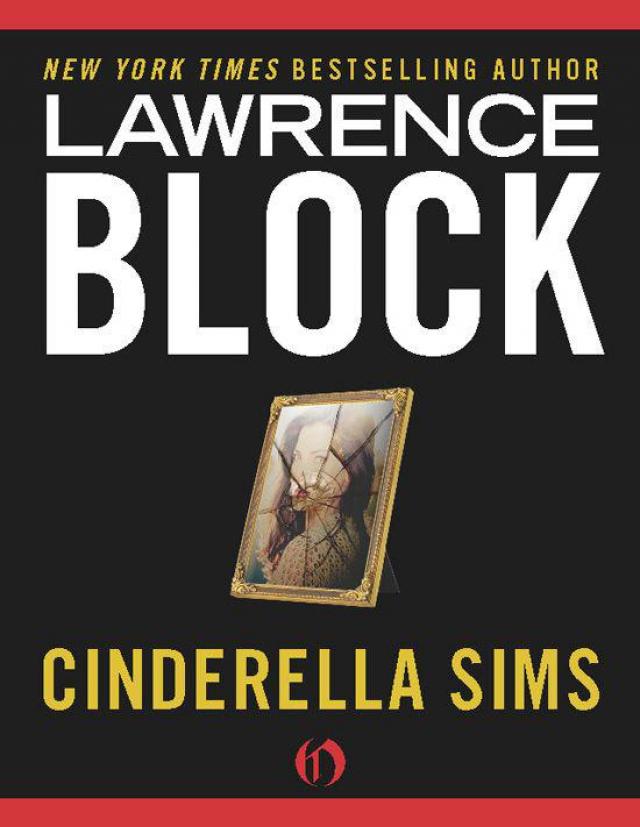
I called the finished book Cinderella Sims. My publisher called it $20 Lust. And poor Lynne wound up stuck with the chore of reading it. Well, better she than I.
I locked the back door, tossed the key into the bushes. If anybody wanted in they were going to have to break their way in. Somebody might do that the next morning, but with luck we had a month, maybe more.
Plenty of time.
I drove the Olds, backed it out of the driveway, hit the street and got going. I kept well under the speed limit, drove in the right lane, and got us the merry hell out of beautiful San Francisco. We both felt a hell of a lot better once we were on the open road, better still when we were across the state line.
We stopped at a place called the Golden d’Or Motel, a last-chance affair on the outskirts of a small Nevada town named Madison City. The name was fancier than the place itself. There were a string of a dozen tourist cabins, none of them painted since the owner bought the place, which must have been around the turn of the century. The owner’s shack stood to one corner, a little larger than the cabins and, paradoxically, a little more run-down—maybe because it got more play. The VACANCY sign was permanently attached to the big sign announcing the name of the place. I don’t think they had a NO VACANCY sign. I’m sure they never needed one.
I hit the brakes, killed the engine and tapped the horn. The owner came out, a long lanky man with a hawk nose and a pair of dusty blue jeans. He was wearing a ten-gallon hat and I guessed that he fancied himself a tourist attraction. He shuffled over to the car.
“Lucky for you,” he said, “I got a cabin left.” He had eleven like it, and they were also left but we didn’t bother telling him this. Instead I signed the book—I think I used the name Mr. and Mrs. Benjamin Harrison—and paid the guy, and we piled out of the car and into the cabin. Luxurious it was not—old furniture scarred with cigarette butts and bottle rings, a creaking bed, walls that wouldn’t stand up for a minute if a good wind ever blew across that section of Nevada.
We dropped into Madison City for a meal. There was one excuse for a restaurant in the town. I had eggs and coffee; Cindy had toast and tea. Neither of us was very hungry. Not for food.
So we left the excuse for a restaurant and returned to the excuse for a cabin, and we went into the cabin and locked the door behind us, and I turned to look at Cindy and she looked back at me and it began.
“We made it,” she said. “We made it, Ted. We…did it, we finished it, we did the job. We’re all set now, Ted. We’re rich.”
She was shaking like a leaf. This wasn’t too hard to understand. All the pressures had piled up on her and she’d never fully cracked up. Now that we were safe, now that it was over, she was letting herself fall apart a little. I held her close and stroked her hair. It was unbelievably soft to the touch.
“It’s okay,” I said. “It’s okay, baby.”
“We did it. We did it, Ted.”
“Easy, baby. Just relax, everything’s all right, it’s all over. Just relax.”
She was shivering. “Suppose they find the bodies, Ted. Then what?”
“They won’t find them for weeks.”
“They might have found them already, Ted. You can never say for sure. Maybe somebody had to deliver a package to that house and decided something must be wrong.”
“Why would they do that?”
She gave a little shrug. “I don’t know,” she said. “But it could happen. Or some nosy neighbor could decide something was wrong and call the police. You never know what’s going to happen. I’ve read about cases that get solved that way. One slip of luck like that and the whole ballgame is over.”
“It won’t happen.”
“But what if it did?”
I held her closer and rubbed the back of her neck. Deep down inside she wasn’t as excited as she seemed. It was just the damned pressure.
“Listen,” I said, “let’s suppose the cops have already found the bodies. Personally, I think the odds against that are sky-high, but I’ll concede the possibility. As you said, it could happen.”
She didn’t say anything.
“Even so,” I went on, “we’re about as safe as a government bond. They can’t follow us. They don’t know a thing about us, not a damned thing. As far as they’re concerned, we’re nameless and faceless. They don’t know if there’s one of us or ten of us. Nobody’s looking for a man and a woman and nobody will.”
“How about the car?”
“It’s safe.”
“Maybe somebody spotted it.”
I shrugged. “It could happen,” I said, “but don’t stay up nights worrying about it. The car was clean when they drove up. It wasn’t there very long before we were in it and out of the city. If it’ll make you happy, we can get rid of it tomorrow.”
“I think we should, Ted. There’s no sense taking chances.”
That was all right with me.
“And the money, Ted. The…counterfeit. That’s another chance.”
“It’s no chance at all,” I told her. “The bills will pass banks, for God’s sake. And there’s no way to tie up the job in San Francisco with counterfeiting. We got rid of all the junk in the place. Face it, baby—we’re one hundred percent pure. Not even Ivory Soap can make that statement.”
“I know, but—”
“But what?”
“But I’m scared.”
She was scared—and she would go on being scared no matter how much talking I did. Her fear was emotional, not rational. It demanded an emotional solution rather than a profound logical argument.
Which was fine with me.
“Come here,” I said.
She came to me and looked frightened.
“Me Tarzan,” I said. “You Jane. That Bed.”
She looked at me, at herself, and at the bed. A slow smile spread on her face. She understood completely and she was all in favor of the idea. But she stood there looking young and scared and virginal and left me to take good care of her.
While she stood there like a statue, motionless and beautiful and frightened, I took her in my arms and kissed her. Then I undressed her, taking her clothes off slowly but surely, my hands deft and clever. As each article of clothing left her person and became part of a crumpled heap on the cabin floor, more of her beauty was uncovered. It was like seeing her for the first time. I’d made love to her before—how many times?—but it seemed now that I had never realized quite how lovely she was.
It was uncanny. I had seen her on the street, then followed her only to discover she lived in the building right across from mine. And that little odd coincidence had led us to hell and back, from New York to Phoenix to Frisco to a broken down cabin on the outskirts of Madison City, Nevada.
And now we were going to make love again.
She stood stock still in bra and panties. I reached behind her, got my fingers on the hook of the bra. I took it off and saw the radiant beauty of her breasts. I wondered again why she bothered to wear a bra. She didn’t need it.
Then the panties.
And then my goddess was nude. I took off my own clothes while she watched through sightless eyes. Then I picked her up in my arms without noticing her weight at all, and I carried her to the ramshackle bed, and I set her down on top of the sheet and stretched out beside her.
I kissed her. I kissed her mouth and her nose and her eyes. I stroked her cheek, her throat. I touched her breasts, felt the firmness of them, pinched the hard little nipples until they stiffened under my touch.
I ran a hand over her stomach. In time, when we were married, that stomach would swell up and blossom out with the weight of the child I would implant there. She would be pregnant with my son or daughter, and the two of us would have managed to create new life.
I touched all of her, her legs and thighs, her back, her shoulders. And throughout the process she remained entirely calm and completely motionless.
“I love you,” I said.
And then it began. I took her once more in my arms, held her tight against me, and passion took over from fear. At once she came alive, alive for me, and I knew that everything was going to be all right. Her breasts cushioned me and her body made a place for me, and then it began in earnest.
It was a new kind of lovemaking for us. It was born in desperation, but it grew and developed with something not desperate or hectic at all. We were in love and nothing was going to stand in our way. We had it made—we were rich and free and nobody was chasing us.
Our lovemaking mirrored this. It was contained and yet unrestrained, passionate but gentle, complete but somehow calm.
There was no rush now, no need to hurry. For the first time in our relationship we were not pressed for time. Instead we had all our lives ahead of us, all the time in the world. And so we didn’t rush. We took things easy, and we moved gently but firmly together, and I lay with the woman I loved and the world was now the best of all possible worlds.
She spoke my name and I spoke hers. She told me that she loved me and I told her it was mutual. But we did not talk very much because it was not very essential. Our bodies were telling each other everything that had to be said.
The bed strained under the weight of our love, its springs echoing the rhythms of passion. Outside, a wind was blowing up and it wouldn’t carry the cabin away. I think if a wind had blown the cabin free from us we would have gone on doing just what we were doing. We’d never have noticed the difference.
Her body locked tight around me and our mouths merged in a kiss. It was going to happen now—our love was snowballing to a climax and no force on earth could have stopped it. The world was about to end—not with a whimper but with a bang.
And, at the crest of passion, she broke. She came to fulfillment with a rush of tears and a heave of sobs, and I knew that her fear and nervousness were over now that the crisis had been reached and surpassed.
Everything was going to be all right.
We slept well for the first time in a long time.
We found a dealer who wouldn’t care about the fine points and traded dead-even for a cheaper car that was not in Reed’s name. That gave us a clean car, which we traded again on a better model when we crossed another state line. If we had left any kind of trail it was covered.
We kept going. Heading east, leaving California as far behind as possible. The little tension that had remained with us was gone entirely when we hit Boston. Cindy was completely calm. I wasn’t, not entirely, and I knew I wouldn’t be as long as we had the plates and the press.
In a Boston hotel room I ran off two grand in twenties for spending money.
I opened a checking account in Rutland, Vermont.
I bought a weekly in Belfast, Vermont. Bought a house in Belfast, set up shop in the basement. Married Cindy, of course. That ought to go without saying.
Then I saved one-dollar bills.
And bleached them.
And turned them into twenties.
I printed a million dollars in twenties. Yes, a million dollars.
Then I got rid of the plates. I pounded them out of shape, tossed them into the hell box at the paper, made type out of them. It was better than throwing them in the river. I still own the press, however, and we use it for job printing at the Sentinel office. Handbills, stationery. Anything but money.
I make a damned good editor, the way it has worked out, and Cindy has developed into a damned good secretary. The paper needed money behind it to get out from under, and with the money I’ve poured into it, things are going pretty well.
Most of the million has been going into stocks and bonds, a little at a time. When it’s all invested we’ll probably leave Belfast, head somewhere else, some other town in some other part of the country. Buy a bigger paper, a bigger house, come in with more money and spend it without looking suspicious at all.
Sometimes we remember that very short period of time when we were hunters and hunted, criminals, murderers. Sometimes I remember Cindy putting a knife into Reed’s back, killing him. She is pregnant now, and it is difficult to reconcile this lovely incipient mother with a murderess. Just as it is difficult to believe that I myself killed four men, one with a bullet in the throat, three more with a gun butt. I don’t feel like a killer, or a criminal, or anything other than what I am—a small-town editor and publisher, a husband, an up-and-coming father.
A strange life. But a good one.
It’s ironic, building a life of good from a life of sin and evil. It’s not only ironic, it’s impossible. Things like this just don’t happen. Except maybe in fiction. But what’s the old saw about truth sometimes being stranger than fiction?
Cindy and a hell of a lot of $20 bills kind of prove it.
I’m not complaining.
Afterword
Look, this wasn’t my idea.
Three or four years ago, Bill Schafer of Subterranean Press suggested that I might give some consideration to republishing a book of mine called $20 Lust, which had originally appeared under the name Andrew Shaw. I recalled the book he meant but dimly; I had, after all, written it in 1960. But I didn’t need to remember it all that vividly to know the answer to his suggestion.
“No,” I told him.
A little later I suggested he might want to publish a fancy edition of Grifter’s Game, the first book under my own name; it had come out as a paperback original, then called Mona, in 1961, and we could celebrate its fortieth anniversary with a nice limited edition hardcover.
Bill was lukewarm to the notion but had an alternative proposal; how about issuing a double volume containing Grifter’s Game and $20 Lust? Once again, I didn’t have to do a lot of soul-searching to come up with a response.
“No,” I told him.
Time passed. Then Ed Gorman, the Sage of Cedar Rapids, reprinted an ancient private eye novelette of mine in a pulp anthology. When it came out he sent me a copy, and although I didn’t read my novelette—I figured it was enough that I wrote the damned thing—I did read his introduction, which I found to be thoughtful, incisive, and generous. I emailed him and told him so, and he emailed me back and thanked me, adding that my early work was probably better than I thought.
“And,” he added, “I really think you ought to consider letting Bill Schafer publish $20 Lust.”
I felt as though I’d been sucker punched. Where the hell did that come from?
So I got in touch with Bill. “I suppose I could at least read it,” I said, “except I can’t, because I don’t have a copy.” He did, or maybe he got one from Ed; in either case, a battered copy arrived in the mail. I looked at the first two pages and I looked at the last two or three pages, and I heaved a sigh. Heaved it clear across the room and would have heaved the book, too, but instead I hollered for my wife, Lynne.
“Bill Schafer wants to reprint this,” I said.
“Great,” she said.
“Not necessarily,” I said, and explained the circumstances. “I’d like you to read this,” I said, “or as much of it as you can without gagging, and then tell me it’s utter crap and I’d surely destroy what little reputation I have if I consent to its republication.”
“Suppose I like it?”
“Not to worry,” I said. “I’ll sign the commitment papers, and I’ll make sure they take real good care of you.”
She found herself a comfortable chair and got to work.
While she’s reading, I’ll tell you what I remember about the book.
In the spring of 1960, I got married. My future ex-wife and I took an apartment on West Sixty-Ninth Street between Columbus and Amsterdam avenues. I installed a desk in our bedroom and planted a typewriter on top of it. I was writing a book a month for a publisher of what we’d now call soft-core porn, but which we then knew as sex novels. Veiled descriptions, no naughty words—but, within those limitations, as arousing as possible. Books, in short, to be read with one hand.
I was doing other things as well, trying to write better books and stories for more respectable markets.
Sometimes a book would start out in one direction and wind up changing course. Grifter’s Game, of which I spoke earlier, is a case in point. After I wrote the first chapter, it occurred to me that this might have possibilities. I stayed with it and wrote it as well as I could, and Henry Morrison, then my agent, agreed that it was a cut above the other stuff, and sent it to Gold Medal Books, where Knox Burger bought it.
Similarly, my second book started out as a TV tie-in novel, a thousand-dollar quickie based on Markham, a short-lived detective series starring Ray Milland. I was pleased with the way it turned out and so was Henry and Knox; I changed the character’s name from Roy Markham to Ed London, and called the book Coward’s Kiss. (Gold Medal called it Death Pulls a Doublecross. In recent years its original title has been restored.)
Now where does $20 Lust fit into this scheme of things? Good question, and I’m not sure I can answer it. Ed Gorman sees it as a precursor to Grifter’s Game, but I’m not sure that’s the case; it may as easily have been written after Grifter’s Game.
What I do know is that it represents a reversal of the earlier pattern, in which I’d started out to write a sow’s ear and wound up with, well, call it a polyester handbag. I set out with the intention of writing a Gold Medal–type crime novel, and somewhere along the way I decided it wasn’t good enough and finished it up as a sex novel. I don’t remember when this happened, only that I was still at that desk and in that apartment at the time. (I was there for nine months, until the end of the year, when my ex-to-be and I moved to 444 Central Park West. We took the desk along, and indeed took it to Tonawanda, New York; to Racine, Wisconsin; and to New Brunswick, New Jersey, where I had to cut off two of its feet to get it upstairs to my third-floor office at 16 Stratford Place. There, for all I know, it remains to this day.)
I called the finished book Cinderella Sims. My publisher called it $20 Lust. And poor Lynne wound up stuck with the chore of reading it. Well, better she than I.


