And When She Was Good, page 29


“For what?” her mother says. It’s unclear which part she needs clarified. Can she really not know? Or does she see things differently?
“It’s a long story.” True on both counts.
“But you know it doesn’t work that way, right? That forgiveness is not— What’s the word?”
“It doesn’t have transitive properties.”
“What?”
“Just because I forgive you, it doesn’t mean Scott will forgive me if that day will come.”
“Aren’t you fancy?”
Heloise believes she detects a note of pride in her mother’s voice.
Back in Turner’s Grove, sitting at the little shelf that really is Mother’s office now—the basement office has been emptied and locked, never to be entered again as long as they live here—Heloise goes over her schedule for the next day, sips a glass of wine.
Audrey comes in to review which appointments she has to cover tomorrow, who’s going to pick up Scott at school. Strangely, since Heloise started helping other women with their lives, her once-smooth-sailing routine seems slightly more chaotic, harder to control. Her male clientele was orderly, predictable. For the women she serves, the emergencies and conflicts never stop coming, and that backs up on her. She needs employees, but she can’t afford their salaries, not yet.
So Audrey’s still working for Heloise, although Heloise can’t offer her anything more than room and board. Instead Heloise has given her a partnership stake in the new business. Why not? It has to turn out better than the collaboration with Val.
“How was the visit?” Audrey asks.
“It was okay.”
“Only okay?”
“Only okay.”
Audrey takes Heloise’s terse answers as her cue to leave. She’s a true silent partner. Unlike Val. He plays a very long game, Terry had told Heloise. Okay, so she’s not safe. That’s the irony. She never was. She never will be. But then—no one is safe in this world. The best you can hope to do is create an illusion of safety for your children for as long as possible. Scott has nightmares now, real ones, even though he never saw what happened in the house. (Bless Coranne, who kept him all that terrible weekend and somehow kept him away from the news.) But he knows, of course. Heloise will sell if she can find something smaller in the same school district, get a good price for this now-infamous house. For the time being, they are stuck here, and for all the cleaning that has been done, she still finds errant spots of blood lurking on the moldings, hiding in the garage.
She works by the light of her laptop, enjoying the darkness, the view through the rear windows, her own still-impressive reflection rebounding back to her, although the dim light obscures the inch of roots in her hair. She sees the lights on in other homes, imagines other women still up, poring over schedules, trying to figure out how to get through life one day, one appointment, one obligation at a time. She’s one of them now.
Maybe she always was.
Author’s Note
This is a work of fiction. While I read quite a bit about prostitution—I’d like to single out Jeanette Angle (Call Girl) and Christine Wiltz (The Last Madam)—I once again took comfort in the wisdom of Donald Westlake: “I became a novelist so I could make things up.” Heloise Lewis’s business model is of my own design, and if she is mistaken in her beliefs about what will keep her safe from prosecution—well, that’s sort of the point of the novel, isn’t it? We are all, at some point or another in our lives, mistaken about the amount of control we have, how shrewd we might be. It has always been my contention that Heloise Lewis is an American everywoman—a single mother trying to maintain a civil relationship with her son’s father, a small-business woman nervous about her future.
I also feel compelled to point out that Heloise first entered my imagination in 2001—before the real housewives of anywhere, before Weeds, before Washingtonienne. And also before the unrelated suicides of two different madams, one in D.C. and one in the Baltimore–D.C. suburbs. In the post-9/11 world in which I pitched stories about Heloise, I think I sounded a little daft. In 2006, however, Harlan Coben asked me to write a story for an anthology in which the theme was love. I asked: “What about a mother’s love for her son? And what if that woman was a prostitute?” He had no problem with it. So thanks to Harlan for the chance to bring Heloise to life, finally. This book might not exist if it weren’t for the invitation.
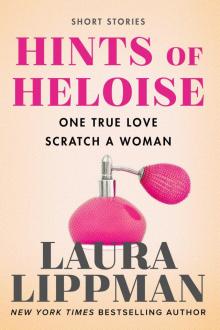
Two years later, a book of previously published short stories was heading to publication and my editor, Carrie Feron, asked if I could write at least one new piece for the collection. In two weeks, I wrote “Scratch a Woman,” a novella about Heloise’s twisted relationship with her half sister, Meghan. Still, I always knew I wanted to come back to this complicated woman and explore how she became who she was. How she got in and how she got out.
There are some small discrepancies between Heloise’s historical record, if you will, and this novel. See above: “Donald Westlake . . . make things up.” One character decided he deserved a different name. Scott’s soccer skills eroded slightly as he aged, but that happens. Turner’s Grove is completely fictional, as is Heloise’s church and Tommy’s Market. And, of course, every single politician referenced here is a fictional creation. Politicians with prostitutes! Some people probably think I’ve entered the fantasy genre with this book.
As always, I had help. As always, I’m the only one responsible for any errors. Thanks to William F. Zorzi Jr., who indulged my fictional flights about a bogus lobbyist and how she might operate; thanks to Bill Salganik, who provided me lots of information and sources about health care, which I ended up not using.
Then there is the Mouseketeer roll call of regulars: David Simon; Alison Chaplin; Maureen Sugden; Vicky Bijur; Carrie Feron; and pretty much everyone at HarperCollins/William Morrow, including, but not limited to, Michael Morrison, Liate Stehlik, Lynn Grady, Sharyn Rosenblum, Tessa Woodward, and Stephanie Kim. A shout-out to Beth Tindall, who deserves an island of her own. Finally, thanks again to Sara Kiehne for taking such good care of Georgia Rae Simon. Also, thanks to all the people on Facebook who tolerate my word counts and bursts of enthusiasm for kale and shoes.
The book is dedicated to three good friends, but also to all women. The fact is, I am eternally grateful that I didn’t get to write Heloise’s story for a decade. Like her, I had a long journey to make. And while I don’t have a “Mother’s office” in a McMansion, I’ve been known to have a glass of wine in the dark at the end of a long, exhausting day. Sometimes two.
LAURA LIPPMAN
APRIL 2012
About the Author
LAURA LIPPMAN has been awarded every major prize in crime fiction. Since the publication of What the Dead Know, each of her hardcovers has hit the New York Times bestseller list. A recent recipient of the first-ever Mayor’s Prize, she lives in Baltimore, Maryland, and New Orleans with her husband, David Simon, their daughter, and her stepson.
Visit www.AuthorTracker.com for exclusive information on your favorite HarperCollins authors.
Also by Laura Lippman
The Most Dangerous Thing
I’d Know You Anywhere
Life Sentences
Hardly Knew Her
Another Thing to Fall
What the Dead Know
No Good Deeds
To the Power of Three
By a Spider’s Thread
Every Secret Thing
The Last Place
In a Strange City
The Sugar House
In Big Trouble
Butchers Hill
Charm City
Baltimore Blues
Credits
Cover design by Mary Schuck
Cover photograph by Shutterstock
Copyright
This book is a work of fiction. References to real people, events, establishments, organizations, or locales are intended only to provide a sense of authenticity, and are used fictitiously. All other characters, and all incidents and dialogue, are drawn from the author’s imagination and are not to be construed as real.
AND WHEN SHE WAS GOOD. Copyright © 2012 by Laura Lippman. All rights reserved under International and Pan-American Copyright Conventions. By payment of the required fees, you have been granted the nonexclusive, nontransferable right to access and read the text of this e-book on-screen. No part of this text may be reproduced, transmitted, downloaded, decompiled, reverse-engineered, or stored in or introduced into any information storage and retrieval system, in any form or by any means, whether electronic or mechanical, now known or hereinafter invented, without the express written permission of HarperCollins e-books.
FIRST EDITION
ISBN 978-0-06-170687-5
EPub Edition © SEPTEMBER 2012 ISBN: 9780062201614
12 13 14 15 16 OV/RRD 10 9 8 7 6 5 4 3 2 1
About the Publisher
Australia
HarperCollins Publishers (Australia) Pty. Ltd.
Level 13, 201 Elizabeth Street
Sydney, NSW 2000, Australia
http://www.harpercollins.com.au
Canada
HarperCollins Canada
2 Bloor Street East - 20th Floor
Toronto, ON, M4W, 1A8, Canada
http://www.harpercollins.ca
New Zealand
HarperCollins Publishers (New Zealand) Limited
P.O. Box 1
Auckland, New Zealand
http://www.harpercollins.co.nz
United Kingdom
HarperCollins Publishers Ltd.
77-85 Fulham Palace Road
London, W6 8JB, UK
http://www.harpercollins.co.uk
United States
HarperCollins Publishers Inc.
10 East 53rd Street
New York, NY 10022
http://www.harpercollins.com
Laura Lippman, And When She Was Good
Thank you for reading books on Archive.BookFrom.Net
Share this book with friends
“It’s a long story.” True on both counts.
“But you know it doesn’t work that way, right? That forgiveness is not— What’s the word?”
“It doesn’t have transitive properties.”
“What?”
“Just because I forgive you, it doesn’t mean Scott will forgive me if that day will come.”
“Aren’t you fancy?”
Heloise believes she detects a note of pride in her mother’s voice.
Back in Turner’s Grove, sitting at the little shelf that really is Mother’s office now—the basement office has been emptied and locked, never to be entered again as long as they live here—Heloise goes over her schedule for the next day, sips a glass of wine.
Audrey comes in to review which appointments she has to cover tomorrow, who’s going to pick up Scott at school. Strangely, since Heloise started helping other women with their lives, her once-smooth-sailing routine seems slightly more chaotic, harder to control. Her male clientele was orderly, predictable. For the women she serves, the emergencies and conflicts never stop coming, and that backs up on her. She needs employees, but she can’t afford their salaries, not yet.
So Audrey’s still working for Heloise, although Heloise can’t offer her anything more than room and board. Instead Heloise has given her a partnership stake in the new business. Why not? It has to turn out better than the collaboration with Val.
“How was the visit?” Audrey asks.
“It was okay.”
“Only okay?”
“Only okay.”
Audrey takes Heloise’s terse answers as her cue to leave. She’s a true silent partner. Unlike Val. He plays a very long game, Terry had told Heloise. Okay, so she’s not safe. That’s the irony. She never was. She never will be. But then—no one is safe in this world. The best you can hope to do is create an illusion of safety for your children for as long as possible. Scott has nightmares now, real ones, even though he never saw what happened in the house. (Bless Coranne, who kept him all that terrible weekend and somehow kept him away from the news.) But he knows, of course. Heloise will sell if she can find something smaller in the same school district, get a good price for this now-infamous house. For the time being, they are stuck here, and for all the cleaning that has been done, she still finds errant spots of blood lurking on the moldings, hiding in the garage.
She works by the light of her laptop, enjoying the darkness, the view through the rear windows, her own still-impressive reflection rebounding back to her, although the dim light obscures the inch of roots in her hair. She sees the lights on in other homes, imagines other women still up, poring over schedules, trying to figure out how to get through life one day, one appointment, one obligation at a time. She’s one of them now.
Maybe she always was.
Author’s Note
This is a work of fiction. While I read quite a bit about prostitution—I’d like to single out Jeanette Angle (Call Girl) and Christine Wiltz (The Last Madam)—I once again took comfort in the wisdom of Donald Westlake: “I became a novelist so I could make things up.” Heloise Lewis’s business model is of my own design, and if she is mistaken in her beliefs about what will keep her safe from prosecution—well, that’s sort of the point of the novel, isn’t it? We are all, at some point or another in our lives, mistaken about the amount of control we have, how shrewd we might be. It has always been my contention that Heloise Lewis is an American everywoman—a single mother trying to maintain a civil relationship with her son’s father, a small-business woman nervous about her future.
I also feel compelled to point out that Heloise first entered my imagination in 2001—before the real housewives of anywhere, before Weeds, before Washingtonienne. And also before the unrelated suicides of two different madams, one in D.C. and one in the Baltimore–D.C. suburbs. In the post-9/11 world in which I pitched stories about Heloise, I think I sounded a little daft. In 2006, however, Harlan Coben asked me to write a story for an anthology in which the theme was love. I asked: “What about a mother’s love for her son? And what if that woman was a prostitute?” He had no problem with it. So thanks to Harlan for the chance to bring Heloise to life, finally. This book might not exist if it weren’t for the invitation.
Two years later, a book of previously published short stories was heading to publication and my editor, Carrie Feron, asked if I could write at least one new piece for the collection. In two weeks, I wrote “Scratch a Woman,” a novella about Heloise’s twisted relationship with her half sister, Meghan. Still, I always knew I wanted to come back to this complicated woman and explore how she became who she was. How she got in and how she got out.
There are some small discrepancies between Heloise’s historical record, if you will, and this novel. See above: “Donald Westlake . . . make things up.” One character decided he deserved a different name. Scott’s soccer skills eroded slightly as he aged, but that happens. Turner’s Grove is completely fictional, as is Heloise’s church and Tommy’s Market. And, of course, every single politician referenced here is a fictional creation. Politicians with prostitutes! Some people probably think I’ve entered the fantasy genre with this book.
As always, I had help. As always, I’m the only one responsible for any errors. Thanks to William F. Zorzi Jr., who indulged my fictional flights about a bogus lobbyist and how she might operate; thanks to Bill Salganik, who provided me lots of information and sources about health care, which I ended up not using.
Then there is the Mouseketeer roll call of regulars: David Simon; Alison Chaplin; Maureen Sugden; Vicky Bijur; Carrie Feron; and pretty much everyone at HarperCollins/William Morrow, including, but not limited to, Michael Morrison, Liate Stehlik, Lynn Grady, Sharyn Rosenblum, Tessa Woodward, and Stephanie Kim. A shout-out to Beth Tindall, who deserves an island of her own. Finally, thanks again to Sara Kiehne for taking such good care of Georgia Rae Simon. Also, thanks to all the people on Facebook who tolerate my word counts and bursts of enthusiasm for kale and shoes.
The book is dedicated to three good friends, but also to all women. The fact is, I am eternally grateful that I didn’t get to write Heloise’s story for a decade. Like her, I had a long journey to make. And while I don’t have a “Mother’s office” in a McMansion, I’ve been known to have a glass of wine in the dark at the end of a long, exhausting day. Sometimes two.
LAURA LIPPMAN
APRIL 2012
About the Author
LAURA LIPPMAN has been awarded every major prize in crime fiction. Since the publication of What the Dead Know, each of her hardcovers has hit the New York Times bestseller list. A recent recipient of the first-ever Mayor’s Prize, she lives in Baltimore, Maryland, and New Orleans with her husband, David Simon, their daughter, and her stepson.
Visit www.AuthorTracker.com for exclusive information on your favorite HarperCollins authors.
Also by Laura Lippman
The Most Dangerous Thing
I’d Know You Anywhere
Life Sentences
Hardly Knew Her
Another Thing to Fall
What the Dead Know
No Good Deeds
To the Power of Three
By a Spider’s Thread
Every Secret Thing
The Last Place
In a Strange City
The Sugar House
In Big Trouble
Butchers Hill
Charm City
Baltimore Blues
Credits
Cover design by Mary Schuck
Cover photograph by Shutterstock
Copyright
This book is a work of fiction. References to real people, events, establishments, organizations, or locales are intended only to provide a sense of authenticity, and are used fictitiously. All other characters, and all incidents and dialogue, are drawn from the author’s imagination and are not to be construed as real.
AND WHEN SHE WAS GOOD. Copyright © 2012 by Laura Lippman. All rights reserved under International and Pan-American Copyright Conventions. By payment of the required fees, you have been granted the nonexclusive, nontransferable right to access and read the text of this e-book on-screen. No part of this text may be reproduced, transmitted, downloaded, decompiled, reverse-engineered, or stored in or introduced into any information storage and retrieval system, in any form or by any means, whether electronic or mechanical, now known or hereinafter invented, without the express written permission of HarperCollins e-books.
FIRST EDITION
ISBN 978-0-06-170687-5
EPub Edition © SEPTEMBER 2012 ISBN: 9780062201614
12 13 14 15 16 OV/RRD 10 9 8 7 6 5 4 3 2 1
About the Publisher
Australia
HarperCollins Publishers (Australia) Pty. Ltd.
Level 13, 201 Elizabeth Street
Sydney, NSW 2000, Australia
http://www.harpercollins.com.au
Canada
HarperCollins Canada
2 Bloor Street East - 20th Floor
Toronto, ON, M4W, 1A8, Canada
http://www.harpercollins.ca
New Zealand
HarperCollins Publishers (New Zealand) Limited
P.O. Box 1
Auckland, New Zealand
http://www.harpercollins.co.nz
United Kingdom
HarperCollins Publishers Ltd.
77-85 Fulham Palace Road
London, W6 8JB, UK
http://www.harpercollins.co.uk
United States
HarperCollins Publishers Inc.
10 East 53rd Street
New York, NY 10022
http://www.harpercollins.com
Laura Lippman, And When She Was Good