

The Night We Lost Him, page 1


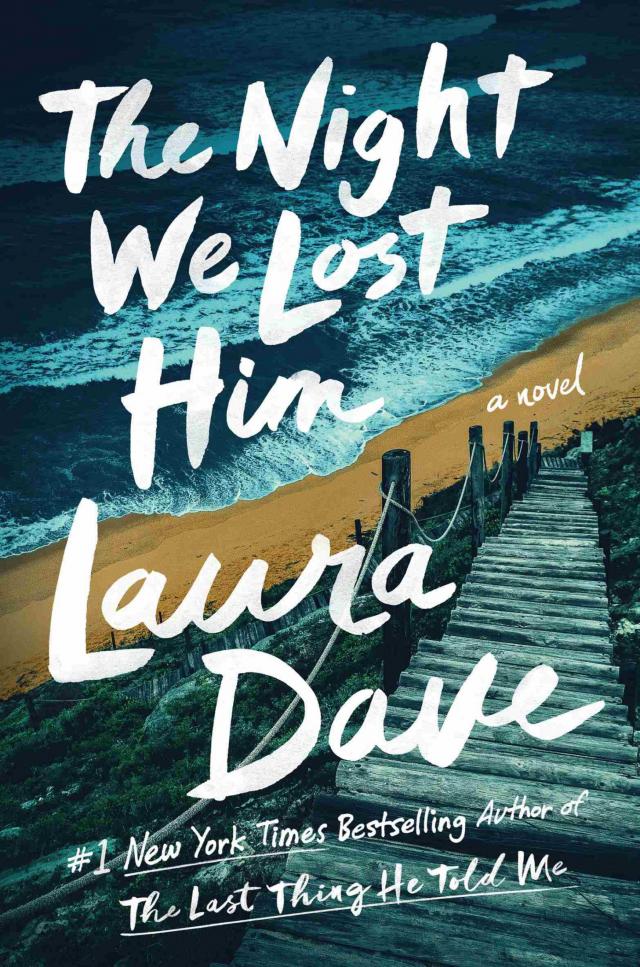
Thank you for downloading this Simon & Schuster ebook.
Get a FREE ebook when you join our mailing list. Plus, get updates on new releases, deals, recommended reads, and more from Simon & Schuster. Click below to sign up and see terms and conditions.
CLICK HERE TO SIGN UP
Already a subscriber? Provide your email again so we can register this ebook and send you more of what you like to read. You will continue to receive exclusive offers in your inbox.
To Josh and Jacob,
They’re all for you
The way the high-wire walker
must carry a pole
to make her arms longer
You carried me I carried you
through this world
—Jane Hirshfield
Prologue
He knew any biographer would decide that the story of his life could be summarized by this: When Liam Samuel Noone began accruing his fortune, the first thing he did was buy a piece of land as far away from his hometown as he could possibly get.
Of course, there were places technically farther from Midwood, Brooklyn than the Central California Coast. But Liam felt reborn the first time he arrived in Carpinteria. His pulse quieted, his chest released—a small, yet seismic shift. He drove through the secluded beachside town in a haze—the world around him windy and soulful, cypress trees sweeping every which way, a messy canopy.
Liam was in the early days of taking over the company, and he’d flown out west to meet with a potential investor. They were in discussions to build a boutique hotel together eight miles up the road in Santa Barbara—a hillside retreat, private and luxurious, with forty-eight stand-alone cottages, winding mountain trails, outdoor fireplaces, and cobblestone walkways. A stone-wrapped restaurant.
He was meeting with the investment partner, a former classmate named Ben, at Ben’s oceanfront vacation home on Padaro Lane. They sat outside on the back deck, eating poached eggs and studying blueprints, Liam’s suit no match for the chill coming in off the ocean. He drank extra coffee, refusing Ben’s offer to borrow a coat.
At some point, Liam looked east and spotted a cottage, perched cliffside at Loon Point. It was lit up by the rising sun—the incandescent yellow ricocheting off the bluff front, landing on its white rock and citrus grove. The rose gardens.
The property encompassed a large parcel of land, five exquisite acres, endless ocean views, the Santa Ynez foothills in the distance.
An old woman lived in the one structure on the property, a Craftsman bungalow, a white wooden sign by the front door with the bungalow’s name, WINDBREAK. Liam knocked on the front door and asked her what she wanted for her home. She said she wanted to live there peacefully without people knocking on her door asking her what she wanted for her home. He smiled at her and apologized. I can’t afford it anyway, he said.
Which was when she let him in.
Now, more than three decades later—how can that much time just pass?—he walks over to the northeast edge, his favorite vantage point, the ocean expansive beneath him, the ancient olive trees and the wind and the sharp breeze, wild all around him.
He takes a deep breath, swallows the tears pushing in from the back of his throat as he remembers that day.
He isn’t normally so nostalgic and has never been much for fantasy. But he feels himself doing it: pretending, again, that he is still that riled-up young man, knocking on an old woman’s door, wanting to start a new life. As opposed to the older man he now is, an empty house behind him, no one to answer how he’d gotten it wrong. How he’d ended up here, emotional and weary, but willing to say out loud (to finally say out loud) all the things he wished he could undo. It isn’t regret, exactly. It isn’t anything as clichéd or inactive as regret. No. It is penance.
That is why he keeps playing the moments back on an unforgiving loop: the moments he is trying to return to, to relive. The first moment at eighteen, then at twenty and twenty-six and thirty-seven and forty-five. Fifty-eight. Sixty-one. Sixty-eight. In the ways that matter, it is all the same moment, isn’t it?
The same choice. You move toward your destiny or you move away.
He digs his feet into the white rock, a light rain starting to fall. When exactly did this place become a referendum on what he’d failed to do? It would be easy (and probably wrong) to name that shift as a recent occurrence. But however it happened, slowly and at once, Windbreak is now the place that reminds him of himself the most. The irony of that! Instead of the escape he assumed it would be, a reprieve from the childhood home that he’d run from, it has turned out to be the opposite. It is his time capsule.
He turns and looks at Windbreak, the small Craftsman, all the lights on: two bedrooms, two bathrooms, a galley kitchen. A house, a cottage, that is smaller than the guesthouses on any of the neighboring properties, let alone the eight-thousand-square-foot main houses. Everyone assumed he’d knock the small house down eventually, build anew. This bungalow, perfect and misplaced, wasn’t nearly big enough to house a large family. It wasn’t big enough for his families certainly.
But it wasn’t as simple as building a larger home. He was always nervous to bring his daughter here when she was small, and then the boys when they were. The palisades were no security from the drastic edges. That cliffside was too precipitous, eighty feet down to the ocean and the rock and the California coast. What if they fell? What if any one of them with their small quick legs and ready elbows went over the edge before he could catch them?
That’s what he told himself, at least. Is it even the truth? Or is the truth simpler? He always liked to be here alone. Alone or with her.
He peers out over the edge, the waves lapping eighty feet below, the bluffs jagged and beautiful and strong. And he knows that, no, it isn’t just selfishness. He’s certain of that. He’s certain that he was trying, in his way, to protect his children. Even when he failed (and he doesn’t kid himself, he failed far more often as a father than he succeeded), he did want to protect them.
When, mere moments later, Liam Samuel Noone is pushed over that edge, airborne and pivoting, this is in fact his last thought. For all his faults, his very last thought.
Better me, than them.
— Part I —
The architect works in the territory of memory.
—Mario Botta
Open Houses
“So what do you think? Can it even be salvaged?” she asks.
I’m standing in the doorway of a five-story brownstone in Brooklyn, perched at the edge of Cobble Hill. In my professional opinion, the brownstone is remarkable as it is: an extra-wide with steel windows, original banisters, wainscot ceilings some twelve feet above. And an eighteen-hundred-square-foot rooftop garden, which looks over a lush and lovely corner of Henry Street.
I turn to look at Morgan, my client. “What do you mean by salvaged, exactly?”
“Well, you’re the expert, but the place obviously needs to be gutted. It’s dumpy, you know?”
Morgan shakes her head, apparently waiting for me to catch up. She is beautiful and young (twenty-five, maybe twenty-six) and wearing the same blue knee-high boots that she’s been clad in the few times we’ve met in person. Each time, she has seemed increasingly unhappy about being Brooklyn-bound. I don’t know if it’s this brownstone she doesn’t like, or the idea of leaving Manhattan in general. But this move is clearly not one she is excited for.
She is moving to Brooklyn, she keeps telling me, because her fiancé, a business guy of some sort, is pushing for it. He has decided he wants to leave Tribeca and their North Moore Street loft and flee to the outer borough. I have yet to meet Morgan’s fiancé, even though he was apparently the one who insisted that Morgan hire me. He wants to get married on the rooftop here. And, while they’re at it, to completely renovate the five floors beneath it.
“When do you think it can all be done?” Morgan asks.
“Which part?”
“You know. All of it.”
She motions to indicate the entire brownstone as she clips down the steps, down into the sunken living room.
“Let’s start by talking about what you’re imagining,” I say. “Then we can get more granular and make sure we’re on the same page in terms of schedule and planning. Sound good?”
“Sure…”
She sits down on the sofa, seemingly accepting this plan. But then she pulls her phone out of her bag—already bored with the details we haven’t begun to discuss. She taps into Instagram, her five hundred thousand followers staring back at her. And she is lost to me.
I start unloading the brownstone’s original blueprints anyway. The previous owner is an architect I’ve known since graduate school. He spent the better part of three years remodeling this space for his own family, not anticipating that his wife’s job would send them to Colorado shortly after they moved in. There are, of course, many ways to design a space, but I can feel the attention he paid to every detail—the way the living room is relaxed and spacious, the rounded corners, the olive tree balancing out the fireplace, the natural light coming in from three directions.
You may think of noteworthy architecture as constructing the most novel, sculptural buildings. But I lean first and foremost into how people’s environments can positively impact the quality of their lives. I am focused, most fundamentally, on building spaces that can be healing. I specialize in neuroarchitecture. Most of my clients are interested in this particular architectural approach, which is all about designing spaces to benefit overall well-being.
“Is your fiancé still joining or is it just going to be the two of us?” I ask.
Instead of answering, she holds her phone out, in selfie position, and puckers up. I step out of camera view as quickly as I can.
“He should be coming.”
This is when her fiancé walks through the front door, the winter wind following him in. He is good-looking—tall and broad with a strong jaw, intense eyes. He is older than Morgan, nearly thirty, and wearing a sports jacket, with a hoodie peeking out beneath it, making him look younger than he is.
He is also, it turns out, my brother.
Sam nods in my direction. “What’s going on, Nora?”
“You’ve got to be kidding me,” I say.
Morgan sits up and looks back and forth between us. “Do you two know each other?” she asks.
“Nora’s actually my sister,” he says.
“Your sister?”
I smile, motion between them. “Do you two know each other?”
It’s a little unfair. I can count the number of times I’ve been in the same room as Sam. We didn’t see each other often while we were growing up. We see each other even less now that we’re adults. I’m the only child from our father’s first marriage. Sam is one of two kids from his second. You could argue that Sam and his twin brother, Tommy, are the reason there was a second marriage—their mother’s surprise pregnancy a small tip-off to the fact that my parents’ relationship wasn’t exactly working.
“Sam. What the fuck?” Morgan says. “You didn’t think this was something you should’ve mentioned?”
I’m not sure if the “this” she’s referring to is my brother hiring me without telling her who I am—or whether she’s referring to Sam even having a sister in the first place. I’m leaning toward the latter, but before Sam can answer her, Morgan’s phone buzzes with an incoming call. She mumbles that it’s their wedding planner. Then she disappears into the hallway to talk with her.
I turn back toward Sam, who gives me a smile. “It’s good to see you,” he says. “How have you been?”
“Why do you have to be so shady?” I ask.
His smile disappears.
“I’ve been trying to reach you for over a month. You haven’t returned any of my calls. But I’m the shady one?”
He has called me—that part is true. Since our father died, I’ve avoided his voice messages and a couple of cryptic emails. Our father hadn’t wanted a funeral, so I’ve avoided seeing my brother in person too.
The truth of the matter is that I don’t want to get into anything with Sam. History has shown me it’s best not to get into anything with him—or anyone from my father’s second family. From my father’s third family, for that matter.
“I need to talk to you,” he says.
“You bought an eight-million-dollar brownstone to have a conversation?”
“It’s a pretty important conversation.”
I start reaching for the blueprints, putting them back in their tubes. “I’m late for my next client.”
“Morgan actually had you block out the rest of the afternoon, so…”
I don’t often take on residential projects like this brownstone anymore. But Morgan had paid a hefty retainer up front—the kind of retainer that gives me the latitude to do more of the work that I love the most, the kind of retainer that allows her to request extra hours of my time.
“Happy to void the check,” I say.
“Can we just sit and talk for a few fucking minutes?”
“I thought I made my position clear,” I say. “I don’t want Dad’s money. I didn’t want it when he was alive. I certainly don’t want it now.”
“I’m not here about that,” he says.
I look up, meet his eyes. A familiar hazy-green. My father’s green. They have the same eyes, same light hair, same skin. It stings, but I force myself to push that down.
It’s easier when I remind myself that my brother is only ever here about that. Even on the other side of our shared loss, he’s certainly not suddenly interested in us having a relationship. Which, as far as I’m concerned, is fine. I have no interest in having a relationship with Sam. And I have even less interest in having anything to do with my father’s company.
As I replied when I forwarded Sam’s latest email (Subject line: We need to talk) to my father’s lawyers, Sam can have anything of our father’s he wants. They all can.
“Take care of yourself, Sam,” I say.
I start walking toward the front door. The door that will lead me outside and down the front steps and away from here.
“Would you wait?”
I keep walking and I’m almost free. I’m free of him again and his family again and the world of them again.
And then, my hand on the doorknob, my brother says one thing. The only thing that would stop me.
“Nora. Dad’s death?” Sam calls out. “His fall…”
I stop moving. I don’t take my hand off the doorknob. But I do stop moving.
“It wasn’t an accident.”
You Can’t Pick Your Famil(ies)
The last time I saw my brother in person was more than five years ago.
We were at a dinner party to celebrate our uncle Joe’s birthday. Joe is technically our father’s cousin, but they grew up like brothers. They were raised together, went to high school together, lived together after they finished college, and spent the last several decades working together. If brothers tended to bicker, though—especially brothers who were as connected as they were—they managed to be mostly exempt from conflict. They weren’t only brothers. They were best friends.
My father was hosting Joe’s birthday dinner at Perry St, a restaurant just off the West Side Highway, one of his and Joe’s longstanding favorites. Sam was seated next to me, at the far end of the table. He had recently started working for our father, and he was overseeing the rollout of a new property in Hawaii: a small beachside enclave on the North Shore of Kauai.
Sam flew back to New York for the dinner—which he seemed unhappy that my father had insisted he do, particularly because Tommy was spending most of the meal away from the table, pacing back and forth on the sidewalk on a work call.
Sam kept eyeing Tommy through the window. Tommy also worked for our father. He had been working for our father longer than Sam had. I couldn’t tell from Sam’s expression whether he was jealous that Tommy had a reason to not be at that table. Or whether Sam was feeling competitive that Tommy had a reason to be away from the table that didn’t include him.
Either way, I was more interested in talking to Grace, who was seated on my other side.
“Your father tells me that you just opened your own shop?” she said. “That’s really exciting.”
I’d always liked Grace. She was quiet and whip-smart and had been working with my father since I was a little girl. She had been working there nearly as long as Joe—she and Joe, my father’s two most trusted advisors. From the way my father described it, Joe helped him keep the trains moving on time, while Grace was more of a creative partner. This may be why it felt like she genuinely cared that I had managed to procure enough of my own client base to pay off my school loans (a BA in neuroscience and visual arts, followed by a MArch degree), leave my corporate architecture job, convert a garage in Cobble Hill into an open-floor studio, and become the principal at my own firm.
It felt like an accomplishment to have done that without a financial assist from my father. He’d certainly helped support me while I was growing up, but once I left home, it was understood I would do it on my own. I wasn’t a martyr, but it was important to me to be self-made, and it was important to my mother. It was how she’d raised me. Too much money causes trouble, she used to say. And my father respected that this was how she (and later I) wanted to do it.
Grace certainly knew this, which was probably why she leaned in and gave me a smile, happy to see me on the rewarding end of a long road.
“We’ve started exploring a property on the Nayarit Peninsula,” she said. “Has your father mentioned?”


