

Good Mothers Don't, page 1


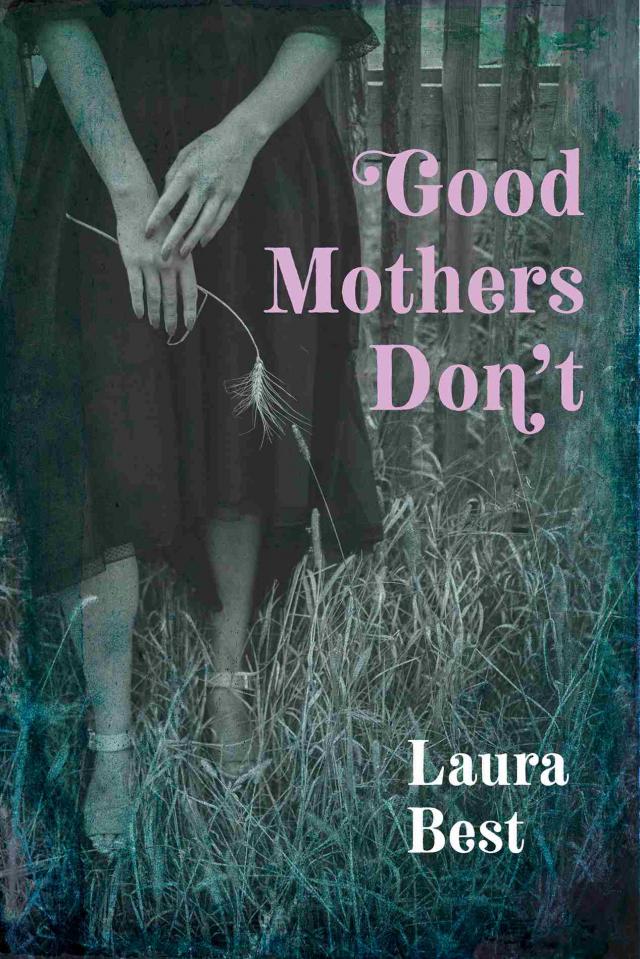
Copyright © 2020, Laura Best
All rights reserved. No part of this book may be reproduced, stored in a retrieval system or transmitted in any form or by any means without the prior written permission from the publisher, or, in the case of photocopying or other reprographic copying, permission from Access Copyright, 1 Yonge Street, Suite 1900, Toronto, Ontario M5E 1E5.
Vagrant Press is an imprint of Nimbus Publishing Limited
3660 Strawberry Hill Street, Halifax, NS, B3K 5A9
(902) 455-4286 nimbus.ca
Printed and bound in Canada
NB1462
Editor: Penelope Jackson
Editor for the press: Whitney Moran
Cover design: Heather Bryan
Interior design: Jenn Embree
This story is a work of fiction. Names characters, incidents, and places, including organizations and institutions, either are the product of the author’s imagination or are used fictitiously.
Library and Archives Canada Cataloguing in Publication
Title: Good mothers don’t / Laura Best.
Other titles: Good mothers do not
Names: Best, Laura (Laura A.), author.
Identifiers: Canadiana (print) 20200159429 |
Canadiana (ebook) 20200159437 | ISBN 9781771088282 (softcover) | ISBN 9781771088299 (HTML)
Classification: LCC PS8603.E777 G66 2020 |
DDC C813/.6—dc23
Nimbus Publishing acknowledges the financial support for its publishing activities from the Government of Canada, the Canada Council for the Arts, and from the Province of Nova Scotia. We are pleased to work in partnership with the Province of Nova Scotia to develop and promote our creative industries for the benefit of all Nova Scotians.
For Brian
Advance Praise for
Good Mothers Don’t
“Laura Best’s remarkable talent radiates from every page of this novel, the story of Elizabeth and her journey to reclaim herself and her family after a long sickness. This is a riveting exploration of mental illness and the devastation it brings to the lives of women, children and the poor. Told through a chorus of voices, Best weaves a hypnotically beautiful and intimate narrative, capturing the anguish and joy in the everyday, and the otherworldly. An unlikely page turner replete with hushed surprises, unexpected crescendos, endless love and boundless vitality.”
–Christy Ann Conlin, bestselling author of Heave and Watermark
“Running deeper than the memory of home, only the body memory of maternal love survives the far-reaching ravages of mental illness which set a mother adrift from herself and her family in this crushingly beautiful novel. Laura Best shows the power of words to resurrect what gets lost to ideas and expectations of ‘how a mother should be’ and the stigma that surrounds all of this. This is a riveting, fearless book shot through with compassion. I loved it. I couldn’t put it down.”
–Carol Bruneau, award-winning author of A Circle on the Surface
“Laura Best ferries us along on a journey both compassionate and compelling. She explores the relationship between memory and self, between what we know and who we are. Her voices are clear and true and true and tough as hope. Here is a writer you can trust to carry you away and bring you safe home.”
–Linda Little, award-winning author of Scotch River and Grist
Harmony House
1975
I am well now.
When the pink dawn draws near to my bedroom window I take comfort in those words. For a long time I wouldn’t have been able to make that claim, but now, if someone were to ask, “How are you, Elizabeth?” I could reply, “I’m very well, thank you,” and I’d be right, and could show proof if need be. Still, there are times when I’m uncertain about that claim—when I fail to remember something so simple, or when a kernel of fear sprouts in my chest, sending out gnarly vines that spread far and wide, or when a whispered thought comes into my head when I hadn’t been thinking of anything in particular at the time. The hospital says I’m well and so does the doctor who signed my release forms. They said that more than five years ago, and no one in their right mind would argue their own wellness when it’s been clearly stated as fact, and neither should I.
They released me—the same authorities who declared me well—when dandelion seeds were blowing in the wind. There was a field of them along the route we took the day I came to Harmony House. I hadn’t seen a dandelion for years, let alone a field full of them; soft grey balls of fluff trembling in the wind, their downy pips flying out across the air. I smiled and imagined that I might like to chase after them had we not been going at such a speed that I couldn’t cry out for the car to be stopped.
That would not be the behaviour of someone who is well.
Wellness brings with it a certain responsibility, a promise not to act in a particular way or to say things of an inappropriate nature. So I watched and imagined and smiled until we were well past the field of dandelions, with Mrs. Weaver none the wiser.
“You can go home,” the doctor said the day I was declared well. He was smiling as if this suggestion would have me leaping for joy. Home was a word I hadn’t uttered in years; I feared for the longest while no such word existed for me. Or maybe it did exist in some strange, out-of-the-way place, one no one would tell me about. For sure it was some closely guarded secret and, somehow, intended for my own good.
“Where is home?” I said, sitting across from the doctor. I looked down and stopped myself from fiddling with the hem of my dress. I wondered if he knew more than he was letting on. He was a young man, too young to be in charge of my life, yet I accepted what he said even with the reservations I felt inside. They would send me home no matter where that home was. It was time to release the secret they’d been keeping from me for all these years.
“You’re ready to re-enter the world, Elizabeth. That’s all you need to know at this point.”
His words caused my knees to tremble, and I crossed my legs to tame the uneasiness hammering away inside me. I didn’t want the doctor to see how jumpy this made me in case he reversed his declaration of my wellness. His smile didn’t wane, but neither did he look directly at me, as if he didn’t want to see that far into the future—my future. The future that suddenly seemed murky and undefined. What was waiting for me in this future he spoke of? Even he didn’t seem to have the answer to that.
“Someone will make all the arrangements. No need for you to worry about any of it,” he said before he left me that day. I spent the next few weeks wondering about this someone and the arrangements they were making for me to go home.
Home. I had a home one time, one that hadn’t been arranged. I must have. Everyone does. Step by step we build our lives with every choice we make, every thought we think, everything we feel and all the people we encounter. But that life, my life, was gone. I had no idea where. Places cannot stop existing. Yet it seemed that home, or at least my home, had done just that. Now there was nothing but a vague sense of familiarity lurking deep within me, a tangle of stale memories that I fought hard to remember. Flashes and flickers, small bits of the past, moved like static in my brain as I waited to start my life over again. And I began to wonder just how important those flashes and flickers might eventually prove to be. Some nights I couldn’t shut them off. I’d toss and turn and wrestle the unknown, certain that something, or someone, would prevent me from ever seeing home.
This home the doctor spoke of became Harmony House, on a quiet back street in a little town not far from Halifax; a new start with freedoms I could only have dreamt about from inside the hospital walls. Home was a place to eat and sleep and watch TV, a place to breathe in the wide-open spaces, with trips into town and some money in my purse. And there was an old woman, the occupant of the bed on the other side of the room, who had been there for several years before my arrival.
“Mrs. Zimmer has her ways, but you’ll get used to her soon enough,” said Mrs. Weaver as we pulled up the driveway to Harmony House. “She means well.” She left me standing in the middle of the room without a clue as to what I should do next. Setting my suitcase on the empty bed, I looked toward my roommate.
“Hello,” I said with a smile she didn’t return. Her mouth was pulled into a scowl and her flabby arms were folded in front of her. She turned her head and stared directly at me. I felt like an alien from a distant planet, a being with three eyes and a pair of horns sticking out from my head.
“Sal croaked just the other night,” she said as I put my things in the dresser that had my name on it. “Stiff as a poker in the morning when they came to wake her. They just changed the sheets before you got here. The bed’s probably still warm. We shared this room for four long years,” she said, stretching out those last three words to indicate how miserable those years had been for her. She finished her speech by adding, with what seemed like a fair bit of satisfaction, “She always had a lot of gas.” Raising a bushy eyebrow, she added, “You’re not gassy, are you?”
Since the declaration of my wellness, I’ve contemplated my illness as many times as one can consider something they have little memory of. I’m uncertain as to when I became ill, what time of year, or even the year itself; whether dandelions were blooming or coloured leaves were hanging on the trees. I like to imagine it might have been in the cold of winter, a time when nature pulls back her hand, tired of making the flowers bloom and the grass grow; a time of rest. Certainly not in spring
But I am well now, and all that is childlike thinking, hardly plausible explanations for the life I’ve lost.
So much of my life is now made up of uncertainties. But I’ve been told there is nothing unique in that. The only certainty in life is life’s uncertainty. Sometimes in order for us to get to that place of wellness, things must be sacrificed. Life is a trade-off, a juggling of people, places, and events, maybe even the disappearance of time and memory if I were to make a guess. Isn’t it only right that we lose some things along the way? I’m told even the most experienced juggler will drop a ball or two; I, who knows nothing about juggling, have managed to drop them all.
All these years and I still fight to push back the fear I sometimes feel, even with the declaration of my wellness. For a time it works and the panic quells for weeks, months, but eventually it floats to the top like a dead body at the rim of a lake. It’s my own fault. I’ll admit that much. An important aspect of wellness is the acceptance of the part we play in our own life’s circumstance. If this hadn’t happened, or If only I had done things differently. Perhaps if I had been stronger. I think all these things and wonder how much of it is true and how much is imagined, and it always comes back to the same irreversible thing.
A whispered thought as I drift into sleep.
The one thing that started it all.
You wouldn’t have lost the life you had if you hadn’t gone crazy.
Part I
1960
Jewel
“The roads aren’t fit to be on, Cliff. You and your big ideas. How are you going to spare the gas for a joyride to Chester? You’re not using the money from the steers you sold. You aren’t.”
“I know what I’m doing, Lizabeth,” said Daddy. “Just get yourself ready.”
We hadn’t been to visit Aunt Joan and Uncle Dylan since Christmas. Mumma had been sulky that day. She let out a big sigh as Aunt Joan showed us the perfectly displayed gifts beneath the tree. On the way home, Daddy scolded her for acting out. “I suppose you think those fancy gadgets Dylan gave her aren’t going back to the store next week. It’s all for show,” she’d said, turning toward the window of the truck.
When Mumma failed to move from her place at the kitchen table, Daddy looked at her and said, “Get around now, Lizabeth.” She screwed up her face.
“Are we staying for dinner?” asked Jacob, gulping the last of his milk.
“We’ll see,” said Daddy, dipping the facecloth into a basin of warm water before wringing it out.
“And can we play down by the shore?” I asked.
“Possibly.”
“No, you may not play by the shore,” Mumma said, jumping to her feet. Jacob and I moaned our disappointment. Other than playing on the beach, there was little to do when we went to Chester. Ripping the washcloth from Daddy’s hands, Mumma removed the milk from the corner of Jacob’s mouth.
“Maybe some other time. The kids like playing on the sand, Lizabeth.”
“Some other time is your answer for everything, and one day it’s going to backfire on you, Cliff—on us all.”
I looked out the kitchen window. Wet snow was spinning from the wheels of a passing car going at a snail’s pace up the hill. I wondered why Daddy was so insistent that we go to Chester. Mumma was right: there would be better days for travelling.
“It’s not fit to be on the road today, especially with the kids in the truck.”
“You’re exaggerating again, like you always do. Do you think I’d go out if it wasn’t safe?”
“Go then, if you want. You don’t need me.”
“We’re not going without you, and if you don’t go Dylan and Joan will think something’s wrong.”
Mumma laughed. “They won’t care. I could kick the bucket and they’d be happy as clams, the two of them.”
“Now, that’s just crazy talk, Lizabeth,” said Daddy, steering Jacob’s foot toward his boot. I looked quickly at Mumma, saw the peculiar look she was giving Daddy. There came a pause and I waited for what was to come.
“So you think I’m crazy, do you, Cliff?” Despite the smile that was now stretched across her face, Mumma didn’t look the least bit happy. Tossing the damp washcloth at the counter, she threw her arms into the air and began to dance around in a little circle, breaking out into song.
“Crazed…crazy…crazy Elizabeth,” she sang, stomping her feet as she moved around the kitchen.
“Look, I didn’t mean….” Daddy’s words fell flat as Mumma’s voice grew louder.
“Crazy Elizabeth,” she continued to sing as if it was the most delightful song in the world.
Grabbing mine and Jacob’s hands, she pulled us along. Smiling, she continued to sing, “La…dee…dee…crazy Elizabeth…crazy Elizabeth.” When Daddy demanded she stop, she sang even louder.
“Crazy Elizabeth…crazy Elizabeth.”
We moved around in a circle, one foot over the other. Our feet gliding across the floor. We had no choice but to follow.
“La…dee…dee. Crazy…crazed…crazy Elizabeth.”
“Lizabeth!” Daddy shouted, smacking his hand against the table. We all flinched.
“What’s the matter? We were just having a little fun,” she said, letting go of our hands.
“Can’t you understand how important this is? The bank wants its money. We’re barely scraping by. I’ve got to do something.”
“And Dylan MacKay is our saviour? Well, hallelujah!”
Grabbing our coats from the hooks in the porch, Daddy began shoving Jacob’s arm through one of the sleeves, nearly upsetting him off his feet. I zipped my coat and put on my cap and mitts while Jacob whined. I whispered, “Shush, Jakey-boy,” my lips trembling softly, as Daddy hastened us out the door.
“Hurry along, Lizabeth,” said Daddy sternly. Pausing on the doorstep with his back to Mumma, he cleared his throat. “The sooner we get going, the sooner we’ll get back.”
A waft of April air blew past me. Taking Jacob’s hand, I ran toward the truck. “If you make me do this, Cliff, you’ll be sorry,” shouted Mumma from the doorway. I was sure everyone in the Forties Settlement could hear. I turned back toward the house. The look on Mumma’s face sent a chill through me.
“But Mumma,” Jacob protested as we climbed into the truck.
“Don’t worry about Mumma. She’s coming,” Daddy reassured him as he pressed the palm of his hand into the horn.
Honk. Honk. Honk. The sound echoed out across the Forties Settlement in the cold, damp air. Honk. Honk. Honk. It wouldn’t go away. I shuddered, looking back toward the house. Honk. Honk. Honk. Daddy wouldn’t stop blowing the horn, not until Mumma gave in. When the front door finally banged shut, the vibration reached us.
“Here she comes!” announced Jacob, sounding pleased. My heart fluttered when I saw Mumma step down off the doorstep, her bright red shoes a stark contrast to the snow.
“Where are your boots?” asked Daddy as she climbed into the truck.
“Bend over for a second, I’ll give you a boot,” she said, releasing a harsh laugh as she slammed the truck door shut.
“Suit yourself, but if the truck breaks down and we have to walk, you won’t be laughing then.”
“You got your way—isn’t that enough?” she said, folding her arms across her chest. She looked over at me and quickly winked. That’s how I knew she wasn’t going to tell.
“Stop it, Lizabeth. Just stop it,” said Daddy as he started backing out of the driveway. “Do you have to do this today? Life isn’t one big joke, you know.”
A shot of guilt drew me to glance down at Mumma’s feet as we pulled onto the road. Two days earlier, she’d given me her boots to wear. One of mine had gone missing from the closet at school.


