

My Daughter’s Mistake: An utterly gripping and unforgettable tear-jerker, page 1


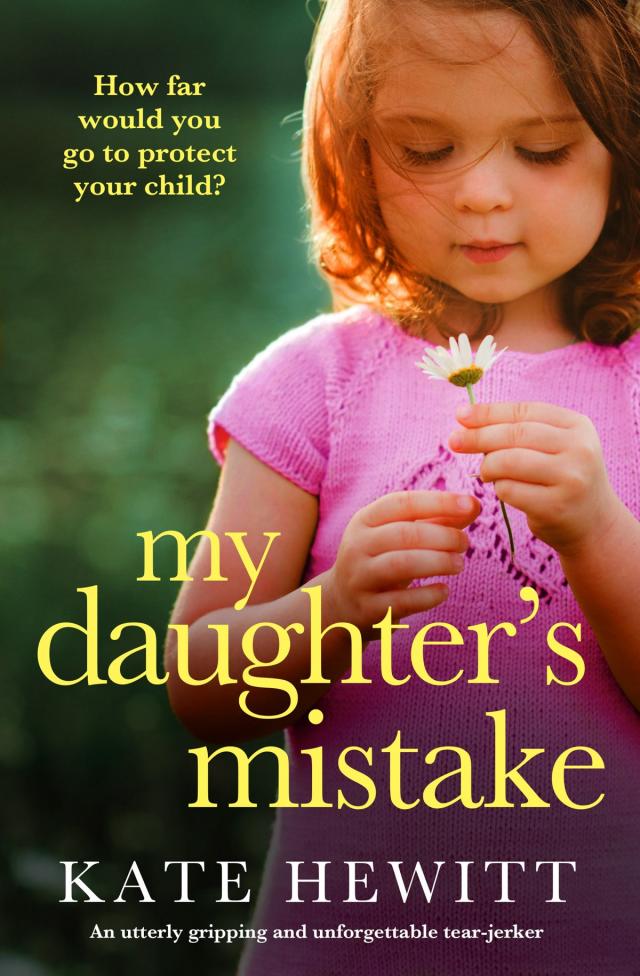
My Daughter’s Mistake
An utterly gripping and unforgettable tear-jerker
Kate Hewitt
Books by Kate Hewitt
Standalone Novels
Beyond the Olive Grove
The Edelweiss Sisters
The Girl from Berlin
When You Were Mine
Into the Darkest Day
A Hope for Emily
No Time to Say Goodbye
Not My Daughter
The Secrets We Keep
A Mother’s Goodbye
This Fragile Life
When He Fell
Rainy Day Sisters
Now and Then Friends
A Mother like Mine
* * *
Amherst Island Trilogy
The Orphan’s Island
Dreams of the Island
Return to the Island
* * *
Far Horizons Trilogy
The Heart Goes On
Her Rebel Heart
This Fragile Heart
* * *
Writing as Katharine Swartz
The Vicar's Wife
The Lost Garden
The Second Bride
AVAILABLE IN AUDIO
The Edelweiss Sisters (Available in the UK and the US)
The Girl from Berlin (Available in the UK and the US)
When You Were Mine (Available in the UK and the US)
Into the Darkest Day (Available in the UK and the US)
A Hope for Emily (Available in the UK and the US)
No Time to Say Goodbye (Available in the UK and the US)
Not My Daughter (Available in the UK and the US)
The Secrets We Keep (Available in the UK and the US)
A Mother’s Goodbye (Available in the UK and the US)
* * *
Amherst Island Trilogy
The Orphan’s Island (Available in the UK and the US)
Dreams of the Island (Available in the UK and the US)
Return to the Island (Available in the UK and the US)
* * *
Far Horizons Trilogy
The Heart Goes On (Available in the UK and the US)
Her Rebel Heart (Available in the UK and the US)
This Fragile Heart (Available in the UK and the US)
Contents
Prologue
Chapter 1
Chapter 2
Chapter 3
Chapter 4
Chapter 5
Chapter 6
Chapter 7
Chapter 8
Chapter 9
Chapter 10
Chapter 11
Chapter 12
Chapter 13
Chapter 14
Chapter 15
Chapter 16
Chapter 17
Chapter 18
Chapter 19
Chapter 20
Chapter 21
Chapter 22
Chapter 23
Chapter 24
Chapter 25
Chapter 26
Chapter 27
Chapter 28
Chapter 29
Epilogue
The Secrets We Keep
Hear More from Kate
Books by Kate Hewitt
A Letter from Kate
Beyond the Olive Grove
The Edelweiss Sisters
The Girl from Berlin
When You Were Mine
The Orphan’s Island
Dreams of the Island
Return to the Island
The Heart Goes On
Her Rebel Heart
This Fragile Heart
Into the Darkest Day
A Hope for Emily
No Time to Say Goodbye
Not My Daughter
A Mother’s Goodbye
Acknowledgments
*
Dedicated to Caroline, Ellen, Teddy, Anna and Charlotte
I love you! Love, Mom
Prologue
I stand by the door, everything in me aching and broken, one hand pressed to the small glass pane as I gaze at my daughter lying in the hospital bed. She’s so slight, so still. I can barely see the rise and fall of her chest, and I have to bite my lip hard to suppress the animalistic sound of terror and pain I fear could burst out of me, something between a sob and a roar.
This never should have happened.
I am awash with regret, with fear, with guilt, with longing. Please, I pray, please let her live. Please let her heal. Please let her thrive…
Is that so much to ask, to want your child to flourish? Isn’t that what any and every mother wants? Isn’t that what every mother prays or even wills from the moment she clasps her child in her arms, red-faced and squalling, damp and new? Please let this child thrive.
Now I would settle for survival. Almost. But surely my daughter deserves more than scraping the barrel of life, making do with its dregs. She has so much to live for, so much possibility. I imagine the sparkle in her eye, the laugh that rings clear as a bell. I can’t bear for her to be changed, to be less. Please let her get better.
And then, as if I have some sort of bargaining power, I start making deals in my head. If you let her be okay, I’ll be the best mother I know how to be. I’ll be better than that. I’ll try so hard. I’ll love so deep. I’ll never be disappointed or disapproving. I’ll never get angry or irritable or afraid…
I have so many promises to make, to keep, if my daughter can just be spared.
A nurse comes along the hallway, her rubber-soled shoes squeaking on the floor. “You shouldn’t be here,” she says, glancing around, sounding as if she isn’t sure whether to be sharp or sympathetic.
“My daughter…” I gesture to the door, the room, that bed.
“I’m sorry, but we can’t allow visitors in the ER,” the nurse replies, and now she sounds gentle but firm. “The doctor will be with you shortly.”
I let myself be borne away on a tide of well-meaning officiousness, to a small room with vinyl sofas and a stale smell of despair. I am picturing my daughter—how I held her in my arms, how I kissed her head, how I nestled her against me and thought I would never let her go. I kept her safe then. It was so easy.
How did everything go so wrong? I wonder helplessly, and then another, far worse question reverberates through me: Is this all my fault?
1
ELLEN
When I answer my daughter’s phone call, all I can hear is sobbing. I am sitting in my office, the window open to birdsong and the scent of freshly mown grass, and Maddie is hiccupping and crying as she tries to get the words out.
“Mom… Mom…”
“Maddie, what’s happened? What’s wrong?” The questions come out of me like bullets, my voice already high with panic and fear. “Take a deep breath, sweetheart, please.” Although perhaps I’m the one who needs to take a deep breath. My heart is already racing, my palms damp as I clamp my phone to my ear. Not again, I am thinking. Praying. Please, please, not again…
“Mom, can you come?” She gives another gulping, hiccupping sort of sob. “Please, can you come?”
“Yes, I can be home in five minutes—”
“I’m not at home.”
A split second’s pause as I absorb that information, what it might mean, the ripples of it spreading outward into ignorance. When I left the house an hour ago, my teenage daughter Maddie was lying on her bed in a spill of summer sunshine, languidly scrolling on her phone. William was downstairs, eating cereal and reading a book about beetles, at twelve years old his latest obsession. Brian had left for work, as he usually did this time of year, at the crack of dawn; I vaguely remember rolling over and pulling the pillow over my head to drown out the sound of his shower. And now this.
“Maddie, where are you, sweetheart?”
She sniffs, draws a shuddery breath. “Um… Torrance Place.”
“Torrance…” The word escapes me in a breath as my mind reels through the streets of our small New Hampshire town. Torrance Place, I think, is on the opposite end of Milford, a fifteen-minute walk at least from where we live, a place I’ve only driven past, and then indifferently. “Why—” I break off, because I don’t need to know why right now. I just need to know where. “Okay.” There are so many more questions I want and need to ask—Are you hurt? What happened? Why did you go out? Why are you on that street?—but I know this isn’t the time to ask, or perhaps even to know. My daughter needs me. That’s all that matters. “I’m coming,” I tell her. “Hold on.”
I disconnect the call and grab my keys and my bag, nameless fears scuttling into dark crevices in my mind that I try to ignore. I tell myself her call, her tears, might not mean anything actually truly bad. Since she came home a month ago, Maddie has veered between lethargic indifference and manic obsessiveness. Sometimes she has been seemingly uncaring that she’s going into her senior year having missed the last two months of eleventh grade, and at other times she has burst into tears when Brian tells her, gently, to turn her music down.
It’s so hard to know how to handle any of it—the doctor in charge of her care insisted we measure her food portions; the counselor said not to make a big deal of mealtimes. How are we supposed to do both? How do we navigate the tightrope of care versus control, interest versus indifference? And what has happened now that threatens to upset the fragile balance we’ve almost managed to achieve?
I take several deep breaths, trying to tamp down the ever-present fear that threatens to lurch up to grab me by the throat and strangle me.
My perfect family fell apart four months ago, and I am still scrambling to put the pieces of it back together.
Quickly I leave my office, although that might be too grand a word for the glorified broom cupboard I was given after I returned part-time to Milford College ten years ago, when William went to preschool. As part-time adjunct professor of sociology, my position didn’t warrant a proper office, a slight I took with as much grace as I could, because staying home with my kids had been worth it.
Hadn’t it? Then why am I here, rushing into a drowsy summer’s afternoon, so afraid my world has spun out of control yet again?
As my best friend Tabitha told me, there are no guarantees with children. You can bake brownies and tuck them in every night, buy organic and shepherd them to Little League every single Saturday, and it still might not make a whit of difference to how they end up. The choices they make. The mistakes.
It’s a truth I hate to face, and yet ever since Maddie was rushed to ER back in April, I’ve had to.
But that’s not going to happen this time, I tell myself as I head out into the college’s verdant quad, the air warm and humid, the two-hundred-year-old buildings of pale gray limestone surrounding me on all four sides in perfect, pastoral peace. This time it’s going to be something small, probably nothing, an overreaction, a blip…
“Ellen!”
I look up from my head-down quick stride across the quad to see Abigail, another sociology professor, full tenured and sometimes a bit smug about it, walking towards me, a quizzical smile on her face.
“Hey.” I manage a tense smile back, a mere stretching of my lips. My heart is still racing. The truth is, I don’t believe Maddie called me for nothing. I have an awful, certain sensation that it is very much something. It’s just how bad that something is.
Brian would tell me I was being melodramatic, paranoid; he’s observed how, in the last few months, I’ve become, as he says, “more of a glass-half-empty person.” He’d shake his head and say something like, “You think the glass is broken and there isn’t any water for a hundred miles, Ell. You’ve got to relax. Maddie’s okay now.”
The funny thing is, someone telling you to relax doesn’t make you feel relaxed. At all. And based on the call I just received, I’m not at all sure she’s okay.
“Just picking up my daughter,” I tell Abigail before I can think better of it, regretting it instantly because I don’t want to talk about Maddie.
As expected, Abigail’s friendly expression morphs into a look of sorrowful sympathy I’ve learned not to trust. Milford is a small town, and people love to gossip, especially when the object of their gossip is distant enough that it doesn’t actually affect them. Abigail has met Maddie a handful of times, if that.
“Maddie?” she asks, as if I have another daughter. “How is she?”
“Fine,” I reply tightly, my keys clutched between my fingers like I’m about to be attacked. “She’s fine.” Abigail is opening her mouth to ask another question, but I’ve already started down the sidewalk. “Sorry,” I call over my shoulder as I head toward the parking lot. “I’m already late.”
I don’t want those words to actually be true.
My car is one of only a handful in the half-acre of concrete that is Milford’s faculty parking lot. It is the week before freshmen orientation, and professors are slowly starting to trickle back to their offices, to deal with paperwork and problems, fall syllabi and department politics. Five minutes ago, my main focus was locating a copy of an out-of-print textbook for my freshman class, Sociology of Organizations. Now I’m trying not to hyperventilate, not to remember the last time I got a call like this, from William. “Mom? Mom? Maddie’s in the bathroom and she’s not answering. I’m scared…”
As I slide into the oven-baked interior of my car and turn on the AC, I take several steadying breaths. The still-hot air rolls over me as sweat prickles along my forehead and under my arms. I rest my hands on the steering wheel and breathe. In. Out. It may be nothing.
Then I reverse out of the parking lot, and try not to break the 25 mph speed limit through the town’s historic center.
Milford is the quintessential New England college town, with a main street of gracious limestone buildings on the banks of Shelter Brook, a cheerful, burbling tributary of the Connecticut River. The college is at one end and the town’s slightly less salubrious elements at the other, and the two co-exist in a state that is both amiable and uneasy. Population three thousand, with a high school, two elementary schools, a public park and swimming pool, five churches and six restaurants. The perfect place to raise a family.
I take Main Street at the necessary crawl, my fingers tapping the steering wheel in a frenetic, staccato beat—past the tiny movie theater that locals campaigned to keep open to show arthouse films, the old-fashioned drugstore that still sells milkshakes at a marble counter in the back, the erstwhile Woolworth’s that is now an upmarket boutique for designer clothes and homeware, the eye-wateringly expensive vegetarian café with its chalkboard sign offering cold-pressed juice and acai berry smoothies.
Milford is a jostling mix of old and new, ordinary and elite, town and gown. I’ve lived here for nearly twenty years; I know everyone, or almost. I’ve done the baby groups, sent my children to local schools, shopped in every single store, gone to every harvest and Christmas festival.
I like to think I straddle the town and college divide, but as I drive over the bridge and turn onto Torrance Place at the far end of Main Street, I realize I have never actually been on this street before.
Just one block away from the town’s well-heeled main drag, it’s a depressing mix of dilapidated clapboard and squat brick ranch houses, all with overgrown yards of summer-brown grass, and a few broken-down cars in the driveways. It reminds me of that old New England joke, what’s the difference between a house in Vermont and one in New Hampshire? The car on concrete blocks in the driveway. Told by Vermonters, of course, but we’re only seven miles from the border. Vermont’s affluent, touristy vibe feels a lot closer on my side of Milford than here.
As I drive down the street, I scour the cracked concrete sidewalks for Maddie, but I don’t see anyone at all. The whole place feels empty and lifeless, with barely a breeze stirring, the boxy houses looking blank and uninviting. Is Maddie really here?
Then I round a corner, and my heart freefalls. I glimpse the flashing blue siren of a police car, the banner of red lights on top of an ambulance, with several paramedics standing by. I forget to breathe as my mind spins and blanks with terror.
Somehow I manage to pull over to the far side of the road, hitting the curb in the process. I yank my keys out of the ignition and then stumble towards the configuration of cars—the police car is parked sideways to block off the road, the ambulance is behind it, its back doors open. I see Maddie’s car too, pulled haphazardly up on the other side, past the police car and ambulance.
Why was she driving out here? When I left this morning, she hadn’t been planning to go anywhere, as far as I knew.
Clearly, I didn’t know much.


