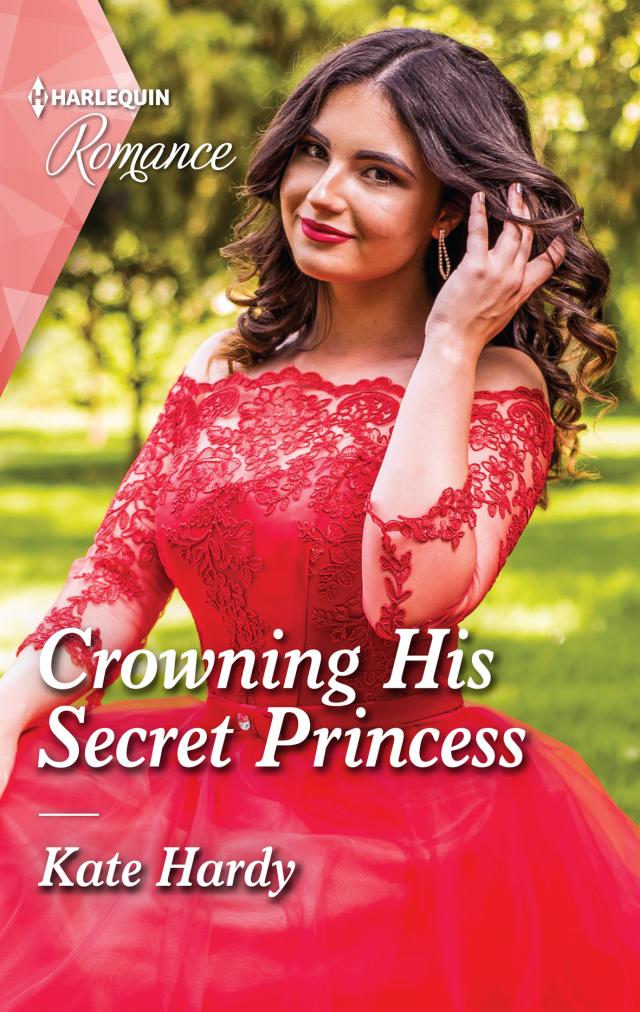
Crowning His Secret Princess, page 1


Séb blew out a breath. “I’m sorry. There isn’t an easy way to put this.”
“Then tell me straight,” Louisa said.
“Louis Gallet was the heir to the throne of Charlmoux.”
“What?” She stared at him, those gorgeous brown eyes wide with shock. “You’re telling me my father was a prince?”
“I would say that the man who married your mother and was named on your birth certificate as your father was the prince of Charlmoux.”
“Named as my father,” she repeated. “That’s insinuating that my mother was lying.”
“No. I’m casting no aspersions whatsoever on your mother’s character. You need to take the emotion out of this and look at the facts.” Which was what he’d been trained to do over the last nine years. He’d become very, very good at suppressing his emotions. “This isn’t just a family business—it’s the throne of a country. We need to prove that you really are Princess Louisa of Charlmoux.”
“I’m not a princess, I’ve never even heard of Charlmoux, and I don’t want the throne,” she said.
His throne.
Dear Reader,
I started this book thinking about writing a secret baby. But what if my heroine was the secret baby? And what if finding out who she really was changed everything?
It starts with Louisa having no clue that her late father was a prince—and Sébastien discovering that the secret heiress to the throne of Charlmoux will be displacing him. They start on very opposite sides, but Louisa teaches Sébastien to become less starchy. And when the press finds out the secret, Sébastien teaches Louisa how to be a princess.
But Sébastien wants to marry her for duty, and Louisa only wants to marry for love. Can they both get what they want?
I hope you enjoy Louisa and Sébastien’s journey.
With love,
Kate Hardy
Crowning His Secret Princess
Kate Hardy
Kate Hardy has been a bookworm since she was a toddler. When she isn’t writing, Kate enjoys reading, theatre, live music, ballet and the gym. She lives with her husband, student children and their spaniel in Norwich, England. You can contact her via her website, katehardy.com.
Books by Kate Hardy
Harlequin Romance
A Crown by Christmas
Soldier Prince’s Secret Baby Gift
Summer at Villa Rosa
The Runaway Bride and the Billionaire
Christmas Bride for the Boss
Reunited at the Altar
A Diamond in the Snow
Finding Mr. Right in Florence
One Night to Remember
A Will, a Wish, a Wedding
Surprise Heir for the Princess
Snowbound with the Millionaire
One Week in Venice with the CEO
Visit the Author Profile page
at Harlequin.com for more titles.
For Gerard—one day, we’ll get back to the Mediterranean...
Praise for Kate Hardy
“Ms. Hardy has written a very sweet novel about forgiveness and breaking the molds we place ourselves in... A good heartstring novel that will have you embracing happiness in your heart.”
—Harlequin Junkie on Christmas Bride for the Boss
Contents
PROLOGUE
CHAPTER ONE
CHAPTER TWO
CHAPTER THREE
CHAPTER FOUR
CHAPTER FIVE
CHAPTER SIX
CHAPTER SEVEN
CHAPTER EIGHT
CHAPTER NINE
EPILOGUE
EXCERPT FROM WHIRLWIND FLING TO BABY BOMBSHELL BY ALLY BLAKE
PROLOGUE
‘SÉBASTIEN, DO YOU have a few minutes?’
No, he didn’t. He was wrestling his way through the paperwork surrounding the latest trade negotiations. But Séb noted the grim look on his PA’s face. Pascal wouldn’t have interrupted him if it wasn’t important. ‘Of course, Pascal. Problem?’
‘Perhaps. I had a visit from the chief archivist, a couple of hours ago.’
The palace archivists usually made an appointment to see the King or the Queen, not Séb’s office. This was odd. He frowned. ‘What is it?’
‘The team found something in Prince Louis’ papers. I promised to bring it to you.’
The papers were from a box that had been shelved temporarily and then forgotten about after the Prince’s death, more than a quarter of a century before—until a fortnight ago, when a leaking pipe had caused a minor flood in the archives, and the box had come to light again. Since then, Séb knew that the archivists had been working through the papers, carefully logging them.
Pascal handed Séb a cardboard wallet marked with the name of a high street photographic developer.
Séb opened the wallet and took out the thin sheaf of photographs. The first one was of Prince Louis, the only child of King Henri IV and Queen Marguerite of Charlmoux, who was standing with his arm around a pretty blonde woman Séb didn’t recognise; there was confetti around their feet. The second photograph was of the two of them outside the city clerk’s office in Manhattan. The third made Séb’s eyes widen: the woman was holding a bridal bouquet. Was she a bridesmaid, holding it for the bride? Or maybe a wedding guest, who’d caught the bouquet the bride had just thrown?
The fourth photograph made the situation clear: she and Louis were both posed with their left hands displaying their wedding rings, and they both looked deliriously happy.
‘I thought Prince Louis died unmarried,’ Séb said quietly. ‘These photos would suggest otherwise.’
‘Indeed,’ Pascal agreed.
‘Are there negatives? Or any papers in that box that could shed light on what’s actually happening here?’
‘According to the chief archivist, no. So I did a little discreet research. I wanted to bring you answers, not questions. Except... Well, you can see for yourself.’ Pascal took a piece of paper from the file. ‘This is a print from a digital copy which I’ll forward to you. A notarised print copy is being sent here by special delivery from New York.’
Séb’s spine prickled with unease as he took the document. He studied it carefully. It was the marriage certificate of Louis Gallet—using his family surname, Séb noted, rather than his royal title—to English ballet dancer Catherine Wilson, in New York, dated a month before his death. Louis had given his occupation as ‘statesman’ rather than ‘Prince of Charlmoux’.
‘So he did get married.’
‘And the marriage is legitimate. I’ve checked. Using his family name is as valid as if he’d signed it as Prince Louis,’ Pascal said.
‘Is the marriage legally recognised here in Charlmoux?’
‘Yes,’ Pascal confirmed. ‘I also looked up some newspaper archives online, and there were a few press photographs of Louis and Catherine together that summer. Some of the gossip columns speculated that the Prince might be secretly dating the ballerina.’
‘If the paparazzi were following them, then how did they manage to keep the actual marriage secret?’ Séb asked.
Pascal shrugged. ‘I assume it was a bit easier to do things quietly in the days before the internet. Before everyone had a camera on their phone and could send pictures across the world in seconds. And it was easier to avoid the paps back then, too.’
‘Even so.’ Séb frowned. ‘Why would the Prince of Charlmoux have married someone at a register office in New York, rather than having a state wedding in the cathedral here? It doesn’t add up.’ Or, rather, it added up to something that was potentially political dynamite. Had Henri forbidden the wedding and then Louis had eloped and married the woman he loved anyway, without his father’s permission? Even though Pascal had confirmed that the marriage was legally recognised here, there could still be a scandal. Plus the King’s health was becoming frailer. If he had no idea about the marriage, the shock might be too great for him. ‘Does the King know?’
‘About the contents of the box, or the marriage?’
‘Both.’
‘I don’t know,’ Pascal said, ‘but I assured the archivist that you would be delighted with his discretion and would wish that to continue, and that you would prefer him to speak to you about the matter for the time being rather than bother the King.’
‘Thank you.’ And Séb was grateful, too, that his PA had checked the facts discreetly. ‘Did you find anything else?’
‘I did some more searching, on a hunch. It was the way Louis was standing that made me wonder.’ Pascal indicated the photograph where Louis’ hand seemed to hover protectively over Catherine’s abdomen, then handed over another document. ‘Again, it’s a print from a digital copy, and a notarised print copy is on its way from England.’
This time, it was a birth certificate. The birth of Louisa Veronica Gallet to Catherine Gallet, in London; the birth was dated seven months after the marriage. Clearly Catherine had been pregnant at the time of the wedding. This time, Catherine’s occupation was shown as ‘ballet teacher’ rather than ‘prima ballerina’; it looked as though she’d stopped performing after Louis’ death and had chosen a job that would fit more easily around a baby, which made perfect sense to Séb. She’d named Louis on the birth certificate as the deceased father of her daughter.
&
Prince Louis had had a child. A daughter who was the legal heir to the throne. The Act of Parliament naming Sébastien Moreau as the heir to the throne of Charlmoux would be null and void. So when Henri IV abdicated at the end of the summer, as planned, there might be a completely different person on the throne...
‘We don’t have proof that Louis was actually the child’s father,’ Pascal said.
Séb winced, not liking the implication. The woman in the photograph looked completely in love with her new husband, and he looked just as besotted with her. ‘Catherine was married to him. Legally.’ Even if the wedding had taken place in another country. ‘And he’s named as the father on the birth certificate.’
‘It’s all on paper, Séb. I know it’s highly likely that Louisa Gallet is his child, but she can’t be formally recognised as the daughter of Prince Louis without a DNA test,’ Pascal said. ‘We need the physical genetic proof.’
That felt harsh; but Séb had to acknowledge that it was a valid point.
If Louisa really was Louis’ child, that would change everything.
Séb had spent nearly a third of his life at the palace, as a king in training. He wasn’t actually related to the royal family; his parents came from a long line of farmers. But Séb hadn’t wanted to be a farmer. He’d wanted to change the world—or, at least, to change Charlmoux. To become a lawyer and work his way up the justice system so he could make sure a miscarriage of justice like the one that had wrecked his best friend Marcel’s life couldn’t happen again. The headmaster of his secondary school had spotted that Séb was academically gifted and had persuaded his family to let him go to university to study law instead of joining the family business. Séb had won a scholarship to the top-ranking university in Charlmoux, and he’d worked hard to show that he didn’t take either his place or his scholarship for granted. He knew his plans wouldn’t bring Marcel’s dad back, but at least he could help put in the checks and balances to make sure that what had happened to his best friend’s family wouldn’t happen to someone else.
In Séb’s final year at university, the head of the faculty had suggested that Séb should apply for the role of a special advisor at the palace, rather than taking the usual route of qualifying as a solicitor or barrister. Séb had had to sign the Official Secrets Act before he’d even been able to apply for the role, and then he’d discovered that it wasn’t just any old advisory role. The job was to take over from Henri IV, who had no legal heir following the death of his son. To be first in line to the throne. To be a king in training, by a royal decree ratified by an Act of Parliament.
Which meant he’d really have the power to make a difference to people’s lives. To make things fairer. To stop things going wrong. To highlight the importance of mental health and how everyone needed access to proper treatment.
How could he turn down an opportunity like that?
The interview panel had liked the quiet, earnest young man and offered him the job. Séb had discussed it with his girlfriend, Elodie, and his family—as far as he could, around the restrictions of the Official Secrets Act—and accepted. He’d applied himself to the job, earned the trust of the King, and had taken on more and more of the older man’s duties as Henri’s health had declined.
Though now it looked as if everything he’d worked so hard for might vanish overnight: because it seemed there was someone who had a better claim to the throne than he did.
‘I assume, from what you said earlier,’ Séb said, ‘that you’ve also done some research regarding Louisa Gallet.’
Pascal inclined his head. ‘Firstly, her mother. Catherine. She didn’t remarry. She died when Louisa was sixteen.’ He handed over the death certificate.
Séb read it and winced. Cancer. Catherine had been only forty-one. How sad. He felt a wave of sympathy for both of them: for the young woman cut off in her prime and for the child who’d been bereaved during her teens. ‘Being sixteen is hard enough, let alone losing your only parent.’ And it struck a particular chord with him: he remembered the summer when he’d turned sixteen, and learned that his best friend’s father had died. Marcel’s family had moved to the other side of the country, two years before; all Séb had been able to do in support was write letters, make phone calls, and promise to visit Marcel in the school holidays.
He’d kept his promises, but it hadn’t been nearly enough. It hadn’t stopped his best friend taking drugs to blot out the misery and shame, then needing months of rehab.
Though this wasn’t about what had happened to his best friend. It was about Louisa Gallet and his own future.
‘So what do we know about Louisa Gallet?’ he asked.
‘She took a degree in textile management. She works part-time for her family’s bridalwear business, and part-time for a heritage organisation, restoring textiles,’ Pascal told him.
So far, so respectable. ‘Married? Significant other?’
‘It seems not. Though I’m sure you’d prefer to see for yourself.’ Pascal passed his phone to Séb, with the screen open on the internet. ‘There’s a tab for each of her social media sites.’
Séb scrolled through them quickly. They were completely unremarkable. No wild parties, no shots of Louisa looking drunk or out of control, no scandal or gossip. No signs of any boyfriend—or girlfriend. Most of the pictures she posted seemed to be of textiles, or the occasional photograph of herself with her cousins. There were plenty of messages on the bridalwear studio’s website from grateful brides and teenagers, thrilled with the dresses Louisa had made them. She’d reposted a few scholarly articles about textile heritage; Regency shoes, dresses and bonnets seemed to be among her favourites, along with Renaissance tapestries.
There weren’t many photographs of Louisa herself. The most recent one, on the bridalwear studio’s website, showed that she had her mother’s fine facial features and Prince Louis’ colouring. Her brown eyes were wide, and she wore her dark hair in a messy updo. She looked quite serious; Séb had to stop himself wondering what she’d look like when she laughed, and whether her smile would light up a room. How ridiculous. He needed to concentrate on the task in hand. Her smile had absolutely nothing to do with her suitability as a future monarch.
‘So she loves history and she’s dedicated to her work,’ Séb remarked. Two things that would probably endear her to the people of Charlmoux—and to her grandparents. ‘But surely,’ he said, ‘King Henri and Queen Marguerite know of her existence?’ In which case, why on earth had the King insisted on the Act of Parliament to make Séb his heir?
Pascal spread his hands. ‘I’ve made some very, very discreet enquiries with Emil—’ the King’s PA ‘—who has also agreed to refer the matter to you. It’s very likely that they don’t know. All I know for definite is that Prince Louis died in London and it broke his mother’s heart.’ He paused. ‘There’s no record of a Catherine Wilson or a Catherine Gallet being at the funeral or having signed the official book of condolence.’
So Louisa Gallet was a secret.
For now.
But if Pascal had been able to find out all this in the space of a couple of hours, so could the media. Rumours could do a huge amount of damage to the country’s stability. Séb needed to find out the truth—and do it quickly.
‘I assume you have a contact number for her?’
‘Yes.’ Pascal handed over the rest of the file. ‘I guessed you’d want to talk to her and ask her to do the DNA test.’
‘Yes. Thank you, Pascal. You’ve done an excellent job.’ Séb’s PA was reliable, discreet and they worked well together. Séb knew that Emil, the King’s PA, intended to retire when the King stepped down, and Séb would have no hesitation in promoting Pascal when he took over from Henri.
‘Let me know whether you need me to make arrangements for you to go to London, or for her to come here,’ Pascal said.
‘Thank you. I will.’
Once the door had closed behind his PA, Séb stared at the file in front of him.
The situation left him in a quandary. On paper, it looked as if Louisa Gallet could be Henri IV’s rightful heir, meaning that she was the next in line to the throne of Charlmoux. Morally, Séb knew he should step aside for the legitimate heir.