

Magissa, page 1


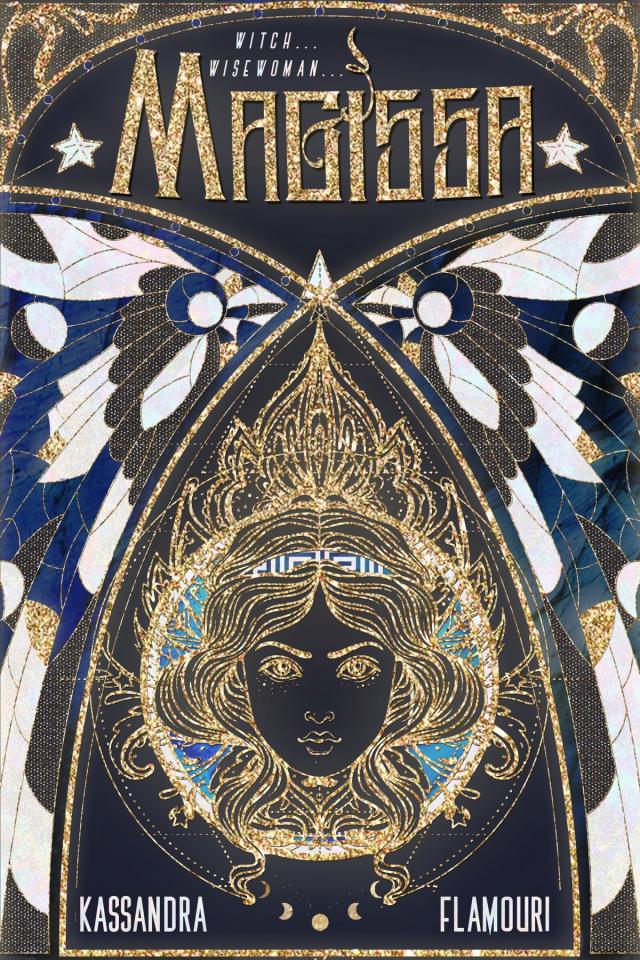
Magissa
Kassandra Flamouri
Copyright © 2022 by Kassandra Flamouri
All rights reserved.
ISBN: 978-1-9535399-8-4
No part of this book may be reproduced in any form or by any electronic or mechanical means, including information storage and retrieval systems, without written permission from the author, except for the use of brief quotations in a book review.
The Parliament House
www.parliamenthousepress.com
Cover design by Shayne Leighton
Edited by Erica Farner, Jennia D’Lima, & Hayley Frerichs
Note: This is a work of fiction. Names, Characters, Places and Events are products of the author's imagination, and are used factitiously. These are not to be construed or associated otherwise. Any resemblance to actual locations, incidents, organizations, or people (living or deceased) is entirely coincidental.
Contents
Chapter 1
Chapter 2
Chapter 3
Chapter 4
Chapter 5
Chapter 6
Chapter 7
Chapter 8
Chapter 9
Chapter 10
Chapter 11
Chapter 12
Chapter 13
Chapter 14
Chapter 15
Chapter 16
Chapter 17
Chapter 18
Chapter 19
Chapter 20
Chapter 21
Chapter 22
Chapter 23
Chapter 24
Chapter 25
Chapter 26
Chapter 27
Chapter 28
Chapter 29
Chapter 30
Chapter 31
Chapter 32
Chapter 33
Chapter 34
Acknowledgments
About the Author
Chapter One
Once upon a time, on a mountainside shrouded in mist and sunlight, a baby girl was born.
Once upon a time. That's how fairy tales begin, isn't it? With a vague suggestion of times past, times of happiness and innocence. But my once-upon-a-time was up. I was seventeen, almost an adult, and at the very end of my childhood. A storyteller might think that I was ready for my adventure to begin, that I didn’t need my parents anymore.
But the storytellers are wrong. A child doesn't stop needing parents who love her—not when she reaches adulthood, not when she leaves home…and not when she holds their ashes in her hands.
I stood on the very mountainside that had witnessed the beginning of my fairy tale, a steep slope blanketed by a forest of ferns and moss-covered trees. The air was cool but heavy, thick with the scent of damp earth and pine. Somewhere to my right, mist obscured a vast gorge, dizzying in its height and breadth. In another time, another age, the sight of the gorge, these mountains, would have filled me with the wild joy of dreams fulfilled. How often had I begged my parents to return here, to the land of my birth?
My parents had never given in to my pleas. Maybe because we were all too busy, like they’d said every time I asked, but I’d always wondered if it was something more. I ran my hand over the puckered, rippled scars that covered my left arm, a memento from a “little kitchen accident” just before we left Greece. A pot of boiling water had fallen and practically melted the skin off. My parents had never told me who dropped it.
They’d always insisted it was an accident, nothing more. But the fact remained that I hadn’t set foot in Greece for fourteen years. Everything I knew about the village I’d been born in came from my grandmother’s stories. She had been the one to tell me about Pyrga and the surrounding forests and mountains. My uncle, Theio Giorgo, had told me the traditional stories of fairies and goblins lurking in the shadows of the trees. They made it sound so magical, exotic, yet familiar at the same time. Though I loved the life my parents had made for us in America, I had longed for my homeland for as long as I could remember. I had always dreamed of coming back…but not like this.
At my right stood Yiayia, my grandmother, whip-thin and sturdy but bowed with grief. At my left, Theio Giorgo—uncle, godfather, confidante, and now my legal guardian. We stood together at the head of a procession comprised of people I could swear I’d never seen before but who all seemed to know me. I was the only one wearing black to mourn my parents. Yiayia had laid out a long white dress for me back at the house, but I had flatly refused to give into any more of her eccentricities. It had felt good to defy her, even in such a small way. But now I felt exposed, off balance, like I was the one dressed inappropriately by wearing black to a funeral.
Cold curled under my ribs, wrapping each bone in resentment and loneliness as my gaze wandered over the sea of white. Who were these people who presumed to mourn with me today? Strangers, though Yiayia had introduced them as my mother’s “colleagues,” whatever that meant. Mama had been a nurse and midwife, Baba a cardiologist. These people didn’t strike me as medical professionals of any kind, nor had any of their names sounded familiar. They hadn’t been a part of my life or my parents’ lives for a decade at least, and they couldn’t share my grief.
Where were the people who could? Where was Theia Anna, my father’s sister? Where were my cousins? Where was my parents’ best friend, Sotiri Samaras? Why was there not a single person whose face or name I recognized?
“Nouno,” I murmured, my voice cracking as I looked to my godfather. “This isn't right. None of this is right.”
“It’s what my sister would have wanted.” Theio Giorgo shook his head, a rueful smile peeking through his beard. “And if Thalia wanted it, Lukas would have wanted it, too.”
I couldn’t return his smile. My throat tightened like a vice, threatening to choke me. He was right, of course. Baba would have wanted whatever made my mother happy. But why would she want all this—a trek through the mountains at dawn, surrounded by strangers, with no priest to bless their grave?
At our feet, my parents’ final resting place yawned wide like the gaping jaws of a monster. Though the hole itself wasn’t more than a foot wide, it felt ready to swallow the whole world. My whole world.
I closed my eyes, wincing as Yiayia let out a keening wail that was immediately echoed by the women at our back. The men took up a rumbling hum, buoying the women’s voices until the sickening lurch of sound coalesced into a haunting melody.
A chill ran up my spine as the music settled into my bones. I didn’t recognize the language of the song. It wasn’t the Greek I had spoken with my parents since I was a baby, nor was it the Byzantine Greek used for the liturgy. These words were older—much older—and wilder. They called to something inside me and made the green light of the forest pulse in time with the chanting.
The ferns waved in a gentle breeze, their fronds whispering together, joining and parting as if an invisible body walked through them. Something glittered in a nearby tree-trunk like the flicker of an eye. The longer I stared at the tree, the more I saw. The lines in the bark made shapes, each one flickering and shifting in the space of a breath: swirls like clouds, letters, a crouching cat.
A face.
“Maiden,” a voice whispered, and I jumped.
“Chrysa,” Yiayia murmured. “It’s time.”
I swallowed and nodded, my gaze caught by an iridescent scarab beetle that had crash landed at my feet. That must have been what I saw flickering in the trees. A beetle, nothing more. Get a grip, I ordered myself. You’re burying your parents today.
My knees sank deep into the moss as I knelt beside the dark hole that would house my parents’ ashes. Slowly, with an almost unnatural grace, Yiayia knelt beside me. Grief ached in every line of her body, from the laugh lines around her eyes and mouth to the sharp angles of her joints, almost hidden within the folds of her skirt and shawl. Her eyes were tender as she tipped a mixture of boiled grain, nuts, and fruit into the grave.
Anger flared, mingling with confusion and resignation in equal measure. Kolyva was a dish prepared in remembrance of the dead. But it was meant to be served to the mourners, not poured into the grave. Yiayia followed the kolyva with oil and wine, and I took a deep breath against another wave of uneasy irritation. It all seemed so…pagan.
My parents and I had never been particularly devout. I’d always considered myself a rationalist, a future doctor, but the Orthodox Church was the center of Brattleboro’s Greek American community. I’d grown up with the liturgy in my ears and the scent of incense tickling my nose every Sunday. I couldn’t help fearing, deep down, that my parents might be denied entry to Heaven without an Orthodox burial, which this clearly was not. I clutched the urn close to my chest, as if to protect the ashes within.
“Chrysa,” Yiayia said gently, guiding my hands.
A ragged breath scraped against my throat. With trembling hands, I placed the urn into the odd grave with exaggerated care, as if it were an infant. Yiayia nodded approvingly.
“They can rest now,” she said. “They’re home.”
Were they? How long did you have to stay in a new place to call it home? How long could you stay away from your old home and still consider it yours? My parents had lived in Vermont for fourteen years and had never returned to this land of mist and sun. Was this really what they would have wanted?
I tried not to look as Yiayia took a handful of dark earth and scattered it over the urn. The mourners took up their chant once more, but this time the words were clear:
“In the place of Your rest, O Lord, where all Your Saints repose, give rest also to the
As if in response to the verse, my eyes rose and then fell on a curly-haired young man. Though tall and broad-shouldered, something about the angles of his face and the distribution of weight on his body seemed to suggest lingering adolescence. His eyes were fixed on my scars, his face twisted with disgust. I flushed and resisted the urge to shift my arm out of sight.
You have no reason to be ashamed, my father had always told me. If people are rude enough to stare, they’re the ones who should be embarrassed.
I lifted my chin and stared back at the young man. A jolt of recognition shot through me as I met his black-coffee eyes, but it was gone in the next heartbeat, flickering away like a fish into the deep.
Unnerved, I dropped my gaze and turned back to my grandmother, who held out a portion of earth in her cupped hands. I swallowed, pushing both my scars and the young man from my mind. I took the earth from Yiayia and poured it into the grave. It was so soft, and strangely warm, like living flesh. I reached for more, and my fingers trembled as they dug into the soft soil at the grave’s head.
“Siga, siga,” Yiayia murmured. “Easy, agapi mou. Breathe.”
Breathe.
Breathe, because Mama couldn’t anymore. Breathe, because Baba would expect me to keep going, keep living.
Breathe.
I took another handful, and Yiayia took another, and Theio Giorgo’s work-roughened hands joined ours, burying my parents piece by piece. Another pair of hands entered my vision, just as tanned and calloused, but not as coarse. My eyes snapped up to meet the young man’s stare as his fingers brushed mine. This time, he was the first to look away.
Who was he, and why was he permitted to join my family in such an intimate moment? But there was no time to wonder. Too soon, yet not nearly soon enough, the burial was over. A mound of earth, too large for the hole it filled, stood as the only monument to my parents’ lives and memory. Homely, without even a headstone, the grave was criminally unimpressive. It did nothing to capture my mother’s piercing gray eyes and wild dark hair or my father’s gentle, rumbling voice.
Tears of grief and frustration welled in my eyes. I was blind, choking, curled into myself with my head on my knees. My stomach roiled, hot and cold by turns. The little hairs on my arms and the back of my neck stood on end as energy rippled over my back and chest.
“No,” I whispered. “No. Please.”
“Chrysa?”
Yiayia’s hands were on me, cool and soothing, but they did nothing to stem the tide of heat rising in my chest. Panic gripped me. I’d felt something like this before, and it had ended with an argument, a broken vase—and a fire. I closed my eyes against an onslaught of remembered pain and anger. Recriminations, both real and imagined, rang in my ears with my mother’s voice. The pulsing in my chest throbbed and squeezed, overlaid with an echo of memories…and death.
“Don’t be frightened,” Yiayia whispered urgently. “Don’t fight it.”
“Yiayia.” My voice was thick, sluggish. “What—”
Something inside me bucked against my diaphragm. I fell forward, one arm clutched against my belly and the other thrown out to brace myself. My hand plunged through the loosely piled dirt of the grave mound until my fingers brushed the urn. I shuddered as something flowed through me and out of me, pouring into the earth.
Something curled and wiggled against my hand, and I snatched it back, scattering soil everywhere. I scrambled to scoop the dirt back into place, muttering broken apologies through my tears.
“It’s alright, Chrysa,” Yiayia murmured, kneeling to help me. “Look.”
I held my breath, mingled sweat and tears dripping off the end of my nose and onto a small sprout that had appeared between my splayed fingers. I looked up, my lips parted in shock, and found my grandmother staring at me with sharp gray eyes. Eyes just like my mother’s, like mine. The flame of energy inside me flared again, and the sprout pushed against my fingers. My gaze dropped just in time to see two delicate leaves unfurl. I gasped. My hand jerked, sending a spray of dirt across the tiny sliver of green. I pushed myself backward so violently I fell against my uncle’s shins. Yiayia reached for me, something intent and almost—was I imagining it?—eager in her gaze.
“Chrysa—”
“Mother,” Theio Giorgo whispered tightly, and he stepped in front of me as if shielding me from my grandmother. “Please.”
She pursed her lips, then nodded and turned to shoo away the staring crowd. They, too, were looking at me with a strange mix of speculation and anticipation.
Theio Giorgo shifted to block me from their view and bent to squeeze my shoulders.
“Easy now. You’re alright, Chryssoula.”
I leaned into him gratefully, accepting both his comfort and his warmth. My head pounded in time with my heartbeat, and I felt weak and shivery, like I’d been sick. What had just happened? I shivered, remembering the look in my grandmother’s eyes. Did she know what I’d done? Had that sprout come from…me?
No. No, of course it hadn’t. I forced myself to take a deep breath and gather my thoughts. The sprout had been there already, hidden in the dirt along with other stray bits of roots and grass. I’d had a panic attack, that was all. A fit brought on by stress and grief. It was natural, if a bit rude, for people to stare when I’d made such a spectacle of myself.
Were they still looking? Panting, I peeked through the curtain of my hair. It had come loose from its clip and now hung around my face in thick waves almost the exact color of the soil. No one was looking at me anymore. The orderly ranks of mourners had broken at Yiayia’s direction, and people were drifting away in companionable twos and threes. Yiayia was urging the curly-haired young man away, pushing him toward the path down the mountain.
But even though the crowd had left, a low murmur of voices remained. Or was it only the wind in the trees? I shook my head and shivered again. I needed to sleep. Though I’d spent days on end under the covers in my grandmother’s tiny house, I had yet to find any true rest.
“Come on,” Theio Giorgo said gently. “It’s over. Let’s go home.”
My whole body shook as I got to my feet. The wind curled through my hair like gentle fingers, lifting and tugging playfully. The whispers were back, and I could swear they sounded eager…excited. I hunched my shoulders and leaned into Theio Giorgo’s supporting arm. Yiayia watched us from the tree line, her white gown rippling in the breeze. So much white…white dress, white hair, all blowing and billowing in a wind that spoke in whispers.
“Need to sleep,” I mumbled. “There’s no one there.”
“No one who shouldn’t be,” Theio Giorgo agreed, his gaze flickering to the woods.
But there were eyes watching from the shadows, and this time when the wind blew, I heard the words clearly:
“Welcome home, Maiden.”
Chapter Two
“Welcome home.”
My mother’s greeting seemed to reach out and grab me by the ear as I walked through the door. I sighed. It wasn’t like I’d been out drinking—I’d been at the library, for God’s sake. But it was late, nearly ten o’clock, and my parents were waiting for me in the living room. They sat together on the couch, holding hands, united in their disappointment.
“Half the church was here to celebrate with us—everyone with their families, everyone together. Everyone but us.” Mama shook her head, her dark curls spiraling in all directions. “I know you don’t like parties, Chryssoula, but you could make more of an effort. This is the third time you’ve left us to explain away your absence. This can’t keep happening, Chrysa. It’s important to be a part of something, to have a community.”
My temper flared. It was true that maybe I wasn’t as excited about community events as they’d like me to be. People still stared at my scars, even after all these years, and no one ever wanted to talk about anything but my academic and athletic accomplishments. Not that I would have talked to me about anything but my academic and athletic accomplishments. But then, I didn’t have anything else to talk about. My parents knew that better than anyone. “More of an effort? Are you serious?”


