Fractured, page 19
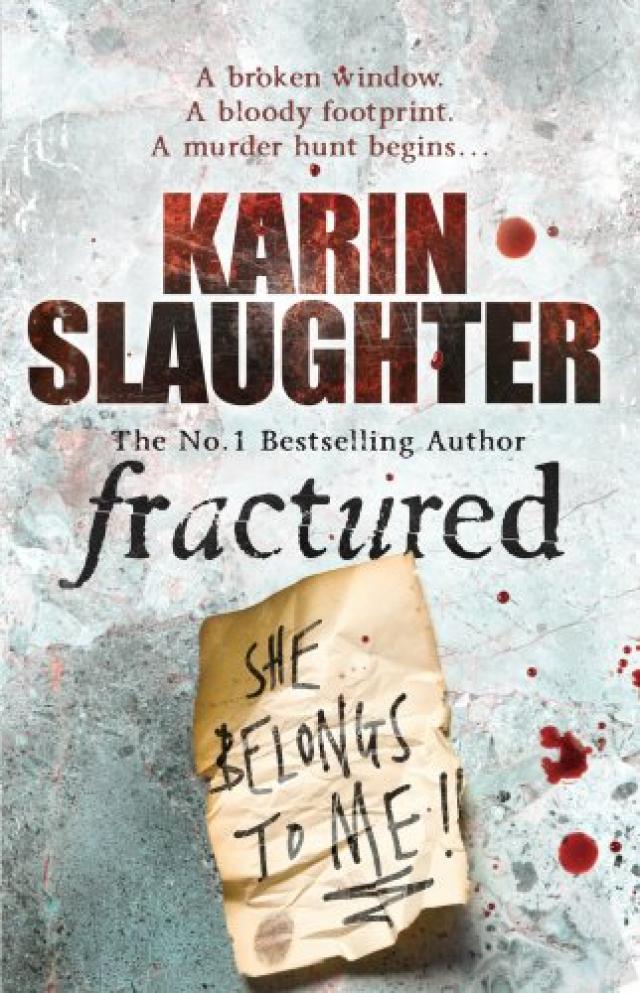
part #2 of Will Trent Series


Gabe sat on the bare floor, his back to one of the beds, his book bag beside him. His elbows were on his knees, his head pressed against the cast on his arm. His shoulders shook. Still, Faith could not forget the angry man who had threatened to call security on her yesterday. Was that the real Gabriel Cohen, or was this crying child closer to his real self? Either way, he had something to tell her. If Faith had to play along with his game to get the information, then that was how it was going to be.
She rapped her knuckles lightly on the open door. “Gabe?”
He looked up at her with swollen, red eyes. Fresh tears rolled down his cheeks. “Adam told me she was young,” he sobbed. “I thought, like, fourteen or something. Not seventeen. The news said that she was seventeen.”
Faith used his book bag to prop open the door before sitting beside him on the floor. “Tell me from the beginning,” she said, trying to keep her voice calm. Here was proof that Adam had talked to Gabe about Emma.
“I’m sorry,” he cried. His lip trembled, and he put his head down, hiding his face from her. “I should have told you.”
She should have felt sorry for the kid, but all Faith could think was that Emma Campano was somewhere crying, too—but there was no one there to comfort her.
“I’m sorry,” he repeated. “I’m so sorry.”
Faith asked him, “What did you want to tell me?”
His body shook as he struggled with his emotions. “He met her online. He was on this video Web site.”
Faith felt her heart stop mid-beat. “What sort of Web site?”
“LD.” Faith had known the answer before he opened his mouth. Learning disabilities. Will Trent’s instincts had been right yet again.
Gabe told her, “Adam went online with her all the time, like, for a year.”
“You said it was a video site?” she asked, wondering what else the kid had been hiding.
“Yeah,” Gabe answered. “A lot of them weren’t really good at writing.”
“What learning disorder did Adam have?”
“Behavioral stuff. He was homeschooled. He didn’t fit in.” Gabe glanced up at her. “You don’t think that’s why he was killed, do you?”
Faith wasn’t sure about anything at this point, but she assured him, “No. Of course not.”
“She seemed younger than she was, you know?”
Faith made sure she understood. “That’s why you didn’t tell me that you knew Adam was seeing Emma? You thought she was underage and you didn’t want to get him into trouble?”
He nodded. “I think he had a car, too.”
Faith felt her jaw clench. “What kind? What model?”
He took his time answering—for effect or from genuine emotion, she could not tell. “It was an old beater. Some graduate student was transferring to Ireland and he posted it on the board.”
“Do you remember the student’s name?”
“Farokh? Something like that.”
“Do you know what the car looked like?”
“I only saw it once. It was this shitty color blue. It didn’t even have air-conditioning.”
Adam would have had thirty days to register the car with the state, which might explain why they hadn’t pulled up anything on the state’s system. If they could get a description, then they could put it on the wire and have every cop in the city looking for it. “Can you remember anything else about it? Did it have a bumper sticker or a cracked windshield or—”
He turned petulant. “I told you I only saw it once.”
Faith could practically feel the irritation in her voice, like an itch at the back of her throat. She took a deep breath before asking, “Why didn’t you tell me about the car before?”
He shrugged again. “I told my girlfriend, Julie, and she said . . . she said that if Emma’s dead, it’s my fault for not telling you. She said she never wants to see me again.”
Faith guessed that that was what was really bothering him. There was nothing more self-involved than a teenager. She asked, “Did you ever meet Emma in person?”
He shook his head.
“How about her friend Kayla Alexander—blond girl, very pretty?”
“I’d never even heard of her until I turned on the news.” Gabe asked, “Do you think I did a bad thing?”
“Of course not,” Faith assured him, hoping she managed to keep the sarcasm out of her voice. “Do you know the Web site Adam and Emma used?”
He shook his head. “He had it on his laptop, but then his laptop got stolen.”
“How did it get stolen?”
Gabe sat up, wiping his eyes with his fist. “He left it out at the library when he went to pee, and when he came back, it was gone.”
Faith was hardly surprised. Adam might as well have put a “take me” sign on it. “Did you ever see what name he used on the site? Did he use his e-mail address?”
“I don’t think so.” He used the bottom of his shirt to wipe his nose. “If you put in your e-mail address, then you get all kinds of trolls for spam and shit.”
She had assumed as much. Compounding the problem, there were probably nine billion Web sites for people with learning disabilities, and those were just the American ones. She reminded him, “When you called me, you said you had something to show me. Something that belonged to Adam.”
Guilt flashed in his eyes, and she realized that the other stuff—the Web site, the car, the fear about Emma’s age—was just preamble to the information that had really compelled him to call her.
Faith struggled to keep the urgency out of her tone. “Whatever it is that you have, I need to see it.”
He took his sweet time relenting, making a show of leaning up on his heels so he could dig his hand into the front pocket of his jeans. Slowly, he pulled out several pieces of folded white paper. He explained, “These were slipped under Adam’s door last week.”
As he unfolded the three pages, all she could think was that between the creases, smudges and dog-eared corners, the paper had been handled many, many times.
“Here,” Gabe said. “That’s all of them.”
Faith stared in shock at the three notes he’d spread out on the floor between them. Each page had a single line of bold, block text running horizontally across it. Each line heightened her sense of foreboding.
SHE BE LONGS TOME!!!
RAPIST!!!
LEV HER ALONG!!!
At first, Faith didn’t trust herself to speak. Someone had tried to warn Adam Humphrey away from Emma Campano. Someone had been watching them together, knew their habits. The notes were more proof that this was not a spur-of-the-moment abduction. The killer had known some if not all of the participants.
Gabe had his own concerns. “Are you mad at me?”
Faith could not answer him. Instead, she gave him back her own question. “Did anyone else touch these besides you and Adam?”
He shook his head.
“What order did they come in—do you remember?”
He switched around the last two sheets before she could stop him. “Like that.”
“Don’t touch them again, okay?” He nodded. “When did the first one come?”
“Monday last week.”
“What did Adam say when he got it?”
Gabe was no longer being emotional about his answers. He seemed almost relieved to be telling her. “First, we were like, you know, it was funny, because everything is spelled wrong.”
“And when the second one came?”
“It came the next day. We were kind of freaked out. I thought Tommy was doing it.”
The asshole dormmate. “Was he?”
“No. Because I was with Tommy the day Adam got the third note. That was when his computer was stolen, and I was like, ‘What the fuck? Is somebody stalking you or what?’ ” Gabe glanced at her, probably looking for confirmation on his theory. Faith gave him none, and he continued, “Adam was pretty freaked out. He said he was going to get a gun.”
Faith’s instincts told her that Gabe was not blowing smoke. She made her tone deadly serious. “Did he?”
Gabe looked back at the notes.
“Gabe?”
“He was thinking about it.”
“Where would he get a gun?” she asked, though the answer was obvious. Tech was an urban campus. You could walk ten blocks in any direction and find meth, coke, prostitutes and firearms in any combination on any street corner.
“Gabe?” she prompted. “Where would Adam get a gun?”
Again, he remained silent.
“Stop screwing around,” she warned him. “This is not a game.”
“It was just talk,” he insisted, but he still wouldn’t look her in the eye.
Faith no longer tried to hide her impatience. She indicated the notes. “Did you report these to campus security?”
His chin started to quiver. Tears brimmed in his eyes. “We should’ve, right? That’s what you’re saying. It’s my fault, because Adam wanted to, and I told him not to, that he’d get in trouble because of Emma.” He put his head in his hands, shoulders shaking again. She saw how thin he was, how his ribs pressed into the thin T-shirt he wore. Watching him, listening to him cry, Faith realized that she had read Gabe Cohen completely wrong. This was no act on his part. He was genuinely upset, and she had been too focused on the case to notice.
His voice cracked. “It’s all my fault. That’s what Julie said. It’s all my fault, and I know you think that, too.”
Faith sat there, not knowing what to do. The truth was, she was mad at him, but also at herself. If Faith had been better at her job, she would have spotted this yesterday. The time lost was down to her. Gabe had probably had these notes in his pocket when he challenged her less than twenty-four hours ago. Blaming him for her own failure would not get them any closer to finding Emma Campano, and right now, that was all that mattered.
She sat back on her heels, trying to figure out what to do. Faith could not tell how fragile the young man was right now. Was he just another teenager caught up in his emotions or was he playing up the situation for her attention?
“Gabe,” she began, “I need you to be honest with me.”
“I am being honest.”
Faith took a moment, trying to find the best way to phrase her next question. “Is there something else you’re not telling me?”
He looked up at her. There was suddenly such sadness in his eyes that she had to force herself not to look away. “I can’t do anything right.”
His life had been turned upside down over the last couple of days, but she knew he was talking about more than that. She told him, “I’m sure that’s not true.”
“Adam was my only friend, and he’s dead—probably because of me.”
“I promise you that’s not true.”
He looked away, staring at the bare mattress across from him. “I don’t fit in here. Everybody’s smarter than me. Everybody’s already picking fraternities and hanging out. Even Tommy.”
Faith was not stupid enough to offer Jeremy as his new best friend. She told Gabe, “It’s hard to adjust to a new school. You’ll figure it out eventually.”
“I really don’t think I will,” he said, sounding so sure of himself that Faith could almost hear an alarm going off in her head. She had been so concerned about the information Gabe had withheld that she had lost sight of the fact that he was just a teenager who had been thrown into a very bad situation.
“Gabe,” Faith began, “what’s going on with you?”
“I just need to get some rest.”
She knew then that he wasn’t talking about sleep. He had not called her to help Adam, he had called to help himself—and her response had been to push him around like a suspect she was interrogating. She made her voice softer. “What are you thinking about doing?”
“I don’t know,” he answered, but he still would not make eye contact with her. “Sometimes, I just think that the world would be a better place if I was just . . . gone. You know?”
“Have you tried anything before?” She glanced at his wrists. There were scratch marks that she hadn’t noticed before, thin red streaks where the skin had been broken but not punctured. “Maybe tried to hurt yourself?”
“I just want to get away from here. I want to go . . .”
“Home?” she suggested.
He shook his head. “There’s nothing there for me. My mom died of cancer six years ago. My dad and me . . .” He shook his head.
Faith told him, “I want to help you, Gabe, but you need to be honest with me.”
He picked at a tear in his jeans. She saw that his fingernails were chewed to the quick. The cuticles were ragged and torn.
“Did Adam buy a gun?”
He kept picking at his jeans. He shrugged his shoulders, and she still did not know whether to believe him.
She suggested, “Why don’t I call your father?”
His eyes widened. “No. Don’t do that. Please.”
“I can’t just leave you alone, Gabe.”
His eyes filled with tears again. His lips trembled. There was such desperation in his manner that she felt like he had reached into her chest and grabbed her heart with his fist. She could have kicked herself for letting it get to this point.
She repeated, “I’m not going to leave you alone.”
“I’ll be okay.”
Faith felt caught in an untenable position. Gabe was obviously a troubled young man, but he could not be her problem right now. She needed to get the threatening notes to the lab to see if there were any usable fingerprints on them. There was a student in Ireland who had sold his car to Adam—a car that had probably been used to transport Emma Campano from the Copy Right. There were two sets of parents who would identify their dead children tonight. There was a mother and a father on the other side of Atlanta waiting to find out whether or not their daughter was still alive.
Faith took out her cell phone and scrolled through her recent calls.
Gabe asked, “Are you going to arrest me?”
“No.” Faith pressed the send button on the phone. “I’m going to get you some help, and then I have to go do my job.” She didn’t add that she was going to search every item in his room, including the computer he’d let Adam borrow, before she left campus.
Gabe sat back against the bed, an air of resignation about him. He stared at the mattress opposite. Faith resisted the impulse to reach out and tuck a stray strand of hair behind his ear. Pimples dotted his chin. She could see stubble on his cheek where he had missed a spot shaving. He was still just a child—a child who was very lost and needed help.
Victor Martinez’s secretary answered on the second ring. “Student Services.”
“This is Detective Mitchell,” she told the woman. “I need to speak to the dean immediately.”
CHAPTER TEN
WILL STOOD BEHIND Gail and Simon Humphrey as they waited in front of the viewing window. The setup was the sort that was always shown on television and in movies: a simple curtain hung on the other side of the glass. Will would press a button, and the drape would be slowly drawn back, revealing the cleaned-up victim. The sheet would be tucked up to the chin in order to cover the baseball stitches holding together the Y-incision. Cue the mother slumping against her husband.
But the camera couldn’t capture everything. The pungent smell of the morgue. The distant whine of the giant freezers where they stored the bodies. The way the floor seemed to suck at the soles of your shoes as you walked toward that window. The heaviness of your arm as you reached out to push that button.
The curtain pulled back. Both parents stood, silent, probably numb. Simon was the first to move. He reached out and pressed his hand against the glass. Will wondered if he was remembering what it felt like to hold his son’s hand. Was that the sort of thing fathers did? At the park, out in public, fathers and sons were always playing ball or tossing Frisbees, the only contact between them a rustle of the hair or a punch on the arm. This seemed to be how dads taught their boys to be men, but there had to be a point, maybe early on, when they were able to hold their hands. One tiny one engulfed by one big one. Adam would have needed help crossing the street. In a crowd, you wouldn’t want him to wander off.
Yes, Will decided. Simon Humphrey had held his son’s hands.
Gail turned to Will. She wasn’t crying, but he sensed a familiar reserve, a kindred spirit. She would be at the hotel later tonight, maybe in the shower or sitting on the bed while her husband went for a walk, and then she would allow this moment to crash over her. She would be back in front of that window, looking at her dead son. She would collapse. She would feel her spirit leaving her body and know it might never return.
For now, she said, “Thank you, Agent Trent,” and shook his hand.
He led them down the hallway, asking them about the hotel where they would stay, giving them advice on where to have supper. He was aware of how foolish the small talk sounded, but Will also knew that the distraction would help them make it through the building, to give them the strength they needed to leave their child in this cold, dark place.
They had rented a car at the airport, and Will went with them as far as the garage. Through the glass panel in the door, he watched Gail Humphrey stumble. Her husband caught her arm and she shrugged him off. He tried again and she slapped at him, yelling, until he wrapped his arms around her to make her stop.
Will turned away, feeling like an intruder. He took the stairs up the six flights to his office. At half past eight, everyone but the skeleton crew had already gone home for the day. The lights were out, but he would have known his way even without the faint glow of the emergency exit signs. Will had a corner office, which would have been impressive if it hadn’t been this particular corner. Between the Home Depot across the street and the old Ford Factory next door that had been turned into apartment buildings, there wasn’t much to look at. Sometimes, he convinced himself that the abandoned railroad tracks with their weeds and discarded hypodermic needles offered something of a parklike view, but daydreaming only worked during the day.