

Bonnie and Clyde, page 1


VIKING
An imprint of Penguin Random House LLC
375 Hudson Street
New York, New York 10014
First published in the United States of America by Viking, an imprint of Penguin Random House LLC, 2018
Copyright © 2018 by Karen Blumenthal
Penguin supports copyright. Copyright fuels creativity, encourages diverse voices, promotes free speech, and creates a vibrant culture. Thank you for buying an authorized edition of this book and for complying with copyright laws by not reproducing, scanning, or distributing any part of it in any form without permission. You are supporting writers and allowing Penguin to continue to publish books for every reader.
LIBRARY OF CONGRESS CATALOGING-IN -PUBLICATION DATA IS AVAILABLE
Ebook ISBN 9780698167940
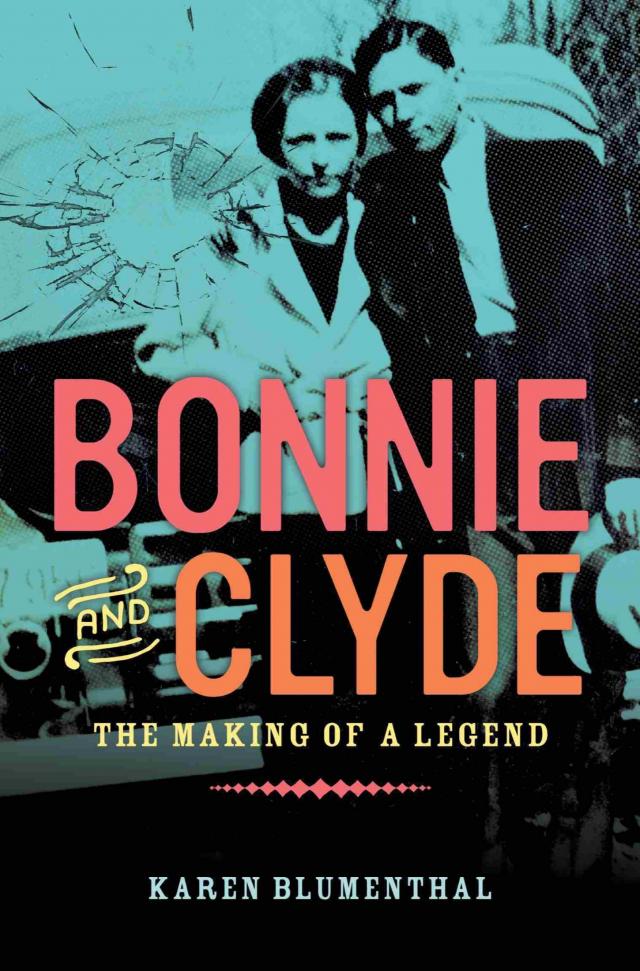
Title page: Clyde and Bonnie in a photo said to be Bonnie’s favorite of her and Clyde, early 1933.
Version_1
TO MY “GANG” DURING THIS PROJECT:
Kate Park, Jo Giudice, and the amazing and committed employees of the Dallas Public Library
CONTENTS
Title Page
Copyright
Dedication
Prologue
1: JOPLIN, MO., April 1933.—
2: TELICO, TEX., March 24, 1909.—
3: WEST OF DALLAS, TEX., 1922.—
4: WACO, TEX., March 1930.—
5: EASTHAM FARM, TEXAS PRISON SYSTEM, 1930–1932.—
6: ELECTRA, TEX., April 14, 1932.—
7: STRINGTOWN, OKLA., August 5, 1932.—
8: CARLSBAD, N.MEX., August 14, 1932.—
9: SHERMAN, TEX., October 11, 1932.—
10: TEMPLE, TEX., December 25, 1932.—
11: JOPLIN, MO., April 13, 1933.—
12: WELLINGTON, TEX., June 10, 1933.—
13: PLATTE CITY, MO., July 19, 1933.—
14: DES MOINES, IOWA, July 1933.—
15: EASTHAM FARM, TEXAS PRISON SYSTEM, January 16, 1934.—
16: GRAPEVINE, TEX., April 1, 1934.—
17: NEAR GIBSLAND, LA., May 23, 1934.—
18: DALLAS, TEX.—
19: HOLLYWOOD, CALIF.—
A Note About “The Story of Bonnie and Clyde”
What Happened to
Key Dates
Acknowledgments
A Note About Facts and Sources
Source Notes
Bibliography
Photo Credits
Index
About the Author
Playing around for the camera, Bonnie pretends to lift a gun from Clyde’s waistband, March 1933.
PROLOGUE
BONNIE AND Clyde. For decades, they’ve been as famous as any pair of outlaws could be. They’re the ones who adored fast cars and faster living. The dangerous young couple with undying love for each other.
JAY-Z and Beyoncé and Tupac rapped about them. Country singers from Merle Haggard to Kellie Pickler sang about them.
There have been books, a musical, and movies, especially the 1967 blockbuster Bonnie and Clyde. In that one, a stunning Faye Dunaway and a dimpled Warren Beatty starred as alienated outsiders trying to survive and stay together during the most difficult of times. While some reviewers hated the jolting violence, the movie was nominated for ten Academy Awards, won two Oscars, and was hailed as a breakthrough in filmmaking.
Yet, in their prime, during some of the darkest days of the Great Depression, just the mention of Clyde—and sometimes, his girlfriend, Bonnie—terrified communities and captured headlines. Their two-year crime spree spanned numerous states and included the murder of several law enforcement officers.
They are romanticized, celebrated, and remembered as the stuff of legend.
But why?
1
JOPLIN, MO., APRIL 1933.—
You’ve read the story of Jesse James—
Of how he lived and died;
If you’re still in need
Of something to read
Here’s the story of Bonnie and Clyde.
—Bonnie Parker, “The Story of Bonnie and Clyde”
Bonnie poses with a gun and a cigar, March 1933. This is the photograph that made her famous.
IN TRUTH, Bonnie Parker was just messing around the day her most famous photo was taken.
But once a picture runs over and over again in newspapers all across the country, people draw their own conclusions.
By 1930s standards, this shot was a doozy. Bonnie, twenty-two years old and maybe a nick under five feet tall, propped her heel on the bumper of a car in a most unladylike position. She held a revolver stolen from a police officer on her hip. Most outrageous, she clenched a cigar between her teeth, something a decent woman would never do. Her expression was defiant.
In reality, she had borrowed the cigar from her friend W. D. Jones and was playing around for the camera. She knew how to shoot, sure, but she rarely fired a gun in public. She would never actually smoke a cigar; she wasn’t that type of woman. She did smoke cigarettes, though—lots of people did in those dreary days of the Great Depression.
When the photo was snapped, Bonnie and her boyfriend, Clyde Barrow, had been running from police for about a year. Clyde was already wanted for robbery and at least four murders in Texas and Oklahoma, where he was considered an elusive and extremely dangerous criminal with a quick trigger finger. But beyond the region, he wasn’t well known. To law enforcement and reporters, Bonnie was only a female companion along for the ride as they raced through New Mexico, Texas, Oklahoma, Missouri, and Arkansas.
Then they decided to take a break in Joplin, Missouri.
On April 1, 1933, Bonnie, Clyde, and W. D., a teenager who had been a family friend of the Barrows, moved to a two-bedroom garage apartment. They were looking forward to a reunion with Clyde’s older brother Buck, who had just gotten out of a Texas prison, and Buck’s wife, Blanche.
A neighbor, noticing that the curtains were always drawn, grew suspicious. Thinking they were thieves or bootleggers, he contacted the police, who began to watch the apartment.
In the late afternoon of April 13—the day before the group planned to leave—Clyde and W. D. were in the garage when five officers pulled up in two cars. When the county constable emerged with a gun, the two outlaws quickly responded with a hail of bullets. The constable was hit in the neck and shoulder. Another barrage of buckshot hit a Joplin detective.
In the intense gunfight, W. D. took a bullet in his side and Clyde was struck in the chest, which left him bleeding but not badly injured. Somehow, the gang managed to pile into a stolen car and escape the bloody scene.
The county constable was dead. The other lawman was dying.
Inside the apartment, amid partially packed clothes and dishes dirty from lunch, police found Buck and Blanche’s marriage license, Clyde’s guitar, and a poem that Bonnie was refining and recopying, the ink still wet. In Blanche’s bag, there was something else: a camera and undeveloped film.
Soon after, Bonnie Parker’s photos appeared for the first time in the newspapers. There was the outrageous one with the cigar, and another one, where she teasingly poked a rifle into Clyde’s midsection, pretending to lift his gun. There were plenty of pictures of Clyde and W. D., too. But Bonnie’s photos were the attention grabbers.
Once the photographs were public, Bonnie was no longer merely a criminal’s girlfriend—or, to use the derogatory term, moll—along for the ride. She was a partner, a gang member, a rare female fugitive with a known name and a really bad reputation. It was almost too scandalous to believe.
LEGEND HAS IT: OUTLAW FASHION
While their crimes put Clyde and Bonnie in the headlines, their fashion choices set them apart from other lawbreakers in the news. In photos, Clyde often had on a suit and a fashionable fedora, and Bonnie often wore dresses and popular berets or cloche hats, which fit snug to the head.
Clyde didn’t always wear a tie and Bonnie didn’t always have on a short bolero jacket and long skirt. But when a camera was out or they wanted to impress the public, they found a way to sport current styles. By the 1930s, straight flapper silhouettes had given way to slim dresses with broad shoulders and small waists, and more and more people were buying outfits “ready to wear” from a store, rather than sewing them at home. Both men and women wore hats.
Underneath her hats, Bonnie had a modern short hairstyle with finger curls, waves created by crimping wet hair. She frequently wore makeup, which was just beginning to be popular, especially with young women.
As detectives began to follow their trail, they found plain calico housedresses and men’s shorts left behind in abandoned cars and hideouts. But officers also found receipts for purchases made by Barrow family members. One, from Lord’s dress shop in Dallas, was for a green angora wool dress with a small scarf and matching green belt. It cost $6.95, or about $130 in today’s dollars.
At a time when many Americans could barely afford food and shelter, the couple’s clothes left the impression that crime paid very well.
Among the other Depression-era bandits who captured the public’s attention during those dark years, John Dillinger was smoother and more famous. Baby Face Nelson was meaner. Pretty Boy Floyd was more Robin Hood–like, sharing his ill-gotten wealth
To young people in the region trying to get by during the toughest of times, Clyde and Bonnie seemed to be living the life—at least based on those photos left behind in Joplin. Though a slight man, roughly five feet six inches tall, and a slender one hundred thirty-five pounds, Clyde was dapper in a suit and fedora. Petite Bonnie, weighing less than one hundred pounds soaking wet, was fashionably dressed, her hair carefully tucked in a beret-like hat.
“Their whole image was one of glamour,” recalled Jim Wright, a longtime Texas congressman who was a kid living in the region at the time. “You rather imagined them holed up in some upscale hotel,” he said. “It was a very romantic existence we felt they must enjoy. And even if you did not approve of them, you would still have to envy them a little, to be so good-looking and rich and happy.”
In truth, their families said, there was little joy for them. Their world had become a “living hell.”
2
TELICO, TEX., MARCH 24, 1909.—
They call them cold-blooded killers;
They say they are heartless and mean;
But I say this with pride,
That I once knew Clyde
When he was honest and upright and clean.
—Bonnie Parker, “The Story of Bonnie and Clyde”
IF HE had been born in a different time or place, Clyde Barrow might have been a musician, a car mechanic, or a race car driver. Bonnie Parker might have starred on the stage. But a whole mess of rough circumstances and terrible choices took them in another direction, beginning in their earliest years.
Clyde’s parents, Henry Barrow and Cumie Walker, came from modest circumstances, but they had big plans when they married on December 5, 1891, near Swift, a small farming community in East Texas. Cumie had just turned seventeen and Henry was eighteen. “Everything looked bright and rosey then,” Cumie wrote later. “We had dreams of some day owning a farm of our own.”
They rented a farm nearby. Elvin, who was called Jack, was born in 1894, followed by a daughter, Artie, in 1899. “We soon awoke to a realization that life was indeed earnest. As our family grew this became more and more apparent, and we had no time then for day dreaming,” Cumie wrote. “We found that life was very much of a struggle most of the time, although sometimes we got along fairly well.”
Hoping for better land, the growing family moved to another farm in East Texas. There, Marvin Ivan, nicknamed Buck, was born in 1903, and Nell was born in 1905.
The Barrow family (in Texas, their name was typically pronounced BEAR-a rather than BEAR-o) still struggled to grow cotton and other crops and to make ends meet. They moved again, this time to another rural area called Telico. The population was tiny, likely less than fifty people, but it was near the larger town of Ennis and about forty miles southeast of Dallas, a young city sitting on several rail lines.
Clyde Chestnut Barrow was the fifth child. His birthday was March 24, but the actual year is unclear. It is officially recorded as 1909—but his mother wrote 1910 in the family Bible, which some family members considered the true date. L. C. came along in 1913 and Marie, the seventh and last child, was born in 1918, when Jack and Artie were already grown.
As a child, Clyde was “a good boy, playful and full of life,” his mother recalled. Like all kids, he got into trouble occasionally. A local storekeeper caught him dipping into a candy jar. Rather than punish the boy, he required Clyde to whistle when he was in the store, to be sure he wasn’t enjoying more treats.
Clyde was so close to L. C. and Nell that the family nicknamed him Bud, a shortened version of buddy. When he wasn’t picking cotton or doing other work on the farm, he loved to play. He and L. C. shot marbles, or Clyde pretended to be Jesse James or one of his gang members, famous outlaws who robbed banks and trains in the 1870s, and who were often portrayed in the movies and in cheap novels as folk heroes. When his big sister Nell wanted to take the lead role, young Clyde balked and refused to play. Westerns were also a big hit at the Telico movie house, and the Barrow children were happy to walk the three miles there to escape in a Saturday matinee if they could scrounge up the few pennies to get in.
Clyde loved to dance and sing, and, his mother recalled, “He liked music better than anything.” He taught himself to play guitar and later danced a sharp Charleston. “His first ambition,” his mother said, “was to be in some kind of a band with other boys.”
All of the kids learned to use a gun, and Cumie remembered Clyde was a good shot. But as an animal lover, he wasn’t fond of hunting, preferring instead to shoot at cans and other targets.
The Barrows never were able to make a comfortable living off the land. The family lived in a three-room shack that was so small that most of the family slept on makeshift pallets on the floor. Nell recalled that they rarely had enough to eat or much in the way of clothes, even when cotton prices tripled during and just after World War I, from 1915 to 1919.
To make up for what their farm didn’t produce, Henry and Cumie often worked for others, following the harvest from farm to farm as migrant workers. While they were on the road, the younger children were sent for up to three months at a time to an uncle’s farm about twenty-five miles to the south. There, they worked in the fields, just like at home, but also enjoyed playing with their cousins and going fishing. At their uncle’s, there was adequate food on the table.
Clyde Barrow (center) and L. C. Barrow (second from left) in an undated school photo in Telico.
Cumie pushed her kids to go to church and sent them off to school as often as possible, although usually that was only after they’d done their work on the farm. Their father, Henry, had been sickly as a child, suffering from chills and fevers, and spent a total of one half day at school, never learning to read or write. Their mother wanted more for her own clan.
Some of the children did better than others. Clyde enjoyed the church’s Sunday school and was as consistent as any of the kids about going to school. Buck, the third child, however, preferred being outdoors and made it only through third grade before he began skipping classes regularly. Like his dad, he never really learned to read or write.
The Barrows’ tough times grew worse after the war. Prices for cotton and other crops plunged as Europe got back to business, making it even more difficult for the family to scrape together enough to live on.
By then, the oldest son, Jack, had married and become a car mechanic in Dallas, working out of the back of his home. Artie had become a hairdresser in the city, and Nell married and joined her. Buck had grown antsy and followed his siblings.
LEGEND HAS IT: FAMOUS OUTLAWS
In an era before movie stars and sports icons, notorious outlaws—such as Jesse James and Billy the Kid—were thought of as heroes by many Americans. They were celebrated in inexpensive magazines and dime novels that sensationalized their exploits and portrayed them as brave and daring men who challenged authority. Pretending to be the Jesse James gang the way Clyde Barrow and his siblings did was common for kids.
Jesse James, born in 1847 in Clay County, Missouri, was known as a murderous robber of trains and banks, supposedly in revenge for mistreatment at the hands of Northerners after the Civil War. Billy the Kid, born William Henry McCarty, Jr., around 1860, had a reputation as a quick-shooting cattle rustler and thief.
Both died young and became far more famous from the retelling and remaking of their stories than from their actual crimes. Movies transformed them into rebellious, romanticized larger-than-life characters. Their stories were endlessly engrossing, combining fear, fascination, gore, and glamour in a way that riveted viewers and turned the bad guys into cultural legends.
As they reached their late forties, Henry and Cumie saw fewer possibilities for farmers. So they packed up what little they had and headed to the big city with four-year-old Marie, nine-year-old L. C., and Clyde on the edge of his teen years. The move would change their lives in ways they could never have imagined.





