

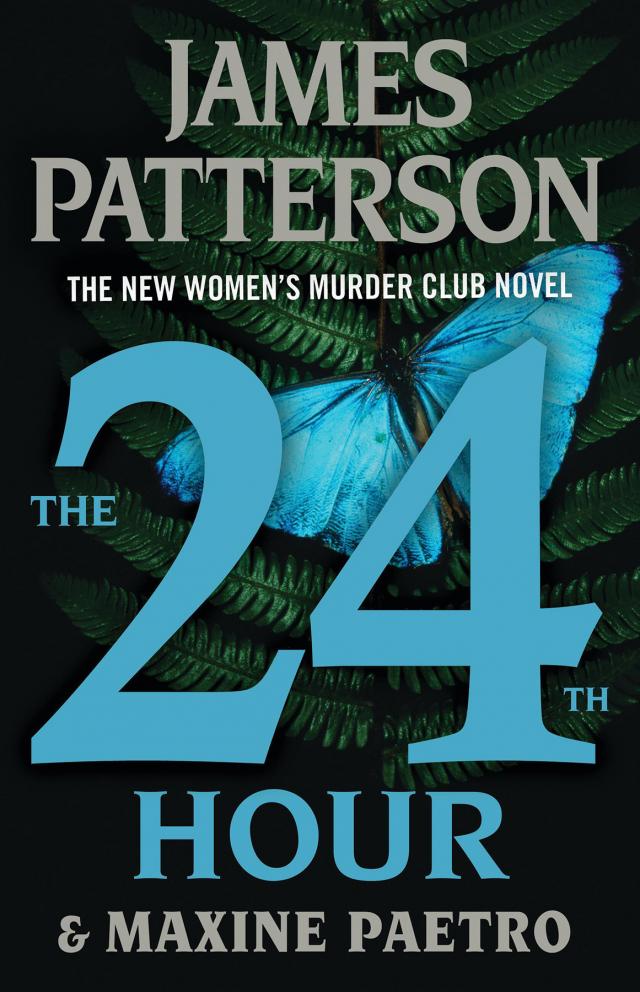
The 24th Hour, page 11


She told her doctor that Oompah gave her the snack in the kitchen and said that he’d spent all morning sorting out inventory in his hardware store and he was awfully tired. He then asked Mary Elena if she was ready for her nap. From the expression of stark fear on Mary Elena’s face visible on the recording, she knew what was coming from her previous experience with Oompah. And she was remembering that resisting him would fail.
In the courtroom now, Dr. Aronson spoke up. “See this. On the tape, Mary Elena is her current age of twenty-eight. But her fear has thrown a switch in her mind. She’s mentally in the second grade. She backs into her chair and hugs her knees.”
On the tape, Mary Elena was saying, “Let’s go outside, Oompah. Let’s go for a ride in the car. I want to go to the park.”
Then her voice changed, though it still sounded young. She said, “He came toward me and I pushed back and the chair fell over and Oompah picked me up. ‘What hurts?’ he asked me. I told him, ‘I just want to go outside. Please, Oompah.’ We went to the park.”
On the tape, Aronson asked, “Who are you now?”
“My name is Olivia.”
In the courtroom, Dr. Aronson said, “Mr. Gaines, please freeze the frame.”
Gaines pressed a button and the scene froze.
CHAPTER 50
YUKI STOOD TEN feet away from Dr. Aronson and continued her direct examination.
She asked, “Did you ever call the police about Mary Elena’s grandfather, or tell her parents?”
The doctor said, “Oompah had died by the time I started seeing Mary Elena in therapy. Both her parents are now dead, but at that time, she didn’t want to tell them, particularly her mother, who was Oompah’s only child. But she told me how she tried to protect herself. One of the signal traits of DID is the use of alters.”
Yuki asked, “Can you explain more about these alters?”
Aronson described four alternate personalities he’d either met or been told about by Mary Elena. He began with Lily, the childlike alter who had been seen on the video. She was about the same age Mary Elena had been when she was first assaulted. Lily had some power to shame Oompah with her baby talk and manner, but as a grown man, he often as not overrode her.
Aronson explained that a couple of years after Lily’s appearance in Mary Elena’s mind, Olivia came into being. Olivia’s personality was that of an ingenue who used her so-called feminine wiles to distract potential attackers. But Olivia had limited power as a guardian, and soon after Olivia became part of the group of alters, Loretta appeared.
Dr. Aronson noted, “I’ve only met Loretta one time, and when I asked her if she knew the other alters, she wouldn’t answer. I later deduced that she’d been instructed to keep to herself by a fourth alter, Ana.”
Yuki asked, “What is the nature of Ana?”
Dr. Aronson smoothed his hair back with his hand and seemed to search for the right words.
Finally, he said, “Mary Elena told me that Ana first appeared when she went to high school. Ana was older than the other alters and assumed a parental role in this grouping. She is authoritative, angry at what Mary Elena has suffered, and appeared when boys tried to get physical with Mary Elena.
“It was Ana who told me that she stood up to Mr. Cates, explaining to him that Mary Elena had a personality disorder. Ana told me that she’d specifically told Mr. Cates, ‘Don’t bother her. She is off-limits because she has a mental disorder that makes her much younger than she appears.’ But he didn’t listen to her.”
The defendant, Tyler Cates, interrupted loudly, “Oh come on. This is crap,” as Schneider added, “Hearsay, Your Honor.”
The judge slammed down the gavel and cautioned both Cates and his lawyer. Yuki looked at the jury box. As she expected, she saw shock on the jurors’ faces. If they bought that Mary Elena, in the person of Ana, told Tyler Cates that she was psychologically impaired, Cates was cooked.
Yuki asked, “Dr. Aronson, how long have you been treating Ms. Hayes?”
“Currently, for about the last six months. But I was at Handel-Reeves, a noted psychiatric hospital in San Francisco, and treated Mary Elena when as a teenager she was admitted to Handel-Reeves on five separate occasions and diagnosed with dissociative identity disorder, post-traumatic stress disorder, mixed personality disorder, and amnesia.”
“Did she know Mr. Cates before the attack?”
“She told me that she did not. She does not know him now.”
“Thank you, Dr. Aronson. I have nothing further.”
Judge St. John turned to the defense and asked, “Mr. Schneider, do you wish to cross-examine the witness?”
CHAPTER 51
YUKI WATCHED ED SCHNEIDER stump across the well to the witness stand. He greeted the witness, getting his name wrong.
“Dr. Aronstein, how do you know that Ms. Hayes has this DID as opposed to faking it for her own benefit?”
Dr. Aronson didn’t correct Schneider’s mistake. “I first became her therapist when she was a teenager. Her core personality has aged to match her chronological age, but she still manifests the traits of DID and a few other disorders as well.”
“So, you diagnosed her based on traits you observed in a therapeutic environment,” said Schneider.
“Yes, that’s right.”
Schneider took a half turn toward the jury, then pivoted back to the witness. He said, “So you’re telling us that the diagnosis of DID is based on hypothesis and/or a theory of intermittent behavior, as opposed to a physical illness like, say, cardiomyopathy.”
Aronson asked, “Is there a physical marker for DID? Is that what you’re asking me?”
He’d twisted the question just enough to make Schneider sharpen his point to Mary Elena’s psychological condition.
“Yes, doctor. That’s my question.”
Aronson said, “In some cases, there can be a brain anomaly or physical damage that dictates abnormal thoughts and behaviors. But DID is a complicated disorder that is pieced out through interviews over a period of time.”
Yuki hoped that Aronson was explaining the disorder in such a way that the jurors, even those who had not had therapy, could understand. He talked about the principal marker of the disorder, the two or more distinct personalities as well as depression and gaps in memory that Dr. Birney had also outlined.
Said Aronson, “These memory gaps cannot be attributed to substance abuse or any other physiological diagnosis.”
Schneider said, “So this diagnosis is formed by the attending psychiatrist’s analysis, but two such professionals could arrive at different diagnoses, isn’t that right, doctor?”
Aronson smiled. “Absolutely. But, in my years with Mary Elena, I’ve not only observed her. I have been with her when she dissociates, and I have conferred with other psychiatrists at the hospital where we worked. This is how DID is diagnosed.”
Yuki shut down her urge to shout, “Yeah!”
Aronson looked calm and competent, but Schneider’s expression showed that he hadn’t given up trying to discredit the doctor, and by extension, Mary Elena Hayes.
Schneider said, “Question, Doctor. Did Ms. Hayes have control of her body and her conduct on the day in question at Xe Sogni?”
“Yes. But the guile and the physical strength of the attacker would strongly determine the result.”
Schneider smiled with his mouth but the rest of his face was stony.
“Dr. Aronstein. It’s perfectly clear from what you’ve told us already that diagnosis of DID is somewhat arbitrary, made of observation, gut instinct, or guesswork—not lab tests or radiology or chemistry. In other words, not provable.”
Yuki was on her feet. “Objection, Your Honor. Argumentative.”
The judge sustained the objection.
But Schneider talked over the bang of the gavel and the judge’s voice.
“—and because psychiatry is not considered a true science, the claim that any single person could know what another person suffers from, if anything…”
Yuki, in her best and loudest courtroom voice, said again, “Objection, Your Honor. Not only is counsel’s commentary argumentative, it is irrelevant, immaterial, and clearly prejudicial.”
Schneider shot back, “Your Honor, this evidence is central to showing that the case against my client is faulty and based on unprovable theory…”
The judge, in an equally elevated tone, pounded his gavel harder, saying, “That’s enough, Mr. Schneider. The jury will disregard.”
Despite the judge’s gaveling, Dr. Aronson now joined the free-for-all.
“I don’t agree that the diagnosis of DID and psychiatry itself is arbitrary. Studies are made over decades, consensus is formed, and diagnoses made that are evidenced by statistics and improvement and relief for the patient, sometimes with medication, sometimes partially, sometimes entirely, for the rest of their lives.”
Schneider said dismissively, “I have nothing else.”
Yuki’s voice rang out in the courtroom. “Your Honor, I move to strike…”
At Yuki’s loudly voiced objection, the judge told the clerk to strike Schneider’s cross-examination and the doctor’s response. He added, “There is a time for closing arguments and this wasn’t it. The jury is instructed to disregard Mr. Schneider’s commentary. I will see both counselors in my chambers, now.
“Court is adjourned until tomorrow morning at nine o’clock.”
CHAPTER 52
JOE AND BAO had been sitting in Joe’s car, watching the ferry terminal for over an hour. Ferries had docked, boarded, and launched. In all, ferries had arrived from five points across the bay and hundreds of passengers had disembarked.
Bao had her laptop open. She had uploaded Thordarson and Wooten’s threat-catcher program, which indicated computer signals that hopped over oceans and continents. Presently, it showed an enlarged image of Northern California and was alive with pinpoints of light forming clusters and breaking apart. Not a single light came toward or departed from the ferry terminal. There were no hits on St. Vartan’s Hospital that were also tagged as having hit on an office building in Amsterdam.
Joe said to Bao, “I’m calling Thordarson and Wooten.”
Peter Wooten answered the video call.
Bao said, “We can see you. How’s our reception?”
“First-class,” said the red-haired cyber tracker from his office on Fremont Street.
Joe said, “Pete, if I’m St. Vartan’s, I’m asking, can’t you just unplug the hospital network to stop the bleeding?”
“We’ve taken a few computers off the servers. But if we disconnect the system, there are two possibilities that are as real as death. One, if Apocalypto has booby-trapped the system, it will trigger a complete shutdown and the damage will be biblical. Also, if we disconnect the server, we can’t track the signal back to the attackers.”
“Okay. My background in cyber threats is out of its league,” said Joe.
“Not mine,” said Bao.
“Nor mine,” said Wooten. “I know you feel like nothing is happening, Joe. We need more time and this is our best chance to pull the line and hook them.”
“Got it,” Joe said. “All’s clear at the ferry terminal.”
“Keep the faith,” said Wooten. “We’re tagging incoming searches, so if they come up again…”
Joe left the conversation to Bao. She lived and breathed cyberterrorism. He wondered why Steinmetz had pulled a risk assessment specialist into a cyberwar with lethal consequences. He listened with one ear as tech talk flowed between the woman sitting beside him and a man who’d spent the last six years of his life becoming a cyber threat catcher.
He heard Wooten say, “We’re making progress by process of elimination,” then goodbyes, and Bao cut their connection.
“Had enough?” she said to Joe.
“Mmmm. I say we grab a slice then go back to Mission Street.”
Bao said, “How do you like your pie?”
“Extra pepperoni with jalapeños.”
“I wish I’d bet on that.”
Joe laughed.
The pizza was hot and good enough, Bao was great company on a dull gray day, and it was good to have a partner again, especially one who understood the nuances of cyber warfare. But the clock was running out on the patients at St. Vartan’s, and the clock was loud and persistent.
Joe let out a sigh, and Bao looked up as they cruised toward FBI HQ.
“Joe? It’s good that we manned the ferry terminal, but it was a long shot. Wooten and Thordarson have the big guns. If or when they call us with a hit—”
“I like ‘go’ a lot more than ‘wait.’”
Bao said, “I know. Get ready. Get set. Stand down.” She dropped her eyes to her laptop, where the threat-catcher program displayed attacks in real time.
Joe crossed Market Street, took a left on McAllister Street to Polk to Mission, and was backing into a spot when his phone buzzed.
“It’s Steinmetz,” he said, pressing the button on his console. “Craig? We’re parking a block from the office. You’re on speaker.”
CHAPTER 53
STEINMETZ’S VOICE FILLED the front compartment.
“Something just came in,” the chief said. “There’s an abandoned house on Turquoise Way, a teardown. It’s been empty since the crypto market crashed. Suddenly, young guys, five or six of them, college age, start coming and going from this shack. Cars are parked all over.
“Our tipster peered into one of the windows just now. Saw these boys passed out on the floor and on furniture, and several expensive industrial-grade computer setups on the dining table. The neighbor’s name is Wade McEnroe. He’s a former Silicon Valley engineer and what he saw lit up his nervous system. He called Chief Clapper, who called me.”
Joe said, “So, a bunch of college-age kids are holed up in an abandoned building. They could be taking control of a hospital network for twenty million—or watching porn in 3D.”
Steinmetz said, “You have a better lead?”
“No. Give us the address. We’re going to be outnumbered. Send backup.”
Steinmetz agreed, read off the address, and clicked off.
Bao said, “It’s just weird enough to be possible.”
Joe unlocked the trunk, got out of the car, put on his Kevlar vest, and hung his badge on a chain around his neck. He gave a second vest to Bao, then got back behind the wheel and headed toward the house on Turquoise Way under occupation by a handful of squatters who might be holding hundreds of hospital patients for ransom.
CHAPTER 54
THE HOUSE ON Turquoise Way was faded blue, wood frame, one story high, squeezed in between two taller, bigger houses, and set back on its small wooded lot. Joe knew this area well. The small front yard meant that the rear of the house backed up to the top of a hill at the edge of Glen Canyon Park, a steep drop hundreds of feet above the floor of the valley below.
Joe parked across and up the street from the target house. His mood had picked up significantly since Steinmetz had given them this assignment. He took out his phone and got out of the car. He walked up and down, taking photos of the tags on vehicles. Bao tucked her gun into her waist holster, put her suit jacket on over the vest, and when Joe came back to the car, she said, “We need backup before we go into… that.”
Joe called Steinmetz. It was midafternoon and the chief was out. His assistant picked up his call.
“Agent Molinari, it’s Farah. Chief Steinmetz left you a message that SFPD is on the way. And also you got a call from a Sveinn Thordarson, twenty minutes ago. He said it’s not urgent.”
Joe thanked Farah and clicked off.
He said to Bao, “Car’s on the way. So we still wait?”
“Who’s in charge here?” she asked.
“You are. I’m freelance.”
“We watch and wait.”
Time passed without either speaking, then Bao reached the limit of her patience. “Okay,” she said. “Let’s move.”
The street sloped up from the car toward the house but the driveway was a parking lot to four used American cars. They walked slowly, a nice-looking couple taking in the view, wearing badges, packing. They reached the poured concrete walk leading to the front door of the shabby blue house without seeing another soul on foot.
“We’re not too conspicuous,” she said, “but I do feel eyes on me.”
Joe said, “I’ll be opposite you in the doorway with my gun out. You knock.”
“Oh, boy,” she said.
As the agents started up the walkway in front of the house, a tall, dark-haired man wearing a ball cap, jeans, and a Giants windbreaker came out of the house next door and walked quickly toward them.
“I’m Wade McEnroe,” he said. “I’m the one who called the police. You’re FBI?” he said, looking at the badges.
Bao said, “SFPD called us in.”
“Good,” said McEnroe. “There’s about a half dozen of them. Maybe they’re just rich kids with nothing to do but sleep all day, drink all night, and play video games. But I spent twenty-five years in Silicon Valley and I recognize the tens of thousands’ worth of industrial-grade computer hardware they’ve got there. It’s all new, arrayed on the dining table.”
Joe thanked McEnroe and gave him a business card, saying, “We’re just checking things out. But for your safety, please go home. And thanks for calling the police.”
CHAPTER 55
AFTER LEAVING THE Fricke house, I’d flagged down a cruiser, thrown myself against the back seat, and tuned in to my unanswered question. Who killed the Frickes?
I pictured their dead bodies on the street. Compared them. Both lying on their bellies, shot from behind. Holly’s face was turned to the left. Jamie was cradling his face with his right arm.
Differences without distinction.
I pictured our array of possible subjects: Arthur, Rafe, Patty, and Jamie’s other lovers from here to New York. Of course there was also the mystery man in black, who the neighbor had seen shoot Jamie and drive off in his Jaguar. A lot of work had been done, but we were still at square one. Maybe someone would walk into the station with a hot clue or a confession? It happened. But very rarely.


