

Wolf Mountain, page 4
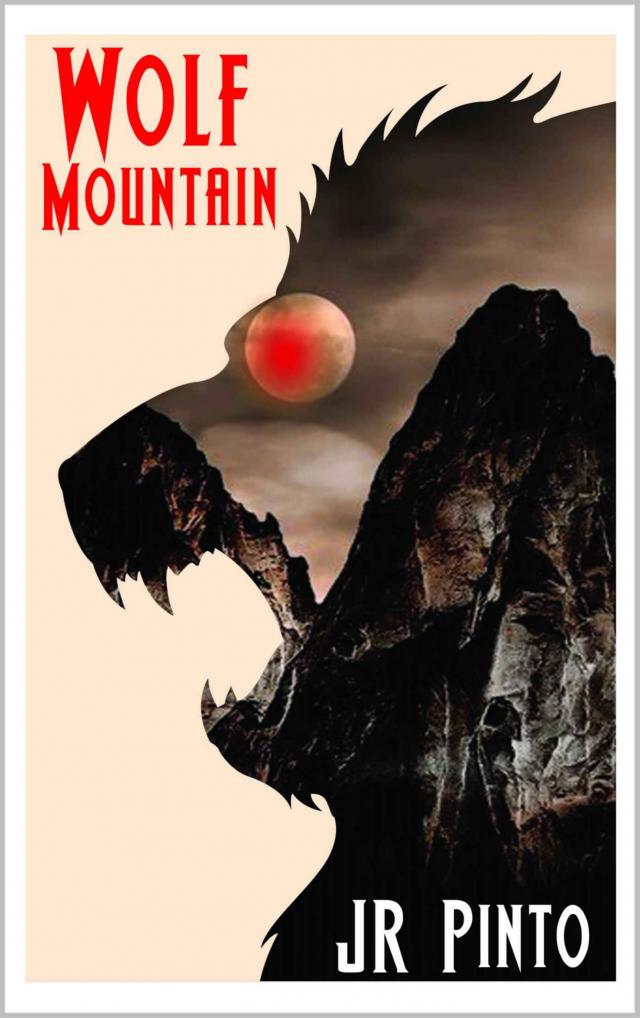


The howling sounded like a wolf.
Chapter 4
The Tent City
When Asher Greene awakened at seven the next morning, he was surprised to see the sun shining. He rose, dressed only in boxer shorts, and walked out onto the balcony. There was no trace of the violence from the previous night’s storm.
He rested on the banister and absorbed the scene. It was a beautiful Caribbean day. Sparse clouds dotted the sky. As soon as he walked outside, the smell of tropical flowers from the hotel garden—hibiscus, jasmine, bougainvillea—hit him like a crashing wave. Little sugarbirds flitted through the trees, complimenting the aroma with their sweet songs.
The entire scene put him in a good mood. It was a successful jailbreak from life in New Jersey. As soon as the thought crossed his mind, he felt guilty. Covering disaster shouldn’t make him happy.
From the high vantage point, a splendid view of Port-au-Prince spread out in the distance beyond the trees. It was too far away to make out too many details. There were three ships in the harbor: two container ships and an American Navy vessel. Probably a hospital ship to provide emergency medical assistance.
Asher phoned room service and ordered breakfast. He went into the bathroom and brushed his teeth. Then took a surprisingly hot shower, shaved, and put on a light cotton shirt, safari vest, and cargo shorts. He covered his exposed bits with sunscreen and insect repellent—Dengue fever could be a problem down here.
When breakfast came, he took it on the balcony, listening to the birds as he checked his computer. His story was up and running. There was a video attached to it—somewhat edited—of his interview with Duvalier. Nice —but would anybody care? Baby Doc, he imagined people asking. Who is that? I thought he was dead.
The phone rang. “Monsieur Greene?” Magda said. “Your guide is here.”
“Thank you.”
Asher filled the pockets of his cargo shorts and safari vest with his camera, digital recorder, smart phone, press badge, wallet, etc., and headed downstairs.
When he arrived at the front desk, there was an attractive young Haitian woman sitting across from it. “Mr. Greene?” she asked.
“Yes.”
She rose to her feet then walked over to him and extended her hand. “I am Coco Bernard.” She wore blue jeans and a smart white blouse with the sleeves folded above her elbows.
Asher took her hand and shook. “Pleased to meet you.”
“I’ll be your driver and guide.”
“Oh?”
“Do I not meet your expectations?”
“Well...I was expecting someone a bit more manly.”
Coco smiled. “So was I.”
Asher laughed. “Touché. But I was told that they’d hired a man to be my guide.”
“Oh, that was probably Bobby,” Coco said. “He’s been kidnapped.” She said it the same way she might have said that he had a cold.
“I’m sorry,what?”
“Somebody kidnapped him.” Coco shrugged. “It happens.”
Asher was experiencing his first genuine moment of culture-shock. “Well...will they release him?”
“I certainly hope so—if his family pays the ransom. Shall we go?”
“Um...sure. Why not?”
It was only nine o’clock and the day was already beginning to grow hot as Asher and Coco left the hotel. Coco’s car was a dark blue Ford F-150 pickup truck. It was dusty and dented for the wear-and-tear of Haitian driving. Asher was pleased to see that it was a stick-shift and the way Coco put it in gear was slightly sexy.
“Where to?” Coco asked.
“The first stop is the hotel where Duvalier is staying.”
“That’s The Karibe. It’s the most expensive hotel in Haiti.”
“Quelle surprise,” Asher said. “You can’t help your people unless you’re lounging in the lap of luxury.”
They drove down the garden path of the Hotel Oloffson. Just as the night before, the front gate was guarded by two young, muscular, machine gun-wielding guards. For all their firepower, they smiled warmly at them as they drove through and, to Asher, they looked little older than the children they probably were.
Once the grounds of the hotel were behind them, they had left the tropical paradise atmosphere and were plunged back into the realities of a “failed republic.” The road—if it could be called a road—was in a terrible state of disrepair. The Oloffson nestled into the side of a hill—in most other countries it would be a “mountain” but in Haiti it was merely a hill. Downhill was Port-au-Prince and the heart of the devastation. Coco turned the pickup truck right—uphill—away from town. For the time being, all there was to look at in this direction was the occasional one-story gray cinderblock building, baking in the sunlight.
“So, you speak French?” Asher said.
Coco cast him a sideways glance. She smiled as she downshifted. “And Creole. And Spanish. And English.”
Asher stuck his arm out the window to catch the breeze. “You don’t have an accent.”
“I do, a little bit. I grew up here and in Florida. I’d mostly been living in Orlando until the earthquake hit.”
“Oh, really? What is your first language?”
“Creole, I suppose. I was born here. But I grew up speaking English and Creole. I only had to know a little French growing up. Even though it’s the ‘official language’ here, only the rich and powerful speak it. I mostly learned how to speak French at college.”
“Really? Where did you go to college?”
“Technically, I’m still going. I’m getting my Master’s in Business Administration from the University of Central Florida. I’d have it already but I keep on wasting my time, as my father tells me, taking electives.”
“When are you going back?”
She shrugged. “I don’t know. I have to work out things here first. My sister died in the earthquake and I came back here to help out my parents.”
“Oh, God.” Asher said. “I’m sorry.”
“Thank you.” She kept her eyes on the road and said it in such a way as to let him know that it was a closed subject.
After a few minutes of bumpy driving, they turned onto the property of the Karibe Hotel. Of course, there were the ubiquitous armed guards—seemingly more so here, because of their special guest.
“Nice digs,” Asher remarked as they pulled up to the main building. In many ways, it was the opposite of the Hotel Oloffson. This one was ultra-modern and could pass for a tropical hotel anywhere in the world.
In the end, they didn’t stay long. There was a smattering of international journalists already camped out in front of the atrium lobby, in the off hope that Baby Doc Duvalier would show himself. Asher questioned them for a few minutes, learned what he could.
“Let’s go,” he said to Coco.
“So soon?”
“Nothing is going to happen now. Duvalier’s up in his room eating room service and drinking Barbancourt. There won’t be any new developments at least until later in the day. For the time being, I’d like to go to the tent city at Carrefour.”
Coco put the pickup in gear and headed back toward the city. Asher grew increasingly impressed at what an aggressive driver she was. It struck him that driving in Haiti was like an extended game of chicken. The roads were barely wide enough for two cars and most people drove too slowly for Coco’s taste. Whenever she found herself behind another vehicle, she jumped into the oncoming traffic lane and gunned it, regardless of whether or not there was another car coming at her.
“How did you make it here so quickly?” Coco asked as she began to speed around a trio of cars that were moving unacceptably slow for her.
“Excuse me?” Asher’s attention was almost entirely focused on the truck that was accelerating straight for them. Could she possibly get back in the other lane in time?
“For Duvalier? How did you know he was coming?”
“I....” The oncoming truck was almost upon them. My God, Asher thought, we’re not going to make it. He grabbed onto the passenger-side strap and braced for impact. Instead, the oncoming car swerved slightly to the left, the other car swerved slightly to the right, and Coco breezed between them with a good inch, inch-and-a-half on either side.
She turned to him, distracted. “I’m sorry, what were you saying?”
“Baruch atah Adonai...Oh.” Asher relaxed his iron grip on the strap. “I was just saying I had no idea that Duvalier was returning. Even the President of the United States didn’t know he was coming until he was almost here. It’s just blind luck, fate, or Divine Intervention that put me in the right place at the right time.”
“Then what are you doing in Port-au-Prince now? Most of the other American journalists have already done their anniversary stories and left by now.”
“I’m investigating a series of murders in the tent cities.”
“People get murdered all the time in the tent cities. They’re not safe.”
“I know, but these are different. Two little boys were murdered. The community lynched the man they believed did it.”
Coco shrugged. “So? You want to bring them to justice? In case you haven’t noticed, there’s not much of a police force around here. Sometimes, communities have to take care of justice on their own. Even before the earthquake, Haitians have had to take matters into their own hands.”
“Why so?”
Coco shrugged. “Try not to think of Haiti as one independent nation with a centralized government. It always reminded me more of ancient Greece—a collection of city-states all sharing a common language. There’s never been a strong central government here, or a constitution that’s lasted for very long, so communities are mostly forced to govern themselves.”
Asher smiled. “You know an awful lot about history.”
Coco turned to him and smiled back. “It’s all those electives my father disapproves of. But, if you come from a country the rest of the world pities or mocks, it helps to be knowledgable. They don’t even call my country ‘Haiti’ anymore—it’s ‘Haiti-the-poorest-country-in-the-western-hemisphere,’ one word.”
“I understand,” Asher said. “Anyway, it’s not just the murders themselves that attracted me to this case. The man that did it—the one they lynched—everyone seems to think he was a werewolf.”
She looked at him sharply. “Thejé-rouge?”
“You know what they are?”
She turned her attention to the road again. “Of course I know what they are.” Her tone had changed. Now it was cold with a hint of contempt.
“Have you heard about this incident then?”
“Rumors. Not much else.”
“But you don’t think that I should investigate it, do you?” He didn’t want to waste time with bullshit.
She looked at him, coldly this time. “No, I don’t.”
“Why?” He smiled. “Are you worried that I’ll be eaten by a werewolf?”
“Not particularly.” And then she added: “Here, it’s called ajé-rouge. That’s Creole—it means ‘red eyes.’ Loup-garouis the French word for ‘werewolf.’ You can call it aloup-garouas well.”
“So why do you disapprove?”
“Oh, I don’t know,” she said with mock conviviality. “Is it because another white American comes down here to tell the rest of the world what superstitious savages we are? Or is it because you’re profiteering off the worst disaster in our history?”
“You judge me unfairly.”
“Do I? Did you know that America occupied Haiti for twenty years?”
“Yes, I do.” Asher kept his tone as respectful as possible.
“Well, after this humiliating and tyrannical occupation, it was common for returning soldiers to write books about their adventures in the savage land with the blacks and their Voodoo.”
Asher thought for a moment. “Okay, let me put it to you this way. I give you my word that I’ll clear everything I write about this with you first. And if you don’t like, I swear I won’t publish it.”
She rolled her eyes. “You’re word?”
“In journalism, that’s all we have and we take it seriously.”
“That’s a generous offer, Mr. Greene.”
“Asher.”
“That’s a generous offer,Asher.”
“Well, I’ve already got a story out of this trip.”
“Then why continue.”
Asher shrugged. “Curiosity.” He extended his hand. “What do you say? We have a deal?”
“Deal.” They shook on it.
The truck hit a pothole and broke their handshake. They rounded a corner and Asher got his first up-close view of Port-au-Prince in daylight. “My God,” he said. There was rubble everywhere. “It looked like the earthquake could’ve happened yesterday.”
They were traveling down one of the many traffic-clogged streets.
“You should’ve been here a year ago,” Coco said. “There’s actually been a lot of progress.”
“This is progress?”
“This street was buried ten feet deep.”
Asher looked past the rubble, past the garbage, past the dirty water running in the gutters. He looked at the buildings themselves that made up Port-au-Prince. It was a model of urban decay. It was a city—that was for sure—but it looked like a city that had never had a heyday. The buildings he drove past all looked to be about fifty years old at least. They seemed to be made mostly of concrete and cinderblocks. The devastation had been so bad partly because the cinderblock walls had been constructed without the necessary iron rods going through them for support; when the earthquake struck, they just crumbled to pieces.
The buildings were poorly maintained. They were usually only two stories high. The first-floor porches—and usually the second floor porches as well—were protected by a complex latticework of wrought-iron. The paint on the houses had faded away years ago into dull hues of blue, red, and green. The walls were chipped and covered in graffiti. There were gaps in neighborhoods where some of the adjoining houses had simply crumbled away into nothing. It was an inner city gone horribly wrong. As much as Asher tried to keep an open mind and not view things from an American perspective, he couldn’t resist thinking:What a shithole. It was like the desolate poverty that Asher was familiar with in American towns such as Camden, New Jersey. The difference was, if you drove for a few minutes, you would be out of Camden and in a nice town. In Haiti, if you drove through one slum, you would just drive into another.
“Whatare those things?” Asher said. He pointed at some of the ostentatiously painted vans, busses, and pickup trucks he’d been seeing since he arrived. Each one was a work of art—every available space covered with bright murals. They were bright blue, yellow, orange....
Coco laughed. “You never heard oftap-taps?”
“No.”
“They’re busses—like public transportation. You just hop on one and ‘tap-tap’ here," she tapped her hand on the door, “on the side when you want the driver to stop.”
“Awesome. We should paint busses like that in America.”
“There is no shortage of artists here.”
As Asher looked, a tap-tap drove past them with the logo “NEW JERSEY” written above the windscreen. He laughed, feeling patriotic. Why would they ever write that? He resisted the urge to fist-pump.
A UN peacekeeping truck rounded the corner. On the open flatbed sat the soldiers. They were dressed in green camouflage with their trademark Robin-egg-blue helmets. There were six of them. One of them stood, surveying the scene—the other five sat, each holding a rifle and ready to fire. The truck headed down a street that ended in one of the mountains that surrounded Port-au-Prince.
Outside the city, mountains covered the horizon in every direction. Houses crusted the mountains of Port-au-Prince like barnacles. Asher knew that, up close, they would be the hovels of people living in the direst poverty. But from this distance, it looked kind of pretty.
They turned off the coast road and began driving through the ruined town of Carrefour. Again, there was still uncollected rubble. Fragments of walls stood as the last remaining vestiges of whatever building they had supported.
The Haitians still seemed to be getting on with their lives. Everywhere Asher looked, people were selling things—from their houses, from makeshift stands, or simply from their hands. Mostly, they sold convenience store products—batteries, tissues, alcohol. This made sense because Asher had not yet seen a store since he’d been here.
As they were stopped in traffic, a heavy old woman approached Asher’s window. She carried a basket of mangoes. “Monsieur. Mangoes?” Her front teeth were missing. “Deux pour un dollar.”
Asher reached into his pocket.
Coco reached for him. “Don’t.” It was too late. Asher handed her the money. When the other vendors saw this, they began mobbing the truck. People held out cigarettes, rum, bottled water, and a dozen other things. Asher heard shouts of “Blanc! Blanc!” He took the two mangoes and rolled up his window. Coco honked the horn and began nudging the pick-up truck through the throng of people. Some vendors blocked their way and, for a moment, Asher was sure that Coco was going to run over a wrinkled man in a straw hat. It was like a scene out ofDawn of the Dead.
She got the truck past them and continued out of the city at a good pace. “What you don’t know about Haiti is a lot.”
“Are you this charming with all your clients? Keep it up and I won’t give you the mango I bought for you.”
They took a road that led uphill. Asher could see the mountainside covered with tents and shanties. They drove through a clutch of trees and climbed steadily higher. The road was cut into the side of the mountain—veer too far to the right and you’d tumble all the way down. Asher contemplated this as he looked down. He turned his gaze up and, through the trees, saw a beautiful view of the sea.
Around the bend the road opened up and they arrived at the tent city.
They pulled into a clearing where several other vehicles were already parked. Incongruously, Coco put the Club on her steering wheel before locking the truck. Asher stepped out into the dust and began taking pictures. Before him lay a sea of tents that stretched up the mountain.


