

The Last Hunter, page 1


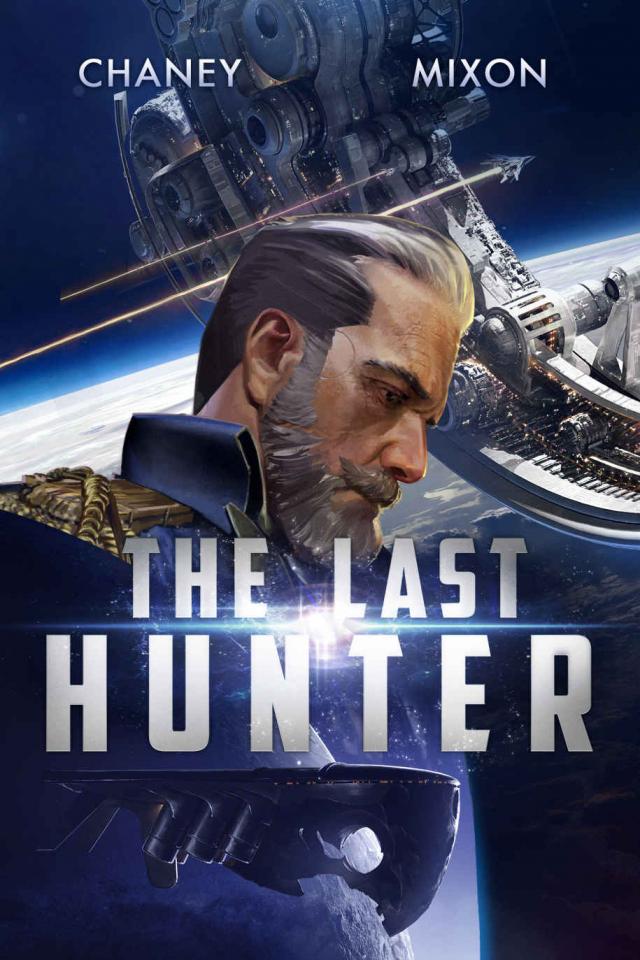
Copyrighted Material
The Last Hunter Copyright © 2021 by Variant Publications
Book design and layout copyright © 2021 by JN Chaney
This novel is a work of fiction. Names, characters, places, and incidents are either products of the author’s imagination or used fictitiously. Any resemblance to actual events, locales, or persons, living, dead, or undead, is entirely coincidental.
All rights reserved
No part of this publication can be reproduced or transmitted in any form or by any means, electronic or mechanical, without permission in writing.
1st Edition
CONTENTS
Don’t Miss Out
Chapter 1
Chapter 2
Chapter 3
Chapter 4
Chapter 5
Chapter 6
Chapter 7
Chapter 8
Chapter 9
Chapter 10
Chapter 11
Chapter 12
Chapter 13
Chapter 14
Chapter 15
Chapter 16
Chapter 17
Chapter 18
Chapter 19
Chapter 20
Chapter 21
Chapter 22
Chapter 23
Chapter 24
Chapter 25
Chapter 26
Chapter 27
Chapter 28
Chapter 29
Chapter 30
Chapter 31
Chapter 32
Chapter 33
Chapter 34
Chapter 35
Chapter 36
Chapter 37
Chapter 38
Join the Conversation
Connect with J.N. Chaney
Connect with Terry Mixon
About the Authors
Don’t miss out on these exclusive perks:
Instant access to free short stories from series like Backyard Starship, Sentenced to War, and more.
Receive email updates for new releases and other news.
Get notified when we run special deals on books and audiobooks.
So, what are you waiting for? Enter your email address at the link below to stay in the loop.
Click Here
1
Captain Jack Romanoff reflexively suppressed a mild whole-body twitch as the Confederation Navy cruiser Hawkwing jumped through the quantum gate and into the Faust system. He’d done that kind of jump hundreds of times, and the sensation always made him slightly queasy.
This time felt somehow worse, but he knew that was simply nerves.
To distract himself, he paid attention to the plot at the front of the cramped bridge. It showed the Faust system in great detail but was primarily focused on the planet itself. The quantum gate trailed the planet and was somewhat farther out, so they still had hours of flight time until they arrived in orbit.
His helm officer, Lieutenant Commander Alexey Golousenko, turned away from his console long enough to smile at him. That always lit up the short, thin man’s face. “I estimate that we’ll be at headquarters in about three hours, Captain.”
“Take us in.”
The helm officer did so, his movements quick and dexterous. In reality, Jack wanted to tell him to drop their speed because he wasn’t in a hurry to get there, but that wasn’t the Navy way. He’d face what came without flinching. Getting there late wouldn’t improve the outcome of this meeting, so best to just get it over with.
Commander India MacKinnon, his executive officer, rose from her console and stepped over to his command chair. Without directly looking at him, she rested her hand on his forearm. It was a caring gesture, and he appreciated it.
“It’s going to be fine, Jack,” she said softly enough that her voice wouldn’t carry. “Each of us has to go through this at some point. I was just as nervous when it came time for me to get my executive officer’s slot. It’s going to work out.”
He raised an eyebrow and felt the corners of his mouth quirk upward slightly. “You’ve made a much better executive officer than I’d be as a commodore, I think. And there are a lot more executive officer slots to fill than flag postings. I’m not expecting a positive outcome, particularly after… well, you know.”
The tall, dark-haired woman faced him and gave him the kind of look she generally reserved for unruly petty officers. “That was five years ago, and you didn’t actually hit the liner. You took your eyes off the helm for sixty seconds and missed them recklessly cutting in front of your ship. It could’ve happened to any of us.
“You spotted it in time and were able to change course. Did it go on your record? Yes. Did it stop you from getting this command? No. It’s not going to be a factor in getting flag rank. Frankly, I think your father is a much bigger obstacle.”
He grunted. She was probably right about that. Living in the shadow of retired Grand Admiral Eric Romanoff would almost certainly have a bigger impact on his future. Sadly, it wasn’t going to be a positive one.
The man had been a terror when he ran the Confederation Navy. He’d made so many enemies that it was impossible to know exactly how many were scattered across the service. And most of them seemed ready to take their ire out on his son, no matter that he shared many of their views about the man.
“Thanks for that reminder,” he said dryly. “I think you’ve just reduced my chances of getting that promotion by about seventy percent.”
And for failing to be promoted, the service would cashier him. With so few ships in active service, there weren’t enough openings for all of the qualified officers. Each of the ranks hit a bottleneck where only a certain number of people could advance. The rest were beached.
He’d made it all the way to captain despite his near collision with the liner. Frankly, he’d been shocked to make it so far.
To a degree, despite his fearsome legacy, his father’s name had probably helped make that happen. The old man might have retired to pursue a political life, but his shadow was still long in the service. He still knew people and pulled their strings. If a deal could be made, his father would make it.
Jack didn’t think that was enough to help him now, and he didn’t want it to. If he was going to make commodore, he wanted it to be on his own merits. Sadly, part of him feared that he didn’t truly have what it took.
An old saying called the Peter Principle stated that one rose to the level of their own incompetence. They’d be promoted for the success they had until they found themselves in a position where they couldn’t handle their duties.
He’d seen it happen with his own eyes, so he knew it was true. The Navy weeded those people out in promotion cycles just like the one that he was about to go through. With everything stacked against him, he was pretty sure that it was his turn to be rejected for his shortcomings.
“You’re going to be fine,” India told him firmly. “Approach this like you would any other tactical problem. You can win this fight. No matter what the admiral has in mind, this meeting is going to be your chance to convince her that you’re the man for the job. Don’t blow it by acting as if the fight is already lost.
“This isn’t a time to be timid, Jack. By your thinking, it can hardly make things worse, right? Go for broke.”
He almost sighed at her words. He’d become more than a little risk-averse since the close call with the liner, and India hadn’t been shy about telling him how that didn’t work for a Navy captain.
She was right. In a fight, a timid commander was a dead one.
He suspected that nothing would change what the admiral had in mind for him, but he could approach the situation as if he had control of his own fate. What would it cost him in the end? If they were going to beach him, they’d do so no matter what he said.
“You’re right,” he admitted. “Thanks.”
“I am right. Mark my words. And that dashing beard and mustache you grew on this cruise certainly can’t hurt.”
That made him smile. India had encouraged him to give facial hair a try, and he had to admit that he liked the look, as long as he kept it neatly trimmed.
“With my luck, she’ll fire me just for that. If she does, I’m blaming you.”
“You’ll be fine, Jack,” she said with a final squeeze of his arm before she returned to her console.
He watched her for a few moments and smiled. She was one hell of an executive officer and would make a terrific captain one day. Much better than he’d been. She was an amazing officer.
The next two hours passed without any issues, and Faust grew larger on the screen.
“We’ve got an approach vector, Captain,” Alexey said. “We’re coming straight in and will make a pass by the Locust War Museum.”
“Very good,” Jack said. “Put it on screen as we pass.”
Having grown up on Faust, Jack had visited the museum as a kid, as most schools arranged trips to the massive warship. His memories of the experience were vague, but he clearly remembered the excitement of the trip.
His father had been a junior officer back in those days and hadn’t been home, but his mother had made sure that she’d primed him with everything she could learn about the old battleship in the days leading up to the trip.
He’d forgotten most of it in the years since, though he’d had tactical training about the Locusts and the invasion when he joined the Navy.
Massive warships like the decommissioned Delta Orionis had fought and defeated the robotic Locusts when they invaded the nearby Perseus Cluster two hundred years ago. The mechanical probes had taken over most of the cluster, destroying everything in space as they went, by the time the Confederation had been able to mount an effective defense.
Delta Orionis had been the first of the Hunter-class battleships. A mobile battle platform of almost unimaginable destructive potential. She’d helped prevent the Locusts from making the jump out of the Perseus Cluster and into the rest of the Confederation. As more battleships came online, they’d been able to push the robotic probes back and eventually exterminate them.
That had been the heyday of the Confederation Navy. Those men and women had been the heroes that saved humanity from whatever fate the robots had intended. Since then everything for the Navy had been a slow slide into ignominy.
Maintaining a powerful Navy took willpower and lots of money. The Confederation had kept up their resolve for decades after the invasion, fearful that another was right on its heels. When one failed to materialize, the spigots that had kept the Navy afloat had begun to shut off.
Now, two hundred years later, the Navy was a pale shadow of its former self. Yes, their warships were state-of-the-art and had weapons designed to handle another Locust invasion, should one come, but their number had dwindled with every passing decade.
At this point, even though the number was classified, Jack would’ve been shocked if there were more than three hundred cruisers in service across the whole Confederation. The sector centered on Faust had around six dozen.
He was glad that the Locusts didn’t seem to have had a return trip on their dance cards because he wasn’t convinced humanity could stand them off again.
“Take us as close as you safely can when we pass, Alexey,” he ordered. “Let’s give the old girl a good look.”
His helm officer grinned. “Aye, sir. One flyby coming up.”
The old warship trailed the Confederation Naval Headquarters in the same orbit. It never ceased to make him chuckle to see how the warship dwarfed the Navy station.
It wasn’t that headquarters was small. Rather, Delta Orionis was huge.
Built from a hollowed-out nickel-iron asteroid more than two kilometers long and almost a kilometer across, the vast warship mounted more lasers and missile batteries than could easily be counted, even by his ship’s advanced sensors.
That was partly because they were all nestled deep inside protective pits to keep them safe from enemy fire, but it was also because their number seemed to be never-ending. He was certain that he’d been told how many missile and laser batteries the battleship had once boasted when he’d taken the tour all those years ago, but he didn’t remember now.
It had undoubtedly been in the thousands. Possibly the tens of thousands. The weapons were far more primitive than what the Navy used these days, but as they said, quantity has a quality all its own.
The problem with fighting the Locusts was that their motherships had arrived in the cluster using some form of hyperspace travel that allowed them to move faster than light. No one had known they were coming. Once they’d arrived, each of the motherships had disgorged a swarm of small craft that washed over every space-based artificial structure in the affected systems.
They’d destroyed indiscriminately, tearing down mining structures in the belts, civilian stations in orbit around planets, warships sent to stop them, and civilians trying to flee.
Each of the drones mounted a single weak laser that, by itself, was a minimal threat, but hundreds or thousands of them firing at you would kill you just as surely as a more powerful weapon.
The Navy of the day hadn’t had anything that could stand up to them. They’d lost fight after fight and had conceded system after system. The Locusts had proved intelligent enough to figure out how to use the Confederation’s quantum gate network to follow their enemies and seize other systems without traversing the distance between them.
Only the arrival of the first hastily built battleship—the aforementioned Delta Orionis—had stopped them from breaking out of the Perseus Cluster and destroying humanity.
Delta Orionis had held the line while other battleships were rushed into service and sent into the fray. It took years to finally destroy the Locusts and all their motherships, but these vessels had managed it through raw offensive power and the ability to absorb punishing damage.
They’d been the premier posting for decades after the war, but those vessels took a lot to maintain, and without a driving need, they were retired one by one until all of them were out of service.
The Navy’s designers had built ships like his cruiser to handle the return of the Locusts if that ever happened. Hawkwing had two dozen phased packet plasma guns—which were far more powerful than the ancient lasers on the battleships, and able to fire much more quickly—so she was more than capable of defending against a swarm of Locust drones if called upon. There was simply no need for the gargantuan warships anymore, which was a damned pity.
Jack was glad that the Confederation had kept Delta Orionis as a museum. He didn’t know where the other eleven battleships had gone after the war, but at least one of them still served a purpose, and that had to count for something.
Their time had passed, but they’d served the Confederation well. They deserved his respect, and this final flyby would be his salute.
The sunlight reflecting off the museum grew as they approached Faust. Using magnification, they could see the Confederation Naval Sector Headquarters and the massive battleship trailing it around the green and blue world that he’d grown up on.
Faust was very much like Earth and had a population in the tens of billions. The surface he could see was shrouded in darkness and littered with glittering gemstones that were, in reality, massive cities. It was a beautiful world, and he was glad to have the opportunity to visit it once again, even under these circumstances.
Alexey brought Hawkwing down into the orbit Delta Orionis followed and approached the old warship from the rear. The massive asteroid ship filled their screen in minutes, and he was looking at the gargantuan fusion drives required to move that incredible mass.
They couldn’t have propelled the ship to another star system in a human being’s lifetime, of course, but the vessel had more than enough space for the Navy to build an equally outsized quantum drive inside her that was capable of jumping the entire asteroid from one system to another without a gate. That was a horrendously expensive piece of equipment, but even tight-fisted governments coughed up the money when faced with mass extermination.
Other than the Hunter-class battleships, fully independent quantum drives that generated their own quantum tunnels were restricted to exploratory vessels. Those purpose-built ships could explore a new system, and if the target was worthy of colonization, place and activate a matched pair of quantum gates to establish a means for ships with standard quantum drives to get there.
Once the gates were up and running, no further intervention was required, and that new system was linked to the rest of the Confederation from then on. Ships with the more limited standard quantum drives could use the quantum tunnel generated by the gates since they were incapable of generating one themselves.
Sadly, the Confederation wasn’t expanding these days, so he doubted there were any exploratory vessels still in service. That was another cost-cutting measure, he was sure. The Confederation had entered a state of decline. They were contracting rather than growing, and that wasn’t a good sign.
“Flash the running lights in salute as we pass, Alexey. Let’s show our respect.”


