The Witch's Daughter, page 1


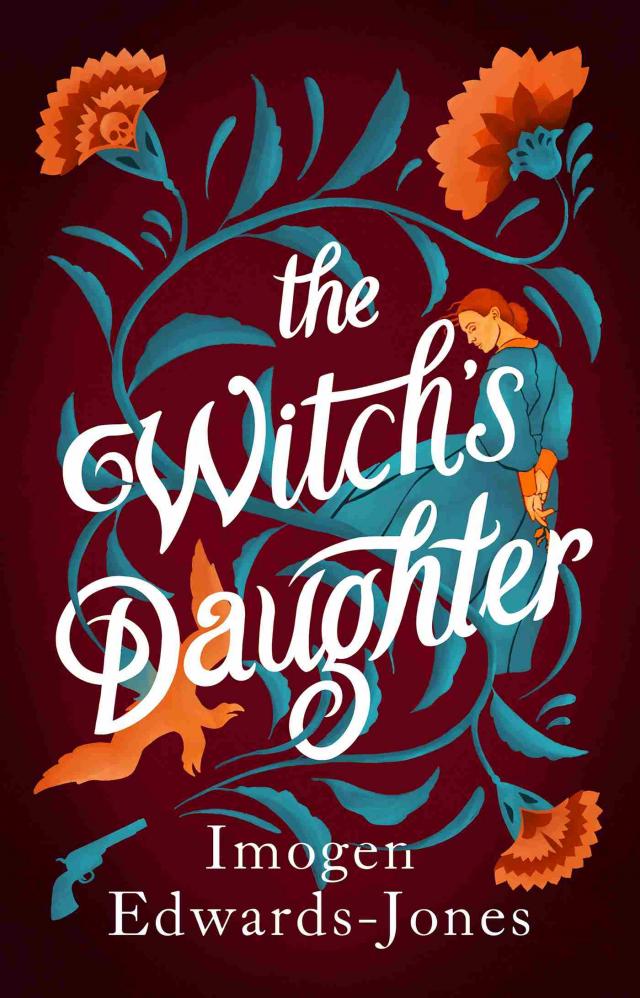
THE WITCH’S DAUGHTER
ALSO BY IMOGEN EDWARDS-JONES
The Witches of St Petersburg
THE WITCH’S DAUGHTER
IMOGEN EDWARDS-JONES
www.headofzeus.com
First published in the UK in 2023 by Head of Zeus,
part of Bloomsbury Publishing Plc
Copyright © Imogen Edwards-Jones, 2023
Translation of Alexander Pushkin on page 239
copyright © Katya Galitzine
The moral right of Imogen Edwards-Jones to be identified as the author of this work has been asserted in accordance with the Copyright, Designs and Patents Act of 1988.
All rights reserved. No part of this publication may be reproduced, stored in a retrieval system, or transmitted in any form or by any means, electronic, mechanical, photocopying, recording, or otherwise, without the prior permission of both the copyright owner and the above publisher of this book.
This is a work of fiction. All characters, organizations, and events portrayed in this novel are either products of the author’s imagination or are used fictitiously.
A catalogue record for this book is available from the British Library.
ISBN (HB): 9781838933289
ISBN (XTPB): 9781838933296
ISBN (E): 9781838933319
Head of Zeus
First Floor East
5–8 Hardwick Street
London EC1R 4RG
WWW.HEADOFZEUS.COM
To the handsome Kit Craig and the wonderful Annabel with love
Contents
Also by Imogen Edwards-Jones
Title Page
Copyright
Dedication
Author’s Note
Cast of Characters
Prologue
Chapter 1
Chapter 2
Chapter 3
Chapter 4
Chapter 5
Chapter 6
Chapter 7
Chapter 8
Chapter 9
Chapter 10
Chapter 11
Chapter 12
Chapter 13
Chapter 14
Chapter 15
Chapter 16
Chapter 17
Chapter 18
Chapter 19
Epilogue
Acknowledgements/Author Note
About the Author
An Invitation from the Publisher
AUTHOR’S NOTE
This is a work of fiction – although many of the facts are as is, this is not entirely as it was. I have taken many forms of poetic license. Also Russian dates present all sorts of problems. Until 1st February 1918, Russia used the Old Style Julian Calendar which meant that it was 12 days behind the West in the 19th Century, and 13 days behind in the 20th Century. Many sources don’t differentiate between the two calendars. Some slip between both. Others don’t bother with either! I have tried to use the Gregorian New Style Calendar as much as possible in this novel for clarity and efficacity. But I am sure some errors will have slipped through the net; I hope it does not spoil your enjoyment of the story.
CAST OF CHARACTERS
Grand Duchess Militza Nikolayevna – second daughter of King Nikola of Montenegro; she was one of twelve children, only nine of whom survived into adulthood.
Grand Duke Peter Nikolayevich – cousin to Tsar Nicholas II of Russia, married to Militza.
Princess Marina Petrovna of Russia – eldest daughter of Grand Duchess Militza and Grand Duke Peter.
Prince Roman Petrovich of Russia – only son of Grand Duchess Militza and Grand Duke Peter.
Princess Nadezhda Petrovna of Russia – the younger daughter of Grand Duchess Militza and Grand Duke Peter; her twin sister Princess Sofia Petrovna of Russia died at birth.
Grand Duchess Anastasia (Stana) – third daughter of King Nikola of Montenegro.
George Maximilianovich, 6th Duke of Leuchtenberg – Stana’s first husband.
Grand Duke Nikolai Nikolayevich (Nikolasha) – brother of Grand Duke Peter Nikolayevich, commander in chief of the Russian army, viceroy of the Caucasus, and cousin to Tsar Nicholas II; second husband to Stana.
Tsar Nicholas II (Nicky) – reigned as the last Emperor of Russia from 1894 to 1917.
Tsarina Alexandra Fyodorovna (née Princess Alexandra of Hesse-Darmstadt; also called Alix) – Empress of Russia.
Their children:
Olga
Tatiana
Maria
Anastasia
Alexei, the Tsarevich
Dowager Empress Maria Fyodorovna (née Princess Dagmar of Denmark; also known as Minny) – widow of Alexander III, mother to Tsar Nicholas II.
Grand Duchess Elizabeth Fyodorovna (Ella) – elder sister of the Tsarina; married to Grand Duke Sergei Alexandrovich, uncle to the Tsar.
Grand Duchess Vladimir, Maria Pavlovna – one of the richest women in all Russia.
Grand Duke Vladimir Alexandrovich – husband to Maria Pavlovna and uncle to the Tsar.
Count Felix Sumarokov-Elston (Count Felix Yusupov) – married to Princess Zinaida Yusupova, the richest woman in all Russia; father of Prince Nikolai Felixovich and Prince Felix Felixovich.
Prince Felix Yusupov – married to Princess Irina Alexandrovna, daughter of Xenia (Tsar Nicholas II’s sister) and Alexander Mikhailovich (Sandro); one of the murderers of Rasputin.
Prince Dmitry Pavlovich – son of Grand Duke Paul Alexandrovich of Russia, grandson of Tsar Alexander II of Russia, first cousin of Tsar Nicholas II; one of the murderers of Rasputin.
Anna Vyrubova (née Taneyeva) – the Tsarina’s best friend.
Dr Shamzaran Badmaev (otherwise known as Dr Peter Badmaev) – apothecary, philosopher, and purveyor of fine drugs; born in Tibet.
Grigory Yefimovich Rasputin (Grisha) – man of God, hierophant, and holy satyr from Siberia.
Yekaterina Konstantinovna Breshko-Breskovskaya (otherwise known as Catherine Breshkovsky) – rebel, political prisoner and ‘Grandmother of the Revolution’.
Bertie Stopford (Albert Henry Stopford) – antiques dealer, diplomatic courier and best friend of Grand Duchess Vladimir, whose jewels he smuggled out of Russia. He served time in Wormwood Scrubs for homosexuality and died in 1939. He is buried in Bagneux, France.
Prince Oleg Konstantinovich of Russia – fiancé to Princess Nadezhda of Russia; a poet and considered the cleverest of his seven siblings, he was the only member of the Imperial Family to die on the battlefields of WW1. He was twenty-one years old.
After witnessing an admirable performance of the Revolution with the keenest enjoyment, the intellectuals wanted to fetch their warm fur-lined overcoats and return to their fine comfortable homes: but the coats had been stolen and the houses burned.
Rosanov – The Revolution and the Intellectuals
There is no more Russian nobility. There is no more Russian aristocracy… A future historian will describe in precise detail how this class died. You will read this account and you will experience madness and horror…
The Red Newspaper (Petrograd)
No. 10, 14 January 1922
Paris for lunch, dinner in St Petersburg.
Kaiser Wilhelm II
PROLOGUE
31 August 1914, Znamenka, Peterhof
Militza and Peter sat down to breakfast, at opposite ends of the highly polished dining table and drank their coffee in total silence, save for the ticking of the large, baroque mantel clock. The clock stood on an equally large baroque table between the two sets of French windows that looked out on to the immaculately curated garden, the avenue of evergreens and the Gulf of Finland beyond. The sweet smell of cut grass floated in on the warm, late-summer breeze that wafted through the open doors. A soft-shoed butler served the Grand Duke Peter Nikolayevich his buttered toast and black cherry jam, while the Grand Duchess Militza Nikolayevna was content with her usual raw eggs. It was an old habit. The Grand Duchess Vladimir, the self-appointed doyenne of all things fashionable, had once been overheard extolling the virtues of such a healthy breakfast and soon the whole court, including the Tsarina herself, had followed suit. Militza no longer knew what Tsarina Alexandra, Alix, had for breakfast, or for lunch for that matter – those days were long gone. But she had kept up the habit all the same. What better way to start the day than consuming the ancient symbol of new life?
She cracked open two eggs into her glass, splitting the shells with her long, sharp thumb nails. Puncturing the two yolks with a silver fork, she whipped them into a light froth, tapping and tinkling the sides of the glass as she did so. She looked down the length of the table. Her husband would normally complain, in jovial tones, about the noise and her ‘filthy habit’, but today he was silent. He was reading a pile of dispatches from the front. They’d arrived overnight, bound in black ribbon, sealed with red wax and encased in a leather envelope. His pale eyes were unblinking behind his slightly smeared spectacles, his mouth was immobile, his lips, below his stiffly waxed upturned moustache, were tight, only his left hand was shaking. Militza picked up the glass, opened her throat, and swiftly swallowed the medicinal cocktail back in one.
‘Everything all right?’ she asked, dabbing the corners of her mouth with a white linen napkin.
Peter did not reply. He wasn’t being rude, he just didn’t appear to hear her. She glanced down at the folded newspaper next to her on the table and smoothed it flat. Grand Duke Nikolai Nikolayevich leads from The Front! proclaimed the headline. Two Russian armies poised to take Eastern Prussia, read
‘I see your brother is marching the troops out earlier than expected,’ remarked Militza, nodding at the newspaper. ‘I thought they didn’t have enough guns or, more’s the point, enough boots? Isn’t that what you said? Not enough equipment? Not enough training? But they seem to have launched an attack anyway. Extraordinary.’ She shook her head. ‘Peter!’
‘Sorry.’ He looked up from his papers, his face blanched, his eyes red and brimmed with tears. ‘Fifty thousand,’ he mumbled, shaking his head. ‘Fifty thousand. How is that possible?’
‘Fifty thousand what?’
‘Dead… Russian dead. Ninety-two thousand taken prisoner. Cavalry, Cossacks, horses. Five infantry corps, four cavalry divisions, a whole army… annihilated.’
‘In one battle?’
‘It appears so.’ His voice was barely audible. ‘The Germans are calling it the Battle of Tannenberg, revenge for their loss five hundred years ago.’ He shook his head again. ‘And what revenge…’
‘Mama, Mama, Mama!’ Cries and footsteps clattered down the parquet corridor. ‘Have you heard! Have you heard?’
Nadezhda burst through the double doors into the dining room; the sudden draught blowing the papers in front of her father off the table and up, swirling, into the air. Dressed in a white chiffon day dress, her long dark hair hanging loose around her shoulders, her normally pale cheeks were pink from running.
‘Oleg is here, and he’s told me everything! They shot the wounded in cold blood as they lay stuck in the mud, they put bullets through the heads of the horses. Thousands of screaming men and horses, driven into two huge swampy lakes to drown. It took them eight hours to kill them all. They were twitching and moaning, stuck in the quagmire, unable to move.’
‘Oleg,’ nodded Militza, smiling, fighting to maintain her composure as her heart beat wildly in her chest. ‘How very lovely to see you.’
‘Grand Duchess Militza Nikolayevna,’ replied the young man bowing in the doorway, his hand placed across his chest. ‘Grand Duke Peter Nikolayevich.’ He bowed again, turning towards the other end of the table.
Dressed in his scarlet and blue guard’s uniform and tight, red-striped breeches and knee-length highly polished leather boots, Oleg’s face still shone with the golden glow of youth. His blond hair, shorn against his head, only emphasised his earnestness and made him appear younger than his twenty-one years. Nadezhda stood next to him, her sharp features quivering with indignation and outrage.
‘Tell them,’ she said, taking hold of his arm. ‘Tell them what you told me.’
‘You can keep your stories, Oleg,’ said Peter, getting out of his chair. ‘I have urgent matters to attend to.’
‘Papa!’ Nadezhda fixed her father with a glare.
Of their three children, Nadezhda was most like her mother. Not physically. The eldest, Marina, was more like Militza in appearance, with the same black hair from the Black Mountains of Montenegro. Nadezhda was dark too, but she had the look of her father, tall and slim like a reed in the wind, she hailed more from the Russian north than the temperate climes of the Balkans. But Nadezhda had her mother’s heart, her mother’s soul, her mother’s gifts, and the same black eyes.
Peter sat slowly back down, his papers still scattered all over floor.
‘Oleg had a telephone call this morning from his brother Kostya at the front. Did you know five Konstantinovich brothers have enlisted in the war?’
‘I did.’ Peter nodded.
‘Much to his mother’s misery,’ added Militza.
‘Anyway, what did Kostya tell you, my love?’ prompted Nadezhda.
Oleg paused. Although he had known both Militza and Peter his entire life, their country estates – Znamenka and the Konstantinovsky Palace – were close to each other and, as children, his large family of eight siblings, including six brothers, were always back and forth, playing tennis, swimming in the waves, climbing trees, putting on plays with Marina, Roman and Nadezhda, but what he had to say was so appalling, he did not want to upset his future parents-in-law. His engagement to Nadezhda was unofficial, but he was determined to marry her. Even if he did have to wait the two years, that everyone had insisted on, until she turned eighteen.
‘Go on,’ nodded Militza.
‘It was as if the gates of hell had swung open, so Kostya said, and all that is evil and pestilent was released,’ he began, glancing from one end of the table to the other. ‘There were thousands of them, our soldiers, our army, stuck in the mud, unable to move, exhausted by the struggle, or by the loss of blood, or the agony of their wounds. Our boys baked in the sun, their mouths gaping, their eyes frying, with nothing to drink. The Germans left them to die. But three days later some of them came back, out of compassion, pity, or most likely irritation. The moans and cries were travelling across the plain and they could not sleep. They came to find the bodies still twitching and the horses still breathing. Mostly the wounded were too tired to plead for their lives. A bullet through the brain would put an end to their pain. It took the Germans eight hours to kill all our soldiers, wandering between the corpses, picking off them off one by one, as they clung to life, caked in mud, just about breathing.’
‘Tell me it isn’t true,’ whispered Militza, rising out of her chair.
‘Papa?’ Nadezhda looked at father.
Peter shook his head. ‘It’s all in there.’ He indicated to the papers on the floor. ‘Our appalling defeat. So many Russian lives lost. Of the 150,000 who went into battle only 10,000 souls returned. And General Alexander Samsonov…’ He stopped. The story was too painful to tell.
‘What happened to the general?’ snapped Nadezhda.
‘He was so ashamed of the defeat, and the loss of his men, he walked into the woods and shot himself,’ continued Oleg.
‘Killed himself?’
Militza covered her mouth in horror. Samsonov was a hero in the Russo-Japanese War. Samsonov was the commander of the fiercely loyal Semirechyenskoe Cossacks. She’d met him at court, they’d dined together at the Yacht Club. He’d made her laugh.
‘He’s a true man of honour,’ added Oleg. ‘He went off on his own. His troops only knew what had happened when one shot rang out.’
‘What a terrible waste of young men,’ said Militza. ‘What a terrible waste of lives.’
‘What has the great Uncle Nikolai got to say about this?’ asked Nadezhda, staring hotly at her father.
‘Nadya,’ hushed Oleg.
‘What?’ Nadezhda spun around. ‘My uncle, the brilliant Grand Duke Nikolai Nikolayevich, is in charge of this war. He’s commander in chief of the whole army! My uncle’s in charge of all the bloodshed. He chose that we fight the Germans.’
‘The Tsar chose to enter this war,’ corrected Peter. His voice was quiet and yet clear.
‘And your big brother is helping him,’ hissed Nadezhda, her face flushed with fury. ‘There’s only one person who can stop this horror. One man.’ She raised her slim index finger. ‘One person who truly understands the Russian people and how they suffer. Rasputin!’
‘We don’t talk of that man in this house.’ It was Peter’s turn to glare at his daughter.
‘We’re the only house that doesn’t!’ Nadezhda’s pretty little mouth curled with disdain, her reddened cheeks burnt bright.
‘Don’t talk to your father like that,’ admonished Militza.
‘Don’t talk to me like I am a child!’
‘Then don’t behave like one.’
‘Go to your room!’ Peter stood up.
‘I am sixteen years old!’
‘If I have to repeat myself the consequences will be dire.’ Peter pointed his finger slowly and directly at the door.
‘Not as dire as this war!’ Nadezhda turned around and marched out of the dining room, slamming the door behind her.
Oleg remained. Rigid with embarrassment, his lips were pursed, his eyes, as clear and as blue as a Siberian sky in winter, were wide with astonishment. He knew his beloved had a hot head and a passionate heart, that’s why he’d fallen so deeply in love with her in the first place, but he’d never seen her behave as petulantly as this. Maybe the families had been right to make him wait two years. Maybe she was a little too childish for marriage just yet. Although, now, with the advent of war, with everything else in such a state of flux, one less uncertainty might have been comforting.