

Judgment Clay, page 2
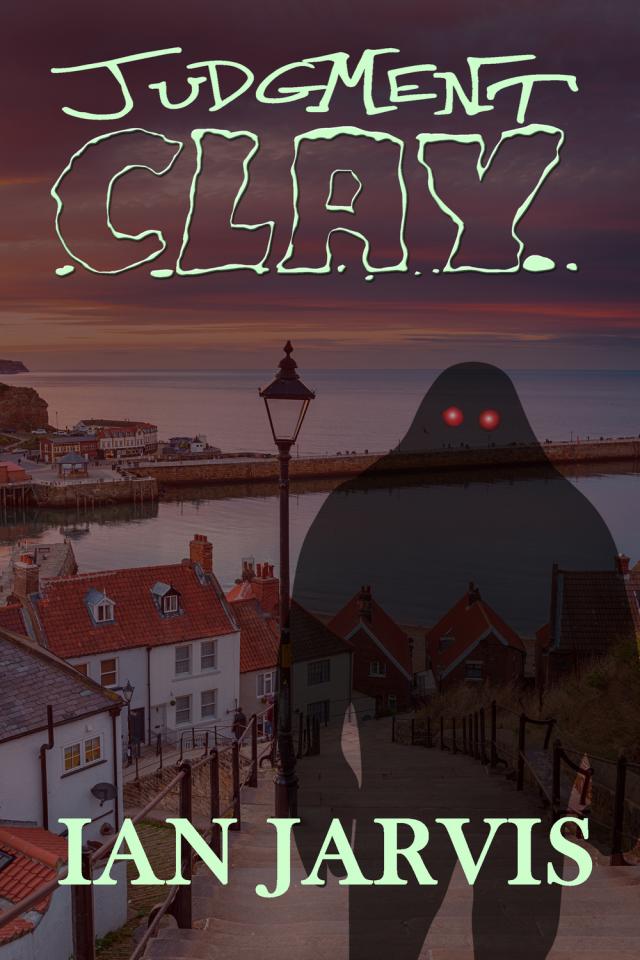


North Yorkshire’s premiere resort, Scarborough lies forty miles east of the city of York, where Quist lived and operated a small detective agency. The private investigator, or consultant detective, as he preferred to be known, puffed out a cloud of smoke and ran his eyes along the colourful seafront. Pubs, cafes and fast-food outlets lined the promenade, along with amusement arcades, entertainment facilities and those ubiquitous seaside shops that, for some unfathomable reason, sold nothing but cheap crap. The land rose steeply from the harbour and the detective looked upwards, past the streets and houses, to the breathtaking ruins of Scarborough Castle. A massive promontory of limestone rock thrust out into the North Sea, dividing the town into two wide bays, and the remains of the twelfth century fortress covered the summit, its stone walls running along the cliff edges and its great keep rising from the centre.
Quist glanced at a passing gull that screamed angrily at him. The birds were highly intelligent and invariably approached seafront visitors, checking to see if they were carrying anything edible. Strangely, none came anywhere near the detective and all eyed him warily as they flew by. He smoked his cigarette, meeting their flint-eyed looks with a lopsided cynical smile.
Scarborough has been a spa town since the English civil war. A stream of acidic water was discovered, which supposedly possessed medicinal qualities, and wealthy visitors travelled here for their health. Bathing machines rolled across the sand and the town became a tourist mecca with the arrival of the railway in 1845. Quist could well understand how this would be a paradise to northern workers, who spent their lives in mills, factories and coal mines, but the gentry flocked here too, filling the splendid Victorian hotels on the south cliff to his left. Built in the 1800s, two funicular railways still operated, ferrying the less athletic and the downright lazy up the headlands. Quist had a real passion for history and Scarborough was steeped in it. From here he could see the hilltop church near the castle where Anne, the youngest of the famous Bronte sisters, lay buried.
He smiled thoughtfully, remembering the time he’d discovered an artist sitting in this very spot on the harbour wall. The short man had been admiring the same view and painting the church and the ruined fortress. Recognising him immediately, Quist had walked over to inspect the half-finished watercolour on his easel.
“Excellent,” Quist said, sitting with the painter and offering him a salad sandwich, part of the packed lunch prepared by his hotel that morning. “I have to say, I’ve always been an admirer of your work. The way you capture the light is truly uncanny.”
“Why, thank you.” The artist had taken the food. “And thank you for your compliment. I enjoy painting Yorkshire. It’s a delightful part of the world, isn’t it? Really quite splendid.”
“Oh, I agree. It’s exceptional.”
“Good Lord! Is this just salad?” The artist had frowned curiously as he munched on the sandwich. “Where’s the meat?”
“No, I’m afraid it’s lettuce, tomato and cucumber. I never consume animal flesh.”
“That’s a little odd.” The man stared at him, then took another bite and began to chuckle. “But I suppose I can relate to that. Most people view me as somewhat strange and eccentric.” He held out a hand. “Turner.”
“Very pleased to meet you, Mister Turner. Quist’s the name. Bernard Quist.”
That had been in the summer of 1825 and another twenty-four years would pass before Anne Bronte would be laid to rest in the churchyard upon the hill. Most people who saw Quist estimated him to be mid-forties, but he was older than he looked. Much older.
* * *
The detective checked his watch; he’d arranged to meet a friend at three-thirty this Monday afternoon, and it was time to head up to the Grand Hotel. Retracing his steps along the sea wall and leaving the harbour, he walked along the promenade where pop music blasted out from the gaudy amusement arcades. Quist had a highly developed sense of smell and the fresh scent of the ocean was almost overpowered here by the powerful aromas of candy floss, waffles, hot dogs and ice cream. The predominant odour was the boiling vegetable oil used for cooking battered fish, chips and sugary doughnuts - hopefully not in the same fryer.
Way up above the seafront stood the huge Victorian building he was heading for. Constructed of tawny yellow brick, the Grand Hotel dominated the Scarborough skyline, an iconic coastal landmark that almost outshone the castle. When this place was completed in 1867, it was one of the world’s largest hotels and the biggest brick-built structure in Europe. Quist had never been inside before and something told him his sense of smell would be picking up a particularly bad stench there today.
The jingling of bridle bells drew his attention to the beach where six saddled donkeys stood waiting to be ridden by children. Spotting the detective, they grew restless and he quickened his pace to put some distance between them before they began to panic. Animals were always frightened around Bernard Quist. The promenade pavement was wide here, allowing for a beachfront kiosk that sold burgers and ice cream, and a white wooden cabin plastered with pentagrams and pictures of tarot cards. He hurried past and away from the jittery animals.
“Hey, you. Hey, Mister Wolf.”
Quist heard the woman’s voice behind him, but ignored it.
“You in the leather overcoat. Mister Wolf.”
Halting abruptly, the detective turned with a puzzled frown. An elderly purple-haired woman in a black shawl gestured from the doorway of the cabin.
“Excuse me?” he said, walking over. Mister Wolf? What on earth could she mean by that? “Can I help you?”
“Perhaps I can help you,” she said. “I’m Madame Selene.”
“Madame Selene?” Quist repeated the name in his eloquent voice. Some had said the English accent belonged on a stage reciting Shakespeare. “Ah, I see you’re a clairvoyant.”
Looking at the exterior wall of her cabin, it was pretty much impossible not to see she was a clairvoyant. He ran his eyes over the painted advertising information. Apparently, Madame Selene knew all and saw all. She was descended from a psychic Romany family and well-versed in the mystic arts of tarot and palmistry. Photographs in the cabin window showed minor celebrities having their palms read by her over the past couple of decades. Most looked to be entertainers from summer seasons in the old theatre that had once stood nearby and a few were actors in Yorkshire television shows. The interior of her “parlour” was mysterious and spookily inviting, with candles, an incense burner and velvet door curtains for privacy. A lace cloth covered a table and comfortable chairs stood on either side.
“Selene like the Greek Goddess of the moon?” asked Quist.
“That’s the one.” She smiled, her grey eyes twinkling. “Well, to be honest, my name’s Vera, Vera Lewis, and I’m not really a Gypsy. Er, I wonder if I could possibly hold your hand for a moment?”
Although many older ladies used adventurous hair dye colours these days, Quist knew this purple hair was a wig. Glancing into the cabin, he saw three bottles of pills on the table by her teacup. “You really must forgive me,” he said. “I’m actually on my way to meet someone right now, so I’m afraid I don’t have time for your palm readings.”
“It isn’t a reading. It’s more of a confirmation.” The elderly woman gripped his hand and caught her breath sharply. “Well, I was right. Good Lord, that’s amazing.”
“Amazing?”
“I’m almost seventy years old, but there are many things I’ve never experienced and I don’t suppose I ever will now. I’ve never tasted caviar, for example.” Vera smiled mischievously and lowered her voice. “And, as far as I know, I’ve never met a werewolf before.”
Quist stiffened and gave a lopsided grin to mask his shock. “Er, right. Well, I really have to say, that’s a somewhat bizarre and unexpected statement. Why on earth would you possibly imagine...”
“Oh, you’ve no need to worry, Bernard.” She drew the black shawl tighter around her shoulders and gave his arm a friendly pat. “I won’t tell anyone. It happened to you in 1790, didn’t it?”
The detective stared in astonishment, his heart racing. She knew his name and, more to the point, she obviously knew about his lycanthropy. Did he know her from somewhere? He couldn’t recall ever meeting this woman. She said her name was Vera Lewis, but just who the hell was she?
“You don’t eat meat, do you?” said Vera. “That’s how you manage to control the blood lust and the beast within.”
Quist swallowed uncomfortably and remained silent. His heart pounded faster still, but his blank expression didn’t betray his alarm and confusion. He didn’t eat any animal product whatsoever. No one, but a very select few knew these things. No, he hadn’t met her before, he was certain of that, which led him to a bizarre deduction.
“Your illness...” He cleared his arid throat and spoke quietly. “It’s a rather serious condition, isn’t it, Vera?”
She let out a mirthless laugh. “About as serious as it’s possible to get. How did you know that?”
“I’m very sorry, my dear lady. I realised when I saw the medication on your table back there. Morphine-based painkillers and cancer drugs.”
“You read the tablet labels from there?” Vera nodded. “You have good eyesight, but I suppose that’s to be expected with a werewolf.”
“You’re also wearing a wig and your eyebrows are painted on. The thing is, I’ve heard of this supernatural phenomenon before. It’s rather rare, but when some individuals are close to the end, they can develop this form of psychic gift. It’s stronger in some than others, but they’re able to see and sense things...” He paused and gave a tight smile. “Not that I’m in any way confirming the fantastical things you believe you sense in me.”
“Oh, of course not,” she said, grinning. “But I’ve been working as a psychic on this seafront for over thirty years. What makes you think I’ve only just developed my gift?”
“Without wishing to appear discourteous, if you’d been able to do this for the past three decades, you’d be a very wealthy lady. Looking at this realistically, by now you’d probably be employed by the CIA or some similar clandestine group.”
“Yes, incredible, isn’t it?” Vera sighed. “All this time I’ve been pretending to be clairvoyant. I’ve been cold reading the tourists and talking drivel and now suddenly it’s real. I have less than a month to live and I’m a genuine psychic at last. Talk about irony?”
“Have the doctors informed you...”
“Like I said, Bernard, I’m psychic. I know exactly how long I have.”
The detective nodded sadly. “I’m sorry, but I have to enquire, why on Earth are you working here? Shouldn’t you be at home with your family or...”
“I don’t have any family as such. It’s just me.” Shrugging resignedly, Vera looked around the promenade. “I’ve spent so long telling lies for money, I thought I might spend my last few days here helping people for a change with genuine free readings. People like you.” She gazed at him. “Listen, you need to know that when I held your hand I sensed approaching darkness. I must warn you that you’re heading towards darkness and evil.”
“You’re right about that.” Quist glanced up at Grand Hotel on the headland and checked his watch.
“What time is it, Mister Wolf?”
He laughed. “Isn’t that what children say in one of their playground games?”
“Yes, but you have somewhere important to be and a friend you need to meet. I could feel you were going to meet him at the Grand, but that isn’t it. There are dark forces gathering around you and I sense a large figure. Very soon you will encounter a large, dark, dangerous figure.”
“Now you’re beginning to sound like a typical seafront charlatan. What sort of dark forces?”
“I’m not sure,” admitted Vera, “but I sense evil, fear and death in the very near future. If I had something substantial to go on - something to touch - I could give you more details to help you, but this is just a general feeling of impending danger and a sense of this large, dark... figure.” She shook her head. “I sensed you were a werewolf when I saw you, but I had to hold your hand to know your name and all the details about you.”
“Vera...” said Quist, uneasily. “I’m really sorry about your illness. I don’t know if you’re thinking it could be cured with a bite, but lycanthropy isn’t something which...”
“No.” She smiled wistfully. “Maybe if I were younger I might be considering that, but trust me, I’m a big believer in fate. I’m at peace with this and I know when it’s time to go.”
The detective regarded her thoughtfully. Strangely enough, he did trust her. He had no idea why, but his initial shock and fear at her knowing his dark secret had vanished. “Just as a matter of interest,” he said, “if I am what you believe me to be, surely you should be warning people? Organising some sort of Hammer horror movie lynch mob with burning torches and pitchforks?”
Vera reached out and squeezed his hand. “I can sense you’re a good man, Bernard. A kind man. I know you control your other self with yoga and by not consuming meat, and I can sense that you use your...” she hesitated, “your gift to help people.”
Quist nodded slowly, still amazed at her psychic abilities. “I’m not confirming your suspicions in any way, but thank you for that. Listen, it’s been good to meet you, Vera. Truthfully, it’s been utterly astonishing, but...”
“I see someone wearing a uniform,” she broke in, staring intently at him. “I see a child learning to play a musical instrument, either a young relative, or possibly the child of a friend. I see someone in a very unhealthy relationship - you know exactly who I’m referring to - and they need to see sense and end it quickly. Also, someone you know is thinking about changing their job.”
“Good Lord!” he gasped. “You see all that?”
“Don’t be silly.” Her laughter turned into a bout of painful coughing. “That’s part of my old routine. I thought I’d give you a seaside psychic treat before you left.” She pointed to the Grand Hotel. “I know you have to go and meet your friend up there. I also know that we’ll meet again.” Vera vanished into her white cabin, heading for her medicine. “Goodbye for now and take care, Mister Wolf.”
Chapter 3
Wisteria had never grown upon the walls of the Wisteria Lodge care home, or anywhere near it for that matter. Then again, the majority of British houses called Mount View don’t have mountains in the vicinity and the commonly named Orchard Houses are rarely built in or near orchards. The place didn’t get too many visitors. Most folk left their elderly relatives here and then drove away from Robin Hood’s Bay at high speed, their guilt offset by the immense feeling of relief that came from not having to look after them. This Monday afternoon, however, Wisteria Lodge was filled with visitors, although the majority were wearing police uniforms and none of them were related to the residents.
Detective Inspector Katie Bradstreet stood at the Lodge reception desk, gazing around the hallway and feeling decidedly tacky in her grey suit. Like all care homes, the central heating was set higher than the temperatures she’d encountered in illicit cannabis farms. This was the sort of warmth found in zoological reptile enclosures. Liberal amounts of air-freshener failed to mask the ever-present aromas of urine and worse. Katie knew that if visitors looked past the chic décor - and few ever did, as they already felt uncomfortable about consigning their loved ones to this - they’d see that hardly anything was spent on staffing. If twenty care workers were needed, and thirty would be preferable, some of these privately run businesses attempted to get by with twelve. It was more economical to let residents soil themselves and clean them later, than employ enough staff to escort them to the toilet when necessary.
It was sad, decided the Inspector, but the tradition of having aged relatives live with us has long since vanished in Britain.
Nowadays, caring for old people within a loving family environment was usually only to be found in places like Asia and Africa. No London professional, single and living in a stylish four-bedroom apartment, could possibly be expected to find room for an elderly mother. No, these care homes were a regrettable necessity, but Katie Bradstreet did NOT want to live in one. Unfortunately, the time seemed to race past much faster as she matured. Twenty years ago, when Katie joined the North Yorkshire Police, old age was some vague future possibility, much like androids, flying cars and an honest government. Katie was now forty-one and it no longer seemed so distant.
Unable to believe what she’d just heard, the Inspector closed her eyes and ran a hand through her short fair hair. Her Sergeant, Tariq Aslam, was equally astounded.
“Seriously?” said Aslam. “You’re telling us that you didn’t find the body until noon?”
The teenage carer Becca Hughes leant on the reception desk and rolled her eyes. Andrea Spedding, the owner of Wisteria Lodge, stood beside her and stiffened defensively. Her golden brown perm looked like an overcooked Pot Noodle, decided Katie, and the mean face reminded her of the neighbour’s vicious whippet that had once bitten her as a child.
“We’re understaffed,” snapped Andrea. “We naturally assumed Mister Taylor had gone to bed last night and hadn’t bothered with breakfast this morning. We didn’t know he was missing until lunch when we realised he wasn’t...”
“Yes, that’s understandable,” broke in Katie, attempting to conceal her angry sarcasm. “But perhaps employing a few more staff would solve the problem of being understaffed?”
Andrea gave her a harsh smile and Katie knew that would never happen. This was a lucrative business, where old folk were converted into cash, and the fewer carers they employed, the less they had to pay out. Not that they paid out much.


