

The Truce: Progressives, Centrists, and the Future of the Democratic Party, page 1


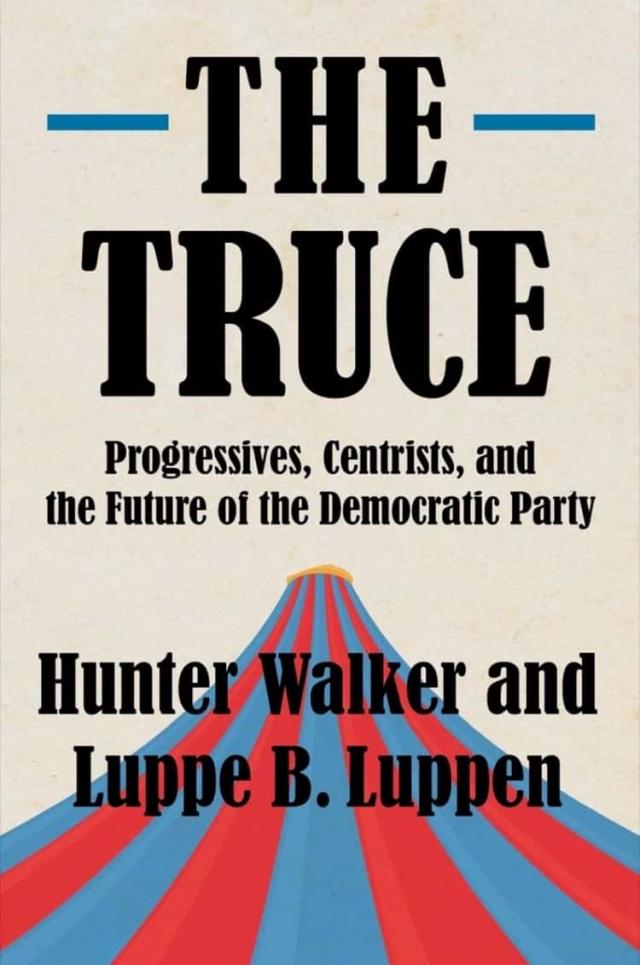
THE
TRUCE
Progressives, Centrists,
and the Future of
the Democratic Party
HUNTER WALKER
and LUPPE B. LUPPEN
To Gloria, who made me the luckiest man on the face of the earth.
—H.W.
To Polly, who lights up the world.
—L.B.L.
CONTENTS
Authors’ Note
Prologue
1.Kalorama
2.Justice Democrats
3.The People’s Republic of Queens
4.Pulling Teeth
5.For the People
6.War Room
7.Regime Change
8.Coup de Grâce
9.The Inside-Outside Game
10.The Bridge
11.Filibuster
12.Empire State
13.Thunderdome
14.The Next Episode
15.Soft Launch
16.Afterburn
Acknowledgments
Sources and Further Reading
AUTHORS’ NOTE
This book is based on over two years of reporting and conversations with key insiders at all levels of the Democratic Party, including past—and possibly future—presidential candidates, White House officials, senators, House members, local politicians, party officials, campaign consultants, and aides to all of the above. The bulk of our reporting consisted of hundreds of hours of interviews with hundreds of sources and subjects. These conversations were conducted in person, over the phone, and—with a pandemic having coincided with much of our reporting time—over Zoom. Whenever someone is quoted, unless the text says otherwise, we are quoting from original reporting based on public statements or our own interview with that person.
These conversations captured a major political party at a key turning point, facing an election that will decide whether the Democrats’ victory in 2020 actually defeated the rise of Trump-fueled authoritarianism or merely managed to postpone it. Everyone we spoke to, whether they were upholding the party establishment or working against it, agreed that the stakes were immense. But despite controlling the White House and the Senate under the Biden administration, Democrats had not settled on who will next lead them or how anyone besides the octogenarian Biden can unite the party.
Many political staffers (and even some of their bosses) were eager to share the truth, as they see it. Some were also terrified of losing their livelihoods and, as a result, reluctant to be candid on the record.
As one source who’d worked for Kamala Harris put it, “Obviously, she’s the vice president, and I need to continue to work in this industry.”
While we strove to push our sources to speak under their own names wherever possible, we granted requests for anonymity when we otherwise would not have been able to quote certain sources or obtain their most candid and honest assessments. Overall, we sought to learn as much as possible about the inner workings of the Democratic Party to help readers understand where it might go next.
THE TRUCE
PROLOGUE
Joe biden has always trusted his gut.
In the year leading up to the 2016 election, a campaign that would transform both major parties and the American political system, Biden knew he could win—and that his longtime senate and White House colleague Hillary Clinton could not.
But President Barack Obama, the man he had served faithfully for two terms as vice president, saw things differently. He made sure Biden got that message.
“My sense was there was every effort to have the political people around Barack Obama communicate directly to Joe Biden that this was not a smart political thing to do,” a former Biden adviser said.
According to the adviser, Obama’s people told Biden, “This isn’t going to end well for you.”
The reasons for Obama’s doubts were obvious. Despite their two-term partnership, the pair were essentially political opposites. Biden had run for president twice—in 1988 and 2008—and lost. Obama, who had never run before, defeated Biden that second time after electrifying the nation with his promise of hope and change. While Obama was known for soaring rhetoric, Biden, who overcame a youthful stutter, was infamously prone to gaffes. Obama, who was in his forties when he became the first Black president, represented a new generation of leadership. Biden, already a senior citizen when the pair took office, was an old white man.
Obama saw Hillary Clinton, his former secretary of state, as a better bet than Biden. Clinton was only five years younger than Biden, and her husband was a former president. But she would have been something new for the party—the first woman in the White House—something many voters in the Democrats’ base desperately wanted.
At that time, Biden’s life had been rocked by a fresh tragedy. In May 2015, as the race was taking shape, Biden’s oldest son, Beau, died at the age of forty-six after a battle with an aggressive form of brain cancer. Biden—who had already lost his first wife and a daughter—was known for his resilience, but this was the unimaginable. His pain was apparent in the brief public statement he issued on Beau’s death. Biden called his son, “quite simply, the finest man any of us have ever known.”
Biden was struggling and Obama had his own political debts to pay. While Biden had washed out of that 2008 race early, Clinton had not. Obama’s charismatic, pragmatic progressivism brought together a coalition fortified by unprecedented turnout from youth and people of color. It ran headlong into the whiter, older, more institutional, and more conservative base of Clinton’s support—a once-dominant wing of the Democratic Party that she and her husband had long cultivated.
Clinton battled Obama hard all the way into the summer, long after her practical pathways to the nomination had disappeared. She threatened to use delegate maneuvers and sheer will to take their battle all the way to the convention. The fight widened the gulf between the younger progressives in the party and its old guard. But as their feud started to turn truly toxic, Clinton backed down and gave Obama her support. Her endorsement that summer had been essential to unifying the party and delivering his victory. After winning the election, Obama chose to cool their rivalry by making Clinton secretary of state. The overture brought stability to his first term, but deeper tensions inside the party remained.
After two terms in office, Obama sought to return the favor by delivering a unified Democratic party to Clinton. As it turned out, party unity wasn’t something he could control.
For his part, Biden had a gut feeling he could win. He also worried that Clinton—whom he liked well enough personally—could not forge a sufficiently strong bond with voters.
To most observers, Clinton seemed solid. She came into the race in April 2015 with near-universal name recognition from her time as a candidate, secretary of state, and, before that, senator from New York and First Lady. Clinton also had a pile of endorsements from the Democratic establishment and polls that firmly established her as the front-runner by a huge margin. Months were ticking by. The first debate had already taken place. Biden’s potential late entry into the race threatened to make things messy. Obama’s team demanded Biden make an immediate decision.
The announcement came abruptly on October 21. Even some of Biden’s top staffers only got a fifteen-minute warning. With his wife, Jill, and Obama by his side, Biden stepped out into the Rose Garden and declared he wouldn’t run.
“Unfortunately, I believe we’re out of time, the time necessary to mount a winning campaign for the nomination,” Biden said.
Clinton became Obama’s chosen successor. The sting of that moment produced lingering resentment for some on Biden’s team.
“It is fair to say, and I believe it, that Joe Biden has been more politically loyal to Barack Obama than Barack Obama has been politically loyal to Joe Biden,” one Biden adviser said.
When he reluctantly stepped to the sidelines, Biden became a passenger on an awful ride. He and Obama remained officially neutral during the extended primary campaign, but they watched with unease as Clinton’s campaign once again faltered in the face of a surprisingly strong and divisive primary challenge from a progressive insurgent who appealed to young voters. Rather than the smooth and graceful Obama, however, Clinton found herself struggling to head off Bernie Sanders, a disheveled socialist senator from Vermont who espoused political “revolution” within the Democratic Party and promised to take down its elites.
With her political pedigree, vast personal fortune, and high-powered allies—including corporate donors and the network of consultants, advocacy groups, and officials that had long benefitted from their largesse—Clinton was the embodiment of the Big Dem establishment. It made her the perfect foil for Sanders. Voters who grew up with the frustrations of the financial crises, the growing wealth gap, and seemingly endless foreign wars that bloomed during the Bush and Obama years were drawn to Sanders’s transformative politics.
Biden feared Sanders’s promises to voters were unrealistic. But, more importantly, he was terrified by what was happening on the other side of the aisle. Donald Trump ran away with the Republican primary by building a cult of personality, beating up his rivals, and bashing minority groups. A demagogic real estate tycoon and TV personality, Trump rode a wave of racist reaction against Obama’s presidency to prominence and then dominance in the Republican world. Once he s
Watching this fearsome right-wing momentum, Biden worried that both Sanders and Clinton were ill-suited to woo the independent-minded voters needed to ward off Trump.
It took until the summer of 2016 for Clinton to secure the nomination. Along the way, a hack linked to Russian intelligence spilled the Democratic Party’s internal communications into public view, revealing—in the eyes of Sanders supporters—a scandalous level of favoritism. The primary culminated with accusations of corruption and chaos at the party’s convention. Faced with the threat of Trump, the Democrats were at war with one another.
When Biden returned to the trail to help with the general election campaign, he found it wasn’t just the kids and die-hard Sanders supporters who had issues with Clinton. Her campaign dispatched Biden to locations she seemed to view as an afterthought. Biden could sense they were losing people.
“Biden got sent to all the Scrantons, and the Wisconsins, and the Ohios,” his senior adviser Greg Schultz, recalled. “We saw all the Democrats who were upset about Hillary.”
While the party relied on people of color and young people as its core base, white working-class voters were its vanguard in the swing states—the front line and the easiest group for the opposition to reach. Biden instinctually knew that the dissatisfaction fracturing the Obama coalition represented an existential threat to his party.
Clinton, famously, neglected to visit Wisconsin herself in the 2016 campaign, and wound up losing it to Donald Trump by the narrowest of margins. In the days before the election, Clinton’s team had called Schultz to ask Biden to go and plant the flag there.
Biden flew out to Madison on November 4, 2016, just four days before the election. He held a rally for young voters at a theater near the University of Wisconsin campus with Senator Russ Feingold. Then he took the senator out for ice cream—a quintessential Biden touch. Back on Air Force Two, the vice president’s official jet, he delivered an ominous verdict for Schultz.
“It just didn’t feel right,” Biden said.
No one had listened to him, and he had been underestimated by Obama, his longtime partner. Now, Biden was watching a slow-moving train wreck.
“If you’re Biden, you’ve been in one thousand events for your own presidency, or potential presidency, or someone else’s, so you can actually judge a room,” Schultz said. “His gut is better than probably most polls because he’s just lived it.”
When the votes were counted, Biden’s fears were confirmed. Disaffected Democrats who didn’t show up to vote seem to have put Trump over the top. A poll of 100,000 registered voters conducted right after the election found that more who leaned Democratic stayed home than Republicans by a margin that likely would have changed the outcome.
Biden spent election night in 2016 with a small circle of advisers at the Naval Observatory, the vice president’s official residence in Washington, DC. As the bitter reality of Trump’s victory over Clinton became increasingly apparent, the mood turned mournful. Around 1:30 in the morning, Biden picked up the phone, called the switchboard at the White House, and asked to speak with Obama.
A source familiar with the call described their brief exchange. Biden had listened to the warnings from Obama’s camp and stayed out of the race. But, apparently, Obama had not listened to the warnings from Biden.
“Boss, I told you,” Biden said to Obama. “People just don’t like her.”
Four years later, Biden would get the chance to do it his way. Once again, he was underestimated and, once again, his political instincts proved strong. After nearly being counted out, Biden managed to surge past both Sanders and Trump to win the White House. Perhaps even more stunningly, as he took power, Biden managed to forge a truce with Sanders and the party’s ascendant left flank—he achieved the party unity Obama could not bestow upon Clinton.
Yet the story of Biden’s uneasy peace with progressives—a pause in the unfinished civil war of 2016—reveals the shakiness of the new Democratic alliance. While Biden managed to fend off Trump in 2020 and largely hold the line in 2022’s midterms, he and his party are once again surrounded by doubts. The story of how the Democrats’ warring factions came together behind Biden also reveals the existential questions the party faces going forward.
Biden, the man who finally brought the party together, is in his eighties. Neither he nor Sanders, who remains the most prominent leader of the left, have identified a clear heir. While bridges have been built between left and center, sharp divisions remain in the Democratic ranks. The party continues to feud over whether to present a transformative progressive message tuned to their base or a moderate one designed to cater to independents and have a broader appeal.
The question now is whether the current truce can hold. The Democratic Party is still struggling to find itself—and the future of the country is hanging in the balance.
Chapter 1
KALORAMA
Barack Obama was looking at his legacy. It was march 25, 2019. The former president surveyed the newly elected Democratic members of Congress, face to face with the fractured, shaky future of the party he once led.
The congressional freshmen crowded in front of him were deeply divided, feuding, and facing a dangerous enemy in the White House. The group was looking to Obama for answers.
It was spring in Washington and the bright cherry blossoms that dotted the nation’s capital were in peak bloom. Obama met with the new class at a home of the Democratic Party’s old guard. The reception was held at the mansion of Esther Coopersmith, a doyenne of DC society for over seven decades.
Coopersmith’s stately redbrick mansion was located on S Street, nestled between the Irish ambassador’s residence and the Laotian embassy. Billionaire Jeff Bezos maintained a residence just up the block. This was Kalorama, the elegant neighborhood at the heart of Washington’s diplomatic community, a key node in its influence ecosystem. Unlike the many consulates, permanent missions, and organizations that dotted the leafy streets, Coopersmith’s home never held an official role. Nevertheless, she had turned it into a regular gathering place for the city’s most powerful and a museum of her own significance.
Coopersmith had met every modern US president since Harry S. Truman—all, that is, except the one who then held office, Trump. Signed photographs hung alongside the sumptuous oil paintings, antique vases sat atop marble mantels and mahogany tabletops. Her home had all the traditional trappings of power.
Though Coopersmith was a stalwart of the Democratic establishment, she had a bipartisan and international sense of hospitality. Over the years, her soirees have been attended by presidents, White House officials, a slew of foreign dignitaries, members of Congress, and even the infamous South Carolina segregationist Strom Thurmond. Coopersmith met everyone who was anyone in Washington, had probably invited them to her home more than once for an elegant luncheon or a relaxed dinner, and she had pictures to prove it hanging on the wall—alongside tickets for every presidential inauguration since 1961.
Coopersmith, then in her eighties, had reportedly broken into politics as a young woman in 1952 when she managed the ill-fated presidential campaign of liberal senator Estes Kefauver in Wisconsin. Two years later, Coopersmith came to Capitol Hill for a staff job. She married a wealthy lawyer and built a reputation as a Democratic fundraiser. Coopersmith went on to spend several years as a diplomat and ambassador under Presidents Carter, Reagan, and Clinton. She also earned a reputation as a hostess nonpareil. A New York Times profile from 1987 described Coopersmith as “one of the best at playing the Washington ‘networking’ game” and noted she “concedes that the real impetus for her party-giving is that she enjoys having power at her dinner table.” She was a major donor who paid for the privilege of mixing with politicians. The late senator William Proxmire, a Wisconsin Democrat, described her to the paper as “the Democratic political den mother of all fundraising.”
“She really is, truly, a human catalyst,” former Democratic House Speaker Nancy Pelosi once said at a birthday celebration for Coopersmith. “She just brings people together.”


