

Austin Noir, page 1


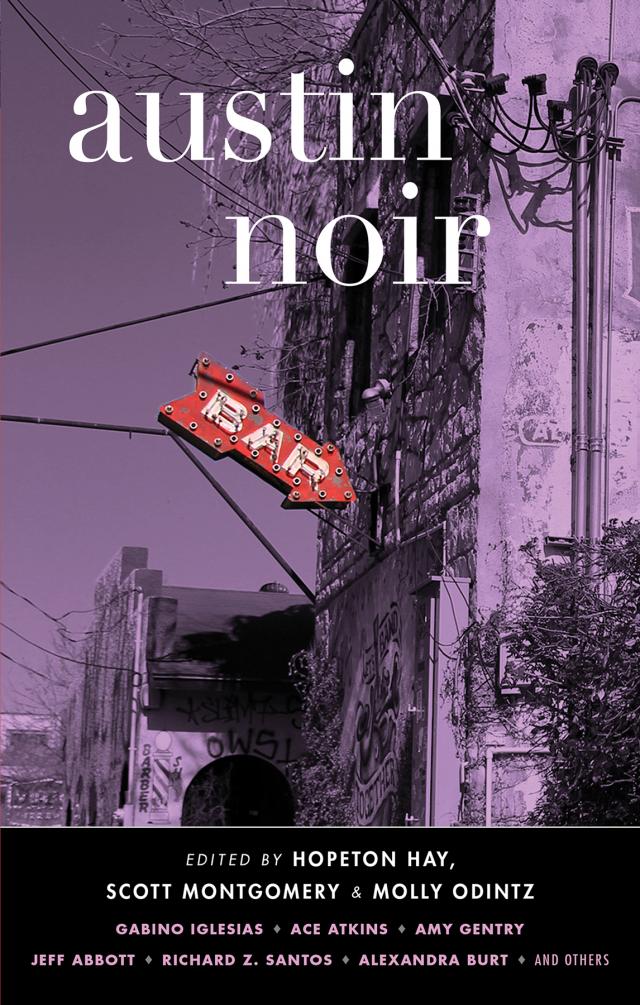
AUSTIN NOIR
EDITED BY HOPETON HAY,
SCOTT MONTGOMERY,
AND MOLLY ODINTZ
This collection comprises works of fiction. All names, characters, places, and incidents are the product of the authors’ imaginations or used in a fictitious manner.
Published by Akashic Books
©2023 Akashic Books
Copyright to the individual stories is retained by the authors.
Series concept by Tim McLoughlin and Johnny Temple
Map of Austin by Sohrab Habibion
Paperback ISBN: 978-1-63614-089-6
Hardcover ISBN: 978-1-63614-090-2
E-Book ISBN: 978-1-63614-098-8
Library of Congress Control Number: 2022947063
All rights reserved
First printing
Akashic Books
Brooklyn, New York
Instagram, Twitter, Facebook: AkashicBooks
info@akashicbooks.com
www.akashicbooks.com
ALSO IN THE AKASHIC NOIR SERIES
ACCRA NOIR (GHANA), edited by NANA-AMA DANQUAH
ADDIS ABABA NOIR (ETHIOPIA), edited by MAAZA MENGISTE
ALABAMA NOIR, edited by DON NOBLE
AMSTERDAM NOIR (NETHERLANDS), edited by RENÉ APPEL AND JOSH PACHTER
ATLANTA NOIR, edited by TAYARI JONES
BAGHDAD NOIR (IRAQ), edited by SAMUEL SHIMON
BALTIMORE NOIR, edited by LAURA LIPPMAN
BARCELONA NOIR (SPAIN), edited by ADRIANA V. LÓPEZ & CARMEN OSPINA
BEIRUT NOIR (LEBANON), edited by IMAN HUMAYDAN
BELFAST NOIR (NORTHERN IRELAND), edited by ADRIAN McKINTY & STUART NEVILLE
BELGRADE NOIR (SERBIA), edited by MILORAD IVANOVIĆ
BERKELEY NOIR, EDITED BY JERRY THOMPSON & OWEN HILL
BERLIN NOIR (GERMANY), edited by THOMAS WÖRTCHE
BOSTON NOIR, edited by DENNIS LEHANE
BOSTON NOIR 2: THE CLASSICS, edited by DENNIS LEHANE, MARY COTTON & JAIME CLARKE
BRONX NOIR, edited by S.J. ROZAN
BROOKLYN NOIR, edited by TIM McLOUGHLIN
BROOKLYN NOIR 2: THE CLASSICS, edited by TIM McLOUGHLIN
BROOKLYN NOIR 3: NOTHING BUT THE TRUTH, edited by TIM McLOUGHLIN & THOMAS ADCOCK
BRUSSELS NOIR (BELGIUM), edited by MICHEL DUFRANNE
BUENOS AIRES NOIR (ARGENTINA), edited by ERNESTO MALLO
BUFFALO NOIR, edited by ED PARK & BRIGID HUGHES
CAPE COD NOIR, edited by DAVID L. ULIN
CHICAGO NOIR, edited by NEAL POLLACK
CHICAGO NOIR: THE CLASSICS, edited by JOE MENO
CLEVELAND NOIR, edited by MIESHA HEADEN & MICHAEL RUHLMAN
COLUMBUS NOIR, edited by ANDREW WELSH-HUGGINS
COPENHAGEN NOIR (DENMARK), edited by BO TAO MICHAËLIS
DALLAS NOIR, edited by DAVID HALE SMITH
D.C. NOIR, edited by GEORGE PELECANOS
D.C. NOIR 2: THE CLASSICS, edited by GEORGE PELECANOS
DELHI NOIR (INDIA), edited by HIRSH SAWHNEY
DENVER NOIR, edited by CYNTHIA SWANSON
DETROIT NOIR, edited by E.J. OLSEN & JOHN C. HOCKING
DUBLIN NOIR (IRELAND), edited by KEN BRUEN
HAITI NOIR, edited by EDWIDGE DANTICAT
HAITI NOIR 2: THE CLASSICS, edited by EDWIDGE DANTICAT
HAVANA NOIR (CUBA), edited by ACHY OBEJAS
HELSINKI NOIR (FINLAND), edited by JAMES THOMPSON
HONG KONG NOIR, edited by JASON Y. NG & SUSAN BLUMBERG-KASON
HOUSTON NOIR, edited by GWENDOLYN ZEPEDA
INDIAN COUNTRY NOIR, edited by SARAH CORTEZ & LIZ MARTÍNEZ
ISTANBUL NOIR (TURKEY), edited by MUSTAFA ZIYALAN & AMY SPANGLER
JERUSALEM NOIR (EAST), edited by RAWYA BURBARA
JERUSALEM NOIR (WEST), edited by MAAYAN EITAN
KANSAS CITY NOIR, edited by STEVE PAUL
KINGSTON NOIR (JAMAICA), edited by COLIN CHANNER
LAGOS NOIR (NIGERIA), edited by CHRIS ABANI
LAS VEGAS NOIR, edited by JARRET KEENE & TODD JAMES PIERCE
LONDON NOIR (ENGLAND), edited by CATHI UNSWORTH
LONE STAR NOIR, edited by BOBBY BYRD & JOHNNY BYRD
LONG ISLAND NOIR, edited by KAYLIE JONES
LOS ANGELES NOIR, edited by DENISE HAMILTON
LOS ANGELES NOIR 2: THE CLASSICS, edited by DENISE HAMILTON
MANHATTAN NOIR, edited by LAWRENCE BLOCK
MANHATTAN NOIR 2: THE CLASSICS, edited by LAWRENCE BLOCK
MANILA NOIR (PHILIPPINES), edited by JESSICA HAGEDORN
MARRAKECH NOIR (MOROCCO), edited by YASSIN ADNAN
MARSEILLE NOIR (FRANCE), edited by CÉDRIC FABRE
MEMPHIS NOIR, edited by LAUREEN P. CANTWELL & LEONARD GILL
MEXICO CITY NOIR (MEXICO), edited by PACO I. TAIBO II
MIAMI NOIR, edited by LES STANDIFORD
MIAMI NOIR: THE CLASSICS, edited by LES STANDIFORD
MILWAUKEE NOIR, edited by TIM HENNESSY
MISSISSIPPI NOIR, edited by TOM FRANKLIN
MONTANA NOIR, edited by JAMES GRADY & KEIR GRAFF
MONTREAL NOIR (CANADA), edited by JOHN MCFETRIDGE & JACQUES FILIPPI
MOSCOW NOIR (RUSSIA), edited by NATALIA SMIRNOVA & JULIA GOUMEN
MUMBAI NOIR (INDIA), edited by ALTAF TYREWALA
NAIROBI NOIR (KENYA), edited by PETER KIMANI
NEW HAVEN NOIR, edited by AMY BLOOM
NEW JERSEY NOIR, edited by JOYCE CAROL OATES
NEW ORLEANS NOIR, edited by JULIE SMITH
NEW ORLEANS NOIR: THE CLASSICS, edited by JULIE SMITH
OAKLAND NOIR, edited by JERRY THOMPSON & EDDIE MULLER
ORANGE COUNTY NOIR, edited by GARY PHILLIPS
PALM SPRINGS NOIR, edited by BARBARA DEMARCO-BARRETT
PARIS NOIR (FRANCE), edited by AURÉLIEN MASSON
PARIS NOIR: THE SUBURBS, edited by HERVÉ DELOUCHE
PHILADELPHIA NOIR, edited by CARLIN ROMANO
PHOENIX NOIR, edited by PATRICK MILLIKIN
PITTSBURGH NOIR, edited by KATHLEEN GEORGE
PORTLAND NOIR, edited by KEVIN SAMPSELL
PRAGUE NOIR (CZECH REPUBLIC), edited by PAVEL MANDYS
PRISON NOIR, edited by JOYCE CAROL OATES
PROVIDENCE NOIR, edited by ANN HOOD
QUEENS NOIR, edited by ROBERT KNIGHTLY
RICHMOND NOIR, edited by ANDREW BLOSSOM, BRIAN CASTLEBERRY & TOM DE HAVEN
RIO NOIR (BRAZIL), edited by TONY BELLOTTO
ROME NOIR (ITALY), edited by CHIARA STANGALINO & MAXIM JAKUBOWSKI
SAN DIEGO NOIR, edited by MARYELIZABETH HART
SAN FRANCISCO NOIR, edited by PETER MARAVELIS
SAN FRANCISCO NOIR 2: THE CLASSICS, edited by PETER MARAVELIS
SAN JUAN NOIR (PUERTO RICO), edited by MAYRA SANTOS-FEBRES
SANTA CRUZ NOIR, edited by SUSIE BRIGHT
SANTA FE NOIR, edited by ARIEL GORE
SÃO PAULO NOIR (BRAZIL), edited by TONY BELLOTTO
SEATTLE NOIR, edited by CURT COLBERT
SINGAPORE NOIR, edited by CHERYL LU-LIEN TAN
SOUTH CENTRAL NOIR, edited by GARY PHILLIPS
STATEN ISLAND NOIR, edited by PATRICIA SMITH
ST. LOUIS NOIR, edited by SCOTT PHILLIPS
STOCKHOLM NOIR (SWEDEN), edited by NATHAN LARSON & CARL-MICHAEL EDENBORG
ST. PETERSBURG NOIR (RUSSIA), edited by NATALIA SMIRNOVA & JULIA GOUMEN
SYDNEY NOIR (AUSTRALIA), edited by JOHN DALE
TAMPA BAY NOIR, edited by COLETTE BANCROFT
TEHRAN NOIR (IRAN), edited by SALAR ABDOH
TEL AVIV NOIR (ISRAEL), edited by ETGAR KERET & ASSAF GAVRON
TORONTO NOIR (CANADA), edited by JANINE ARMIN & NATHANIEL G. MOORE
TRINIDAD NOIR (TRINIDAD & TOBAGO), edited by LISA ALLEN-AGOSTINI & JEANNE MASON
TRINIDAD NOIR: THE CLASSICS (TRINIDAD & TOBAGO), edited by EARL LOVELACE & ROBERT ANTONI
TWIN CITIES NOIR, edited by JULIE SCHAPER & STEVEN HORWITZ
USA NOIR, edited by JOHNNY TEMPLE
VANCOUVER NOIR (CANADA), edited by SAM WIEBE
VENICE NOIR (ITALY), edited by MAXIM JAKUBOWSKI
WALL STREET NOIR, edited by PETER SPIEGELMAN
ZAGREB NOIR (CROATIA), edited by IVAN SRŠEN
FORTHCOMING
HAMBURG NOIR (GERMANY), edited by JAN KARSTEN
NATIVE NOIR, edited by DAVID HESKA WANBLI WEIDEN
SACRAMENTO NOIR, edited by JOHN FREEMAN
VIRGIN ISLANDS NOIR, edited by TIPHANIE YANIQUE & RICHARD GEORGES
TABLE OF CONTENTS
Introduction
PART I: CROSSFIRE
GABINO IGLESIAS
The Pink Monkey East Side
ACE ATKINS
Stunts Red River Street
AMANDA MOORE
Reflections Arboretum
JEFF ABBOTT
The Good Neighbor West Lake Hills
SCOTT MONTGOMERY
A Thousand Bats on an Austin Night Lady Bird Lake
PART II: NOTHING I CAN DO ABOUT IT NOW
RICHARD Z. SANTOS
Rush Hour The Domain
ALEXANDRA BURT
Sapphire Blue Stratford Hills
LEE THOMAS
Charles Bronson Hotel Van Zandt
MIRIAM KUZNETS
Saving Rollingwood
JACOB GROVEY
A Time and Place Braker
PART III: THIS LAND
CHAITALI SEN
The Foundation Clarksville
MOLLY ODINTZ
Michael’s Perfect Penis Airport Boulevard
AMY GENTRY
Stitches West Campus
ANDREW HILBERT
Bangface vs. Cleaning Solutions, LLC Southpark Meadows
About the Contributors
INTRODUCTION
WE HEAR DALLAS IS NICE
You’ve probably heard of Austin. You may have been here for South by Southwest. Your best friend may have recently relocated here from California. You might have thought about moving here yourself, then decided it wasn’t worth it to live in Texas. You may have moved to Austin decades ago. You may even have been born and raised in Austin, and now you’re on the outskirts of San Antonio or (god forbid) Waco because you can’t afford to buy a house anywhere else. Or you may be living in a shiny new building downtown, watching the final stages of a sleepy town’s transformation into modern metropolis. One thing you’ll hear from almost any Austin resident: it was better when they got here.
Austin is so many different things to so many people. In the 1970s, ’80s, and even into the early ’90s, it was a beacon for many looking for the laid-back lifestyle and progressive attitudes that come with being home to a large research university and a thriving music scene. With its pro-environment leanings, big festivals, and intellectual fervor, Austin gained a reputation as a safe place to move from either coast while maintaining the same quality of life. And, most importantly, it was affordable.
It’s the Live Music Capital of the World. It’s a college town. It’s weird. It’s where college students, hippies, high-tech professionals, restaurant and service industry workers, and others can coalesce for a good time during music festivals like Austin City Limits.
And that’s how some used to talk about Austin. It was a touchstone of sixties counterculture with a Texas twang that made it less pretentious. Everybody who was kicked out of their small town came here for harmony. Living was so cheap, you could support yourself by selling flowers on the street (like author Joe Lansdale did).
Then there was the music. Janice Joplin got her start at Kenneth Threadgill’s converted gas station. Willie Nelson came to the Armadillo World Headquarters and brought the hippies and rednecks together. Clifford Antone created a blues club where young kids learned from the old masters, launching the Fabulous Thunderbirds and Stevie Ray Vaughan, and making 6th Street the spot. As Richard Linklater showed us in his 1990 film, Austin was a slacker’s paradise.
More artists came in.
Then more people.
Then more money.
But there has always been another side of Austin in conflict with its liberal label. After the passage of the Voting Rights Act in 1965, cities across the nation began changing their electoral process, often going from at-large election of city council members to single-member districts in order to ensure fairer representation for minority communities. Indeed, at-large election of city council members was essentially put in place to water down the vote of minority communities. By the early 2010s, Austin was the largest city in the country without single-member districts. It was not until the municipal election of November 4, 2014, that the city residents could once again vote for city council in single-member districts.
Austin is not Silicon Valley, but it is a self-styled Silicon Hills that has seen its high tech–driven economic boom foster an explosive growth in the city’s population, adding nearly 200,000 residents between 1990 and 2000, and another 300,000 between 2000 and 2020. And yet this has come at a cost. Housing prices have dramatically climbed and many predominantly Black and brown communities in East Austin have fallen victim to gentrification. The Black population in Austin in particular has declined as some residents have left the city for more affordable housing in the suburbs. Cities like Pflugerville and Manor, some fifteen to twenty miles from downtown Austin, have become destinations for many Black middle-class families.
The rising tide doesn’t lift all ships, and those whose incomes haven’t risen in turn have had to move farther and farther from the core of the city, losing access to such city amenities as public transit. And on the outskirts of downtown, there is a growing population of unhoused people. Austin is no longer a great place to live with little money. There’s still always something fun going on, but even the nights out are growing too pricey for many people to afford.
As the city expands, construction never stops, struggling futilely to keep up with new demand. The running joke is that the city bird is the crane. Rents and property values keep climbing. We fear becoming Dallas.
* * *
The writers contributing to this collection represent a kaleidoscopic view of the city—not just in where they set the stories, but in their different social, economic, and cultural perspectives.
But to understand the stories, you first must understand the geography. East Austin, the setting to Gabino Iglesias’s “The Pink Monkey,” is the historic heart of the Black and Latinx communities, now bulldozed and replaced by soulless condominiums. South Austin, which makes a disturbing appearance in Andrew Hilbert’s “Bangface vs. Cleaning Solutions, LLC,” is a locus of aging hippies and newly arrived tech gurus. Stratford Hills, perfectly captured in Alexandra Burt’s “Sapphire Blue,” is home to any number of, shall we say, Botox clinics and doggy-day-care spas. Miriam Kuznets’s “Saving” takes place in Rollingwood, a wealthy area of South Austin where environmentalists and homeowners have forged an unholy alliance at the expense of urban density. The Great Hills area in Northwest Austin, the setting for Amanda Moore’s story “Reflections,” is an enclave of the upper middle class with its high-end hotels and restaurants. Jacob Grovey’s “A Time and Place” is staged in an area of North Austin hovering between lower middle class and middle class, with apartment complexes, payday loan stores, and a housing development that seems a little out of place.
Downtown Austin, where Ace Atkins’s “Stunts” and Lee Thomas’s “Charles Bronson” take place, is the center of the music scene, now threatened by noise ordinances from luxury condos. It’s also where all the government buildings are, but surprisingly, no one chose to fictionally kill off a politician for this anthology.
Then there are the smaller communities and neighborhoods that show up in these stories. Clarksville, near downtown Austin and the setting for Chaitali Sen’s story “The Foundation,” was established by freed slaves and is now inhabited by many law offices. West Campus, artfully explored in Amy Gentry’s “Stitches,” is the student neighborhood next to UT Austin, home to the city’s many democratically owned and operated housing cooperatives, but sprouting new residential towers like mushrooms in a decades-long building boom fueled by changing height restrictions. The Domain, a mixed-use residential development and the setting for Richard Z. Santos’s “Rush Hour,” was constructed from scratch starting in the midaughts and is now a cross between a neighborhood and a giant outdoor mall, with more parking garage spaces than people. West Lake Hills, lovingly skewered in Jeff Abbott’s “The Good Neighbor,” is home to many of Austin’s wealthier residents, while Scott Montgomery’s “A Thousand Bats on an Austin Night” takes us to Lady Bird Lake, where we watch the bats fly off from under the South Congress Bridge.
Still thinking about moving to Austin? As the bumper stickers say, we hear Dallas is nice.
Hopeton Hay, Scott Montgomery, and Molly Odintz
Austin, Texas
February 2023
PART I
CROSSFIRE
Money’s tight, nothin’ free
Won’t somebody come and rescue me?
—Stevie Ray Vaughan
THE PINK MONKEY
BY GABINO IGLESIAS
East Side
The 2001 Ford Taurus idled in the far left corner of the parking lot in the back of the Pink Monkey. Every once in a while, one of the car’s belts screeched like an angry banshee. Manuel was doing his best to ignore it, but with the windows open and his nerves on edge, it was hard. The sound was like a voice he couldn’t understand yelling a warning he was forcing himself to ignore. Next to him, Carlos sat like a statue, his eyes glued to the back door of the place. He seemed calm, his breathing even. The only movements he’d made since they’d gotten there involved lowering the window and smoking. Manuel envied him. He knew some people were able to keep their cool under any circumstance. He wasn’t one of them. Knowing they were about to commit a crime made him feel like a big python was curled around his lungs. The belt shrieked again.
“You could’ve put some WD-40 on that shit, you know.”
Carlos peeled his eyes away from the strip club’s back door, looked at Manuel, and smiled. It made Manuel think about the snakes in all his kid’s books.


