

Any Other City, page 1


More praise for Any Other City
“I wanted to luxuriate and soak in Hazel Jane Plante’s trans demimonde, bubbling over with queer desire, scented with longing. A hall of mirrors refracting space and time, Any Other City interweaves heartbreak, art-making, guitars and drums, all with electric aplomb and vigour.”
—BISHAKH SOM, AUTHOR OF APSARA ENGINE
“Hazel Jane Plante’s Any Other City is absorbing, funny, hot, tender, and punk AF. Her characters are so vividly rendered that it feels like Plante has actually manifested her novel’s conceit: a musician who is a DIY punk icon and a trans woman invites a fictionalized version of Plante to collaboratively write a hybridized, experimental memoir. Both Plantes deliver, and the writing is wise and raw, joyful and subversive, messy and real. Heartbreak and pain drive some of the plot, but Plante also ensures that pleasure and creativity and creation are given equal space. Gloriously visceral sex scenes abound, provocative art installations are genuinely immersive and thrilling, and there’s tangible exhilaration and exhaustion in the fits and stops of songwriting (and finding ways back to ourselves through our art). Any Other City will get inside your head and your heart, and it will change you in the best possible ways.”
—ANDREA WARNER, AUTHOR OF BUFFY SAINTE-MARIE: THE AUTHORIZED BIOGRAPHY AND WE OUGHTA KNOW: HOW FOUR WOMEN RULED THE '90S AND CHANGED CANADIAN MUSIC
ANY OTHER CITY
Copyright © 2023 by Hazel Jane Plante
All rights reserved. No part of this book may be reproduced in any part by any means—graphic, electronic, or mechanical—without the prior written permission of the publisher, except by a reviewer, who may use brief excerpts in a review, or in the case of photocopying in Canada, a licence from Access Copyright.
ARSENAL PULP PRESS
Suite 202 – 211 East Georgia St.
Vancouver, BC V6A 1Z6
Canada
arsenalpulp.com
The publisher gratefully acknowledges the support of the Canada Council for the Arts and the British Columbia Arts Council for its publishing program, and the Government of Canada and the Government of British Columbia (through the Book Publishing Tax Credit Program) for its publishing activities.
Arsenal Pulp Press acknowledges the xʷməθkʷəy̓əm (Musqueam), Sḵwx̱wú7mesh (Squamish), and səl̓ilwətaɁɬ (Tsleil-Waututh) Nations, custodians of the traditional, ancestral, and unceded territories where our office is located. We pay respect to their histories, traditions, and continuous living cultures and commit to accountability, respectful relations, and friendship.
This is a work of fiction. Any resemblance of characters to persons either living or deceased is purely coincidental.
Parallels
Words and music by Adrianne Lenker
Copyright © 2016 Domino Publishing Company Limited
All rights reserved. Used by permission.
Motion Sickness
Words and music by Phoebe Bridgers and Marshall Vore
Copyright © 2017 Whatever Mom and Pizza Money Publishing
All rights administered worldwide by Kobalt Songs Music Publishing
All rights reserved. Used by permission.
Reprinted by permission of Hal Leonard LLC
Cover and text design by Jazmin Welch
Back cover photography by Daniel Olah via Unsplash
Edited by Catharine Chen
Proofread by Alison Strobel
Printed and bound in Canada
Library and Archives Canada Cataloguing in Publication:
Title: Any other city : a novel / Hazel Jane Plante.
Names: Plante, Hazel Jane, author.
Identifiers: Canadiana (print) 20220412499 | Canadiana (ebook) 20220412502 | ISBN 9781551529110 (softcover) | ISBN 9781551529127 (EPUB)
Classification: LCC PS8631.L345 A79 2023 | DDC C813/.6—dc23
for Onjana
ANY
OTHER
CITY
A Memoir
TRACY ST. CYR
with
HAZEL JANE PLANTE
Foreword to Side A,
or
A Dose of Vinyl Hiss Before the First Song Starts
by Hazel Jane Plante
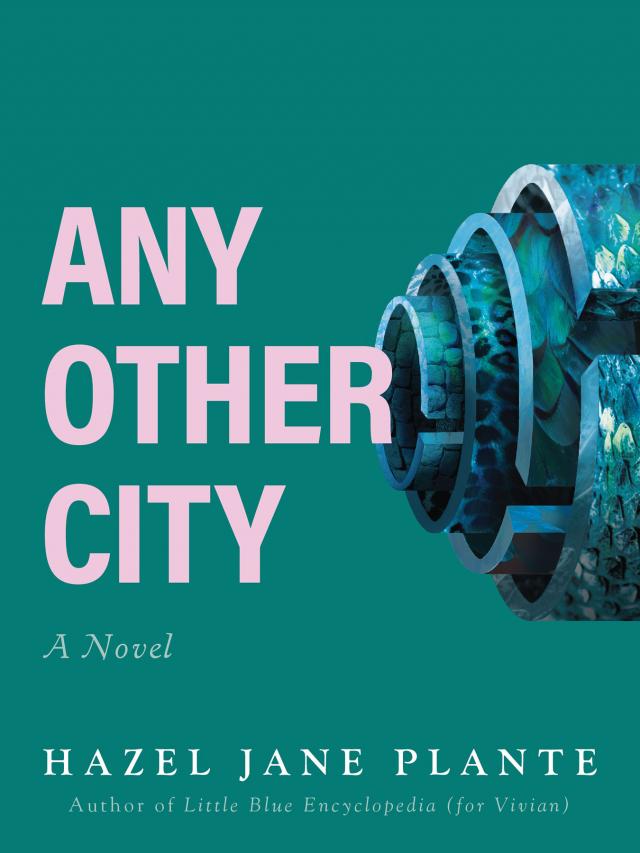
YOU’RE ABOUT TO READ ANY OTHER CITY, Tracy St. Cyr’s avidly anticipated memoir. Perhaps you’re reading this book because you adore her band, Static Saints. Perhaps you were transfixed by her infamous appearance on The Late Show with Stephen Colbert. Perhaps you were intrigued by this book’s tantalizing cover. I’m listed as the person Tracy wrote her memoir “with,” so perhaps I should share how it came into being before you shake off your sandals and wade into its waters.
I met Tracy shortly after my debut novel, Little Blue Encyclopedia (for Vivian), was published. Thanks to my cunning and tireless publicist, I was invited to chat with a musician of my choice for an episode of the Talkhouse podcast, which pairs artists for conversations about their work. I chose to talk to Tracy St. Cyr. I’ve been a fan of Static Saints since their stellar third album, Esperanto A-Go-Go, and I’d watched Tracy publicly transition while I was in the crux of my own gender crisis. We had a wonderful freewheeling chat that centred on shared artistic obsessions, including genius musician Rowland S. Howard and iconoclastic artist Sadie Tang.
Tracy and I became fast friends, and I wrote liner notes for the Static Saints album Dress Rehearsals. At some point, Tracy confided that she’d signed a contract to write a memoir. It happened during her transition-related media whirlwind. One week, she was profiled in The New Yorker; the next week, she was on Good Morning America. During that dizzying wave of wooze and schmooze, Tracy signed a publishing contract. Out of the blue, I awoke to an avalanche of text messages from Tracy imploring me to collaborate on her memoir, her last text (at 2:15 a.m.) being, Help me, Hazy-Wan Kenobi—you’re my only hope.
We met for coffee and talked about what she’d written so far, what she was trying to do with her memoir, and what it might look like if I got involved. She’d delayed the delivery date for the manuscript a couple of times and was on the hook to write the book because she’d already accepted and spent a substantial advance. She unzipped a black leather duffle bag on the empty chair beside her and gave me a quick spiel on the contents. They included most of the remnants of her past that she’d been consulting while working on the book. “My brain is fucked,” she said. “Everything feels super foggy. And this book feels like a jigsaw puzzle with too many missing pieces. Maybe you can help me solve it.”
I took some time off work and sifted through the contents of the duffle bag, which was crammed with notebooks, diaries, photographs, and demos. I sorted the items into piles on the hardwood floor of my apartment. I filled coloured index cards and sticky notes with dozens of discrete details, trying to divine patterns within the chaos. Sure, Tracy could write a linear memoir, but that would be like building a Vancouver Special home. She told me she wanted her memoir to be “architecturally interesting,” which was why she wanted to work with me. (Tracy, you had me at “Hazy-Wan Kenobi.”)
I’d been chatting and texting with Tracy while delving into her past, and our brains converged on the idea of a two-story structure. One story would be a snapshot of her life at twenty, when she flew overseas and unexpectedly fell in with a clutch of trans women. The second story would be from a year earlier, when she flew to the same city, this time to weather a traumatic event. I created a shared document, and we started to populate it with moments from her life at the ages of twenty and forty-six. Before long, we started noticing reverberations. Perhaps we could show how it feels to travel through time with a complicated gender, including the ways our past selves ripple into our present selves.
At some point, Tracy sent me the demos for the next Static Saints album. I was knocked out and soon became fixated on the song “Useful and Beautiful.” It will likely be heard as an ode to sexual debasement, but I think it’s also an invitation to root your life and your art in utility and beauty. I’ve found myself returning endlessly to this question: How can we make Tracy’s memoir more useful and more beautiful? I love that her song enacts what it extols: it reminds us that we can revel in sexual pleasure and perversity (“I’ve got uses / I’ve got bruises”) while also opening up to become more expansive, more useful, and more beautiful (“Oh, let me be a crashing wave / Oh, let me be a secret cave”). The aesthetic and architectural decisions animating this book stem from the desire to make it as useful and as beautiful as humanly possible.
Tracy and I spoke many times about the voices we let into our heads, particularly the people we have imaginary conversations with, who often are our lovers. As a result, Tracy decided in her memoir to write directly to two women who deeply affected her life. In Side A, she writes to her first girlfriend. In Side B, she speaks to a lover who shattered her world.
I’ve seen sources claim that I’m the “ghostwriter” of this memoir. I want to dispel this notion. Tracy is this book’s architect; I’m just someone who chatted with her about the two-story building she wanted to construct and provided some feedback on her blueprints and architectural models. The Side A / Side B structure is a case in point—that comes from Tracy. I was just along for the ride as a pedantic passenger, a light-fingered creative conspirator.
For what it’s worth, I suggest reading Any Other City in several smaller sips rather than one long gulp. It’s a slow work to metabolize and has lingering notes of leather, smoke, and licorice. While reading, please don’t forget to keep hydrated and caffeinated. I don’t think I helped Tracy “solve” her personal jigsaw puzzle, but I’m so glad she trusted me to help her identify and rearrange the pieces into a useful and beautiful shape that feels something like a life.
July 8, 2021
And you will lose yourself in the city
(You will unravel your riddle)
And you will find yourself in the city
(You will secrete all your secrets)
COSTUMES BY EDITH HEAD, “SECRET GIRLS”
WHEN I WAS SMALL, I dreamt of becoming friends with a peregrine falcon. It wasn’t my pet. We were close friends. Maybe best friends. The falcon wanted so badly to be human. And I dearly wanted to have wings. We would sit together in a soft nest high above the city, sharing secrets and nibbling on black-licorice mice. Have you ever tried licorice mice? They are tender, gooey, and delicious.
After I told you my dream of befriending a falcon, you talked about the colony of vampire bats you believed lived in a cave on the outskirts of town. Your brother had told you about them to scare you, but you started asking your parents to take you to the cave. You didn’t tell them it was because you wanted to be bitten and become a bat. We both wanted wings and adventures when we were kids.
Last night, I dreamt that we were together at a lake, drinking soda and dipping our toes in the water off the edge of the wharf. The water was glassy and smooth. A dragonfly landed on your shoulder, and you offered it some of your black cherry soda. I laughed, but it flew from your shoulder to the lip of the bottle. Then, it stunned us by zooming up and hovering between us for a few seconds before whirring off across the lake. You leaned over and kissed me. I felt a burst of electricity as your tongue touched mine. I woke up and remembered where I was and where you are. I couldn’t fall back to sleep.
Somehow, your hands know my body better than I do, Astrid. And now your hands are on the other side of the ocean.
—
The Old Quarter of this city is crammed with long, winding alleys. I live in a tiny third-floor apartment in the middle of one of them. Apparently, it’s called Seahorse Alley, though one of my guidebooks calls it Underwater Horse Alley.
You said you always pictured the continent we were on as a bird with outstretched wings perched on an ice cream cone. Ever since then, whenever I look at a map, that’s what I see too. You realigned my vision. Now, I’m living on a continent that you once said was shaped like a galloping buffalo. And you’re still in that watery city located near the bird’s breast.
I know you don’t understand why I left. You asked why I couldn’t create art in the sleepy, cloudy city you love, the city where you became yourself. I didn’t have words to explain why I needed to leave. I’m here because something in me told me to come here.
But now that I’m here I miss you more than I can explain. My heart feels swollen and heavy. It’s like a rusty, aching anchor. I’m weighed down with want. I’m a wanton thing. Somehow, I failed to recognize that I’m tethered to you. I miss your eyes and your hands and your lips and your voice. I want you to ease me open. I want your fingers to fill me.
—
I’m working part-time in a bakery. I get up at 3 a.m., which shapes my days in weird ways. I’m groggy until I’ve had two cups of coffee. (Yes, I’ve started drinking coffee!) And I curl into bed around 7 p.m.
When we lived together, I was always the night owl, and you tended to drift off while we cuddled on the couch. I tried to paint while you slept, but I found myself wanting to snuggle next to you more than I wanted to paint. For some reason, the phrase “nuzzle and doze” is coming to me. Maybe I read it in a poem once or in a translation of a poem. It sounds like a translated phrase. Nuzzle and doze. That’s all I ever wanted to do when it was dark out: nuzzle and doze alongside you. But unlike you, I find sleep elusive. I often feel myself start to fall asleep, as though I’m tumbling over the edge of a cliff, and I jolt awake, my heart hammering. Sometimes when I’d awoken you, you would cradle me and kiss my shoulders and neck and tell me it was okay. Sometimes you would sigh and turn your back to me.
Sometimes your crabby cat, Buttons, would wake me by biting my toes. She never bit you. I was the one who fed her, so she’d come to me whenever she was hungry. She came to you when she wanted to cuddle. She’d sit in your lap and glower at me. Her expression was 85 percent “What the fuck are you doing here?” and 15 percent “She loves me more than she loves you.”
—
You grew up in an old house that you once said was a fixer-upper nobody was ever going to fix up. Your parents mostly left you alone to do whatever you wanted. Your yard was sprawling and wild.
I was just remembering the first time I rode my bike to your place. We were both sixteen. You poured me a cup of sugary orange juice. Then, you took me into the backyard, and we kissed under a tree you used to climb. After a while, you led me past a collapsed barn. I wanted to go inside, but you said that its muddy floor would muck up my shoes. Behind the barn was a broken-down Volkswagen van surrounded by shoulder-high grass and weeds. The van was a faded military green except for one of the doors, which was painted safety orange. You opened the bright-orange door, and we went in.
You swivelled the little kitchen table against one of the walls in the van, and we sat on the couch. Your lips were sugary. Your tongue tasted like smoke. You turned on a small portable radio. It was broadcasting a song about heartache. You took off your top. Your bra was light blue with one white flower on it. I traced the edges of the flower with a finger.
You folded out the couch to make a small bed. Then, things happened so quickly that my memories are tangled together. I forget if you took off your bra before you slipped one of my fingers into your mouth. I forget if you were staring into my eyes while you sucked on my finger, or if you started staring into my eyes when you guided my finger inside you. And you must have taken off your skirt and panties at some point, but I don’t remember when that happened. And a song must have been playing on the small radio while I fucked you with my finger, but I don’t remember what song it was. And, really, I think you were fucking me, because I was probably trying to be gentle and not hurt you. You asked me to fuck you harder. Then, you asked me to use two fingers, telling me to put them in my mouth before I put them in you. When I slid my fingers into my mouth, I expected you to taste fishy, but you didn’t. You tasted like a tangy, salty fruit that was just ripening. My body was flooded with desire. It was trickier to find your pussy on my own. I felt silly. You smiled and guided my two fingers inside of you. You were more slippery than I’d expected. Then, you pulled me down onto you, kissed me, taught me how to fuck you. When you came, you gasped and your eyes widened and you looked so tender and fragile and I saw tears at the edges of your eyes. Later, when we were lying together, you gently tugged my earlobe with your teeth and whispered, Wow, you fucked me good, like really good. My body is humming.
When you tried to unbuckle my jeans, I shook my head. Next time, I said. You looked disappointed, but I insisted, and finally you kissed me and said okay.
—
Ever since arriving here, I’ve been walking a lot. Mostly, I explore the alleys. Glass Alley. Alley of Branches. Blood Alley. Alley of Gems. Silver Alley. The alleys here are all crooked and crammed with shops and bicycles and spiral staircases that twist this way and that way.
I tried doing watercolours of your face, but they made me miss you too much. So I’ve started mapping one of the alleys instead: Alley of Branches. So far, I’ve discovered a print shop, a barber, a few families, a cul-de-sac where dozens of people park their motorcycles, a locksmith, and a small swimming pool. I’ve never seen a public pool as small as this one. It’s affordable and never crowded. I’ve become one of a handful of regulars. My favourite patron is an older woman with a purple-and-yellow swimsuit who wears goggles and floats on her back, smiling. I’ve never seen her not floating. I’m jealous of how open and serene she seems to be. Her eyes always appear to be closed behind her goggles.
For a while, I thought I could stay with you in the watery city you love, but it’s too crowded with memories. They’re stuffed into every corner and every cranny. All the stuff from the past is stacked on top of what’s there now, like a layer cake. And I have to remember stuff that I don’t want to remember. And I have to feel stuff that I don’t want to feel.


