

Godkiller, page 5
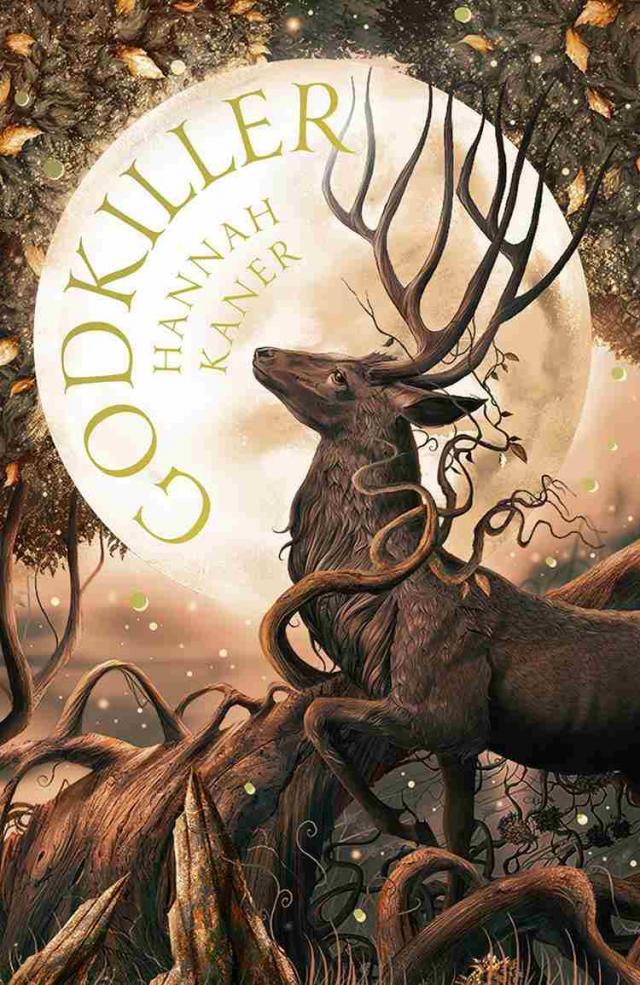


And the flame was dwindling.
THE GODKILLER SMELLED LIKE OLD LEATHER, WET WOOL, and sweat, and Skedi didn’t like it at all.
He also didn’t like that he couldn’t tell what she was thinking. Mortals were a riot of thoughts, and gods could see the colours they made, twisting the air about them with their more powerful emotions. Each person’s colours were different, bright, manipulable. Skedi could tell a liar from a lover, a joker from a fraud. Not the veiga. Her emotions were wrapped tight, hidden. Kissen. A strange name, Skedi thought, for such a hard-bit-looking woman.
He didn’t like sharing a horse with her either, a mid-aged gelding that was taking them up the dirt track Inara had just brought him down, finally, for the first time in five years. Most of all, though, he didn’t like that he was within reaching distance of the veiga’s briddite dagger, no matter where he crawled. He sat now in the crook of Inara’s neck and shoulder, protected by her cloak and hair, eyeing its handle warily.
Inara, thankfully, had taken his advice to hold her tongue for now. He needed to think of a way to get them both out of this.
Tell your mother she just found you in the woods, said Skedi straight into Inara’s mind.
You think she will believe me? said Inara. She told me never to leave the manor.
I will make it stick. She doesn’t have to know. We can find another way.
Another way to be free. Inara had protected him, done her best. For that, Skedi was grateful, but he knew he did not belong with her. One day, they would be found and he would be killed. He didn’t want to die, he wanted to be what he was. A god. He wanted a home, a shrine.
I can’t lie to my mother again, Inara said to him.
She lies to you.
Inara shifted uncomfortably. She does what’s best for me.
Skedi didn’t want to push too hard. Inara admired her mother. Too much. The woman hadn’t even noticed she had slipped away, otherwise they would have met a search party on the road. But Lady Craier was the closest thing Inara had to a friend other than Skedi. The snatched moments she had with her mother while Skedi hid in her pocket were her favourite moments in the world.
I don’t want to die, Ina, Skedi said instead.
I won’t let anyone hurt you, Inara insisted. What power did she have, though, really? It had come as a surprise to both of them that the barkeep hadn’t even known Lady Craier had an heir.
Kissen reined in the horse and sat still, sniffing at the breeze.
Skedi sniffed too: a trace of smoke, there, then gone. They were a long way from Ennerton now, and the dark was thick, stirred by the tiny movements of other creatures in the undergrowth, the flit of a bat in the air, just outside the light of Kissen’s lantern, which she held over the road. Close at hand there were only Inara’s chaotic child-feelings and the muted shades of the godkiller.
Ask the veiga what it is, Ina.
‘What is it?’ muttered Ina, miserable with chill and the prospect of being in trouble.
‘Quiet.’
More smoke came, thicker now. A shiver passed through the veiga, and for a moment Skedi saw her emotions flare out red and angry. Skedi tucked closer to Inara’s neck, frightened. The colours disappeared as quickly as they’d arrived, but when Kissen spoke, her voice rasped like stones against a saw.
‘You said yours was the biggest household around here?’ she asked.
Everything’s fine, Skedi said to Inara quickly.
‘Why?’ asked Inara, unnerved. She had seen those colours too. At Kissen’s look, she answered. ‘Yes. A manor, with outcourt and steadings. It’s barely—’
Kissen snuffed out the lantern and kicked her horse into a gallop. They bolted down a road that Skedi could barely see whipping past, trusting the beast’s dulled senses. So abrupt, so decisive. Mortals should be more cautious; they did not heal like gods did. Skedi decided that the veiga was too distracted to kill him now. He gathered his nerve and leapt to the top of Inara’s head, putting his nose to the air and baring his teeth. Yes, smoke. Too much of it.
‘Skedi, what’s happening?’
‘It will be all right,’ he said to Inara, out loud this time. ‘Veiga,’ he tried, in his biggest voice, ‘we should turn back.’ Whatever had made her so suddenly full of terror was not something he wanted to run towards, not with Inara.
The godkiller said nothing. She had one arm around Inara and the other on her horse’s bridle, his hooves rattling on the stones of the road. A waft of smoke stung their eyes as they rounded the hill. They reached a break in the trees and saw flames.
The manor was burning. Not just the house. The court, the granaries, the stables, all of them aflame, and more than one of the further steadings. The valley was alight. Kissen reined in her horse. Inara was silenced by the sight, her colours bleaching white with panic.
‘What … what happened?’ Inara asked, as if the fire would answer. Skedi watched as the roof of the manor fell in. The trees in the orchards were starting to blaze as the fire jumped from the building. He trembled. Had someone found out about him? No, this was something else. Something bigger.
‘Mama …’ whispered Inara, and Kissen looked at her. Her mother had been home. For once. Inara should have been too.
We have to help them, Inara said in Skedi’s head, then out loud. ‘We have to help them.’ Her voice was hoarse.
Who was ‘them’? They could see no one fighting the fires, no shouting, none of the warning bells were ringing. The road they were on was the only one towards town, the others were miles away, and not one person had passed them looking for help. Skedi could see nothing, only the rush of smoke.
He folded his wings close down to his body. Everyone Inara had ever known. Her mother, her only parent. He had to lie to her; he had to. ‘It will be all right, Inara,’ he said. He loved her, almost as much as he loved his own feathers. He had to protect her from the truth.
They were dead.
‘We have to help!’ said Inara again, trying to spur on the horse. Her colours were in chaos. The horse did not move. Inara wriggled free and leapt down before the godkiller could snatch her and ran, Skedi still clinging to her hair.
‘Ina, please,’ he said, hastening to her shoulder. It was still a long way to the burning buildings. ‘Stop. It’s dangerous! You’ll get us killed.’
The godkiller had dismounted to follow but was too far behind. It was up to Skedi to stop her. He made himself grow, expanding to the size of a kitten, a hare, a dog, his weight increasing as he did. He clung to her back, hooking his claws into her cloak and dragging her down. He could feel the heat on his face, even from this far. There was no one left. He wanted to live.
‘No!’ Inara struck him from her and he fell. She did not get far before Skedi felt a wrenching tug on his heart. Inara gave a strangled cry and fell as the invisible chain that bound them together snapped taut. It was excruciating, a pain like this, as if his core were trying to break out of his chest. Hers too. They were both of them crumpled down into the dust, just within the last of the straggle of trees.
A thunder of hooves. Kissen had remounted her horse and raced up behind them. She swung down and lifted Inara bodily from the ground with one arm before pulling into a thicket off the road. Inara, still dazed, couldn’t fight her. Skediceth spread out his wings and flapped with them, half-blind with pain. The veiga dismounted, pulling the horse down to lie and keeping tight hold of Inara, hand pressed to her mouth to stop her squeaking.
Kissen had noticed what they hadn’t: Skedi heard more horses, coming away from the fire. He hadn’t sensed them, he was so focussed on stopping Inara. His heart lightened for the briefest moment, till he heard their riders. Laughing.
The horses walked into the treeline, twenty of them, and the people on their backs were dressed in dark, rough cloth. It was not those colours that frightened Skedi, it was their emotions: violets to reds to gleaming silver, for all humans saw the world differently, but they simmered the same, like a dying fire: those riders were shining with violence.
Quiet, keep quiet, he said to Inara. This time, she listened.
‘That old one put up a racket, the one with the braid.’
‘Lucky you’re a good shot, Deegan.’
‘Didn’t stop her yelling though. Not smart enough to prefer the arrows to the fires.’
‘Aye, Caren won the bet on when they’d give up.’
Tethis, the old steward, slept with her hair in a long braid. They had to be describing her, otherwise it might be Inara’s mother, but she was young, half into her thirties.
‘It was well done. We got them all. House Craier is finished.’
A gust of wind dispersed the smoke, and moonlight broke through the trees. Skedi saw chain mail glinting under leather. Soldiers, or knights. They wore no colours of a particular House, but the bridles on their horses were fine and well polished, and their saddles matched. There was blood on their hands, he could smell it. As they came closer, he could see the nuance in their colours, the glimmer of lightness, satisfaction, pride. Faith.
They would see them. Of course they would. The veiga had dragged them barely steps from the road; anyone with half an ear would sense the motion of twigs springing back into place, their breaths. Their fear.
One of them paused, reining in his steed. Skedi saw Kissen put her free hand on her sword, and Skedi had to make a choice: take a chance with the godkiller who hadn’t killed him yet, or these soldiers who had death written all over their colours. ‘Got them all’? Not Inara. Inara had escaped. What if they wanted to kill her too? What would happen to him?
Skedi whispered a little white lie.
There is no one here. No one here. There is no one here.
He willed it into the world, allowing it to wrap like gossamer around the colours of the man that had paused, binding his mind with Skedi’s will. He felt the brushes of the human’s emotions, the sting of violence almost as if it were his own. Skedi flattened his ears as far as they would go.
There is no one here. It is time to go. No one is here. They are all dead.
The soldier turned and rejoined the rest. Kissen did not move until after they had all passed. Inara was crying silently, her tears running over the veiga’s fingers.
When they were gone, Skedi watched her release Inara and they both sat back, catching their breath. Skedi remained silent, terrified of drawing attention to himself. For him to survive, Inara had to as well. If she was lost, then whatever bond was keeping him existing without a shrine would break. He was sure of that.
‘Who were they?’ Inara whispered.
The veiga spat as if to rid her mouth of the taste of smoke, then spoke, first to Skedi.
‘What did you do, parasite? He was one breath from seeing us.’
Skedi didn’t answer, and instead made himself even smaller.
‘He saved us,’ Inara whispered, cupping her hand to him. Skedi felt her fingers shaking, cold. ‘I told you. He’s a god of white lies.’ Her voice sounded so thin. Skedi grew bigger despite himself, to the size of a hare, and pressed against her cheek. ‘You would have got us killed, veiga,’ said Inara, more strongly.
‘You’re one to talk, running straight into fire,’ Kissen said. She stood, looking down at the flames below, her face grim. ‘If I’ve the salt to guess you’ve had a lucky escape from a massacre.’ Those eyes turned back on Inara. ‘So, just who the fuck are you?’
ELO SLEPT ON HIS OWN FLOOR, GIVING ARREN HIS BED. FOR the first time in a long while, he did not wake from night terrors, only from the face of the dawn pressing against his shutters.
He sat up, and saw that Arren was also stirring, his shirt wide open where the little flame burned in its clutch of twigs.
Blood on the floor. Arren’s breaths, fewer, lighter, further.
It should have been me.
Elo buried his face in his palms. In another life, his friend would have his whole heart, would not bear the responsibilities of kingship in a country whose gods had turned on one another.
‘Elogast?’ said Arren, sitting up. Elo looked up and clasped his hands together.
‘We should have thought of this,’ he said.
‘It wasn’t your fault,’ said Arren.
Elo shivered with shame at the memory, trying to breathe through the pain in his chest, glad his hands were already clasped tight and disguising the tremor. Neither of them ever spoke about it. Guilt buried them in silence. Elo, that he had not been able to save his friend. Arren, that he had chosen to live on a god’s will, rather than die.
It should have been me.
‘Gods have long memories,’ said Elo. ‘If you go to Blenraden they’ll want your blood on the stones. Even the god who saved you is killing you now.’ They would not speak Hestra’s name aloud. They didn’t know if it might call her through Arren’s burning heart. ‘She wanted something from you, and you haven’t given it to her.’
Arren didn’t deny it. He couldn’t. ‘She didn’t ask for anything …’ he said dismally. A decision made on the chill edge of death could not be undone.
‘You said yourself that gods don’t give without taking.’ Elo stood up slowly. ‘She thought you would preserve her power, and you have not, so she is taking it back.’ He rubbed his own old wound on his left shoulder, feeling the knotting of scar tissue, and reached a decision. ‘Arren, you cannot go to Blenraden, not now. I will not let another of your bloodline die in that blasted city.’
Arren winced and swung his legs out of bed. ‘I have no choice,’ he said. ‘Only in Blenraden might some shrines to the old or wild gods be left standing where we can find them unguarded.’
But it was the old gods that had not liked the new ones multiplying across the Trade Sea, taking prayers and granting wishes. They liked it less that the queen invited these usurpers into her palaces, had their shrines carried up the Godsway road so they could be entertained at the Blenraden court. Gods barely a decade old revered beside those who had lived a thousand lifetimes, and gods of the wild who lived before memory, before Middren. It had only been a matter of time before the queen’s favour spilled out in blood. They knew that now.
‘Those gods killed your family out of spite,’ said Elo. He and Arren had been together when they had finally broken into Blenraden after six months of hard fighting, only to find the bodies of the court, his mother, and his brothers: dismembered, mutilated, rotting to the bones. Gods had destroyed the elite and reclaimed the city, running the wild hunt over and through its walls and refusing to let a single soul pass in or out. ‘What do you think they would do to your life before you opened your mouth to bargain for it? I will go alone.’
‘Elo, no.’ But Elo was already moving. Arren followed him into the living space that Elo barely used, adjacent to his bakery. Elo went to his fireplace and reached beneath the mantel. There, his lion-headed pommel; he pulled down his sword. ‘I won’t let you.’
‘I’ll go in secret,’ Elo continued. ‘Stop at Lesscia and find some sort of pilgrimage that knows the routes away from the main roads. Through the Bennites, probably.’
He looked at the pommel. The new swords for Arren’s knights were stamped with a rising sun and a stag’s head. Elo couldn’t touch those, not the stag. He was fond of the prince’s old lion symbol. He would have to wrap it to hide it. If someone recognised him as a knight, they might trace him back to Arren. And no one could know the destroyer of gods needed one to live.
‘A pilgrimage?’ Arren laughed a little. ‘You really think people will be so flagrantly breaking my laws?’
‘You’d better hope so,’ said Elo, raising his eyebrow and digging in a box of cloth scraps he used for mending his clothes, looking for the right kind of wrap. ‘If they are, it means you’re right, and powerful gods are still there.’ He shrugged. ‘Anyway, people don’t change just because you ask them to.’ He found a long piece of white cotton that he wrapped carefully around the figurine. He was sad to hide it; it was the best gift anyone had got him.
‘They should,’ said Arren, with a haughtiness that reminded Elo briefly and frighteningly of the dead queen. His crooked smile softened the moment. ‘I didn’t think anyone could be as stubborn as you.’
‘Ha,’ said Elo.
‘Elogast. Please.’ Arren was pale again, his breathing laboured, though he was trying to hide it.
Elo stopped. Arren had his hand on the mantel. He could not conceal how weak he was this morning. Why had he travelled at all? Soon someone would notice his absence, if they hadn’t already.
‘How long do you have?’ asked Elo. ‘Answer me honestly.’
Arren hesitated. ‘I don’t know,’ he said after a moment. ‘At the rate it’s fading … maybe a month.’
A month. Elo cast his eyes up to the rafters, gathering himself, hoping Arren wouldn’t see how much that frightened him.
‘If you’re right,’ he said, ‘and the Houses are planning rebellion, your absence will be a chance for them to take power. Worse, if you die, it would leave Middren in chaos. You know that. We know what would happen. Only fear of the gods stopped civil war or invasion while we were fighting in the city.’
‘Fear and them realising how quickly we could recruit an army between us,’ said Arren. ‘Fear and you, Elo. You said we should recruit commoners, you took command when no one else would, and you fought by my side even after you wanted to stop. I want you to do this with me, not for me.’ He put his hand on the pommel of Elo’s sword, then hesitated, and took Elo’s arm. ‘We might not have so much time together. I want us to act as brothers, maybe for the last time.’
Elo clasped Arren’s arm in return. ‘Your Majesty.’ He said it pointedly. ‘We’ve held the world together once before, and we will do it again. Just this time, you hold it from Sakre.’ Arren was responsible for a kingdom, not for Elo. ‘Keep your people’s faith in you, and … please … keep your faith in me. When I took this sword from you, I promised you my life, my blood, my heart. I meant it.’


