The Last Voyage: Captain Cook's Lost Diary, page 1


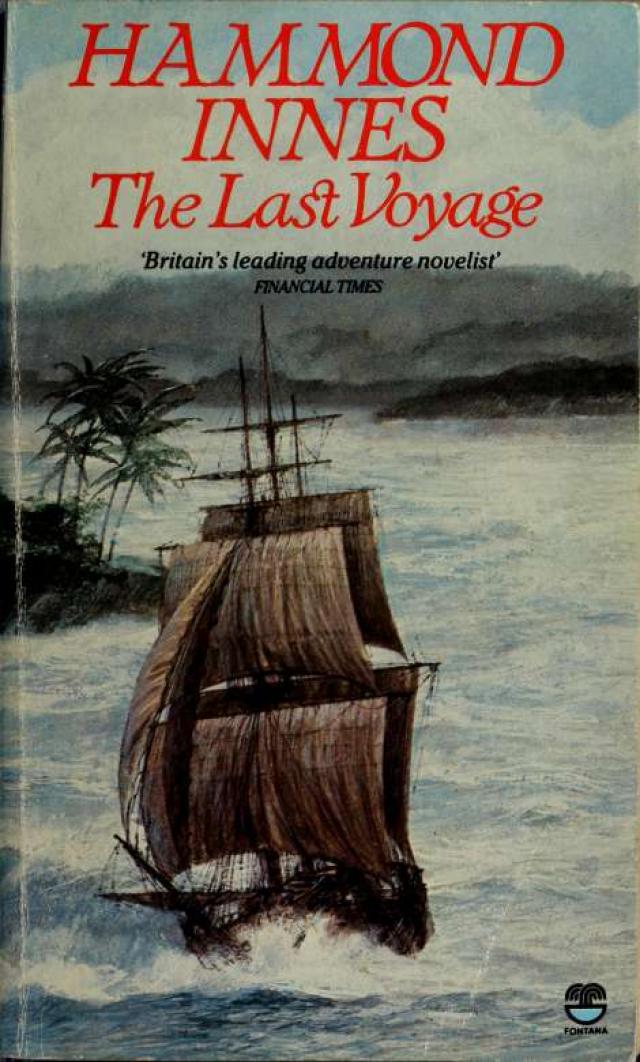
INTRODUCTORY NOTE
This manuscript, which only recently came to light in the cellars of the old St James Club, is such an extraordinary document that I feel some explanation is essential. It appears to be in Cook's hand and style and covers his third voyage up to the time of his death, and to some extent it overlaps his official Journal, even to the extent of repeating passages almost verbatim. But unlike the Journal, which in the manner of those covering his earlier voyages of discovery was written more or less on a day-to-day basis, this was written spasmodically, presumably on those occasions when he had time for reflection.
As in a log, he heads each passage of writing with the day of the week and the date, and checking these against the official Journal, they coincide in the main with periods of relative inactivity. But as the voyage develops more and more of the writing seems to have been done on a Sunday, and since there is nothing in his journals to suggest that he regarded Sunday in any way as a day of rest from his main activities, I can only presume that he set this particular day aside for his private writing so that he would get into the habit of it. The necessity for this sort of discipline is evident from his official Journal, some of the passages of which are extremely lengthy, particularly those dealing with native customs and behaviour, so that he was already doing an immense amount of writing.
THE LAST VOYAGE
It has been said of Cook that, while we know every detail of his voyages, we know very little about the man himself. There are passages in this record that suggest he was in some degree conscious of this. His dislike of the two volumes Dr John Hawkesworth produced for the Admiralty from the Journal of his first voyage was such that he spent much of his time ashore after the second voyage trying to ensure that a more sensible and accurate account of his icy circumnavigation in the South Polar seas would be produced. That he should have decided to keep two journals on his third voyage - one the official record, the other a very personal account - is not, therefore, entirely surprising. He was the forerunner of all those great English writers on exploration that were to come in the next century *• Livingstone, Burton, Speke, Baker, Thomson. What is surprising is the reflective quality of the writing - almost as though he had some premonition. And yet he was a man too sure of himself, and of his abilities as a navigator and a ship's captain, to contemplate death through disaster at sea.
The first page of the manuscript could be taken as an indication that the writing of it was suggested to him by Sir Joseph Banks. It appears to be a dedication of the work, but like the rough canvas cover, it has been half eaten away, probably by rodents, so that all that remains are the following almost indecipherable words i
This personal hist
on board His Majes ....
my third voyage ....
toy....
who made me acqu .... certain facility I did not .... Jams ....
In view of Cook's tendency to hark back with some nostalgia to his first voyage of discovery in the company of the young Mr Banks, and to the fact that Banks was a founder member of the St James Club, the work was most likely to have been dedicated to that 'Gentleman of Large Fortune* who was for three years - from 1768 to 1771 - his close companion on board the Endeavour. It was from him that Cook learned about science and the arts, and above all perhaps how to express himself. Even if it were Sandwich, First Lord of the Admiralty and his patron, who advised him to write a separate and personal record of his third voyage, it is still reasonable, and most likely, that he would have dedicated it to Banks, who was very largely responsible for his election to membership of the Royal Society Club*, an organisation for which Cook had great reverence- Certainly this would explain how the manuscript came to be in the cellars of 106 Piccadilly since Captain Gore, who brought the Resolution and Discovery home after Captain Gierke's death, noting the dedication, would have sent the bundle of papers, not to Cook's widow, but to Banks, either at the St James Club or at the Royal Society.
That it should have been left to rot in the Club's cellars may appear surprising, but it has to be remembered that at the time Banks received it he was already involved in the publication of the official account of Cook's last voyage; he certainly would not have wished the more personal journal to appear at the same time. Banks died in 1820 and under the terms of his long and complicated will he left his scientific collection and his manuscripts to his 'indefatigable and intelligent librarian', the botanist Robert Brown, for use during his lifetime, after which they were to pass to
* On the resignation of Sir John Pringle, Banks was unanimously elected President at the Anniversary Meeting of the Society on November 30, 1778, 220 Members voting.
the British Museum. When Brown finally died 38 years later the intention of the will was overlooked and much of the material never came into the hands of the Museum's trustees.
In any case, there is some mystery about the rest of Cook's manuscripts. Dr John Douglas, Canon of Windsor, who was to edit the official journal of the last voyage, was sent three parcels of writing by the Admiralty Secretary which, according to a note dated November 14, 1780, contained Cook's journal, log books and loose manuscripts. Professor Beaglehole, who spent more than thirty years of his life seeking out and examining every document relating to Cook, states quite categorically that 'all such papers have disappeared', adding, 'how and when they disappeared it is impossible to say, except that it must have been after their arrival in England.' And James King, 2nd lieutenant of the Resolution, in a letter to Dr Douglas says of his search for the missing loose manuscripts, 'They are not at the Admiralty, Mrs Cook has not got them and the Clerke knows nothing about them.' He adds that Captain Gore is out of town 'but it seems unlikely that he can give any account. . .'
If these official papers could disappear under the nose as it were of ship's officers and Admiralty servants, it is not surprising that a private journal left by Cook should have gone astray. Indeed, King's Journal, covering the later part of the Voyage when he commanded the Discovery, has only recently come to light, having been lost among Miscellaneous Sailing Directions in the Hydrographic Department at Taunton. Nor is it surprising that, after 200 years, the condition of the manuscript is now so very bad - all the pages mildewed by damp to a greater or lesser degree, some to the extent that they are almost illegible - that without the official Journal it would have proved impossible to reconstruct. Also the manuscript itself has been worked over with many alterations and additions which have added to its illegibility. This has not made my task an easy one.
I have put it all together to the best of my ability, relying on my knowledge and fascination with the subject to fill the gaps, using for reference Cook's official Journal as edited for the Hakluyt Society by Professor Beaglehole, also the journals of those who sailed with him, Clerke, Anderson, Edgar, Samwell, and others. And in reducing and editing the volume of the writing I have followed Professor Beaglehole in omitting the profusion of capital letters which would otherwise make it difficult to read, and again for ease of reading I have split the writing up into 52 sections under my own headings; however, I have kept largely to the original spelling and punctuation so that the style of Cook's writing is preserved as far as possible.
The last twenty or so pages proved the most difficult to edit as they had clearly been written in haste and had not been worked over. This is not surprising since they cover the period when Cook had ceased work altogether on his official Journal. Professor Beaglehole writes in his Textual Introduction: 'It is impossible to believe that he committed nothing at all to paper after his entry for Sunday 17 January 1779.' This private Journal fills the gap, recording Cook's personal reactions in the last month of his life.
Finally, in my selection of what shall be included I have tried to bear in mind that this is a very personal record and the story of Cook himself rather than what he did, which has already been the subject of innumerable books.
Hammond Innes Kersey, Suffolk.
*3
PART ONE
A year in England
START OF THE VOYAGE
Monday July 22nd^ iyj6
Having had a day of calm weather now after the strong gale at South which forced me to stand to the Westward, I have an opportunity to begin this personal history, or Diary, of the Voyage on which we are embarked. The log book of my last voyage closed with the words: Having been absent from England Three Tears and Eighteen Days in which time I lost but Jour men and only one of them by sickness. In circumnavigating the globe in those cold Southern Seas, and thereby disproving the presence of any great continent of land there, I thought I had been as far as a man may go. But now that I am away in search of the North West Passage, the which may well prove as elusive as that Terra Incognita of which men like Alexander Dalrymple dreamed, I fear I may be forced to go further than ever before. Pray God that it will not take so many years, and that at the end of it I may report as few men lost.
Much of my time since we sailed from Plymouth on 12th of July has been devoted to this end, for with the Navy committed to the disagreeable task of convoying troops to America, the Men are not of the best and know little about how to look after themselves. Indeed, I have only just come from an inspection of the ship and its livestock, the which I could not do during the gale, and having ordered the smoking of all parts below deck and the scrubbing of tables and other flat surfaces with vinegar and gunpowder, I took this opportunity of demonstrating to Mr Bligh, the Master, and some others who have not sailed with me before, my customary routine of hygiene aboard ship and the methods I have ordinarily used to prevent disease among the men. We are altogether 113 souls on the Resolution, including myself and four officers, Mr Webber the painter and Omai, a native of Otaheite, also the livestock which is more numerous than on either of the two previous voyages.
During the month we were at Deptford due to delays in the fitting out and storing of the ships we had 30 desertions, all of which we have replaced. Fortunately I have with me on the two ships a dozen-and-a-half men who have sailed with me before, half-a-dozen of them on both voyages who thus have over 6 years service with me in the oceans, so that here on board the Resolution there has been no repetition of the difficulties experienced on the first voyage in persuading the People to a diet of portable soup, onions and fresh vegetables at regular intervals.
We were off Ushent on July 17th and 18th and are now almost across the Bay approaching Cape Finister. I intend putting into Tenerife instead of Madeira, it having been discovered that there is not a sufficiency of hay and corn on board for the animals to last us to the Cape and thinking to be better supplied at Tenerife. Thence we shall make for the Cape by way of the Cape Verde islands. I am not a little concerned about Capt Clerke, the one officer who has sailed with me on both previous voyages. He guaranteed the debts of his brother, Sir John Clerke, and on that gentleman's sailing off to the East Indies has been committed to the Kings Bench prison. If he does not get his release in time to take command of the Discovery, which I have left waiting for him at Plymouth having done all that is possible through my good friends, I shall not be so well served in that respect. I have every hope he may catch up with us at the Cape Verde islands or else in Table Bay where I propose to take on fresh victuals. If not, I have left orders for the Discovery to meet
A YEAR IN ENGLAND
me in Queen Charlottes Sound in New Zealand which I know from past experience will provide us with all we need in preparation for our long voyage north through the Pacific,
Monday after Noon
We have on board a great deal of Instruments for Observations, more than I have had on any other voyage. As before, I am instructed to be present at the winding up of the Watch Machine, together with Mr Gore and Mr King, the first and second lieutenants, both of whom also have keys to the Box, all of us attesting the time and entering it into the Observations Book. This procedure I have just carried out, following upon the noon observation for latitude, and because all these various observations, particularly those relating to longitude, take up a great deal of my own and my officers time, I think it of some interest to list the variety of instruments delivered to the two ships.
These are:- 2 Astronomical Clocks, one with an Alarum, an Astronomical Quadrant, a Hadley's Sextant by Ramsden and another by Dolland, an Acromatic Tellescope with a treble Object Glass 46 Inches Focus, a Reflecting Tellescope, a 4 feet hand perspective with large Aperture, a Marine dipping Needle with Six Magnetic Steel Bars, 2 Small Variation Compasses, an Azimuth Compass with a spare Card, a Theodolite and Gunters Chain, a pocket Pinchbeck Watch, and Mr Bayly the Astronomer on board of the Discovery and I have each a small Hadleys Sextant by Ramsden as well as logarithms and a variation chart.
The Night Tellescope I shall hope to use next week if the weather serves, there being a total Eclipse of the Moon on the 30th.
It is the necessity of making continual and accurate
THE LAST VOYAGE
observations that caused me to choose in 1768 a cat-rigged collier, which was then renamed the Endeavour. Having been mate in these vessels and sailing cut of Whitby on the Baltic coal trade before I joined the Navy as an able seaman, I understood very well their steady seakeeping qualities, they being three masted, very roomy and easy to handle. They are also shallow-draughted, enabling us to sail close inshore for the better observing of the coastline and being full-built can be readily careened, something we were very glad of after the damage we sustained when we grounded on the coral inside the Barrier Reef.
I had 2 such ships on the second Voyage, and now again I have the Resolution and another Wh1cD37-bui.lt cat, the Diligence renamed Discovery. No better ships could have been devised for my purpose, except that the fitting out of the Resolution on this occasion has not been accomplished as well as I could have wished. The deck appears not very well caulked and after the gale on the 19th the Boatswain, who is an American named Ewin from Pennsylvania and was with me as Boatswains mate on the last Voyage, reported to Mr Bligh that there was some water in the forepart so that we had to pump. It may be that we shall discover further skimping of the work at Deptford. This pcor workmanship may be due to the unreadiness of the Navy for the war against the American colonists, requiring the putting into service of additional ships and the repair of others. In the circumstances, I feel I am much to blame in that I could not look to the work myself to the extent I have done previously, the reason being that I was much engaged in the preparation of the Journal of my las- Voyage for press.
There were many matters occupying my mind during the year I spent ashore between the last voyage and this. For the better understanding of the Narration I am embarked
A YEAR IN ENGLAND
upon, I will attempt to inform the Reader of these matters later, my presence now being required on deck, and after the Cabbin will be set for dinner. Having recently butchered one of our Sheep, we shall have roast meat again today.
2 THE TEAR ASHORE
Tuesday July 23rd
I have said I will recount what transpired ashore between my ordering the anchor let go at Spithead July 30th 1775, on completion of my second Voyage, and my finally embarking again in the Resolution on June 24th of this year at the Nore. If I do not do this now, and also give some account of the feeling of my Lord Sandwich and others regarding the North West Passage, it will not be possible for the Reader to understand fully the circumstances of this Voyage and my offering myself for the command of it. Also, it is certain that once we clear the Cape and head SE into higher latitudes to chart the islands the Frenchman Kerguelen visited in 1772 the weather will be of the worst and my time much taken up with the Navigation of the Ship.
At the time I completed my second Voyage I was not yet 47. I had then been 20 years in the Navy, first as an able seaman, then as Master's mate, then Master, finally as officer in command of expeditions of Discovery and Navigation. At the time of our arrival off Portsmouth I was feeling not a little anxious having returned a second time with no good report to make of that great Southern Continent of which
THE LAST VOYAGE
several of my Lords of the Admiralty had entertained great hopes, believing that I would discover new and fertile lands in the Southern Ocean. Moreover, we had become separated from the second Ship under my command, the Adventure^ off the coast of New Zealand and the last we had seen of her was at Midnight, October 30th 1773. I had heard, however, that Capt Furneaux had come safely home a year since and I now had that information confirmed and was told that the Adventure had arrived at Spithead on July 14th
1774-
Conscious of my duty to report to my Lords Commissioners as soon as possible, I left the Resolution in the charge of Lts Cooper and Gierke and hastened to London. I had much to think about on the journey, for now that I was clear of the Ship I had time to consider the reactions of the Board of Admiralty to the results of the Voyage. They would already have received copy of my Journal and the charts constructed partly from my own observations, partly from those of Mr Gilbert, my Master, also the Views, paintings and drawings by Mr Hodges and others; all these I had committed to Capt Newte of the Ceres, an English East India Company Ship from China which we had found anchored in Table Bay and which was bound direct for England. And by the Button, another Indiaman in whose company we had sailed to St Helena, I had sent a Packet including some of the officers journals, so that my Lords would thus be prepared for disappointment in regards to the Southern Continent.
All the information I had from Capt Furneaux since parting company with the Adventure was the letter he left for me at the Cape in which, apart from the loss of Ten of his best men and a boat to the natives in Queen Charlottes Sound, some of the men being eaten, he stated that he had sailed over the position of Cape Circumcision. Thus even the