

Lethal Control, page 1
part #3 of The DuPage Parish Mysteries Series
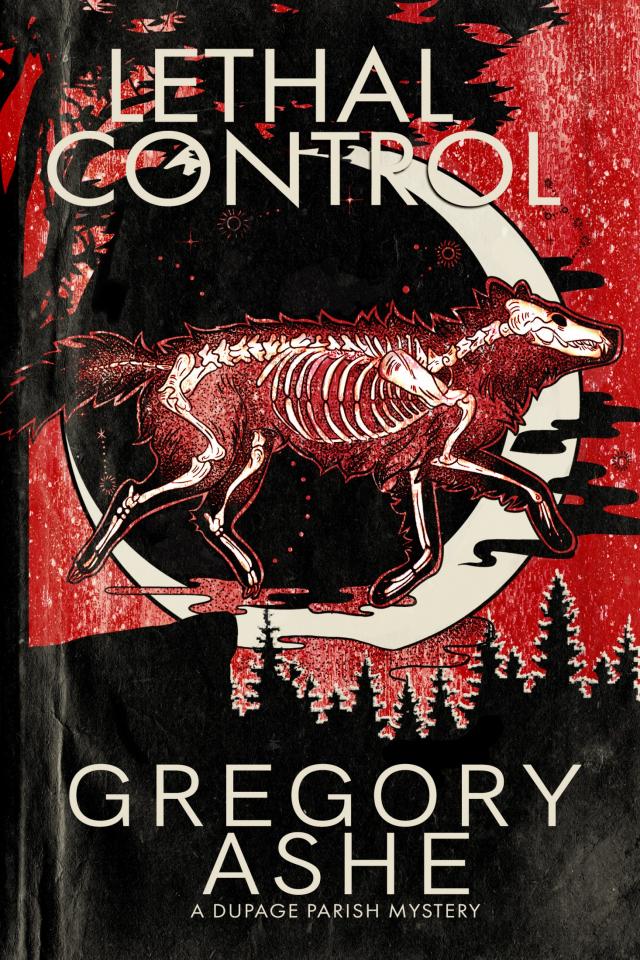


LETHAL CONTROL
A DUPAGE PARISH MYSTERY
GREGORY ASHE
H&B
This is a work of fiction. Names, characters, places, and incidents either are the product of the author’s imagination or are used fictitiously, and any resemblance to actual persons, living or dead, business establishments, events, or locales is entirely coincidental.
Lethal Control
Copyright © 2022 Gregory Ashe
All rights reserved. No part of this book may be reproduced in any form, stored in any retrieval system, or transmitted in any form by any means—electronic, mechanical, photocopy, recording, or otherwise—without prior written permission of the publisher, except as provided by United States of America copyright law. For permission requests and all other inquiries, contact: contact@hodgkinandblount.com
Published by Hodgkin & Blount
https://www.hodgkinandblount.com/
contact@hodgkinandblount.com
Published 2022
Printed in the United States of America
Cover design by Lyrical Lines
Version 1.04
Trade Paperback ISBN: 978-1-63621-047-6
eBook ISBN: 978-1-63621-046-9
I
Beware the Rougarou in the swamps at night. He’ll try to trick you and give you a fright.
- Rougarou Stew, Kat Pigott
ELI (1)
“I am going to murder those kids,” I said when I stepped up onto our gallery. Shards and splinters of glass pumpkins (the retail world’s contribution to the season) slid under my New Balance and crunched against the boards. I studied the disaster zone for a minute, thought about my aching back, my feet sore from a day spent walking tourists around cemeteries. I went around to the shed, got Dag’s old baseball bat, and swung it in slow motion like I was hitting a grand slam. I pictured a decapitated head sailing into left field.
It was October, three days before Halloween, and it was late. On our normally quiet street in New Orleans, the streetlights made a low ceiling that papered over the stars. The air was cool enough to make my skin tighten—but big surprise, I was cold all the time lately—and it smelled faintly like spray paint. From down the street came the murmur of voices and a laugh like a slinky going down a flight of stairs.
Bat swinging lazily at my side, I started in the direction of the voices.
The homes here were stolidly lower-middle-class, shotgun-style houses built on narrow lots. Most of the houses had galleries built onto the front. Some of them had the occasional upgrade—a stained-glass window, or Greek-style columns on the gallery, or gingerbread woodwork. The kind of things, back when people had been building these homes, that were meant to show a degree of financial success—or at least good taste. Some of the houses were painted the bright colors people expected from New Orleans, like the peach-and-lime one at the end of the street. Dag called it, “James and the Giant Peach,” which I told him was too long and gentle to be a genuine burn. When we’d bought ours, it had been turquoise, with red and yellow trim. It was now powder blue with eggshell trim. I’ll let you figure out which one of us—quietly and persistently and with tremendous kindness—won that battle.
I found them on the sagging gallery steps of the Crawford house. It was the kind of place that people looked at, even just driving by, and discovered the latent arsonist in their heart. You couldn’t look at the Crawford place, with its mildew and canting frame and junkyard litter, without being inspired by the limitless possibilities of a cleansing fire. There were three of them, white boys, and until they’d reached eighth grade this year, they’d never been a problem: Charlie Crawford, Michael Mince, and Stephen Sanders. Now, the Alliteration Gang had reached the age where biology turned them into a cross between an acne convention and a boner on legs. Dag didn’t believe me, but hand to God, I’d seen Mikey humping an old tire once. It kept rolling away, and he kept humping after it.
The war had started with Dag reminding them—politely, because it was Dag—to wear helmets when they skateboarded. That night, there’d been a bag of flaming dog shit on our gallery. Dag hadn’t believed me when I’d told him who’d been behind it. The old Eli might have left things alone at that point, with nothing worse than dirty looks for the boys and some thorough bitching-out behind their backs. But over the last year, I’d made some changes. I’d added on muscle—surprisingly easily, in fact, maybe because I’d spent so long trying to avoid bulking up. And I’d made a conscious decision to allow absolutely zero fucks to enter my life. It was a very good life hack. It had even come from a book. Take No F*cks. Or maybe Take No Sh*ts. Although the latter one sounded more like a medical problem.
In any case, I’d taken matters into my own hands when it came to the Alliteration Gang. The next time one of the little turds left his skateboard outside, I’d wrapped it in plastic wrap. Tight. Charlie, the little twat, had spent most of an afternoon getting it free. They’d egged our house a week later, and Dag had been the one to spend a hot September day cleaning the siding in the stink. I’d waited for my opportunity, and I’d gotten the three of them with a paper bag full of tomato soup and breakfast cereal, which I’d allowed to cook in the sun for a couple of days. They’d screamed for a satisfyingly long time, and later, I’d seen Stephen crying as his dad hosed him off in the backyard.
Now, my pumpkins.
Stephen noticed me first; he was the one who always wore a little smirk, and he was wearing it now—albeit, diluted by the hint of paint around his mouth and nose. It took me a moment to spot the can and the rag on the step between him and Mikey. Mikey had some paint on his face too, and his eyes were glassy. Charlie looked boneless, propped up against the railing. My general sense was that Charlie was a pure follower—he’d been the sweetest kid until the evils of puberty, and I pegged him as one of those kids who just wanted someone to accept him. Not an excuse, as far as I was concerned.
I stood there, bat hanging from my hand.
Stephen gave me more of the smirk. “What?”
Charlie must have thought Stephen was talking to him because he mumbled something. Mikey flinched. The movement made him bump the can of spray paint, and it clacked against the steps before Stephen caught it and righted it.
“What?” Stephen asked again, the smirk growing.
“You know what,” I said.
He looked at his buddies. Charlie was comatose, but Mikey was trying to play along, eyes wide and innocent as a shit-eating grin spread across his face. They were stupid at the best of times, and huffing paint hadn’t made them any smarter.
“That was seventy-five dollars’ worth of pumpkins from At Home, you little bitches.”
They just traded looks again.
“Tomorrow, I’m getting new pumpkins. And a camera. And if you come anywhere close to my house, I will ruin your lives, get it? My boyfriend used to be a deputy, and if you keep screwing around, he will end you.” I pointed the bat at each of them in turn. Stephen’s smirk was practically a grin by now. “Get it?”
He shrugged. Mikey tried to copy him and almost fell off the step. Charlie was moaning and fumbling around, probably trying to get another huff.
“This is where it stops,” I told them. “Don’t fuck with me.”
I waited. They dropped their gazes and shifted on the sagging steps. After another moment, I headed back up the street. I heard movement at the Crawford’s door, and I could visualize them slinking inside. I couldn’t have gone more than twenty feet, though, when I heard Stephen say, “Next time, send the pussy, and he can suck our dicks.”
I spun around, bringing the bat up.
Stephen was smirking and throwing double eagles. Mikey was copying him.
I sprinted toward them, but I hadn’t closed half the distance before they were inside the house, and the door slammed shut. Poor Charlie had been left out in the cold. I watched him for a minute, and then I propped him up so he wouldn’t fall over and choke on his tongue or anything.
I eyed the Crawford house. I considered using the bat to leave a message, maybe by destroying their antique, uh—well, maybe the plastic kiddie pool that was sticking out from under the gallery. After a few more deep breaths, I gave it up and turned around.
When I got home, Dag was on the sofa, working on school stuff. My boyfriend was almost five years older than me, and at twenty-nine, his hair had already gone this beautiful gray. He was my height, packing a lot more muscle, and sometimes he did things—like hoist a fifty-pound bag of cement without even blinking—that made his biceps pop, and every twink in a five-mile radius died from overexposure to daddy rays. He didn’t even know, of course. I just swept up the twinks and prayed he wouldn’t figure it out and realize he could do better than me.
As I watched, one of the biceps did very interesting things as he uncapped a highlighter and marked something on a page. Dag was the brains in our couple. He was also the looks, but I tried hard not to let him know that. The cardboard trays from two frozen dinners lay on the floor at his feet, and butter chicken sauce made a trail down his chin, Tulane t-shirt, mesh shorts, and, of all places, his knee. I knew he’d showered and changed that morning, but somehow, he still managed to look like he’d slept in his clothes.
“Hey,” I said. “How’s the presentation coming?”
“Huh?” His head came up. He had a green highlighter tucked behind one ear, and a yellow one behind the other, and in his mouth, he held a pen. “Wha?” He spat out the pen when I dropped onto the sofa, and he gave me a ki
“A couple of hours ago.”
His eyes got huge.
“Like, two minutes ago.”
“Are you hungry?”
“Not really.” Which was the truth; somehow, over the last year, I’d gotten my old metabolism back, which was awesome. Subtract love handles. Add abs. And it wasn’t like I was starving myself. I honestly wasn’t that hungry. Hardly ever, actually. But Dag was still watching me, and I knew the rules, so I said, “But I should eat something.”
“Uh huh,” he said. “Butter chicken? Sorry, I forgot to cook.”
“Sounds great.” My smile must have looked tired, because Dag frowned, but he kissed me again and disappeared down the hall.
We lived in an old shotgun-style house—the idea of a shotgun-style house being, in theory, that you could stand at the front door and fire a shotgun down the hall, and you wouldn’t hit anything because it would go straight out the back door. The living room was at the front, then the bathroom, then our bedroom, then the kitchen. Dag was moving around back there. The fridge door shut, and bottles clinked.
Since we’d moved in a couple of years ago, Dag had worked steadily on the house, making all sorts of improvements and upgrades and repairs—little things, you know, like catching the termites before they literally ate every scrap of wood in the place. He’d sanded and re-stained the floorboards a weathered gray. I’d added a leather sofa that still smelled new, as well as the Bluetooth speaker for the built-in shelves Dag had worked so hard to get right. The shelves were important. I needed space—lots of space—for important things like even more (indoor) seasonal pumpkins and seasonal plastic leaves and seasonal words carved out of wood that said things like I LOVE FALL MOST OF ALL and, well, seasonal candles. Seasonal candles, as I had explained to Dag during what had quickly been approaching a fight, were very important to the gays. He had spent the rest of the day in the shed, allegedly working on the shelves.
I sat on the sofa and picked up Dag’s notes for his presentation. They were on predators—the whole class was on predators, from what I could understand. Control mechanisms, that was part of it. Lethal control. Non-lethal control. Dag, of course, preferred non-lethal, which made me feel bad about the baseball bat all over again.
Mostly, though, I couldn’t make sense of the notes because my eyes kept skipping across the cards, so I set them down again. I thought about how Dag’s arm had looked when he’d highlighted those words. I thought about how his ass looked in those shorts. God help me, I thought about the butter chicken stain—and what did that say about me, honestly? I stood up. I tried to sit on the arm of the sofa and told myself it looked casual. Then I imagined how I looked, and I asked myself if I was doing a photo shoot for a fucking cologne ad. I stood up again. I clasped my hands behind my neck. I folded my arms across my chest. I twisted the hem of my Northshore Adventure Tours polo until I thought I heard a seam give.
A knock at the door saved me from myself.
Oh no, I thought. No fucking way. Come back in twelve to twenty-seven minutes.
“Can you get that?” Dag called from the kitchen.
“I didn’t hear anything,” I said.
The knock came again. It didn’t exactly rattle the door in its frame, but whoever was out there probably had a hell of a handshake.
“E?”
I waited for what I thought was a believable amount of time and said, “Wrong house.”
A moment later, Dag came into the living room, drying his hands on a dish towel. He frowned at me, and then he said, “No, sir. You’re going to bed, and I’ve got to finish my notecards.”
“Excuse me?”
“Not tonight, Eli.”
“I literally haven’t said anything.”
He looked at me. He didn’t even raise his eyebrows.
I mustered up, “Somebody’s got an inflated ego,” but by that point, we both knew I’d lost the battle.
When Dag opened the door, his body language changed: he became still, and he stared out into the night. I barely recognized his voice as he asked, “What do you want?”
I turned, and I stopped too. I recognized the man who stood on our gallery: I’d met him in a juke joint called the Stoplight. He’d tried to cruise me, and he worked for one of the most dangerous people I knew—who also happened to be a witch. His skin was darker than mine, and he had to have been close to Dag’s age, and he was built strong under a washed-thin Cowboys tee and stiff Levi’s. He kept his hair in a skin fade, and he wore a prosthetic hand. For one dizzying moment, it didn’t look like a hand at all—it looked like something twisting and writhing, like shadows crawling across a wall. Then it was nothing but polymer again.
His mouth quirked soundlessly once, and then, in a deep, cracked voice, he said, “I need your help. He’s gone.”
DAG (2)
“Who’s gone?” I asked. Eli took a step forward, and I put a hand back to stop him. I recognized the guy from the juke joint—the bartender—but if I’d known his name, I’d forgotten it. His skin was ashy in places, and his skin fade looked shaggy. If I had to guess, I’d say he’d been wearing those clothes for a couple of days, and he probably hadn’t been doing much sleeping. As I watched, he rocked slightly on his feet, like he was fighting to stay upright. I tried to judge his eyes. When I’d been a deputy, I’d seen guys with eyes like that, and they’d never once done the right thing. The best thing to do when you saw eyes like that was move them along and hope whatever they did, they did it to themselves and not to anybody else.
“Reb.” He put a hand on the door jamb. “Rebellion. I call him Reb. We all do.”
The year before, Lanny—who was, to give you an idea, a hot mess of coon-ass stupidity and pure trouble, and also my ex—had gone to the Stoplight with a woman named Fen, and between the two of them, they’d shot the place to hell. I’d found this guy, the bartender, hiding in a walk-in freezer with a pretty white boy. My guess, although it wasn’t much of a guess: the white boy was Reb.
“We haven’t seen him—” I began.
“Dag,” Eli whispered. In a louder voice, he said, “Do you want to come in?”
For a moment, I thought the bartender would start crying. He nodded.
I put my hand on the door. “He doesn’t need to come in. We don’t know anything about his boyfriend—”
“Come on,” Eli said, shouldering me out of the way. He put a hand on the bartender’s shoulder, and the man flinched, but he let Eli urge him inside. Two minutes later, he was sitting in the La-Z-Boy with some of my Sugarfield. You could see he was trembling by the way the bourbon moved in the glass.
Eli sat on the couch, and he looked at me until I sat next to him. Eli kept looking at me. I knew what he was thinking, and I frowned. His eyes got wider. I’d seen this look before—once, when he wanted me to buy him a t-shirt that he liked, but he wanted me to do it without him telling me to do it because, well, something about how I should have known he wanted it. He explained that later. Loudly.
To the bartender, I said, “I don’t know your name. Why don’t we start there?”
“Posey. Posey Rawlins.” He had the tumbler in his prosthesis. The thumb, I saw now—and memory flashed of the stale, sour smell of the juke joint—had been replaced with a bottle cap opener. Someone had drawn an arrow along the polymer hand, pointing to the opener, and then, in huge letters, the words USE ME!
“All right, Posey. What’s going on?”
“Reb’s gone. He’s—I think something’s wrong.”
“Who’s Reb?”
For a moment, Posey didn’t seem to understand the question. “You know him. You met him at the Stoplight.” When I didn’t say anything, Posey flexed his fingers around the glass. “He’s…he and I…”
“He’s your boyfriend?” Eli asked gently.
Posey barked a laugh and shook his head. But then he shrugged and nodded.
“He’s the pretty little white boy,” I said. “Blond. Looks all of seventeen.”





