

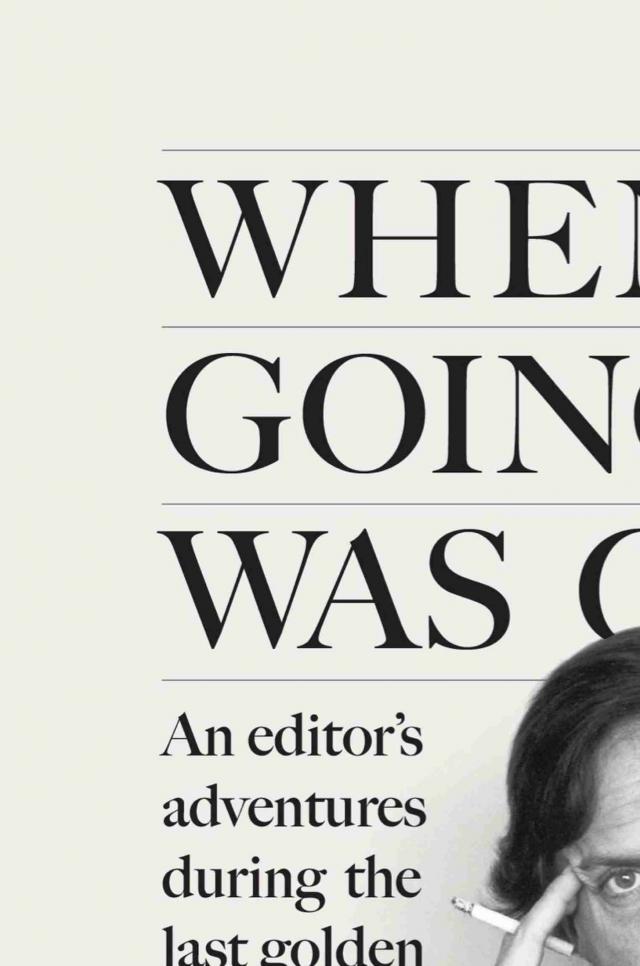
When the Going Was Good, page 27


The thing here was that Scanlon’s campaign of disinformation had backfired on him and he had been called out on it. His campaign of hammering Wigand’s credibility, as reported by Marie, became part of CBS’s story—that he’d tried to discredit this otherwise honorable, but complicated, whistleblower. And it wasn’t quite in Scanlon’s character. After the Lindsay days, he’d worked for left-wing causes and handled the press for films like Richard Attenborough’s Cry Freedom and Sydney Pollack’s Absence of Malice. He was very much an advocate for press freedoms and was hugely popular with journalists. He was dishy with a quote and loved a good gossip. At the same time, he lived large. He had a sprawling apartment on the Upper West Side and a huge mansion built for a nineteenth-century whaling captain in Sag Harbor with a living room the size of a ballroom. There was also a house in Ireland. Friends worried that he had taken on dodgier clients than he would have liked in order to cover his financial nut.
Tobacco companies still advertised in magazines in those days, and after Marie’s story, the big American ones collectively pulled $4 million worth of advertising from Vanity Fair. Which was not an ideal outcome. But we got through it. They stayed away for about six months and then they came back. I mentioned it to Si over lunch one day, and he was typically philosophical about the loss. If the story was good, then that was the most important thing. Marie’s article led to the Michael Mann film The Insider, with Al Pacino as Bergman and Russell Crowe as Wigand. (Scanlon was played by the incomparable Rip Torn—which I imagined eased the pain of the whole episode for him somewhat.) Just before the film was finished, I got a call from Mann. He said that he would rather not have the “Based on a Vanity Fair story by Marie Brenner” in the credits. I said that I thought it should be there, given his reliance on the source material. Mann leaned into the conversation and in an almost conspiratorial voice said, “Please, as a personal favor to me.” Which I found strange. I told him that I didn’t know how I could do it as a personal favor given that we had never met. The credit remained.
With these big stories you need some luck, and sometimes a break. Marie got both in her subsequent exposé in 2002 of the collapse of Enron and the fraudulent accounting of its directors, which cost investors billions of dollars and wiped out the retirement savings of twenty thousand employees. With the disappearance of $63.4 billion in assets, Enron was the biggest bankruptcy case in U.S. history up to that time. Like the tobacco story, it was an example of a general assignment reporter starting from scratch and having the time to pursue it. Just to make the assignment more difficult, Marie had little knowledge of accounting procedures on which the frauds were based, procedures that baffled even the battalion of bankruptcy lawyers who tried to unravel the Enron mess. I nevertheless had a hunch Marie would be well suited to this story. For one thing, she came from Texas, where so many oil companies were based. And she knew some lawyers there—always a way in.
Quite often, early in pretrial proceedings, reporters can be useful for lawyers in setting up the optics of a case. One day, in federal court in Houston, where Marie had decided to go to get a briefing, the prosecutor mentioned that some former employees of Enron would be witnesses for the prosecution. Marie told me that a woman, dressed unlike the attending press corps, had hurriedly left the small courtroom. Marie followed her, made contact, discovered that her name was Jan Avery. She had been a key accountant at Enron, and she was also the secret witness in the case. She had left the courtroom because she didn’t want to be photographed and identified by the television news reporters who were stationed outside. Like anybody else who got on the wrong side of the company, she was afraid of intimidation. From that first meeting she began to fill in Marie on how the fraud had worked. Marie called me from Houston that day and said, “Graydon, you’re not going to believe this.” She had her guide and her mole; potentially she had the whole story.
The other break she got was the kind that reporters usually only dream of. One of the big secrets of the case, which Jan Avery knew, was that Ken Lay, the CEO of Enron, had demanded that employees hand over all their records, which he then had destroyed to hide the original fraud. As the story was almost going to press, Marie got a tip that one of Enron’s accountants had copied the records, taken them to his house, and hidden them in his attic. Marie tracked him down in Corpus Christi, Texas. He confirmed that he had the files, and that the files proved the fraud. Her contact was by telephone, her piece had more or less gone to press, and the early pages were unchangeable. So we tacked this new element of the story onto the end and dropped a page of ads to get it in. All this took place amid a blizzard of midnight calls and a lot of excitement, with our legal editor, Robert Walsh, continually working with Marie to confirm the facts (and talking on his own to the accountant in Corpus Christi). On this story, we seemed to be literally following the truck to the printing press.
* * *
I do think people got the wrong impression of me with regard to going out at night. The truth is, I delineated my life pretty firmly. Daytime was for work and nighttime was for family. Once I had gotten my feet under my desk at Vanity Fair, I generally peeled out of the office at 5:00 or 5:30 in the afternoon so that I could be at home with my kids. I had a rule never to discuss the office or the magazine after hours unless the story was funny, or if I could use some advice on something. We would all have dinner together and then I would edit at the kitchen table while the children did their homework. Dinners at home were often highlighted by rounds of what we called “Quizmasters,” a game I made up to get the kids digging into the things I thought they should be digging into. “For ten points, what was the name of George Lucas’s first film?” (THX 1138.) “And for fifteen points, in what other Lucas film was this title used?” (It was the license plate of Paul Le Mat’s dragster in American Graffiti.) We never tallied the scores or anything. But it got the young brains whirring in an engaging way at the end of a long day of schoolwork. We also had our own film festivals. We’d run through a half dozen Hitchcock films over a weekend when the weather was bad, for instance. It got them on a road that has informed both their personal and professional lives, centered around film, books, music, and art.
It was a rare evening that required me to put on a dinner jacket. Aside from the Oscar party, I did this perhaps once or twice a year. Some years not even that. Most nights out were at Da Silvano, Sant Ambroeus, or Il Cantinori. We’d have dinner with another couple and I’d book a second table for our four kids right beside us. They weren’t allowed games or toys or anything. It was just the four—and later five—Carter kids. Cynthia and I started this tradition when the oldest, Ash, was, say, eight. That would make Max six and Spike three. During those first nights, they sat there and didn’t speak a great deal. Then Ash and Max would begin talking, then Spike, and then, as the group grew, Bron and Izzy. Within a few months of our sidecar dinner arrangement, the Carter kids became a veritable talkfest. And they have never stopped. Newcomers think the Carter children have their own special language. And they do, in a way. It’s an animated stew of current events and film and music and books and television and, when they were younger, made-up table games. When other kids were potted at the table with them, it would take the newcomers a while to figure out what the Carter kids were talking about, so wide and diverse were their reference points. I don’t know any other siblings who are as close, and I attribute a lot of that to their dinners together one table away from the adults.
Da Silvano became something of a second home. The small Italian restaurant down on lower Sixth Avenue was an art-world hangout. I had a regular table, on the left by the window as you came in. I was there maybe three times a week. On many of those nights, across from me at a table that could have held six, was a slim, nice-looking man with world-weary eyes. He regularly ate by himself; occasionally, he’d be joined by someone else. He had an effortless cool about him and his hair was combed in a sort of DA style popular with television stars in the ’50s. We’d nod to each other, but we never exchanged a word.
Back to the office for a moment. In those days, issues were demonstrably thick. With 200 to 250 pages of advertising, I had upward of 140 editorial pages to play around with each month. And once that number was set, you couldn’t go over it. You could get about eight hundred words to a page. I always felt that filling those pages was a great opportunity and not an obligation. I think that made a difference in how I approached each issue. Although I generally started out each month with a blank slate, the pages filled up quickly and I wanted to make every one count. Each and every one of them was its own separate opportunity. To make the whole jigsaw work, I tried to keep the writers to the word count they were assigned. Turning in a ten-thousand-word story when the assignment was for five thousand was a problem. It was a bit like getting a four-seater sofa delivered when you only ordered (and had room for) a loveseat.
But every once in a while, a piece would come in that made you want to change the size of the room. I had an idea in the mid-’90s to do a story on Sidney Korshak, the Chicago mob’s lawyer in Hollywood in the ’40s and ’50s and right up to the ’70s. He lived in the shadows and was rarely photographed. But those who knew, knew that he was, in his own way, the most powerful man in the movie business. And there was, pre-internet, nothing about him—no book, no pictures, almost nothing in print. I assigned the story to Nick Tosches, who was already something of a legend. Nick had started in the rock press and had grown into a major writer. I’d read his book on Dean Martin, Dino: Living High in the Dirty Business of Dreams. He’d also written biographies of Jerry Lee Lewis and the Vatican banker Michele Sindona. This would be Nick’s first piece for Vanity Fair, and it was a tough assignment.
He accepted the commission and then just disappeared for about a year. It was on our planning board, but kept moving, when month after month the story failed to materialize. And Nick wasn’t responding to his editor’s calls. One day a bulky envelope arrived at the office for me. It was a typed manuscript, a half inch thick. (By this point, Christopher and Gore Vidal were the last contributors on the Vanity Fair writing staff who still worked on typewriters.) It was the Korshak manuscript, and it was seventeen thousand words long. The story had been assigned at half that length. I sat down and, without a break, read it through in one sitting. It was a masterpiece, and so beautifully written that I felt my eyes welling up with tears. I expected something great from Nick, but this was truly magnificent. The introduction: “This is the story of a boy, a dream, a law degree, and a gun. It has no beginning and no end, but opens in the American desert on an October day in 1961, with a car emerging as a shimmer in the sun. In the car is Sidney Korshak.” We are led slowly and historically and with brilliantly researched detail to Korshak’s arrival an hour or so later at the Riviera hotel in Las Vegas where the all-powerful teamsters boss Jimmy Hoffa has to move out hastily from the Presidential Suite to accommodate Korshak’s unexpected arrival.
It was all that good.
I called Nick up and I said, “Nick, this will be the most wonderful thing I will have published up to this point. And I want to pay you twice what we agreed on because it’s so much better than I ever imagined.”
He got a bit emotional.
I said, “Plus, I’ll get the check over to you as soon as possible. Where should we send it?”
He said, “Da Silvano.”
I was confused. “You mean the restaurant?” I figured he might owe them money.
“Yeah,” he said. “That’s where I get all my mail. That’s where I eat.”
I thought for a moment and then said, “Wait a minute. Do you sit at the table across from me?”
Nick said he did.
“Why didn’t you ever say anything?” I asked.
“Oh, I didn’t want to bother you,” he said.
* * *
On the planning board for an interminable time was a card that read “The Collapse of Lloyd’s of London.” The writer was David McClintick, who had done a number of pieces for me. He was a significant figure in the world of financial journalism. David had been a star at The Wall Street Journal but he had truly made his name with Indecent Exposure, his 1982 bestseller about David Begelman, the flawed but popular head of Columbia Pictures. Begelman had a gambling addiction that got the better of him, and he ended up siphoning money not only from the studio, but from the Oscar-winning actor Cliff Robertson.
In 1995, Begelman ran into another fraud situation, and I assigned David to write a piece about his new batch of troubles. During his reporting, Begelman committed suicide. I remember a detail in David’s story that involved a friend of Begelman’s turning up at his house to start planning a memorial for him. She looked in the fridge and found that it was completely empty. Begelman was broke. Just as his friend was leaving, a team of detailers showed up—the sort who go over cars with Q-tips—to clean his Rolls-Royce. Begelman would spend the money to detail his car—a Rolls, no less—but didn’t have money for food. That, in a nutshell, is Hollywood.
When I met with David, he told me he wanted to do a story on the possible collapse of Lloyd’s of London, the world’s leading insurance market. I told him that I didn’t know much about the organization beyond the 1936 Tyrone Power film, Lloyd’s of London. I did know that its members, or “names,” made extraordinary profits but were also subjected to unlimited liability. Meaning that they could be completely wiped out if things went horribly bad. Such was the extent of my Lloyd’s scholarship.
In the 1990s, Lloyd’s, which I was also to discover is a syndicate rather than a company, was on the edge of collapse. Huge losses resulting from insurance claims from oil spills, hurricanes, and asbestos lawsuits were crippling many of the partners. The names were largely a collection of wealthy individuals who introduced each other to the syndicate. It was like a private club. David said that should Lloyd’s collapse, “it could affect the wealth of nations.” I thought it was right up our alley, so I gave him the go-ahead. He said he would have to go to London for a few months to integrate himself into the Lloyd’s ecosystem of wealthy names in London and the shires. We settled on two months. A plea for more time came through, and two months became four months and four months became six months. Between David’s expenses and his fee, we were in for about $180,000. And he hadn’t written a word. Chris Garrett and I would just reel when the bills arrived.
When David finally turned his story in, it just didn’t work. Many of the names had been brought to bankruptcy, but the syndicate seemed to hold, and the wealth of nations appeared to be secure. It wasn’t the great opera of aristocrats bringing the world to its knees that David, and I, had hoped for. He said he needed more time in London. I didn’t know what to do. I couldn’t invest more, but I couldn’t run what we had. I told him that if he wanted, he could take it elsewhere. Norman Pearlstine, David’s former boss at The Wall Street Journal, had become the editor in chief of Time Inc. David sold him and Jim Kelly, by then Time’s editor, on the story and he continued with his investigation. Eventually, David’s Lloyd’s piece ran over twenty-three pages in the European edition of Time.
Stories founder for all kinds of reasons, mostly unpredictable. When a military coup overthrew the government of Jean-Bertrand Aristide, the president of Haiti, in 2004, I called T. D. Allman. He was quaintly named on our masthead as “foreign correspondent”—as if foreign stories could only be written by him. Tim (the T in T. D.) was a formidable historian and journalist who had exposed the CIA’s secret involvement in the war in Laos and whose books had put the phrases “rogue state” and “secret war” into the lexicon. But he was also slightly eccentric. At a party once he had gently bitten Aimée Bell’s face—after Forrest Gump had won the Oscar for Best Picture. I can’t recall if that was a bite of happiness or of outrage. He had a sweaty charm that completely surprised me. One night in the 1990s, Bob Colacello and I were in Paris and bumped into Tim. We were on our way to São Schlumberger’s vast, almost hallucinogenic house at the foot of the Eiffel Tower, and we invited him along. There were a half dozen grand Parisian women there, and we watched as Tim slowly came to have them leaning in on his every word. Bob and I might well have been furniture.
Tim was game for a fresh assignment. He was an old Haiti hand, and in a previous dispatch, in 1989, he had seemed entranced by the specter of Baron Samedi, the voodoo king. He quoted a friend of his: “I have seen the zombies laughing and dancing awake. There were tens of thousands of them…. I’ll never forget the rage in those eyes.” He had also praised the proprietor of the Hotel Oloffson, in Port-au-Prince—the hotel made famous by Graham Greene in his novel The Comedians and the only place to stay in Haiti’s capital that offered reasonable safety—for his forbearance during his stay. “For one month,” Allman wrote, “this stranger had shown me kindness and given me help with a graceful stoicism it was beyond my capacity to repay.” Had he been a demanding guest?
He set off, and I heard nothing from him for more than two months. This was in the days when not everyone used cell phones. I was in my office a few weeks later when a registered letter arrived. It was from Richard Morse, the proprietor of the Hotel Oloffson. The letter ran to four pages, closely typed. I no longer have it, but it started something like this: “Dear Mr. Carter, My family has been through hurricanes, wars, and revolutions, but nothing, nothing, could have prepared me for the arrival of your Mr. T. D. Allman.” Allman, he wrote, had spent a month and a half at the hotel. The details of the letter are unprintable here, but it did include the sentiment that Morse would rather have had the Tontons Macoutes to stay than our correspondent. And after all that, Morse wrote, our man had left without paying his bill. I was horrified and walked over to Chris’s office and showed her the letter. Chris called the hotel to ask for the complete invoice so we could pay it. And then I called the owner to offer our most abject apology. Tim must have ventured once too often into that heart of darkness.


