

The Merge, page 1


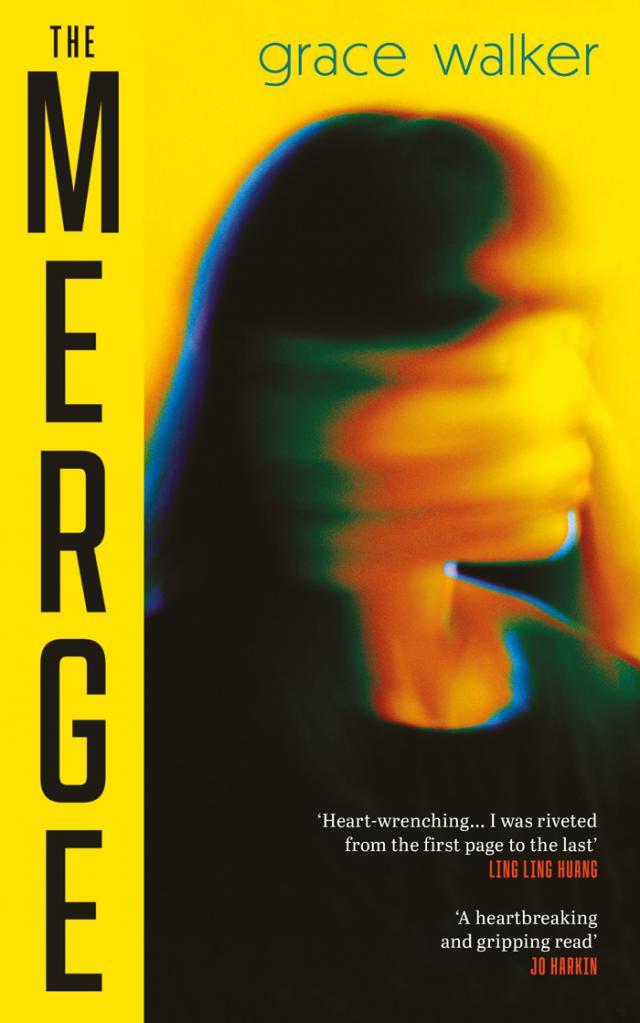
PRAISE FOR THE MERGE
‘A heart-wrenching exploration of the struggle for autonomy amidst dwindling resources, The Merge perfectly captures a modern world obsessed with controversial solutions for problems it has created… I was riveted from the first page to the last.’
Ling Ling Huang, author of Immaculate Conception
‘Chilling, claustrophobic and deeply unsettling, The Merge is a brilliant, unforgettable exploration of memory, control and freedom.’
Carole Hailey, bestselling author of The Silence Project
‘A disturbing, heartbreaking and gripping read, which manages to explore capitalism, technology, personal identity, climate change, human rights and over-population without ever losing sight of its central characters and their vividly drawn lives.’
Jo Harkin, author of Tell Me an Ending
‘Grace Walker creates an uncanny world so rich and allencompassing that it’s hard to believe it’s not real… it’s clear that Walker poured her all into this future classic of the genre.’
Jodie Matthews, author of Meet Me at the Surface
‘An arresting, deeply imaginative debut. The Merge is both a gripping speculative drama and a moving meditation on memory, family and control. Grace Walker also asks what we’re willing to surrender for those we love and her questions linger long after the final page.’
Freya Bromley, author of The Tidal Year
‘With The Merge, Grace Walker takes a clever speculative premise, and creates a dystopian world that feels frighteningly plausible; filled with compelling characters struggling to come to terms with the new reality. Terrifying and fascinating.’
Guy Morpuss, author of Five Minds
‘I read The Merge in one frenzied weekend… Walker has a frighteningly good imagination, but the most frightening thing of all is that the world she’s created doesn’t feel all that outlandish… This is a story that will stay with me. Timely, important, and beautifully written.’
Silvia Saunders, author of Homesick
For Gary and Jim.
What is hell? Hell is oneself.
Hell is alone, the other figures in it
Merely projections. There is nothing to escape from
And nothing to escape to. One is always alone.
T.S. Eliot, The Cocktail Party
They warned us about the grief.
They explained how, when the day came, it would feel as though someone were dying. They reassured us that grieving was normal, to be expected. There was a whole week of sessions dedicated to it.
I watched the speakers during the grief sessions, studying them as they told us about their own experiences. I wasn’t fully listening, catching the odd word, the occasional consoling phrase. I was too busy trying to catch them out, waiting for something to slip and give them away.
Nothing happened, obviously. The speakers were flawless in their delivery. I should have accepted that. I should have given up and paid attention to what they were saying.
If I’d properly listened at the sessions, maybe I’d understand how I’m now feeling. Maybe I’d be able to cope better with the nausea, the shaking, the terrible regret.
If I’d listened, maybe I wouldn’t be so terrified.
Maybe I’d be able to accept the fact that, in an hour’s time, I won’t exist.
PART ONE
The Preparation Period
Three months earlier
Amelia
The sessions begin on the first weekend in July. It’s uncomfortably hot. The short walk from the van to the Clinic requires me to gather my hair into a ponytail and blot the back of my neck with a tissue.
‘I can’t believe we’re here,’ Mum says, tugging at her shirt as we ascend the stone steps leading to the Clinic’s entrance. ‘Whenever your father and I walked past this place, we’d always speculate about the guests lucky enough to be inside. He’d be so proud of his girls for getting in.’
The Clinic used to be a luxurious hotel, favoured by wealthy tourists due to its proximity to Tower Bridge. The building is imposing, four storeys of elaborate brickwork and Gothic spires. A row of silver flagpoles extends along the roofline. Each one holds a forest-green flag, hanging limp and still in the absence of any breeze.
Mum begins climbing faster, spurred on by her excitement and seemingly unfazed by the heat or the angry shouts of the protestors behind us. Her eyes are fixed on the grand stone carvings of trees flanking the Clinic’s large mahogany doors.
Mum and I have already climbed these stone steps, already passed through the Trees of Connection, their mottled grey branches intertwining to form an elegant arch. We visited the Clinic last month for our interviews, but I don’t remind her of this. I let her relish the excitement of entering the building for the first time.
A petite woman wearing a plum-coloured tunic greets us at the door. A neat bun, coiled with precision, sits atop her head. She hands us glasses of iced water and peers down the steps at the protestors gathered on the pavement, their placards hoisted high above their heads. ‘I hope they didn’t bother you too much,’ she says, ushering us inside. ‘They’re relentless in their mission to upset and provoke. I just wish they didn’t target innocent people such as yourselves.’
We follow the woman into the large foyer. Our footsteps echo on the marble floor, decorated with swirls of white and grey, the wave-like pattern suggesting the sea. Mum drinks her water, draining the glass, her eyes wide as she takes in the high ceiling. ‘Goodness,’ she whispers. ‘Isn’t it remarkable?’
I stand with her as she admires the mural stretching above us, the array of featureless golden figures that intersect and overlap on a black background.
A Combine night sky, Eliza called it.
When we came for our interviews last month, it was Eliza who guided us through the foyer. ‘See the scroll in that figure’s hand?’ She pointed to a golden body sprawled above us. ‘It’s representative of knowledge. And do you notice the outstretched arms of the figure it’s connected to? They symbolise compassion. Each figure embodies a distinctive human quality.’ I looked closely and noticed other ‘symbols’ hidden among the golden figures: a saxophone tucked under an arm, hands resting together in prayer, a pair of ballet shoes. ‘It serves as a visual reminder,’ Eliza said, ‘of the extraordinary power that’s bestowed on us when we truly come together.’
Now, the woman in the purple tunic directs our attention to a small figure with closed eyes, their hands gently clasped in meditation. ‘Notice,’ she says, extending her arm and pointing, ‘how the figure beside them, though identical, is alert and awake. Do you see the energy lines connecting them?’
I squint, straining to see the thin, almost imperceptible lines flowing between the figures. Mum tilts her head back further, frowning as she scrutinises the mural. Eventually, she nods. ‘Energy lines,’ she says, though I doubt she’s entirely convinced of their existence.
The woman leads us further into the lobby, towards the large marble statue of Our Combine that stands proudly in the centre of the foyer. Their outstretched hands, smooth and polished, beckon us to join in their mission, to embrace the sacrifice they represent.
An elderly couple dressed in floor-length purple robes pose in front of the statue. A photographer stands a short distance away, a large camera raised to his eye. He must have special permission. Photography, Eliza told me last month when I got my phone out to take a photo, is strictly forbidden.
The elderly couple face one another, holding hands, their arms outstretched. The photographer snaps a few photos, the camera clicking loudly, before directing them to move closer. ‘Nose to nose,’ he says. ‘So close that your vision blurs when you look at one another.’ The couple do as instructed. They stand, the tips of their noses touching.
The pose, though regularly used in advertisements, feels uncomfortably intimate to witness in person. Such closeness feels almost sacred, a communion of spirits.
A shared breath passes between the elderly couple.
I look away.
It’s possible this photoshoot is purely commercial, and these images are intended for buses and billboards, leaflets for retirement homes at full capacity. But there’s a chance it’s genuine, and this couple really is about to Commit. If that’s the case, witnessing their final moments without the invitation to do so seems intrusive. Indelicate.
We continue past the statue and reach the front desk: a large, curved stone counter behind which three Combine employees, also wearing plum-coloured tunics, sit in front of a low bank of screens. The woman remains standing with us as a man with tight black curls smiles from behind the desk. ‘Welcome to the Tower Bridge Clinic. Please could I have the name of your Group Leader?’
‘It’s Eliza Singh. We’re Laurie and Amelia Anderson.’ I open my bag and give him our passports, which are already open on the photo page. I read the email explaining what to do once we arrived at the Clinic so many times that I’m sure I could recite it by heart.
1. Head directly to the Clinic’s entrance, where a designated staff member will be ready to welcome you.
2. Provide the name of your Group Leader to begin the check-in process.
3. Present your identification documents, passports or government-issued IDs to the receptionist. Make sure the photo page is open and clearly visible for verification.
There were ten instructions in total. I read them obsessively. It was the only tangible evidence I had that this was actually happening. No announcements, no news articles confirmed the commencement date for the trials.
The man behind the desk continues to smile as he takes and examines our passports. He glances at Mum, who’s watching the elderly couple with interest. ‘It’s best not to stare,’ he says gently. ‘We want them to enjoy their photoshoot, not feel as though they’re being observed.’
I smile apologetically as Mum, taking no notice, continues to watch them. The man doesn’t reinforce his suggestion, and I don’t try to get Mum to stop staring. We’re having a good morning, and I’d like it to remain that way.
He begins inputting our details, his fingers moving quickly over the keyboard. Mounted on the wall behind him is a large golden mandala, a perfect circle split by a curved line shaped like a loose ‘s’. On either side of the line is the illustration of a brain, one black, the other white. Waves flow between them. I sip my water and consider how many years of experience the tattooists must need to replicate such an intricate pattern on such a small area of skin.
‘Though people are physically merging,’ Our Combine said during their first televised announcement, ‘living as a Combine allows you to celebrate and to utilise the essence of each person’s individuality.’ The camera panned slowly around them, revealing the tattooed emblem on their neck. ‘The mark of a Combine serves as a reminder of the beauty that the Transfer gifts the Host. It is a symbol of balance and interconnection and a reminder of the Combine’s astonishing capabilities.’
The man returns our passports along with two name badges. I help Mum pin hers to her shirt before putting mine on. ‘You should wear the badges at all times while in the Clinic,’ the woman says as she leads us back through the foyer. ‘It prevents any misunderstandings about your access within the premises.’
We walk past the statue and the still-posing couple, through a large set of double doors and down a long, well-lit corridor. As we walk, Mum recounts the story she always tells once summer has finally arrived, about an earlier summer when I was seven and it was so cold we still had the heating on in July.
‘You can’t imagine it,’ the woman says politely. ‘On days like these, it seems we’ll never feel cold again. We’re due to hit highs of forty-three again this week. Though it’s Italy who seems to be really suffering at the moment. Calabria is on fire again, and they only got Sicily under control a few days ago. The flames were mountainous.’
The radio was playing in the van that brought us here. A devastated woman had called in to talk to the harassed presenter. The woman had been so sure that, come July, the earth would no longer be parched, the plants no longer wilted. The rivers no longer shrunk to streams, their grey beds cracked like cement. She began to cry and was abruptly cut off by music. Mum snorted: ‘What did she think, that the weather was just waiting for the calendar to flip before turning from drought to downpour?’
If not for my impatience for the sessions to start, I’d have no real idea how long this heatwave has lasted. June was a blur, the days always too long, eliding into one another, each one indistinguishable from the last.
‘Here we are,’ the woman says, a hint of relief in her voice. Mum smiles, unfazed by the interruption mid-story. She’d been busy explaining how Dad meticulously applied factor fifty to his ears before leaving the house, even on overcast days. ‘Room One,’ the woman says, gesturing to the door ahead. ‘Right opposite The Oasis, so you won’t have to go far for your breaks.’
Room One is small and plain, empty of furniture save for a circle of folding metal chairs set out in the centre. Sitting in the circle are two women and a man, all wearing plum-coloured tunics. ‘Your Support Workers,’ the woman explains. She gestures at the other six people in the circle, dressed in regular clothes. ‘And these are your fellow Participants.’
A lady with curly red hair smiles uncertainly at us. Everyone else avoids eye contact.
Two large windows are covered by thick black blinds. ‘For your privacy,’ the woman says, following my gaze. ‘Reporters are hungry. A shot of the eight of you together would be worthy of the front page. Please, have a seat. Eliza will be joining you shortly.’ She bows her head. ‘Thank you for your sacrifice.’ She leaves the room, closing the door silently behind her.
There are three empty chairs. Two of the vacant seats are together, the other stands alone between four Participants. The Support Workers are seated to divide each pair. ‘Is this it?’ Mum whispers as we head for the two seats next to each other. ‘I was expecting something a lot fancier, weren’t you? This feels like a doctor’s waiting room.’
She’s right. The room has a medical feel about it. It’s harshly lit and has the lingering odour of the cleaning products they use to keep the place spotless. It has the charged atmosphere of a doctor’s waiting room, too, filled with nervous people expecting bad news. I sit and make the mistake of glancing at the spotlight above me; when I look around the circle again, orbs of light blur my vision, distorting the faces.
Amelia
Eliza enters the room. Her black hair is tightly braided into a ponytail, just as it was during our interview. She makes her way to the vacant chair, completing the pattern of a purple uniform on every third seat. ‘Welcome, everybody,’ she says. ‘It’s brilliant to see you all here today. Getting a group together for the first time is always so exciting. As you’re aware, these sessions will be taking place weekly. Every Saturday at nine a.m. your group will meet in The Oasis for tea and coffee. This gives you a chance to chat, relax and enjoy one another’s company before we begin.’
To my right sits a teenage boy, thin and pale, wearing a beanie the exact same shade of green as his sleeveless top. His eyes are not on Eliza, but me.
‘I know it can be daunting meeting the other Participants,’ Eliza says, ‘but rest assured you’ll become much more relaxed as the weeks go on. Over the next three months the eight of you will grow extremely close. You’ll get to know one another in a way that is entirely unique to your situation.’ She gestures to the group as a whole. ‘You start off as strangers and end up as family.’
The boy in the beanie has shifted his attention to Mum. She’s writing in her new notebook, the brown leather one I bought her last month. It’s smaller than her previous one, pocket-sized, easier for her to carry around. Her pen moves quickly across the page. I resist the urge to reach out and stop her. I’ve explained so many times that she should limit her notes and record only the most important information. She never listens.
‘What I’d like to do is go around the circle and introduce ourselves.’ Eliza rests her hand on her chest. ‘I know you’ve already met me, but for the purpose of this exercise, let’s assume you haven’t. I’m Eliza Singh. I’m a psychiatrist, and I’ve been working for Combine for five years. My job is to lead your group sessions, to provide support and offer guidance.’ She pauses, taking the time to look at each of us. When our eyes meet, I offer a small smile. ‘The eight of you are going above and beyond the usual sacrifice asked of our Participants. By volunteering to partake in an Experimental Merge, you are making the ultimate leap of faith, and I applaud you for your courage and compassion. I know for a fact that my admiration is echoed by each member of our team.’
The Support Workers nod in agreement.
Eliza turns to the couple sitting to her left: the red-haired woman who smiled at us earlier and a man of a similar age with short dark hair and a small diamond stud in his nose. ‘Why don’t we start with you two? Please introduce yourselves to the group. Tell us your names, ages, a little about yourselves and why you’re here.’
The couple look at one another. The woman’s hands are tucked between her thighs, and her partner, with his fingers interlocked, looks equally apprehensive. He raises his hand. ‘I’m Ben,’ he says. ‘I’m thirty-two, and a circular economy strategist. This lovely young lady sitting next to me is my fiancée, Annie.’
Annie laughs, embarrassed. She has a round face, her cheeks flushed with generously applied blusher. ‘Sorry,’ she says, covering her mouth. ‘I’m terrible at things like this. I never know what to say.’


