

Bad Bad Girl, page 1


Also by Gish Jen
Thank You, Mr. Nixon
The Resisters
The Girl at the Baggage Claim: Explaining the East-West Culture Gap
Tiger Writing: Art, Culture, and the Independent Self
World and Town
The Love Wife
Who’s Irish?
Mona in the Promised Land
Typical American
A Borzoi Book
First Edition Published by Alfred A. Knopf 2025
Copyright © 2025 by Gish Jen
Penguin Random House values and supports copyright. Copyright fuels creativity, encourages diverse voices, promotes free speech, and creates a vibrant culture. Thank you for buying an authorized edition of this book and for complying with copyright laws by not reproducing, scanning, or distributing any part of it in any form without permission. You are supporting writers and allowing Penguin Random House to continue to publish books for every reader. Please note that no part of this book may be used or reproduced in any manner for the purpose of training artificial intelligence technologies or systems.
Published by Alfred A. Knopf, a division of Penguin Random House LLC, 1745 Broadway, New York, NY 10019.
Knopf, Borzoi Books, and the colophon are registered trademarks of Penguin Random House LLC.
Library of Congress Cataloging-in-Publication Data
Names: Jen, Gish, author.
Title: Bad bad girl : a novel / Gish Jen.
Description: First edition. | New York : Alfred A. Knopf, 2025.
Identifiers: LCCN 2024047385 | ISBN 9780593803738 (hardcover) | ISBN 9780593803745 (ebook)
Subjects: LCSH: Chinese American families—Fiction. | Chinese Americans—Fiction. | Emigration and immigration—Fiction. | Chinese diaspora—Fiction. | Mothers and daughters—Fiction. | LCGFT: Autobiographical fiction. | Novels.
Classification: LCC PS3560.E474 B34 2024 | DDC 813/.54—dc23/eng/20241021
LC record available at https://lccn.loc.gov/2024047385
Ebook ISBN 9780593803745
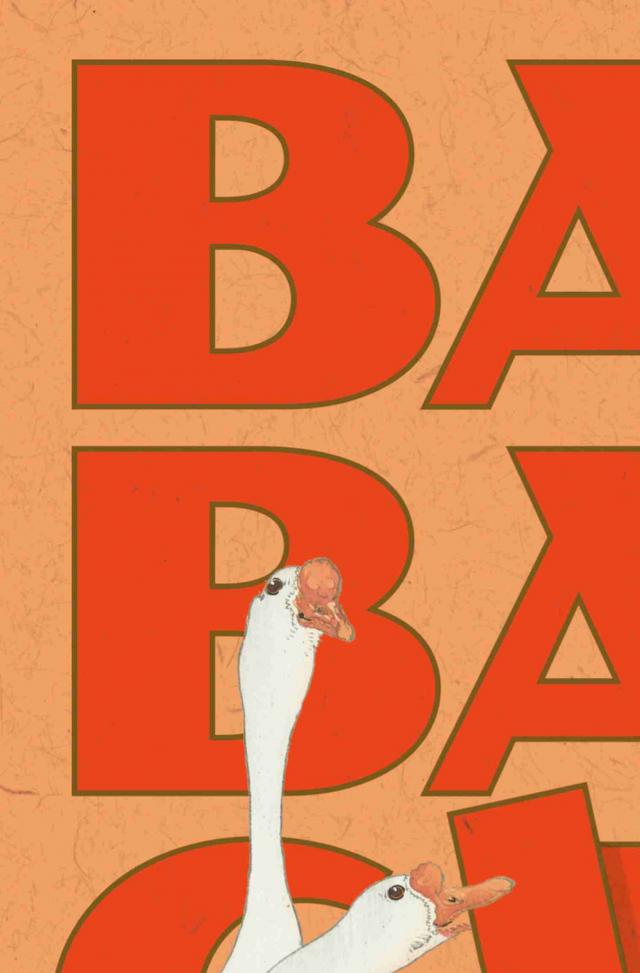
Cover image: Two Geese (detail) by Ohara Koson. Rijksmuseum, Amsterdam, The Netherlands/Bridgeman Images
Cover design by Linda Huang
penguinrandomhouse.com | aaknopf.com
The authorized representative in the EU for product safety and compliance is Penguin Random House Ireland, Morrison Chambers, 32 Nassau Street, Dublin D02 YH68, Ireland, https://eu-contact.penguin.ie.
ep_prh_7.3a_153546687_c0_r0
Contents
Dedication
Epigraph
Author’s Note
Part I
Chapter I
A Daughter
Chapter II
A Newcomer
Chapter III
A Wife and a Mother
Part II
Chapter IV
A Daughter
Chapter V
A Dance
Chapter VI
A Sutra and a Toast
A Note About the Romanization
Acknowledgments
A Note About the Author
_153546687_
To the memory of my mother
Agnes Jen née Loo Shu-hsin
1924–2020
How sad it is to be a woman!
Nothing on earth is held so cheap.
Boys stand leaning at the door
Like Gods fallen out of Heaven.
Their hearts brave the Four Oceans,
The wind and dust of a thousand miles.
No one is glad when a girl is born:
By her the family sets no store.
—Fu Xuan, “Woman”
(c. third century CE, translated by Arthur Waley)
Author’s Note
“You never wrote about your mother.” It could be a pat on the back—a way of saying that you wrote from your imagination and were not a navel-gazer. It could be a way of saying that you did not keep company with what Nathaniel Hawthorne called “the damned mob of scribbling women”—that you were not a writer of what V. S. Naipaul dubbed “feminine tosh” with a “narrow view of the world.”
But “You never wrote about your mother” could also be an observation, followed by a pause and a tilt of the head, and then the question: Why is that? A question that could be asked of me now that I have written enough books that the word “never” might be used. Nine books, and you never wrote about your mother, someone might say—going on to prod, So is it perhaps time to think about it now, with your tenth? And: Do you really want to realize one day that you never did write about a relationship—perhaps the relationship—that stood at the center of your life?
The conventional wisdom is that mothers want their daughters to show interest in them—that they want their daughters to ask about their lives and listen to their stories. (Full disclosure: it’s true of me.) But those mothers were not my mother. I asked my mother about her life many times, without success. I offered many times, too, to write down whatever she had to say and give it back to her to revise or discard. Don’t you want your grandchildren and great-grandchildren to know that you came from China, and what that meant? I’d ask. They might not speak a word of Chinese. They might not eat Chinese food. They might not even really know where China is. Don’t you want them to understand what a distance you crossed and appreciate all you did to establish the family here? She never took me up on my offer, though. Only once, when she was ninety-two, did she relent enough to let me interview her. And she did say a few things then. But she was not anxious to be known.
There were many reasons for this. One was that she’d lived through much trauma. Who wanted to revisit the Battle of Shanghai, or the Japanese occupation, or the privations of immigration? If she wanted to leave the past behind her, who could blame her? Another reason was that women of her background simply do not have the autobiographical impulse we in the West tend to assume is universal. Her story was not of paramount importance to her; and to her way of thinking, to be seen was to be judged. It was always better to say nothing.
And perhaps, I think today, there was a third reason—namely a concern that if I had anything to do with its telling, our relationship would enter the story. Ironically, had she told her story herself, she could have kept our relationship out of it. But since she didn’t, here it is now, a book in which I figure, too, and whose writing she would have adamantly opposed. I can hear her berating me from the grave: “Bad bad girl!” As for the possibility that I would write a book that sought to understand her—that portrayed her honestly but compassionately, and that ultimately forgave her—she would never have conceived of such a thing. Still, I have sought to do just that, as I had to. I suppose I could not have faced the observation “You never wrote about your mother” knowing that I simply lacked the maturity and courage to do so. This was especially true after she died during Covid. I did not see how I could go on calling myself a writer had I not at least tried.
I began this book as a memoir, and it probably would have stayed a memoir had I had more access to my mother’s life. But because she left so little record of herself—some letters, account books, logs, and day planners, but nothing more—I had to imagine a great deal; and as I am a novelist, many things happened as I did. Characters appeared; events shifted; an arc materialized; the narrative made demands. I have stayed as true as I could to the facts of my mother’s life as I knew them, and my goal—to convey, as honestly as possible, our troubled relationship—remained the same throughout. Still, reader, do not be confused: this is reality transmuted. It tells a forged truth. Even from beyond the grave, my mother, as you will hear, objects to many of the liberties I take. At the same time, I like to think she would finally agree both that this book is a novel and that there might be some truth to it.
Part I
Chapter I
A Daughter
My mother had died, but still I heard her voice.
Your grandmother was a Suzhou beauty, she says. Do you know where is Suzhou?
Of course, I say. West of Shanghai.
For I do know: Suzhou is where the classic Chinese gardens are—the Humble Administrator’s Garden. The Lingering Garden. The Garden of the Master of the Fishing Nets. West of Shanghai is the correct answer. But my mother does not say so. She is the same now as she was when she was alive—a master of the art of withholding.
Your grandmother was a Suzhou beauty, my mother says again. She spoke Suzhou dialect, Chinese people say it is like singing. And she was tall and thin. By the standards of 1920s Shanghai, of course.
Meaning thin but maybe not so tall, I think. As was my mother in her youth, too, although I mostly picture her in her late-life, big-bellied stage, when she had the bulbous shape of a snake that has swallowed a large animal. Her stomach was so perfectly spherical that had she not been in her nineties, you might have thought her pregnant, and indeed it was likely the result of her five children, the second of whom was me.
But, whatever.
Go on, I say.
All my life, after all, I have wanted to know how our relationship went wrong—how I became her nemesis, her bête noire, her lightning rod, a scapegoat.
You look like her, she says. Only not so tall, not so thin, not so beautiful.
Oh, I laugh. Now, this is the mother I remember, tactful as a sledgehammer. You are too k
When I see you, I see her, she says.
Oh, no. Your mother? I say. Because of all the possible misfortunes of birth, to remind your mother of a mother who had rejected her is surely one of the worst—as well as, it seems, a great unmentionable. For what does she immediately say but: Bad bad girl! You don’t know how to talk!
Well, she wasn’t exactly the mother of your heart, was she? I say. That was your nursemaid, the one you called “Nǎi-mā”—milk mother—right? The one who was sent away.
She neither agrees nor disagrees. But then she repeats, Nai-ma. And as dead as she is, she begins to cry.
* * *
—
My grandmother was twenty-two and my grandfather forty-eight when they married, and for all I know, he was a ringer for James Bond. But in the only picture I have of him, he is short and rotund. He is wearing a padded Chinese gown; his arms splay in a way that might put one in mind of a penguin. And then there are his porthole glasses, thick and black as Mr. Magoo’s. Actually, he was a crack Chinese banker up to whose porte-cochere chauffeured cars would roll, their shiny doors opening to reveal the gigantic shoes of foreigners. At one point, he saved China’s rural banks from collapse by convincing the Shanghai to back them—or so the family story goes, at least—holding the meeting at his house because his was the only driveway big enough to handle so many cars. My aunt remembers coming downstairs and asking what was going on. To which my grandmother answered, Baba has just saved banking in China. But in the photograph, he mostly looks earthquake-proof—as if, were there to be a big one, he would be the last to topple.
His first wife having died—“of natural causes,” my mother always said, as if we might suspect foul play—my grandfather needed to replace her. He had had two children by that first wife, after all. Someone had to take charge of them. And so: enter a matchmaker with a photo of my grandmother the Suzhou beauty.
My father would boom, “Hello, hello!” to the foreigners as they filled up the garden, my mother says now. It was the only English he knew. And so it was always “Hello, hello!”
What about your mother? What did she say? I ask.
My mother was always sort of like in the background, she says. You do not see her too much; she does not have too much to say.
People said she never even laughed out loud. Is that true?
She was a real lady. Very proper.
She had self-control, you mean.
That’s right! Not like you, always talking, she says. Too much to say.
Proper though she might have been, my grandmother did smoke opium. She was not an addict. She was a social smoker, as most society women were—a smoker of expensive Persian opium, beautifully prepared for her and her friends by an opium sous-chef. Never mind the price, opium was so good for cramps, they agreed, and oh! How bright the opium-smoker’s world, how bright and sharp and glorious! It was all the world should be, a world in which a woman might make demands—demands! can you imagine?—and even laugh out loud, keeping a hand over her mouth as a giggle bubbled up through her fingers.
Another world, indeed.
My grandmother could not read, but she was hardly alone. Never mind most women, most people in China couldn’t read, not even in modern Shanghai. What with its neon lights and dance clubs and exciting crossroads style—its hǎipài, as people called it—Shanghai was known as “the Paris of the East.” But alongside its cars and trams and double-decker buses rolled ox-drawn carts and rickshaws and wheelbarrows. The British racecourse boasted the largest grandstand in the world; its clubhouse featured so much teak and marble, it could have been a land-bound Titanic. But cheek by jowl with its splendors sprawled the sort of shantytowns for which words like “destitute” and “squalid” were coined. Many of the shanties did not even boast bamboo-pole walls; many were straw-mat lean-tos. This “Paris” was no Paris.
Even rickshaw pullers mobbed the schools and libraries that had been opened for them, though. Everyone hungered for an education, and my grandmother was no exception. Having taught herself a few characters, she had a newspaper delivered, so that she could practice. Then it was two papers, and then three. She went to the storytelling theaters as well, listening raptly as scenes from The Dream of the Red Chamber were read and performed—how she loved them. The poetry! The romance! No middle-aged widowers in that story. Instead, there was true love, enduring love, in a garden outside society. Was this what novels were? They were like opium fantasies.
In real life, meanwhile, she dutifully produced five children, one every two and a half years, as if meeting the terms of a contract. My mother was the first and a disappointment.
I should have been a boy, she explains now. I should have been a number one son.
Because? I say.
Because that’s how Chinese people think, she says. The number one son carries on the family line.
And only boys carry it on, so what use is a girl? Except to bear sons?
If my mother did not have a son, there would be a new wife soon, my mother says.
* * *
As for the good news: at least my mother lived to feel everyone’s disappointment. In the China of her childhood, after all, families like my father’s, with five boys and no girls, were hardly unknown.
Why didn’t Dad have any sisters? I ask now. Do you think they were drowned?
Bad bad girl! You don’t know how to talk! she says. But then she says, Families in Shanghai did not do such things.
How about in Yixing? I ask—Yixing having been my father’s hometown, a prosperous lake town a bit west of both Shanghai and Suzhou.
She does not answer.
* * *
In any event, everyone agreed: it was too bad she was a girl. And on top of it, when my grandmother threw my mother’s placenta into the Huangpu River, it floated far away. Shēng háizi bèi lǎo, people said—to have a child is to prepare for old age—but the placenta was an augury. My mother was destined to be raised and fed, only to drift away. Not only would she help carry on some other family’s line, she would be of no help to my grandmother as she aged, either. In short, she would be of no use at all.
And children were supposed to be of use, I say now.
Of course, says my mother.
They weren’t ends in themselves as they are here, at least theoretically.
I don’t know what you are talking, she says.
* * *
At least there would be other children to rely on, and at least my grandmother would not have to raise any of them. That was what nursemaids were for.
* * *
—
My mother loved her nursemaid. Nai-ma nursed her and slept with her; Nai-ma was always there to dress her and pick her up and carry her around on her back. Nai-ma laughed and teased; she tickled my mother and chased her. She was lively and naughty—what my mother would later call “mis-cheevous”—a girl herself, in truth, who had been fired from her last job, although no one knew that but my mother. For stealing, Nai-ma once said (talking to herself, really; my mother was just a baby), which she did not do anymore, she said. She had learned her lesson. And anyway, it was such a small thing she took, just a pin—a tiny phoenix made of kingfisher feathers. She took it out and showed it to my mother and pinned it on her. Its feathers were blue and iridescent, like a glimpse of bright sky in a rain puddle; it had a beady red eye. The mistress who had owned it never wore it because the tip of one of its wings was bent. But Nai-ma had felt sorry for it—an abandoned thing no one wanted until it was gone. Then suddenly it was important! Suddenly it was valuable! My mother laughed to hear the story, if only because of the face Nai-ma made—her eyes opened wide, and her mouth, too, with its chipped front tooth.
Nai-ma was soft and lopsided and good-natured. When my mother was very little, Nai-ma let her play with her mouth, opening it wide and putting her fingers inside to feel her chipped tooth, and whenever she wanted to nurse, Nai-ma would untie her tunic and let her nurse. Of course, that was her job. But when it was time to wean my mother, that was her job, too, yet somehow she could not do it.


