

In Search of Fatima, page 1


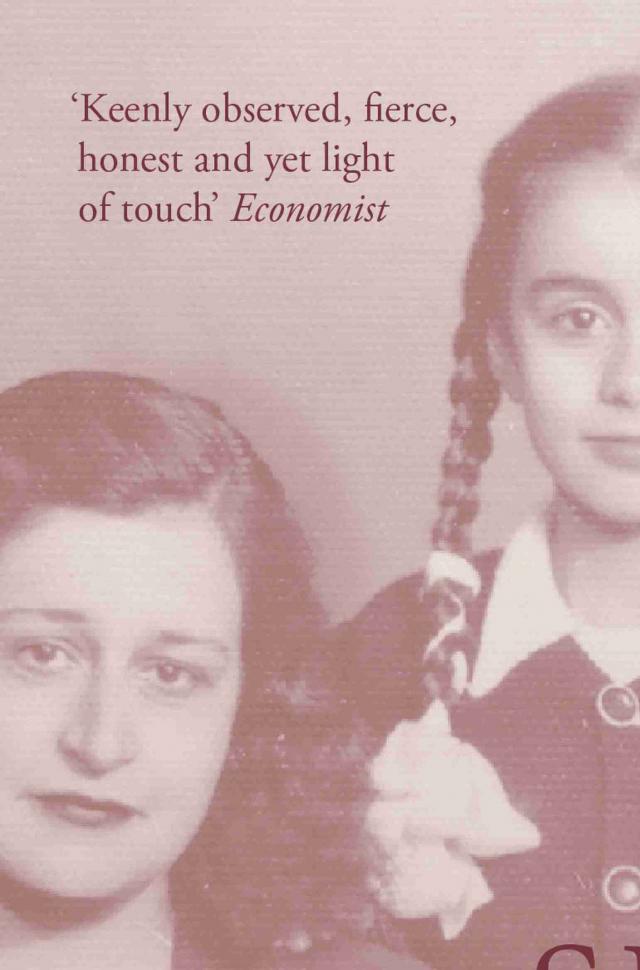
“Ghada Karmi’s stunning memoir is remarkable. Extraordinarily well-written, it is the amazingly honest story of a Palestinian woman of exceptional self-awareness. Hers is a story of exile and displacement… rich in detail and human experience. Karmi is excellent on the quality of family and even communal life in Mandatory Palestine … she also has a wonderfully subtle way of showing how in thousands of different ways the political and the personal intermesh, and this she does with a skill and insight that could be a novelist’s envy.” Edward W. Said
“One of the finest, most eloquent and painfully honest memoirs of the Palestinian exile and displacement, which western power and its creature, Israel, have normalised.” New Statesman
“Ghada Karmi writes simply and poignantly. Hers is a story of our time, about exile and dispossession, and how she has come to be neither British nor quite Arab.” Jewish Chronicle
“A very timely book in the current political situation … This should serve to remind people just what the big fuss in the Middle East is all about.” Ahdaf Soueif, Times Literary Supplement
“… an engrossing and remarkably frank account …” MultiCultural Review
IN SEARCH OF FATIMA
A Palestinian Story
Ghada Karmi
This edition published by Verso 2024
First published by Verso 2002
© Ghada Karmi 2002, 2009, 2024
All rights reserved
All illustrations in this book are reproduced courtesy of the author,
except as specified otherwise. Every effort has been made to obtain
permission to use copyright material; should there be any omissions
in this respect we apologise and will be pleased to make the
appropriate acknowledgements in any future edition of the work.
The moral rights of the author have been asserted
1 3 5 7 9 10 8 6 4 2
Verso
UK: 6 Meard Street, London W1F 0EG
US: 388 Atlantic Avenue, Brooklyn, NY 11217
www.versobooks.com
Verso is the imprint of New Left Books
ISBN-13: 978-1-80429-709-4
ISBN-13: 978-1-78960-482-5 (US EBK)
ISBN-13: 978-1-78960-483-2 (UK EBK)
British Library Cataloguing in Publication Data
A catalogue record for this book is available from the British Library
Library of Congress Cataloging-in-Publication Data
A catalog record for this book is available from the Library of Congress
In memory of my mother
and for
her grand-daughter Lalla Salma
Contents
Acknowledgements
Author’s Note
Introduction
Prologue
Part One
PALESTINE
Part Two
ENGLAND
Part Three
IN SEARCH OF FATIMA
Epilogue
Notes
Acknowledgements
This book could not have been written without the generous help of my family, whose memories of events before 1948 were indispensable. I wish especially to commend in this respect my father and my sister Siham, but also my brother Ziyad and my cousins Zuhair and Aziza Karmi. I am also grateful to the late Mrs Leila Mantoura and members of her family. Many others, both inside and outside the family, helped also with their reminiscences of particular events and I am grateful to all of them. Any errors of fact or omission are entirely mine.
I am grateful to Iradj Bagherzade and Adel Kamal for their highly professional and painstaking editing of the manuscript. My thanks are due also to Jane Hindle and everyone at Verso Press for making the book become a reality. I owe a special debt of gratitude to Tariq Ali, whose initial interest and enthusiasm for the book set the ball rolling.
Critical and editorial work on the manuscript, which helped me in innumerable ways, was offered with unstinting generosity by several people to whom I owe special thanks: Karen Armstrong, George Joffe and Tim Llewellyn, whose help was invaluable in the later stages of the book. Many others encouraged and sustained me through the difficulties of writing this memoir with practical advice and useful suggestions: Gill Emberson, Cleeve and Barbara Mathews; Trevor Mostyn, Julia Hamilton, Alexandra Campbell, Selina Mills, Shelby Tucker, and other members of our reading group. Mrs Maureen Elliott gave me considerable self-confidence in the early stages and I am grateful to her and also to Amy Henderson who did much the same later on.
I am especially appreciative of the efforts of Hisham el Solh, Sami Alami and Bassam Aburdene in supporting the project and for their faith in me. I would also like to thank Adel Kamal and Said Aburish for their encouragement and help.
Edward Said has a special place in the genesis of this book for his marvellously inspiring support and friendship.
Last but not least, I owe enormous gratitude to my daughter, Salma, whose youthful enthusiasm and excitement about the book kept me going through many times of despondency and frustration.
Author’s Note
Most of the people who feature in this memoir are known by their authentic names. In a few instances, however, to avoid professional or personal embarrassment, I have thought it best to alter the names.
Introduction
Ten years have passed since the events that conclude In Search of Fatima. The book ends in 1998, the year of Israel’s fiftieth anniversary and, concomitantly, the fiftieth of Palestine’s destruction. I remember how, at the time, an eager reporter from a local London radio station phoned on behalf of a Jewish programme to ask for a comment on Israel’s anniversary celebrations. “Isn’t it great!” she exclaimed. “Would you like to congratulate Israel for our programme?” Bemused that she should ask me, of all people, for an endorsement of Israel’s “achievement”, I cast about in my mind for something suitable. “Yes, certainly,” I replied. “I would indeed like to congratulate Israel – for getting away with it for so long, like I might admire Al Capone or the Great Train Robbers!” I don’t know what she made of this. I doubt that she ever used those words for her programme.
Looking back over the intervening years, I realize I had imagined that something would happen to improve the dismal reality of Palestinian life, blighted since 1948. I had little hope that the “peace process” between Israel and the Palestinian leadership, interminably and futilely pursued, would succeed. But there was still a feeling that things had to change, and that one day, perhaps soon, through some magical, unexpected event, this sad conflict would be resolved. In 1998, the Oslo Accords were just five years old. Many Palestinians still hoped for a positive outcome: for the recognition of a Palestinian state on the parts of the old Palestine that still remained. The international community encouraged them in this belief. Numerous organisations and aid agencies swarmed over the West Bank and Gaza in those years, helping to create the institutions of the putative state. People spoke of “Palestine” not as a sad, lost place of the past, but as a coming reality, a new beginning and the first step towards regaining the whole of the homeland. Sceptical of the Oslo Accords as I had been, even I could not help but warm to the enthusiasm of fellow Palestinians and the preliminary signs of statehood that made them so proud.
But as it turned out, it was a cruel deception. I have often wondered if the Western states that rushed so enthusiastically to prepare the people of the occupied territories for statehood knew in advance how empty their promises were, or whether they too were duped. Today, the Palestinian state is further beyond reach than ever. The Oslo Agreement is dead. The land that could have formed the Palestinian state is all but consumed by Israel’s growing settlements. In 2000 the second Intifada erupted, an expression of Palestinian rage and disappointment at the reversal in their hopes. Israel’s suppression of Palestinian resistance in all its forms has been the norm since then. After Israel withdrew its Gaza settlements in 2005, it turned Gaza into a prison and the focus of repeated attacks, sieges and blockades.
Similar Israeli tactics had rendered the West Bank a largely passive and quiescent entity, but Gaza remained the last outpost of resistance. For this, the region and its residents were ferociously punished at the end of 2008 and beginning of 2009 in an assault that left 1,400 Gazans dead and thousands wounded. Israel ruined the Palestinian infrastructure, destroyed homes and spread a blanket of devastation. Who knew when, if ever, Gaza’s people would recover from this onslaught? Or how the complicated mess that had been made of their lives would be resolved?
When I wrote In Search of Fatima, I wanted to present this situation in a human, accessible form, in order to get away from the political treatises, research studies, economic analyses and dry histories which have become the norm for conveying the Palestinian experience. Such writings could never have expressed that other world of Palestinian feelings, personal stories, thoughts and aspirations. If people could understand Palastinians as human beings with names and life histories, rather than in terms of collectives such as “Arab refugees”, “extremists” or Islamic “terrorists”, they would begin to empathise with individuals caught within this most tragic of stories. I had grown up in a country, Britain, where the Jewish history of European persecution and the Holocaust was familiar to every schoolchild. It had not reached them through the medium of academic tracts and arid statistics, but through literature, memoir, film and stage play. So, too, I reasoned, must the Palestinian narrative be presented, if only because it is a consequence of the Nazi Holocaust, its sequel, and
the last chapter in a catastrophe that started far away from Middle Eastern shores. In that sense, the Palestinian story is inseparable from the Jewish one; it is its natural and poignant heir.
Since this book’s first publication in 2002, it has been touching and gratifying to see how many readers responded precisely in the way that I had hoped. Hundreds wrote to say how it affected them or resonated with their own experiences. Though I had aimed the book at a Western and, more specifically, an English-speaking readership, I was surprised by the number of non-Western readers who were touched by it. Among these were other Muslims, who found in it an echo of their or their children’s experiences growing up in a Western society. Many young Palestinians too identified with the book’s narrative, and found it a source of knowledge about a historical period, before 1948 and the creation of Israel, they had known little about. But probably the most striking were the Jewish readers, who empathised with a tale of unbelonging and the search for home. The great American intellectual Noam Chomsky saw a parallel to his own Orthodox Jewish family in America. He wrote to me about this in 2002, jut after the book was published: “The account of your family and life in London … awakens many memories. You should have seen how my mother reacted to the marriage of her first son (me), and I was marrying ‘a nice Jewish girl’ … If it had been an Arab – words fail me. Or my grandfather who lived in Baltimore for 60 years and never learned a word of English, or, I suspected, even knew he was in the US.’
Since the book was first issued, many giants of modern Palestinian history, impossible to replace, have died. What a loss for a people in need of heroes. In 2003, Edward Said, the prominent intellectual and a personal friend who endorsed this book, passed away, followed, a year later, by Yasser Arafat, the embodiment of the Palestinian cause. In 2008 came two more great losses: the deaths of the influential radical thinker and activist George Habash, who had headed the Popular Front for the Liberation of Palestine since 1969; and the best known Palestinian poet and national figure, Mahmoud Darwish. A year before, in May 2007, I suffered a personal bereavement which accentuated all the others. My father, who was nearly 102 and whom I had begun to believe immortal, finally died, leaving a rich legacy of over ten English–Arabic dictionaries and hours of BBC recordings on Arabic literature.
These blows have only served to make me more determined than ever to preserve and document the Palestinian story, to save it from extinction, and to redeem the memories of those who suffered and died without seeing a solution. Palestine is not just a country or a name, it is an idea, an aspiration, and a symbol for everyone who has lost and longed for restitution and recompense.
In Search of Fatima is a testament to that hope.
Ghada Karmi
London, March 2009
Prologue
April 1948
A mighty crash that shook the house. Something – a bomb, a mortar, a weapons’ store? – exploded with a deafening bang. The little girl could feel it right inside her head. She put her hands to her ears and automatically got down onto the cold tiled floor of their liwan with the rest, as they had learned to do. Shootings, the bullets whistling around the windows and ricocheting against the walls of the empty houses opposite, followed immediately.
“Hurry up! Hurry up!” The danger in the air was palpable.
The taxi stood waiting outside, its doors open, to take them away to where she did not want to go. The little girl wanted to stay right here at home with Rex and Fatima, playing in the garden, jumping over the fence into the Muscovite’s house next door, seeing her friends return, even restarting school, now closed since Christmas. Doing all the familiar things, which had made up the fabric of her young life. Not this madness. Not this abandoning of everything she knew and loved.
“Get into the car! Quickly!” A brief lull in the fighting. They must hurry, pack their two cases and the eight of them somehow into the taxi. The driver kept urging them to hurry. He was frightened and clearly anxious to get out of their perilous, bullet-ridden street. Rex could not come with them. He must stay behind. She held his furry body tightly against her and stroked his long soft ears. She wanted to say, “Please don’t worry. It’s only for a week. They said so. You’ll be fine and we’ll be back.”
But she knew somehow that it wasn’t true. Despite her parents’ assurances, a dread internal voice told her so.
“Ghada! Come on, come on, please!” Rex inside the iron garden gate, she outside. The house with its empty veranda shuttered and closed, secretive and already mysterious, as if they had never lived there and it had never been their home. The fruit trees in the garden stark against the early morning sky.
Every nerve and fibre of her being raged against her fate, the cruelty of leaving that she was powerless to avert. She put her palms up against the gate and Rex started barking and pushing at it, thinking she was coming in. Her mother dragged her away and pushed her into the back seat of the taxi onto Fatima’s lap. The rest got in and Muhammad banged the car doors shut. She twisted round, kneeling, to look out of the back window.
Another explosion. The taxi, which had seen better days, revved loudly and started to move off. But through the back window, a terrible sight which only she could see. Rex had somehow got out, was standing in the middle of the road. He was still and silent, staring after their retreating car, his tail stiff, his ears pointing forward.
With utter clarity, the little girl saw in that moment that he knew what she knew, that they would never meet again.
Part One
Palestine
One
On a cold autumnal day I stood with my mother, sister and brother in London airport. It was not then called Heathrow. “Oscar Wilde” were the only two English words I knew because one of the books in my father’s library had borne this title, and when I was seven, he taught me to read the English alphabet.
It was September 1949 and I was nine years old. I didn’t know exactly why we had come to London, or how long we would stay. In fact, I knew very little about anything. We were waiting for my father to meet us and I thought that that was why we had come, to see him again. The BOAC propeller plane we came on had taken all night to get us from Damascus to London and we had stopped in Malta on the way. Such new places, such new experiences for me who had hardly been anywhere before. The airport was a daunting place; it had immense halls with polished floors, vinyl and wood, which was the strangest sight of all. In Palestine, floors were tiled or made of stone. And there was such a crush of people, strangers pushing, rushing, jostling. Until then, I had never been anywhere in my life where I did not know any single person. Even when we went to the big souk in Damascus, which was the nearest thing to London airport that I had ever experienced, we had gone with the rest of the family and some of the neighbours as well. The people here looked different to the people I was used to. They were taller and bigger and had pale skins. The men didn’t have moustaches and I wondered why none of the women seemed to be pregnant; I could see no swollen bellies anywhere. Not like Palestine.
We had not seen our father for over a year, not since he had left us in Damascus in my grandfather’s house. I missed him terribly at first. Then I somehow began to forget about him. Everything was so strange in Damascus. It wasn’t where we normally lived, and we scarcely knew our grandparents, although my mother had been born and bred in Damascus. But I don’t think she was ever happy there and was glad to leave for Palestine when she married. “I never thought the day would come when I would be relieved to come back here,” she had said on our arrival in Damascus. “I don’t know what we would have done without my parents to turn to at this terrible time.”
And indeed it had been a terrible time, so terrible that I have blotted many of its most painful moments out of my consciousness. The troubles in Palestine started even before I was born, such that my childhood (and indeed that of my brother and sister, who were both older) was overshadowed by the great political events which were happening around us in Palestine and in the world beyond. For a long time, we did not understand their significance, nor why we, an obscure Middle Eastern people, and our country, an undeveloped, backward place, should have been chosen to play such an important role in the affairs of the world.


