Black Sun, page 36
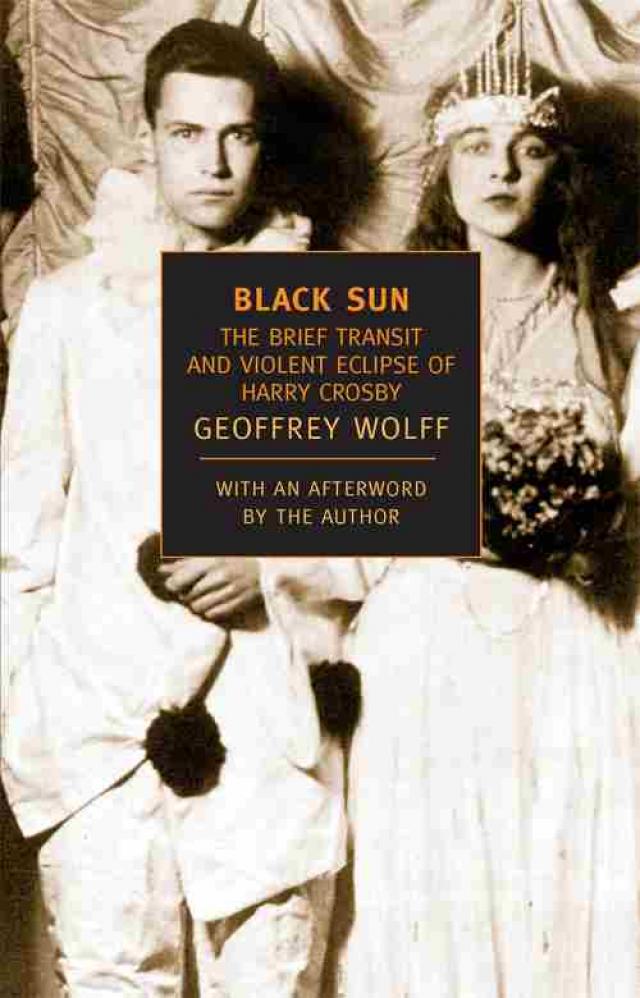


In his severe suits and black ties Harry cut a striking figure, but in no sense was he Carlyle’s definition of a dandy, “a clothes-wearing man.” In winter, people noticed his fur-lined greatcoat, an inheritance from Walter Berry, and his black boutonnière, and his gold belt with its gold buckle. But mostly they noticed his bare head, in its time such an extraordinary announcement of independence from convention that it inspired one of Harry’s last published works, “Bareheaded,” a single sentence of prose: “Hats are parasols, hats are against the Sun—we shall discard our hats we shall stand bareheaded on the top of the hill with the thunderbolt of the sun in our heads.”
All his mature life Harry had battled against the reluctance of people from his kind of background to betray their enthusiasms, and Harry had retained to some degree a hesitation to thrust himself forward, to compel attention and a reply from the world. But he said what he felt, and didn’t give a damn what people thought of him. Where matters of principle were concerned, he had raised candor to an aggressive pitch, refusing all compromise and temporization. He had become increasingly intolerant. His totem, he declared, was the wolf—lonely, hard, resourceful—and like the wolf, which resists domestication to the death, he said again and again that he was “never meant for a cage.”
He loathed communities, and was as ready to declare himself an anarchist as a royalist, because either (provided in the latter case that one was among the royalty) afforded the maximum of personal liberty. Nothing infuriated him more than censorship, whether of books or of morals. “I hate America damning this out and damning that out,” he wrote his mother. “Well there is only one thing in the world that I ‘damn out’ and that is Puritanism. If it came to a choice I would rather be a degenerate any day.”
How much Harry’s heart was in his mischief is not easy to know. Certainly he delighted in offending his countrymen, and his delight was often childishly perverse. One night the Crosbys and Powels caroused through the night in the sleeping car of a train, finally provoking an outraged note from someone in a neighboring compartment: “If you have any consideration for anyone but yourselves—please be quiet. You are the type of Americans one is thoroughly ashamed of.” The note was pasted, in a place of pride, on a full page of one of the Crosbys’ gold-embossed leather scrapbooks. He dropped water bombs from hotel balconies, and deflated the pompous by mocking them. Many people thought him an eccentric little boy; as a friend said, “There’s that Harry again.”
And like a little boy, he was full of good resolutions. Now he would resolve to eat a hearty breakfast of toast and cream of shredded wheat, following systematic exercises, a cold bath and a rubdown. The next day he would resolve to abjure from the use of certain words: beautiful, wonderful, marvelous, rather, terrific ... On his thirtieth birthday, he wrote his mother that for a good many years he had regretted having been born, and that till recently he had believed that she and Stephen Crosby “owed me much for putting me into a world of dreadful night,” but that now he was reconciled to life, was grateful to them for having given him its gift, and that he had drawn up ten laws for the government of his remaining days:
I To read four chapters of the Bible every day for the rest of my life
II To read a book every week for the rest of my life
III To continue to practice Rites ... but to abolish superstitions
IV To never drink more than four drinks in any one period of twenty-four hours and to observe (the way SVRC does) one non-alcoholic month
V To be taciturn (best is to be silent rather than talkative)
VI To be unextravagant in everything except Books and Gifts for Caresse
VII To exercise every morning followed by a shave and a cold bath
VIII To be bright and delicate chaste and gentle with Caresse
IX To be an Ascetic rather than a Hedonist
X To worship with a chaste heart and soul and body the Sun
Within a week he had gambled extravagantly, drunk himself insensible, betrayed Caresse with two women, fought violently with her and forgone exercises. And within a month he had met Josephine and seduced her. With the passage of time his sun worship had grown curioser and curioser. He masturbated with the sun in sight and mind (“and tomorrow I will stand on the top of the hill with the rod of the Sun in my hand”), and called upon the sun to witness his graver acts, addressing it directly. He tricked himself out in a sun-worshiping cloak. He translated whole books of the Bible into a holy writ appropriate to his purposes, changing the names of God and the Holy Ghost to Sun. He declared again and again that he would labor to oblige his life to conform to a single narrow principle, the principle of the Sun, whatever it might be.
Harry had been struck by one of Paul Valéry’s pronouncements—that genius is a habit that can be acquired—and believed that he would acquire it from the sun. Valéry had also said, with an irony lost on Harry, that there were people abroad in the land who believed a metaphor to be a communication from heaven: “A metaphor is what occurs when one looks at things in a certain way, as getting dazzled is what occurs when one looks into a sun.” Harry had worked up a mystical system so complicated that it managed to resist all explication—or to license any. But its center lay within him, as he understood one day, reading Schopenhauer, who advised that the “center of gravity (for me the Sun) should fall entirely and absolutely within oneself.” As he gave away his books, so did he give away his ideas—and his choices—in a quixotic campaign of reduction. He sought “to reduce everything all literature to the word SUN but to do that the word SUN must be worth more than all the other words in the world. I believe this reduction is possible.”
His friends indulged him as they might someone with a fixation on cats or numerology. They added to his collection of exotica as they might send porcelain bunnies to an enthusiast of miniature animals. For Harry’s Christmas present in 1928 Mrs. Crosby selected a Solray ultra-violet sunshine machine—“a veritable Fountain of Sunlight,” in the words of the company’s prospectus. Stuart Kaiser fabricated an anagram from the letters of the names Harry and Caresse: Ra’s Rays Cheer. From Cuba Ernest Hemingway sent a clipping from the New York Times magazine of July 7, 1929, reporting on modern rites of sun worship:
Ra of the Egyptians and the cross-word puzzlers has become the god of débutantes and stenographers, bank clerks and the garment industry.... The cult in its purest form centers at Newport and Southampton, Coney Island and Long Beach.... Whatever the causes, the fact remains that the sun is definitely de riguer. It is the most fashionable of heavenly bodies.... The smartest girls come into town looking like figures molded in old Cordovan leather.... This new version of an old cult has its fanatics, its would-be martyrs, its metaphysicians who would make philosophic systems out of personal desires, and a new moral order out of the ancient human love of sun on bare skin.... It is told of the priests who sacrificed to the Mexican sun on the great pyramidal temples of Chichen Itza that, not content with giving up the outside of their bodies to be burned, they tore out their hearts, and offered them up, still beating, as a living sacrifice to the giver of life.... To the Dravidians of India the sun was as much of a malignant demon as it is to the man who tries to put a stiff collar around a sunburned neck....
Harry was not amused, and in truth, while his friends might wink while his back was turned, none dared laugh outright at him. The possibility of that sacrifice, that arrow into the sun, that thrust through the membrane of life into the messy source of life, that suicide, was too apparent. “I must strive for an unbroken consistency and unity of aim all my life,” Harry wrote in his journal, adding that “not failure but low aim is a crime.” He resolved not to miss the Decisive Moment. One day the sun appeared at his window while he was writing verse, and he said that he would pray to it later, when he was done. But it began to rain, and rained all day, and the sun was gone: “Must not delay ever as regards the Sun.” He was prompt thereafter and honored his self-appointments.
By late 1929, Harry had accumulated a formidable inventory of literary ambitions. He had plans for a novel, with dialogue “crisp and epigrammatic,” whose heroine’s life was to be “built upon the fact that once upon a time she had sold a bouquet of roses to the Queen of Roumania.” Even less promising was his ambition, as he wrote Caresse, to write about the medieval city of Carcassonne “along the same general lines as Irving employed in writing the Alhambra. You know what a love I have for all that is feudal and medieval and here at last I have found the greatness of those ancient times embodied....” He fiddled with his diary, intending to translate it into a cohesive autobiography, and perhaps to embellish it with fantasy. He planned to write a biography of Rimbaud. He considered a play based on Walter Berry’s life.
He wanted to write an essay about Polia Chentoff and her work, and to extend into a book-length monograph the essay on sun dials he had written for his mother. Initially he had wished his diaries to be repressed until after his death, but soon after the Black Sun Press published the first of them in a strictly limited edition, not for sale, he showed them to the English publisher Jonathan Cape, who expressed a willingness to publish them. (Stephen Crosby’s intercession following his son’s death sabotaged the agreement between Cape and Caresse for a posthumous selection from Shadows of the Sun.) He resolved to learn shorthand, the better to record the fragments of conversation he liked to copy into his notebooks following a night on the town. Caresse suggested, and Harry promised himself to pursue, a book composed of letters he had received from Alastair, MacLeish, Berry, Weeks, Constance Coolidge, Goops, Stephen Crosby, Henrietta Crosby—and the phantom Jacqueline, together with his imaginary replies to her. He planned to edit Blake’s proverbs, his own sun-thoughts, his own death-thoughts. In the latter part of 1929, he received the approval and attention of several American literary magazines: Blues, Pagany and Morada had all bought his poems. The American Caravan accepted a batch on December 11.
And he planned to buy an airplane, and embark on long cross-country flights, to fly like Icarus toward the sun, to fall like Icarus from the sky as from grace, like Icarus to plunge into legend. It did not occur to him, as it had earlier occurred to Breughel, and later to W. H. Auden, that Icarus had fallen unnoticed upon the unyielding crust of a busy world, and that his own return to Earth by gravity might make so small a splash. Such a fuss he hoped to make: “I want a long straight road into the Sun and a car with the cut out wide open speeding a mile a minute into the Sun with a princess by my side....”
The day before Harry, Caresse and Constance sailed for New York on the Mauretania, the Crosbys had some people to tea at 19 rue de Lille: Ambassador Joseph Grew, Alex and Sylvia Steinert, the Crouchers, Goops and a few others. The next afternoon, November 16, several of these, together with Eugene Jolas, saw them off with a party on the railway platform in Paris. As soon as they boarded at Cherbourg, a telegram was delivered to Harry. The message was terse—YES —but to him not cryptic. It was signed by the Sorceress. Three days later, sitting with Constance in the smoking room during a storm—both at sea and with Caresse, who was sulking in her stateroom, jealous of Constance—and reading Beating the Stock Market, he was brought another radiogram.
“I guess this must be from my girl in Boston,” he told Constance.
“Oh, Harry,” she said, “I do hope you aren’t going to get mixed up with that girl again. She’s married, and you aren’t really in love with her anyway.”
“I love three people,” he replied. “Caresse, you, and Josephine.”
The next day he wrote a long letter to the Sorceress and told Constance that the principal reason he loved Josephine was that she loved him, and that she passed his tests of devotion. The following day, he wrote out a holograph copy of Sleeping Together for Caresse, as a token of his love. And the day after, November 22, the Mauretania docked in New York, “City of Arabian Nights.”
The Crosbys took the Midnight Express to Boston—Aphelion, in Harry’s judgment, in contrast to the Perihelion of New York—and were given the best guest room, at the back of 95 Beacon Street, overlooking the Charles River. Everyone was determined to make a success of the visit, but it began to come unstuck almost immediately. Harry preferred the Chinese room. He wanted to smoke opium there, gazing at the wallpaper with its motif of flying cranes and water lilies, its screens, its black-lacquered Chippendale with gilt patterns. Harry’s parents bent to their son’s whim, but they refused to let him use the room’s old fireplace, or to permit Narcisse Noir to sleep on the bed.
The following day, Stephen Crosby’s temper blew, and there was a bitter lecture, with recriminations, in the library. The subject was money. Mrs. Crosby had sent Harry and Caresse innumerable gifts and checks, offered to buy her son land, to take her son’s family on holidays abroad or to bring them home. She had even insisted upon paying the school expenses of the Peabody children. Stephen Crosby had been at least equally lavish, now sending unbidden five hundred dollars, now a couple of thousand. During a trip to Paris in 1927, in a single day he had bought Harry shoes, socks, pajamas, a suit, an overcoat, a wine cellar, three paintings, a zebra skin and a polar bear rug. On the same day, he had also given his son and daughter-in-law a gift of cash, and had bought Caresse a dress. Still on the same day, he had fought with his son, who wrote his mother that Stephen Crosby “no more understands our mode of living than we his. But the fault I think is much more mine than his.[1] I have grown very temperamental and difficile.” Now and then their mutual affection would overcome their antipathies, and Harry would suffer remorse (“what a disappointing son I have been”), or his father would, and they would embrace, drink a glass of brandy together, smash the glass for good luck and promise to try harder. But they never managed to glue themselves back together for long.
One or the other of Harry’s parents were forever scolding him for his brutal invasions of the principal of his estate. He would cable home instructing his father to sell stock, which the senior Crosbys felt “wasn’t right”; they would lecture him, and sometimes he would apologize and sometimes not. In 1926 he responded with a telegram signed PENITENT, and the following year he admitted to his mother, “I am a very naughty boy I am afraid.” When Mr. Crosby received notice from the State Street Trust Company in the summer of 1928 that his son had twice overdrawn his account, he managed to contain his anger and pony up the amount of the overdrafts, almost a thousand dollars. Then, in January of 1929, Harry instructed him to sell four thousand dollars of stock “to make up for certain past extravagances in New York,” and he did so. And on July 19, 1929, after an expensive luncheon with the Sorceress, Harry cabled his father: PLEASE SELL TEN THOUSAND DOLLARS WORTH OF STOCK. WE HAVE DECIDED TO LEAD A MAD AND EXTRAVAGANT LIFE. Ten days later Harry received “three terrible letters from the family to damn us out for selling the stock with intimations that I need a guardian and that I am wicked and all gone to pieces and heaven knows what else.... there is only one action I can believe in and that is the action that leads me to eternity.”
Moreover, he said as much to his parents:
Dearest Ma and Pa
The cable saying you were shocked and terribly hurt at our selling stock was I suppose perfectly logical (it is so difficult to understand other people’s point of view) and I was afraid you would feel badly but everyone must must lead their own lives and what sometimes appears folly on the surface may be underneath wisdom.... Ma says she fears disaster “what is your life leading you to” I can say that it is arrowing me into the Finality and Fire of Sun by means of Catapults and Explosions Gold and Sorceresses and Tornados.... You feel it is wrong because I refuse to take the question of money seriously. If you really feel this way the simplest thing is to leave your money to Kitsa and to her children (as you already have done in a certain sense) who lead the lives you would have them lead.... If I wasted money gambling or sitting in bars drinking or entertaining chorus girls then I would be absolutely to blame but as it is I work and I am happy and living in the true sense of the word Alive Awake New Every Morning with the Arrow of my Soul pointing to Rá.... But I am really really sorry to feel that you both feel so hurt. I seem to have done so much in my life to make you unhappy but perhaps some day I shall have done a fine thing to make you happy.
What they wanted he couldn’t give. Henrietta Crosby had once asked for it plainly, in a letter to Caresse, looking forward to a trip with her and with Harry: “I think we can have a most interesting time if [Harry] will just agree to help me by being more or less like other people....” That wasn’t going to happen, and by November of 1929, a couple of weeks before his death, they had all recognized this. Mr. Crosby proclaimed endlessly that he had to think of what they think, here in Boston. Even in Paris, at the Four Arts Ball, he had to think of what they thought, back there in Boston. Harry didn’t give a damn about his father’s worries, or about bridge parties or buying and selling stock, his father’s loves. He had the hard intolerance of the very young, and age had not tempered him. Sometimes he was cruel, as when he wrote his mother that he believed there could “never be a real intimacy between the older and the younger generation. The wall is half sex half war.”
For their part, his parents had never learned to leave off lecturing their son about his clothes, about staying up too late, or about showing up five minutes late for lunch. They treated Harry, as unbending as a priest of sacrifice, like a school kid. Like his son, Stephen Crosby would turn sullen, dive into a black mood and then surface, ebullient, when he learned that Continental Can had risen a couple of points on the day’s market. Mrs. Crosby recognized her husband’s failings, and pleaded with Harry to be kind: “Dearest boy help Pa all you can he worries awfully ... but I guess it’s because he is tired and we are all getting older you know.” Not Harry. He wouldn’t grow older.