

Island Dreams, page 1


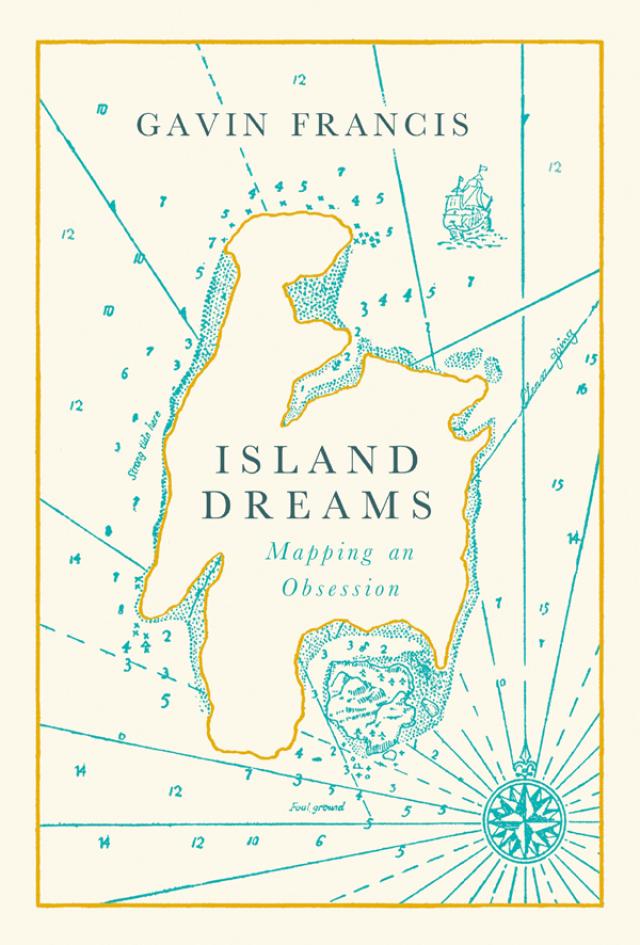
ISLAND DREAMS
ALSO BY GAVIN FRANCIS
True North: Travels in Arctic Europe
Empire Antarctica: Ice, Silence & Emperor Penguins
Adventures in Human Being
Shapeshifters: On Medicine & Human Change
ISLAND DREAMS
Mapping an Obsession
GAVIN FRANCIS
First published in Great Britain in 2020
by Canongate Books Ltd, 14 High Street, Edinburgh EH1 1TE
canongate.co.uk
This digital edition first published in 2020 by Canongate Books
Copyright © Gavin Francis, 2020
The right of Gavin Francis to be identified as the author of this work has been asserted by him in accordance with the Copyright, Designs and Patents Act 1988
Every effort has been made to trace copyright holders and obtain their permission for the use of copyright material. The publisher apologises for any errors or omissions and would be grateful if notified of any corrections that should be incorporated in future reprints or editions of this book.
British Library Cataloguing-in-Publication Data
A catalogue record for this book is available on request from the British Library
ISBN 978 1 78689 818 0
eISBN 978 1 78689 819 7
Typeset in Baskerville by Biblichor Ltd, Edinburgh
CONTENTS
Origins of an Obsession
Reverence, Transformation
Peace & Imprisonment
Books of Distant Islands
Island Retreats
The Fortunate Isles
Islands in the Sky
Gull Island
Treasure Islands
Towards Resolution
Island Dreams
Thanks
Notes on Sources
Maps & Illustrations
For my children.
I couldn’t have hoped for finer
anchors, sails, ballast.
ORIGINS of an OBSESSION
Unst
HITCH-HIKING NORTH THROUGH the islands of Shetland a Land Rover stopped for me. The driver was a man of about forty; he wore a gas-blue boiler suit and his beard was flecked with white. Where are you bound? he asked, with a voice like rust and sea-spray, an accent more Norse than Scots.
Unst, I said.
He told me that off the island of Unst, the northernmost of the Shetland Islands, a black-browed albatross had been seen – a species accustomed to the skerries of the sub-Antarctic. It must have crossed the equator in a storm, he said, and got disorientated. Took one look at Unst and thought, ‘That looks like home.’
I was in search of distant islands, in love with the idea that, on a patch of land, protected by a circumference of sea, the obligations and irritations of life would dissolve and a singular clarity of mind would descend. It proved more complicated than that.
Thinking of islands often returns me in memory to the municipal library I visited as a child. The library was one of the grandest buildings in town – entered directly from the street through heavy brass doors, each one tessellated in panes of glass thick as lenses. By age eight or nine I’d exhausted the children’s library and been given an adult borrower’s ticket. But as my mother browsed the shelves, often as not I’d sit down on the scratchy carpet tiles and open an immense atlas, running my fingers over distant and unreachable archipelagos as if reading Braille. I hardly dared hope I’d reach any of them; that I have reached a few is something of a relief. And so the love of islands has always, for me, been inextricable from the love of maps.
Cartographers know that to isolate and distil the features of a portion of the earth’s surface, in all its inexpressible complexity, is to exert power over it. To transfer that distillation onto paper is in some way to encompass it. But it could be said that maps offer only the illusion of understanding a landscape.
Encompass, from Latin en, meaning to make or put in, and compass, to surround, contain, envelop, enclose with steps (com-passare). Perhaps island maps, reined in by their coasts, offer a special case. They invite the viewer to indulge the imagination, pace a dreamed perimeter.
I’ve always found old maps intoxicating. In their wavering outlines, archaic scripts and obsolete navigational marks, they are palimpsests of the ways islands have been imagined over the centuries. In the famous world map in his atlas of 1570 Ortelius injected vast tracts of pure imagination, including a river of islands draining a mysterious southern continent.
By their omissions, all maps leave room for the imagination, and for dreams.
However beautiful, with their ships and dragons, those old maps were tools of empire and capital. Science is how capitalism knows the world, a friend remarks to me, and the distinctions and details these maps marked out were first of all for merchants and military expeditions. What was marked ‘Terra Incognita’ was also what remained unvanquished.
REBECCA SOLNIT
The twelfth-century Chinese scholar Zheng Qiao wrote of the benefits of mingling textual and pictorial descriptions of landscape: Images (tu) are the warp threads and the written words (shu) are the weft . . . To see the writing without the image is like hearing the voice without seeing the form; to see the image without the writing is like seeing a person but not hearing his words.
Lewis
A few months after my voyage to Shetland, while hitchhiking across the Hebridean island of Lewis, I met a French woman, nineteen years old, who’d received a government grant to travel around Scotland looking for fairies. She had pale blond hair like wisps of cirrostratus; archipelagos of freckles were dotted across her cheeks and nose. She told me she had little money left and often slept rough, painting pictures in exchange for meals – for paint she snapped open biro pens and mingled their contents with coffee.
The same day I met a buzz-cut banker from New York who had quit his job to spend three months cycling around the Hebrides, hauling his surfboard behind him on a trailer. He had already cancelled his flight back. I’d begun to doubt it was possible to feel this free, he said.
Encounters in Unst and in Lewis reinforced to me that my fascination with islands – my isle-o-philia – was far from unique. There seemed to be a connection between a certain kind of sparsely populated island, remote from urban centres, and dreams. Or perhaps it is that such islands have the power of concentrating dreamers.
The word isolate comes from the adoption into English of the Italian isolare: to make into an island. About two centuries ago a critic wrote disparagingly of this new tendency to coin words from mainland Europe rather than stick with English Latinate equivalents, such as insulate. We have here evasion for escape, one wrote, we have the unnecessary and foolish word isolate.
I read Judith Schalansky’s description of circling a man-high globe in Berlin, reading the names of every tiny piece of land marooned in the breadth of the oceans . . . as full of promise as those white patches beyond the lines indicating the horizon of the known world drawn on old maps, and thought of my own atlas-wanderings during the same years, cross-legged on the floor of a Scottish public library. On the blurb of Thurston Clarke’s Islomania I read that islands inspire feelings of great passion, serenity, and sometimes fear . . . they give people the opportunity to find themselves – or to lose their minds. At the time of making the journey to Shetland, and then to the Hebrides, my primary work was as a busy, metropolitan hospital doctor – an occupation noted for its frenetic demands, sleepless nights and hectic schedules of duty. I was in my mid-twenties; the life around and before me promised deepening connections to career, society, friends. Why isolate yourself? I’d think when, on being awarded a few days off, I stood again on a ferry, looking towards a blue horizon.
Between the attractions of isolation and of connection there was a tension that I didn’t particularly attempt, or hope, to resolve.
What are my hopes for readers of these observations on islands? That they may read of an island in words, and then again on a map – in contours, harbours, beaches and rivers? That they may take a journey through a few islands of my acquaintance, and invest those same islands with dreams of their own?
And what do I hope to accomplish for myself – the resolution of the tension between isolation and connection? An assessment of the value of isolation in an increasingly connected world? Mapping them has been like conducting a chess match against myself – each move a nudge towards mutual triumph, stalemate, or mutual defeat.
Unst turned out to be a practical, working island, with a subdued tourist economy. The islanders’ self-reliance was evident in the close correspondence between the surnames in the graveyard and those in the current phone directory: Petersson, Cluness, Ritch, Jamieson.
Muckle Flugga
Off the northern tip of the island, beyond the bird reserve of Herma Ness, were the islets of Muckle Flugga, the most northerly of the British Isles. Muckle Flugga, just a couple of hundred metres across, is famous for cliffs of breeding gannets where the albatross had felt so at home. Muckle means big in Old Norse, and Flugga connotes birds. Beyond it there was only Out Stack, a stubby pestle of stone ground smooth by the perpetual Atlantic swell.
Could it be that the love of islands is less a preference than a diagnosis? In his essay ‘Communicating and Not Communicating’, the psychoanalyst and paediatrician Donald Winnicott wrote: The boy and girl at puberty can be described in many ways, and one way concerns the adolescent as an isolate. This preservation of personal isolation is part of the search for identity. Winnicott goes on to propose that tee
I asked a psychoanalyst. Isolation, for the adolescent, is a motor to leave the family, he said. If a child is raised in a way that is too idealising of childhood, then he or she has reduced motivation to undertake the tasks of adolescence – to develop a sense of the body, of sex, of work, of skills and aptitudes, of disidentifying from parents.
This process can go too far, he added, and he began to speak to me of pathologies of the mind, of autistic and psychotic islands.
Now that smartphones can connect practically everyone, everywhere, it may be that the quality of isolation too has changed. To experience a hint of the thrill and the relief of being marooned, it’s enough to simply disconnect.
Isle of May
Through my own childhood and adolescence, family holidays were often to campsites on the Fife coast, where the estuary of the River Forth relaxes into the expansiveness of the North Sea. The Lothian side of the shore, where I now live, was visible on clear days along the southern horizon. This Fife coast was once home to Alexander Selkirk, a tanner’s son born in 1676, who became a navigator and privateer – a kind of state-sponsored pirate – and in 1704 was marooned on an island in the South Pacific. Rescue came after four years and four months. His story inspired Daniel Defoe to write the tale of Robinson Crusoe.
My brother and I slept on camp beds in a caravan’s curtainless awning – as I waited for sleep I’d count the firefly scintillation of lighthouses on the shorelines opposite. The nearest was the light on the Isle of May, part-way across the firth, which issued two white flashes every fifteen seconds.
One of the earliest lighthouses in northern Europe still stands on the May. It was a simple coal brazier atop a stone-built tower, first kindled in 1636. Selkirk would have sailed past it on his way to the high seas, and on his eventual return. I hoped one day to reach it.
As a boy I had a bowdlerised edition of The Swiss Family Robinson. The tale, written originally in German, is of a family shipwrecked on their way to Australia, forced to make an island life together, adopting Robinson Crusoe as a guide. The author was heavily influenced by the educational ideas of Rousseau. At the close of the family’s decade of isolation some members opted for a return to civilisation, while others stayed on in what, to my mind, seemed a paradise. As it still does.
Shiant Isles
At age twenty-one the writer Adam Nicolson inherited the Shiant Isles, a tiny archipelago between the Scottish mainland and the Hebridean island of Lewis. In his book about them, Sea Room, he wrote: Perhaps . . . the love of islands is a symptom of immaturity, a turning away from the complexities of the real world to a much simpler place, where choices are obvious and rewards straightforward. And perhaps that can be taken another step: is the whole Romantic episode, from Rousseau to Lawrence, a vastly enlarged and egotistical adolescence?
My work as a physician requires immersion in the complexities of human relationships. Few jobs are better suited to someone interested in what motivates and inspires human beings, and what connects them.
But through adolescence, medical school, and working as a doctor in speciality training, it began to dawn on me that I sought out islands to recalibrate my sense of what matters. Their absence of connection, their isolation, was therapeutic in a way I found difficult to articulate.
Treasure Island
When I first saw Muckle Flugga, like the albatross I too thought it looked like home. A lighthouse built in the nineteenth century by the famous Stevenson family clings limpet-like to its highest ridge. It is lapped on the west by the Atlantic, and on the east by the North Sea. During its construction it was visited by a son of the family, the young Robert Louis Stevenson (the lighthouse was completed in 1858), and a legend exists that his map of Treasure Island is based on the outline of Unst.
In my home town of Edinburgh I often pass the headquarters of the Northern Lighthouse Board, announced at eye level on a neat Georgian street by a polished brass plaque. The board’s insignia is a white minaret of a lighthouse on a background of Iznik blue, towering over a shallow bowl of white-topped Hokusai waves. The waves are saw-like, breaking over a serration of black rocks so neatly that it’s difficult, at first, to tell where the waves end and where the foundations of the lighthouse begin. Like Virginia Woolf’s, it is a stark tower on a bare rock.
In Salutem Omnium – ‘for the safety of all’ – is written in letters of gold on a banner draped around the tower’s lantern house.
Like a pilot who sleeps best by a runway, I sleep easiest within sight of the sea.
REVERENCE,
TRANSFORMATION
Unst
THAT FIRST TIME in Unst I camped on the northernmost bluff, surrounded by the burrows of puffins, my tent strobed through the short night by beams from Stevenson’s lighthouse. Cormorants on the rocks below lined up as if listening to the weather’s sermon. Puffins returning to their burrows fussed around my ankles. The horizon was shaded in subtle laminations as it stretched towards the Arctic Ocean, blue to deepest scarlet, and the cliffs were in bloom with little white trumpets of sea campion and purple rosettes of thrift. There were no other flowers: these two species seemed uniquely adapted to the asperities of the North Atlantic fringe.
Around 1,500 years ago an Irish monk known as Brendan explored the archipelagos north and west of the island of Britain – his oral account has survived in a Latin text dated to the ninth century, the Navigatio Sancti Brendani Abbatis. The Navigatio sees Brendan and his companions beaching their leather boat on an island carpeted in flowers of white and purple. White, the narrator informs us, represents innocence. Purple, on the other hand, with its undertones of papal, imperial and Byzantine authority, represents maturity.
Brendan’s island is host to a monastic community and its members dress in white or purple according to their age. Brendan names it the island of steadfast men. One of his companions decides to abandon their voyage and, with Brendan’s blessing, joins the monks.
Islands may be sought out as testing grounds for youth, as catalysts of transformation, as midwives to maturity. Helen Dunmore, in her essay on Woolf’s To the Lighthouse, writes: James, at six years old, hates his father as much as he loves his mother. Only a gash from a poker or a thrust from a knife into Mr Ramsay’s heart will ease James’s furious humiliation. James sustains his hatred for a decade, and, when the voyage to the lighthouse does at last take place, it seems that he will get his chance to lock antlers with his father.
Godrevy Island
Woolf’s fictional lighthouse was off the Isle of Skye, but was inspired by the light on Godrevy Island, just off the north coast of Cornwall, and within sight of the holiday house she frequented as a child. It’s in Cornwall that she may first have read Defoe’s Robinson Crusoe, of which she wrote: To dig, to bake, to plant, to build – how serious these simple occupations are. Hatchets, scissors, logs, axes – how beautiful these simple objects are.
Is this the value of islands, that they simplify?
In Letters from Iceland Louis MacNeice wrote of his gaiety at having come north, running away from what he saw as the south’s ‘cruel clocks’ and surfeit of books, cushions and yelling newsboys. In the monastic isolation of Iceland he hoped to achieve a measure of freedom from the ambushes of sex and the drive to retrieve significance from the river of passing people.
Retrieving significance from rivers of passing people is a fair summary of the satisfactions of medical practice. William Carlos Williams wrote of his pleasure in being intimately connected to the lives of others through doctoring. Was I not interested in man? he wrote. There the thing was, right in front of me.


