

Secondhand Sunsets, page 1


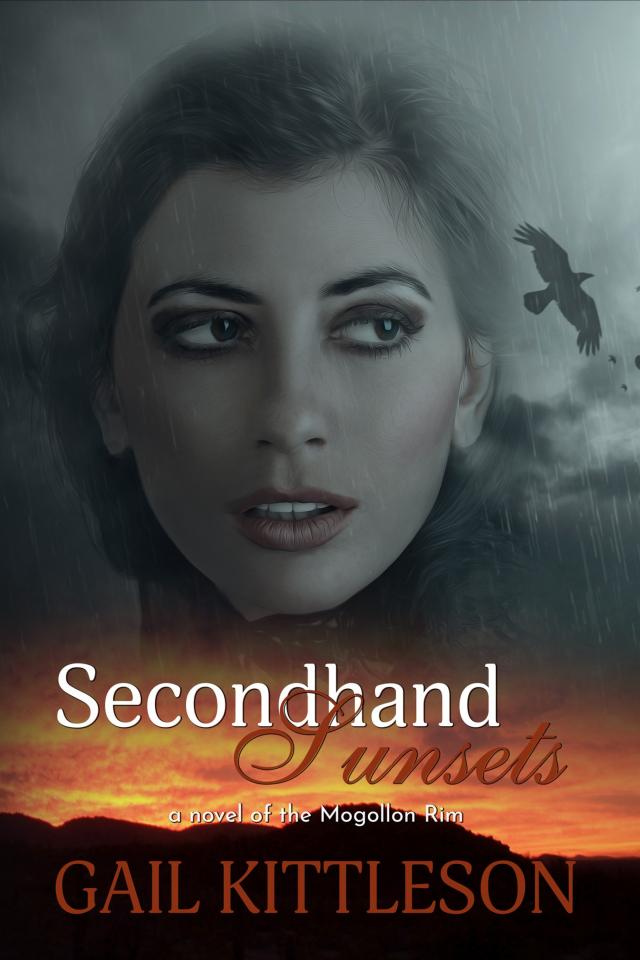
Secondhand Sunsets
Praise for Women of the Heartland
This extraordinary story classically captures the mindset of the 1940s. Addie and her friend Kate reflect the voices women hear as they face confusing dilemmas 75 years later—my first read kept me up into the wee hours. I will refer my readers to In Times Like These!
Patricia Evans, author of
The Verbally Abusive Relationship,
Controlling People,
and other books listed at www.VerbalAbuse.com
Wartime brings out the best and the worst in people. I loved the way Addie and Kate, each in her own way, dug down inside to become more than either had ever dreamed. With Each New Dawn will inspire you toward resilience and personal growth even as it keeps you riveted with each page turn.
Sonia C. Solomonson, freelance writer and life coach
Way2Grow Coaching
Gail Kittleson introduces us to a small town community, under the strains of World War II. The everyday lives of the town folks unfolding their thoughts and concern for the husbands and brothers fighting for their country. The family and friends dynamics in this story keeps the reader wanting to turn page after page. The author knows how to keep the reader engaged. Looking forward to Ms. Kittleson’s next book.
K Currie
The pages almost turned themselves. Great period piece exploring family dynamics and interpersonal relationships as well as the growth of self-esteem and the importance of friendship.
Lisa Lickel
Kittleson’s writing style fosters instant empathy as her quiet heroine, Addie, struggles through daily living in Iowa during WW2. Readers are introduced to Addie through patriotism, friendship, and self-realization. “I’ve spent my whole life in fear instead of living each day,” highlights Addie’s growth in overcoming an emotionally abusive husband. Highest recommendation.
Carolyn Cobb
Kittleson deftly writes strong female characters facing heartbreaking tragedies. Until Then features two: Marian, caught in the Blitz, and Dorothy, a surgical nurse whose work with the 11th Evacuation Hospital has taken her to North Africa, through Sicily and into France. Their stories intertwine in a narrative that touches then heals the soul. Highly, highly recommended!
Literary Soirée
In Times Like These clearly portrays the difficulties for women during WW2. First, there are the challenges of raising food, preserving it, making money stretch, wisely using ration cards and just plain living in fear of the war. But then the overlay of Addie’s controlling husband made me instantly empathize with the main character. His verbally abusive and cold treatment of Addie unfortunately is not just a problem from another era. God’s provision for her was intriguing. The value of faith, friendship and compassion are evident in this book. I personally enjoyed the food tips and recipes, as well as vivid descriptions of farm life. This may be my favorite book by Gail Kittleson. It is the first in the series, Women of the Heartland. Be sure to read the books in order.
Cleo Lampos, co-author of
The Food that Held the World Together
A World War 2 Holiday Scrapbook
Also by Gail Kittleson
Women of the Heartland Series
With Each New Dawn
A Purpose True
All for the Cause
Until Then
&
Kiss Me Once Again
and
In This Together
Catching Up With Daylight
Secondhand
Sunsets
a novel of the Mogollon Rim
gail kittleson
Secondhand Sunsets, although a work of fiction, is based on actual events. The author has endeavored to be respectful to all persons, places, and events presented in this novel, and attempted to be as accurate as possible. Still, this is a novel, and all references to persons, places and events are fictitious or used fictitiously.
Secondhand Sunsets
Copyright © 2021
Gail Kittleson
Cover concept and design by Mike Parker.
All rights reserved. No part of this book may be reproduced, stored in a retrieval system, or transmitted in any form or by any means—electronic, mechanical, photocopy, recording or otherwise—without the prior written permission of the publisher. The only exception is brief quotations for review purposes.
Published by WordCrafts Press
Cody, Wyoming 82414
www.wordcrafts.net
Dedication
To M, who first introduced us to Mogollon Rim Country.
Contents
Prologue
Chapter One
Chapter Two
Chapter Three
Chapter Four
Chapter Five
Chapter Six
Chapter Seven
Chapter Eight
Chapter Nine
Chapter Ten
Chapter Eleven
Chapter Twelve
Chapter Thirteen
Chapter Fourteen
Chapter Fifteen
Chapter Sixteen
Chapter Seventeen
Chapter Eighteen
Chapter Nineteen
Chapter Twenty
Chapter Twenty-one
Chapter Twenty-two
Chapter Twenty-three
Chapter Twenty-four
Chapter Twenty-five
Chapter Twenty-six
Chapter Twenty-seven
Chapter Twenty-eight
Chapter Twenty-nine
Chapter Thirty
Chapter Thirty-one
Chapter Thirty-two
Chapter Thirty-three
Chapter Thirty-four
Epilogue
Thanks
About the Author
Prologue
The 1846 Albert Speyer Expedition to Mexico included Dr. Adolph Wislizenus, whose report, A Memoir of a Tour to Northern Mexico (Washington, Tippin and Streeter, 1846), was also published by the 30th Congress, First Session as Senate Misc. Doc. No. 26.
Previously, Dr. Wislizenus had toured the Northwest and published A Journey to the Rocky Mountains. He prophesied the long-range effect of expansion into the wilderness:
“…the few fierce tribes who may have maintained themselves until that time in the mountains, may offer some resistance to the progress of the waves, but the swelling flood will rise higher and higher, till at last they are buried beneath it. The buffalo and the antelope will be buried too. But for all that there will be no smoking of the pipe of peace; for the new generation with the virtues of civilization will bring also its vices. It will ransack the bowels of the mountains to bring to light the most precious of all metals, which when brought to light will arouse strife and envy and all ignoble passions, and the sons of civilization will be no happier than their red brethren who have perished.” (pg. 160)
Along with the “red brethren” who perished during this great move westward, many white wayfarers lost their lives as well. Almost one in ten who embarked with a cry of “Westward, ho!” died before the end of the journey.
But this era also created the perfect opportunity to reinvent oneself. One might alter one’s name, origin, even one’s allegiance. Like a desert chameleon, a man could present himself in various forms. In this complicated web of deception, he might even thrive.
After the Civil War, desire for land, gold lust, or a passion for adventure drew tens of thousands of fortune-seekers west. Others devised their own wily methods of raising easy money. They followed their unique set of rules, and used whatever and whomever they could to enrich themselves.
Chapter One
Poplar Bluff, Missouri—Late April 1863
This spring afternoon brought a wistful mix of expectation and melancholy. In Mama’s big backyard garden, the marigold seeds Abigail Ferguson planted three weeks ago now peeked through the soil. Ah, the promise in these fledglings!
Bending over a row of carrot seedlings that would soon need thinning, Abby took in the lush Missouri landscape spreading past the wagon path behind their property. Beyond a field of sweet hay a mass of honeysuckle bushes, redbud, dogwood, and hawthorn trees inundated the riverbank. A month ago, so many lacy white blossoms attended that stretch, it looked as though an untimely snow had fallen.
But today, variegated greens splashed with gold hinted that one day, autumn would frost the countryside. Along the Black River, the waterwheel at Hank Jenkins’ sawmill created a steady backdrop to the thud of logs dropped off by landowners intent on earning some cash. This fresh enterprise rose of a sudden, thanks to the new railroad boring its way through the iron ore fields north of Poplar Bluff.
In Papa’s store, word had it they would call the railroad the Iron Mountain and Southern. Concerning this, Abby had her own ideas—why not the Zephyr or the Streaking Flame—something a little more exciting?
A sudden whirlwind taunted her skirt, stretching the fabric’s black crepe covering tighter against her knees. With soil-caked fingers, she brushed the ugly wrinkled stuff as she knelt to pull a few weeds—what matter if her dress got a little dirtier before washday? With her schooling nearly at an end, she would soon work in the store every day, and each time new bolts of yard goods arrived, Mama relished first choic
From the arbor, Aunt Susan’s voice rose and fell with Mama’s. “Early string bean crop this year—if the rains hold right, of course —no guarantees in this life, especially with this ghastly war... But you and Loyal keep each other in balance, a lovely thing to observe, dear sister...”
“Yes, I had all but given up hope, but then Loyal came to town, full of wit and dreams. And now, as soon as the war ends, he plans to—”
The wind stole Mama’s last words, but Abby finished her sentence for her. “—expand the store, and work on a library.”
Keep each other in balance—a perfect description of Mama and Papa. Rising from the backyard soil, she swayed a bit. Little wonder she felt dizzy by times these days, bereft of her beloved Elwood in this fast-changing world.
A verdant tomato leaf lent its fragrance to air tinged by offerings from the McClatchey’s cow next door. Bunches of small, dark green tomatoes hanging thick on these vines would soon begin to color, first the faintest pink, then redder and redder, like the sunsets she cherished. One day, deep ruby globes would greet her on these vines, ready for the picking.
So it was—change all around. The war, however, rendered these alterations more abrupt and cruel. Recently, word of nine Union ironclads sailing into Charleston Harbor reached the telegraph office. Of course, the news immediately generated talk inside Ferguson’s Store, where Abby had helped Papa last Saturday.
“The Confederate batteries badly damaged the ironclads. Those Rebs forced our sailors to withdraw, and we thought our Navy so stalwart, with those new monitors fashioned after the original.”
When the first newspapers had arrived with more details of the debacle, talk rose to a fever pitch. “Such preparations our sailors made, and the tide and visibility proved auspicious. But those monitors move too slowly. When the tide turned, Rear Admiral Du Pont was forced to suspend the operation.”
“Indeed. We were unable to penetrate even the Rebels’ first defense.”
“Yes, and they left one vessel near to sinking, the others damaged as well. One of our sailors perished, with twenty-one wounded. At least all of the captains agreed ’twas no use to continue the battle anew in the morning.”
Papa summarized the discussion. “I had hoped we would occupy the harbor with ease, but alas, such a battle. I fear there will be a passel more before this conflict finds resolution.”
Here in the garden, the tale swirled in Abby’s memory—how long could this horrid war last? Then a late afternoon breeze brought a whiff of dogwood, returning her thoughts to her one all-consuming focus… dear, beloved Elwood.
†††
Poplar Bluff bustled like a mama hen gathering her chicks at the first sign of danger. On the south end of Main Street, clinks and clanks pinpointed where Aloysius Smart struggled to settle a new pump into the stubborn clay loam after digging himself and his hired man into a sweat. The huge mound of red-yellow sand and gravelly clay they unearthed already reached building size.
On this clear June morning, Abby paused after filling her pail at the well behind the general store. For a moment, the crunch of shovels halted while Mr. Smart and his help paused to wipe their foreheads. In the brief serenity, low-lying swamplands to the south and east beckoned.
At the same time, from miles north of town, the click-click of rugged railroad workers’ picks resonated. How they thought to bore through that impenetrable iron ore piqued her curiosity.
On her way to the back entrance, an elderly man called old Duff rehashed the scene she had witnessed with her own eyes less than a month earlier. Seemed as though folks tended toward either the past or the future these days, and old Duff favored the past.
“Yeeess, sir. General Marmaduke’s men swept right through here on the way up t’ Cape Girardeau. Headed in from Arkysaw fer pervisions fer his men, half of ’em with no mount.”
He spat into dry clay. “But Gen’l McNeill put ’im down, that’s what. Learnt ’is lesson, ol’ Marmaduke did. ’Tain’t likely he’ll be raidin’ these parts no more.”
Avoiding the wizened sages gathered around him in the shade of a tall poplar, Abby slipped up the wooden stairs. She only had to close her eyes to see Marmaduke’s long-cut hair bouncing against his collar as he rode through town in his fancy uniform.
Extra gray hairs sprouted from Mama’s scalp that day, gospel truth. At least Marshal Tibbets and his local minions had managed to protect Poplar Bluff from looting, which was more than many other small towns around here could boast.
But now, up Main Street to Virgil G. Riggin’s blacksmith shop and down the other way to Doc’s house, the only brick one for miles, no one would know this small habitation had experienced such a threat. And before that, there had been even more—Abby’s breath caught in her throat at the recollection.
Morning haze still rose from the Current, Black, and St. Francis rivers that met here on an old Indian trail. Low-lying humidity lent a peaceful aura to the town’s layout, but visions of Confederate raiders ranging the outlying hills still remained vivid.
Ever since the battle at New Madrid that snatched three young Poplar Bluff men from this world in the spring of ’62, Abby kept an eye on the front door of Ferguson’s General Store, as Papa instructed. “Be always at the ready, child. Flee out the back if necessary, and run to the church. Your mother and I will search for you there.”
For the moment all was well, but last night, her second story bedroom window revealed Union campfires twinkling like fireflies on the outlying hills. Bound farther south, the troops camped here temporarily, but their presence still produced a shiver.
She set to dusting the shelves, her perennial responsibility. Half an hour later, Papa gestured for her to follow him outdoors. “Help me position the Founder’s Day banner, daughter—this should take only a minute.” Of course, Loyal Ferguson would be the first to decorate for the upcoming festivities.
Below the wide front planks, two Union soldiers dismounted. Abby dipped her head as Papa climbed the side ladder to the roof. “Go right in, gentleman. I shall return soon.”
Papa’s hammer blows from on high dissolved in a sea of speculation by some dawdlers leaning against the storefront. He crossed to the other side of the roof, and Abby, stationed in the dusty street, motioned her directions with her hand.
“Up a bit more. Now to your left a couple of inches.”
Then, from the far end of Main Street, a sudden dust whorl rose higher than Poplar Bluff’s church steeple. That could only mean one thing.
“Hurry, Papa—the stage.” Mr. Ferguson climbed down the ladder as Abby preceded him up the steps. The self-proclaimed vigilantes ogled her, and one spewed a stream of tobacco juice into the folds of her skirt. Though Papa urged forbearance, she marched straight up to the leader.
“You did that on purpose, Hollis Brum!”
Hollis turned his back to face his so-called local warriors. “Them Rebs wolf down California gold and Kansas Territ’ry, too—think they own the world. Quantrill’s Raiders ran wild, but Ol’ Brains showed ’em who was boss.”
“Major Gen’l Halleck?”
“Yep—brung order and made us proud at Shiloh. We’s th’ militia, ready n’ aimin’, if’n they think t’ come back.” Rousing hurrahs launched an even stronger tirade, but Abby stamped her foot.
“Local militia, my foot! Made us proud at Shiloh—don’t you know 23,000 men perished there?”
Hollis spewed more tobacco juice as she scurried inside. Behind the counter, a wet rag made quick work of the stain on her skirt. Her black crepe sleeve rustled against a tattered wall poster with a painting of Old Glory and praise for Missourians already mustered with the Third or Sixth Cavalry.
In the store’s shadowy recesses, a good-looking Union captain studied a worn St. Louis Dispatch while his sergeant eyed the shovels. His clipped mustache lent the slender captain an Eastern air, but the sergeant’s rawboned features hinted at farm country origins.
At another hurrah from the would-be gallants on the stoop, Abby muttered a promise to her feather duster. “Watch your back, Hollis Brum. I know a girl who could take you down.” Inspired by the poster, a plan took shape in her mind.


