Cahokia Jazz, page 1


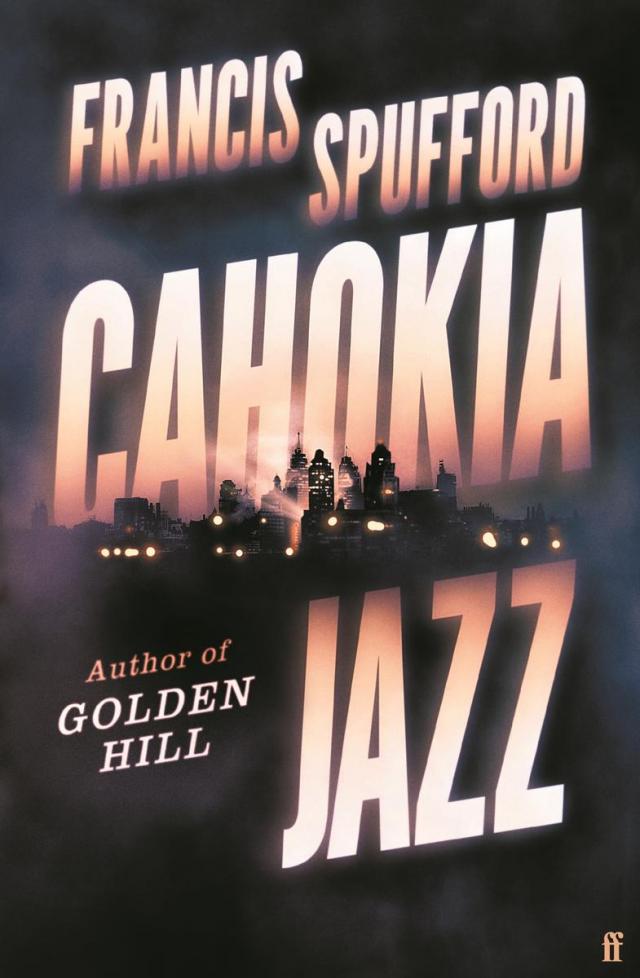
CAHOKIA
JAZZ
FRANCIS SPUFFORD
In respectful memory of Professor Kroeber’s daughter
Contents
Title Page
Dedication
Map of the City of Cahokia in 1922
Map of North America in 1922
Epigraph
MONDAY
TUESDAY
WEDNESDAY
THURSDAY
FRIDAY
SATURDAY
Notes and Acknowledgements
The House of Hashi Family Tree
Photo Credits
About the Author
Also by the Author
Copyright
Three words you must bring with you when you arrive in this most distinctive of American cities. The rest can wait, but these name the people. A takouma – is a person native to the continent. A taklousa – is a person of African ancestry. A takata – is a person of European extraction. Every citizen you meet will use these words, so you must too. Pack them in your luggage along with this brochure!
From ANOPA PHRASES FOR YOUR BUSINESS TRIP! issued by the Better Business Bureau of Cahokia
MONDAY
When the men with the brands approached me, I said to myself the words of the Epistle of John, ‘Whoever fears has not reached perfection in love’. But indeed I did fear, to my shame, remembering the long death of Fr Baltasar the night before and how his body more resembled a charred log than anything human, before his soul was suffered to depart it. But such is the grace of God towards even those most unworthy of it that He reached out to me in the very moment of my cowardice, and showed me what I must do. For, observing how those around me gazed at me solemnly, as if about to receive something from me, my mind was opened, and I saw that the cruel death they purposed to inflict was perceived by them to be a kind of transferring of virtue, from the victim to the whole people assembled. Words were given me, and I said in a loud voice: ‘How much greater a gift was it, when the son of the Great Sun of Heaven himself consented to die a slow and anguished death, to make good all the lacks of man, and to permit men to share in his greatness, and his pity, and his power, so that all they who live and who govern in his name may receive a sign of favour, in which to thrive, and to conquer?’ And at this, the prince of the city waved back the men with the brands, and said: ‘We will hear this tale. Speak more to us concerning these things.’
Sebastian Villanova SJ to the Father Provincial of the Mexican Province, 1605
(Jesuit Relations vol. XXVII, North American Missions III: Cahokia)
1
With the building dark beneath it, the skylight on the roof of the Land Trust was a pyramid of pure black. Down the smooth black of the glass, something sticky had run, black on black, all the way down into the crust of soft spring snow at Barrow’s feet, where it puddled in sunken loops and pools like molasses. On top, a contorted mass was somehow pinned or perched. But the moon was going down on the far side of the Mound, and dawn was an hour and more away. The whole scene on the roof was a clot of shadows, and the wind was full of wet flakes. Along the way, at the small obstacle of a couple of cops on a roof, the snow caked Barrow’s coat and got in his eyes, plastered Drummond’s back where he’d turned it as a windbreak. Drummond was trying for a flame from his lighter, but even with his hat shielding the flint every spark was instantly quenched.
‘Joe, can you go git the patrolman’s flashlight?’
‘Sure, Phin. Hold on.’
Barrow stepped carefully back towards the little hutch holding the door to the stairs. There was already a mess underfoot. As he expected, the uniform who’d called them in, from the phone down in the lobby, was waiting only a few steps down, on the narrow flight winding round the top of the elevator shaft. Just behind him was the night janitor who’d found the door unlocked originally. She’d gone out onto the roof, and then run screaming onto Creek-side to flag down the patrolman. Neither of them looked what you’d call avid. The janitor a heavyset taklousa in her forties, had her mouth clamped shut to hold in shock or nausea. The patroller, only twenty or so, was doing the classic takouma stone face – the set pose for male strength when something bad happened. He’d been out to the skylight too. Not rubberneckers, not spectators. Yet there they still were, keeping close; commanded somehow by the presence of death, compelled to wait attendance where it had visited. It took death repeated over and over, in Barrow’s experience, death repeated in quantities too great for meaning, to wear that solemnity away. It took a war. Soldiers could learn to just walk on by in the presence of death, not many other people.
‘Gimme your flashlight, tastanagi.’
‘Yessir.’
‘Just “Detective”.’
‘Yes, Detective. Sorry, Detective.’
Perhaps not even twenty, thought Barrow.
‘Hey,’ he said, ‘had the snow started when you went out?’
‘Not really. Just a few flakes, maybe?’
‘But nothing on the ground.’
‘No.’
‘Uh-huh.’ So, nothing to be learned from footprints; no reason to worry about churning the snow. He turned.
‘Officer?’ said the janitor. ‘I need to go soon. My babies will be waking up, and my man’s on the early shift.’
‘You must wait in case there are questions!’ the patroller said to her.
‘Yeah, stay put,’ said Barrow.
He went back out, jiggling the flashlight. It made a tinny rattling sound, from a loose contact. For a moment, the scene remained as it had been, whirling and blind, the snow that had congregated wormily in the dim blue streetlamps down on Creekside Drive blowing up and over the three sister-towers of Water and Land and Power, and spattering the looming bulk of the Mound behind them, and weaving away in lines of flickering grey over the dark immensity of the Plaza beyond. Fifty-seven varieties of dark. Then the switch caught. In the beam, the flakes turned to pearly swimmers. And what had been black on black leapt out into scarlet.
‘Whoa,’ said Drummond. ‘Messy.’
‘Yep,’ said Barrow. ‘Phin, you’re standing in it.’
‘Shit,’ said Drummond, backing, and crouching to swipe the porridge of blood and snow off his black oxfords.
The huddled object on the skylight still didn’t make complete sense. A body, of course, and one which had bled out in gouts down the glass; oozed in the other ways death inflicted, judging by the smell reaching Barrow’s nose through the chill of the snow and the city’s usual bouquet of coal smoke and river. But though at one end it terminated in a pair of ordinary man’s legs, dressed in the pants of a dark blue suit, at the other it seemed to have a bundle rather than a head, and from the wreck of the chest between, where blood seemed to have exploded more than just run, rose a shape like a pair of fans, or fish’s fins. Rope ran a couple of times round, hog-tying the corpse to the summit of the glass, and forcing the violated chest up.
Barrow squinted, and the scene resolved itself. The bundle at the head end was the dead man’s clothes, shirt and jacket and coat pulled inside out over his face. The peculiar fans were his ribs, cracked open and somehow pulled wide. Since he was the one holding the light, Barrow stepped closer and shone the beam in, on a cavity full of red ruin and streaked bone, with the tangle of liver and guts visible at one extremity, and a frosting of granular pink, from the snow. The best you could say for the view was that it was tidier than the effect of a shell burst. But there was less in the hole than there should have been: this was obvious. It was a cavity reamed out, a space from which something had been torn.
‘Any more, uh, pieces, rounda side you’re on?’ Barrow said.
‘Pass the light,’ said Drummond, and paced a circuit, lighting up each black blob in the slush till one of them proved more solid, a slick red-brown lump protruding ragged tubes. ‘Well. Seems like this gentleman done mislaid his equipment for Valentine’s Day.’
‘Cold, Phin.’
‘I’m on a roof, in the snow, lookin’ at an e-visserated corpse. At 4 a.m., dammit. When I could be—’
‘Not this again.’
‘—when I could be in Cal-i-forn-i-ay. In the soft and velvet night. Maybe out under those big ol’ stars. In a hammock.’
‘Just shut up.’
‘In my grove of orange trees …’
‘You ain’t got a grove of orange trees.’
‘No, but I will.’
‘Yeah, yeah.’
‘Man’s gotta have a dream, Joe. Where’s yours?’
‘Back in my bed. I left it there when I got up, do this job. This job you got me signed up for, case you don’t remember. So quit belly-aching.’
‘Who’s belly-aching? I’m trying to inject a little ro-mance, here, is all, brother. But okay, okay.’
Drummond found his flask and poured a small dash of corn liquor over the cleanest-looking bit of skin at the side of the shattered chest. The blood streaked away, leaving a bare spot of flesh – scrawny, middle-aged, most definitely in its chicken-neck paleness takata – to which he applied a forefinger, making a little vaudeville business of drawing up his sleeve first.
‘Well?’
‘Not quite stone cold, but getting on.’
‘Few hours, then.’
‘Yeah. Midnight, one o’clock maybe. Though it’s a cold night.’
‘Lucky for us,’ said Barrow.
‘Whaddaya mean?’
‘I mean think how this’d smell in August.’
‘True. True. And that is why the good Lord created see-gars, to block the noses of the police. But I cain’t light up in this, dammit,’ said Drummond, waving a hand in the flying flakes.
Normally, it was true, he would have had a stogie wedged in his wide mouth by now, talking nineteen to the dozen around it and sending up blue smoke in puffs and swathes like a curtain between him and whatever his hands were doing. Smoke and nonsense as the two of them rolled over the body of a drunk in an alley hit a little too hard when someone stole his wallet. Smoke and nonsense as they heaved the deadweight from a bathtub, in an apartment buzzing with flies where a wife-beating had tipped into homicide. Smoke and nonsense when they fished up a citizen from the brown water after a fight on a riverboat. Or, increasingly, when they went out with the meat-wagon to a waste lot, to retrieve the bullet-chewed remains of a moonshiner, curious about causes and culprits or absolutely not, depending on what arrangement Drummond had made just then with the opposing sides in the liquor war. Barrow left that stuff to him. He took the money and preferred not to know. Traditionally, it was Benny Shokcha’s takouma mob that had the department in its pocket, but the takata were getting themselves organised at scale, with shipments coming in now from the Illinois state line, and by freight car all the way from Canada. All standard business for the Murder Squad; and all of it Drummond would face with a smokescreen of smoke and a smokescreen of words, the set of his features as he gripped the butt making him look comically startled. He had a funny-pages face anyway, lips and eyes and nose drawn on a little too big and simple for his skinny white-trash head, and a cowlick of straw-coloured hair flopping on his forehead. But no cigar now, and whatever this rooftop gutting turned out to be, it was not a standard death.
‘This is real … elaborate,’ said Barrow. ‘I mean, doing someone like this? Doing it up here?’
Drummond shrugged. ‘Better see who it is. The why’s usually in the who.’
‘Yeah.’
Drummond held out the flashlight. ‘Your turn, brother,’ he said.
Barrow peeled back the layers of cloth around the corpse’s head, sodden with blood and now stiffening. A white (formerly white) office shirt, not expensive, darned here and there; a dark blue suit coat, also cheap, also shiny with wear; last an overcoat in dark wool, the lining discoloured cotton not silk, one of the buttons not quite matching. Not a bum’s wardrobe, but an outfit for respectability kept up on a tight budget. A clerk, not a tycoon. And when he pulled up the last heavy layer, that seemed to be who Barrow was looking at, though it took a while to get to an impression of what the living face had been, from the mask of gore that struck him first. The throat had been cut, deeply, gapingly, in a crescent-shaped gash from which all the life must surely have gushed out before the killer set to work on the man’s chest. It made it hard to attend to the small, weak, upside-down middle-aged chin, just as the streams of blood that had run into the astonished mouth, and coated its fixed shriek, made it hard to notice the small teeth with many fillings and gaps, and the rivulets pouring down the face to pool in the eye-sockets disguised the careful shave, the anxious little eyes, the lines of fretfulness around them. Dead, the face was lurid and terrible; alive, it must have been mild, petulant, inoffensive, one it was hard to imagine someone taking enough exception to, to think its owner should be spectacularly butchered on a roof.
The way the body was draped, with the head tipped back further than it had ever done in life thanks to the slashed throat, kept the dead man’s thinning hair and forehead more or less right underneath him, out of the blood flow, and it wasn’t until Barrow crouched and played the flashlight beam down there that he found there was a word smeared on the forehead, written by the looks of it with a fingertip dipped in the mess above. Capitals. B-something.
‘Phin, come look. Can you make that out?’
‘What?’
‘There. On his head.’
Drummond squatted next to him, hat pushed back for a better view. Barrow watched his comical blue eyes widen.
‘I can get B–A–S – something,’ Barrow said. ‘Maybe, “Basil” – like the name?’
‘No,’ said Drummond. ‘Now, this is gonna be complicated; you’ll see if it isn’t. This is gonna be a can of trouble opening up right here. That’s not an English word, that’s Anopa. Bashli, is what it says.’
‘And what’s that mean?’ Drummond was Barrow’s guide to the speech of the city. He’d only been there six months longer, but he’d grown up down to the south-west, in the Ozarks, in the white end of the great human mixture of the central states, and therefore in the long shadow of Cahokia. Words from Anopa had been in the air, along with stray phrases of Louisiana French, railroad slang in Navajo from the Dinetah and horsebreakers’ terms in Comanche. It wasn’t what you’d call a complete vocabulary, but two years on the Murder Squad had filled it out some: it was enough to be a serviceable help, working streets where half the people talked it at least some of the time.
‘It means, like, “hit”. Or prob’ly, right here, “cut”. Or just “knife”, even. It’s all one word. Complicated thing is, it’s also what the Warriors like to paint on walls. Bashli! That’s their big slogan.’
‘“Cut”?’
‘Like, ah, cut the cord, cut the connection? Cut the city back out of the US, get it independent again. Takouma craziness.’
‘But they write it on walls, not on bodies.’
‘Till now,’ said Drummond, levering himself back to his feet. As he did so, his head swayed into the full beam of the flashlight, and Barrow saw that the smooth yellow of his hair had gone matted, almost crunchy at the front. ‘This is gonna stir things right up, you see if it doesn’t. Crazy times a-coming, my friend.’
‘Phin, though? I think you musta wiped your hands in your hair? You’ve gotten the blood all up in there.’
‘Goddammit!’ cried Drummond, leaping away and groping at his head with more disgust than Barrow would have expected, from a vet, from a joker in the face of death. Funny what got to people. Drummond gazed wildly around the roof, as if looking for something to wipe himself on. But the snow was only making slush, as fast as it fell.
‘Seems like we’re gonna need a picture of this before we move him,’ said Barrow. ‘Why don’t you go down, call the precinct, say we want a photographer, then find somewhere to wash up? There’s gotta be bathrooms.’
‘Yeah. Yeah. Okay,’ said Drummond, and made hastily for the door, holding his hands out in front of him and shaking them in the air.
Still the search of the corpse’s pockets to do. If this had been a body in an alley, the billfold would have gone with whoever did the deed. If it had been a three-day-old stiff from the river, hauled up waterlogged and swollen, the fingers of the current might well have picked through the openings of the suit as it had through mouth and ears and eyes, and sent papers, coins, keys, spinning off downstream or into the Mississippi mud forever. But with a murder set out deliberately on display like this – like display was its point, like it was someone’s idea of theatre – Barrow thought that maybe after all the why might not be in the who. Maybe whoever had done this hadn’t cared too much who they’d done it to. So he wasn’t totally surprised, feeling through the clammy stiffness inside the suit coat, to find the square shape of a wallet still in the inside breast pocket.
He tugged it out, and shuffling back made a plank of one wide knee where he could flap away the snow and inspect the contents by the cone of yellow light. Wallet worn and many years old, like the suit, pigskin now damp and stained. Four bucks, which Barrow pocketed himself: Murder Squad perquisites. Couple of streetcar tickets. A photograph of a sour-looking woman with marcelled hair and a boy of three or four on her lap. A stub for a concert at something called the Kappa-Choral League, way over on 5th Street towards the river, in what, Barrow calculated, was probably Germantown. A receipt for watch repair, also from Germantown. And, ah yes, a prescription from a doctor in the same district, not yet filled, for asthma medicine, in the name of Mr Frederick Hopper.
‘Hey there, Fred,’ said Barrow.
He stood up, clicked off the light, stretched out the kinks. Cracked his big neck left, right. The white and scarlet underfoot had gone back to a dim blue puddled with black. Over to the east, the very first lightening of the sky was behind the clouds like an ache. He yawned, tired again. Sleep had gone away, with the hurry, and the blood, and the death smell: now it was making itself felt again, as a deep soft velvet layer at the bottom of his mind into which the rooftop and the body wanted to fold up, tumble down, melt away, lose their hard edges and be gone. A cup of coffee soon would be good. Likely, if Drummond was right – and he usually was, about the ins and outs of the city – then the clear next thing to do would be to roust out these Warriors, wherever they might be, and to shake them till something fell out. Till everything fell out, by the usual process. That being the use of his own fists. The why and the how and the what and the when. Or close enough standins. That would be the end to work this from.