Mute Witness, page 17


“Why didn’t he go over and blast the girl at the same time?” Captain Wise asked.
“Because she didn’t have the tickets yet. He didn’t want to be tied up in the ticket deal in any way, manner, form, or shape. It would have been an unnecessary risk. The only reason he threw in a trip to Europe in his offer was to have them get his tickets for him. The tickets were supposed to be delivered to her in the morning. He comes around to pick them up and finds she’s occupied. By listening at the door he hears that her guest is none other than a Lieutenant of police… Well, he isn’t going to hang around, and he can’t wander the streets, so he goes home to the New Yorker.
“But she shows up there—she wants to know what the score is. She doesn’t like the idea of a policeman telling her that Johnny Rossi was shot, not when she’s sitting there facing him, and her husband is God-knows-where. I don’t know how Rossi calmed her, or what story he fobbed her off with, but at least she walked out quietly for the time being and went home. And he was right behind her—or he might even have gotten there before her, while she was riding around the park trying to make up her mind how much of Rossi’s story to believe. And that was that.
“He killed her, picked up the tickets and the passports—he was probably searching as much if not more for the passports as for the tickets—and cleared out. And that night he started to put the final steps of Operation Patsy into motion by catching the boat. Only we caught him instead.” He laid down his pencil. “And that’s the story. Any questions?”
“Just a million, that’s all,” Captain Wise said. He stared at Clancy thoughtfully as he formulated his thoughts.
“Why get involved in a couple of murders? Why didn’t he simply take off and blow?”
“Because you don’t blow from the Syndicate,” Clancy said patiently. “Not after robbing them of money. They can’t let anyone get away with a thing like that, or others might start to get ideas. Run?” He shrugged. “Sure you can run. But like Joe Louis said about one of his opponents: ‘He can run but he can’t hide.’ They knew they couldn’t hide from the organization. Not for long. But if Johnny Rossi was dead and buried? Who’s going to look?”
“All right,” Captain Wise conceded. “But even if the switch was their best bet, why come all the way to New York to work it? Why not do the whole thing out on the coast?”
“Rossi was too well known on the coast,” Clancy explained.
“Renick looked like him, but not to anyone who really knew him intimately. No, New York City was perfect. Boats sailing for Europe almost daily; a city big enough to hide in, and a place where he was relatively unknown except by name and reputation. And he needed a witness, remember. And who better than an ambitious Assistant D.A. who wouldn’t ask questions as to why a man like Johnny Rossi would come to New York to testify before a Crime Commission in the first place? And to swear he was the dead man?”
Doc Freeman snorted. “We would have caught him with fingerprints in the first five minutes!”
“Would you?” Clancy looked at him curiously. “If Kaproski went nuts right this minute, and pulled his gun and shot me, would you check my fingerprints to make sure I was me? I doubt it.”
“Well…”
“I don’t think so,” Clancy said.
There was a moment’s silence in the small room.
“What tipped you off in the first place?” Captain Wise asked.
Clancy picked up his pencil again and began twiddling it absently, a frown on his face.
“No one thing, I suppose,” he said slowly. “There were a lot of little things that kept bothering me, nibbling at me; but they’d all go into hiding as soon as I tried to pin them down. For example: why would a man like Rossi offer to testify to a Crime Commission? And why in New York? And who knew he was at the Farnsworth?” He looked at his superior steadily. “And then there were rumors that Rossi was being hidden by the New York police; somebody had to start those rumors. I think we’ll find that Pete Rossi started them himself. Then there was the fact that the man in Room 456 didn’t play gin rummy—I’ll admit that wasn’t a big thing by itself, but it sounded a bit odd for the head of west-coast gambling. It was just another nibble; another itch. And later, when we found he didn’t even have a toothbrush with him, or a clean shirt, or a spare pair of socks…”
“What about that?”
“Well, obviously he never intended to stay until Tuesday, so why had he asked for police protection that long? I don’t pretend to know what story Rossi fed this Renick; maybe we’ll find out, when and if Rossi tells everything he’s got to tell.”
“He’ll tell,” Captain Wise promised.
Clancy nodded. “He probably will.” He thought back. “And that young doctor in the hospital screwed me up for awhile with his idiotic knifing of a dead man, but that really didn’t lose us too much time. I couldn’t figure out at first why Pete Rossi, after being so insistent on knowing where his brother was—which I could understand—quietly arranged to go home after he had seen his brother’s dead body. Once I saw the whole picture, of course, it became clear. The idea was that the patsy had to be killed—Pete Rossi couldn’t leave until he was sure the shotgun blast had been fatal. He knew we couldn’t hide the body forever; he knew that eventually Chalmers would insist on knowing where his witness was, even to the extent of getting a writ of habeas corpus—and then the whole story would come out. And I’m sure he felt that if he was back on the west coast when it did, it might be better all around.”
There was a moment’s silence. Kaproski cleared his throat. “Where did the dame buy the tickets, Lieutenant?” he asked, almost wistfully. “I know it don’t make any difference, since you figured out the right boat anyways, but I’m curious. Did I miss up somewheres?”
Clancy smiled briefly, “I’m the one that slipped up. She bought them at the Ace Travel Agency. She simply picked the first one alphabetically in the book. They’re on 38th Street; it would have probably taken us a couple of days to find them. Just because I didn’t think of the most logical way for a stranger in town to buy tickets…”
“Speaking of figuring out the right boat,” Captain Wise said slowly, “how the devil did you do that? That’s the thing that’s been bothering me most since Saturday night.”
“Yeah,” Kaproski said. “Me, too.”
“It wasn’t as tricky as it sounds,” Clancy said. “Of course the picture of that wedding breakfast gave me the whole play. Once I saw that, the thing became clear. I knew then that Rossi was the one who was planning to travel to Europe, not Renick. And that Renick was the dead man in the hospital, and not Rossi…”
“The boat,” Captain Wise reminded him.
“I’m getting there. Rossi wouldn’t take an American ship; he’d be under our jurisdiction for at least another week—and why take the chance? Nor would he take a big passenger liner; too many people who might recognize him, beard or not. So that brought it down, more or less, to a freighter. And there were only three freighters sailing that night, and one of them was going to South America, and not to Europe.”
“But even so…” Captain Wise began. Clancy lifted a hand.
“When I was in the girl’s apartment, all she had on her mind—until she found out I was from the police—was that boat trip. She offered me a drink, and she said: ‘We’ve got about everything except Aquavit…’ And when she was talking about the trip she asked me: ‘Do they speak English on board?’ which was a clear clue that she wasn’t going on either an American or a British ship. And then, later, when she was asking me if I’d ever been to Europe, she mentioned some cities there, and the first one she mentioned was Copenhagen…
“Now you want to remember that her trip was on top of her mind. And when I looked at the list of freighters sailing, and found that one of the non-American two that were going to Europe Saturday night was bound for Oslo, and the other was the Aalborg, bound for Denmark…”
He shrugged. Silence fell in the little room, broken at last by Doc Freeman.
“They drink Aquavit in Oslo, too,” he said quietly.
Clancy grinned. “That’s what Porky Frank told me last night. Fortunately I didn’t know that before. Anyway, the Norwegian freighter sailed at ten o’clock Saturday night, even before that wedding picture came over the teletype.”
“And if Rossi had been on that one?” Captain Wise asked.
“He wasn’t,” Clancy said, and smiled gently.
Captain Wise thought about it a moment and then nodded and heaved himself to his feet. Doc Freeman followed and then, more slowly, Stanton and Kaproski.
“Well, I guess that does it,” Captain Wise said, looking down at Clancy with poorly-concealed pride. He straightened his face. “I’ll want it written up and turned in as soon as possible; but at least I can face the reporters now. If they want details, maybe the Rossi boys can clear them up.”
“If they change their minds and don’t feel like talking for the record,” Clancy said, “just threaten to throw them out on the street. The word I got last night from Porky Frank is that Chicago is exporting some talent this way.”
“We’ll take care of them,” Captain Wise said. His eyes softened. “It was a good job, Clancy. But a little close…”
Doc Freeman broke in hastily. “I’ll get the autopsy results to you as soon as possible to include in your report.”
“Thanks,” Clancy said. “I’ll write it up and get it into your office right away, Sam.”
The four men looked at the slender Lieutenant a moment in silence, and then one by one they filed out. Clancy leaned back comfortably, staring at the reports left by Kaproski and Stanton, the envelope he had from Sergeant Martin, and the notes he had begun to make himself. He sighed and sat up, reached for all the papers, and swept them together in front of him. His other hand fumbled in his jacket pocket for a cigarette; he pulled one out, lit it, and then turned to flip the burned matchstick out of the window.
And then he froze.
The air-shaft was free of clothing. The clothesline hung limp and empty between the hovering tenements. He stared, mouth open. Was it possible? Was it on a Monday that he had seen the miracle of the bare clothesline? On a Monday?
Only in the 52nd Precinct, he thought with a tight grin, and turned back to his desk, drawing the papers together in front of him, reaching for his pen. Only in the 52nd Precinct.
About the Author
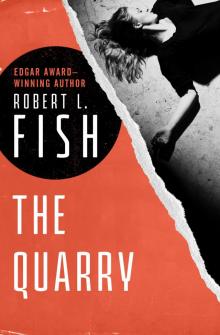
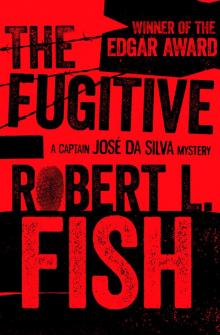
Robert L. Fish, the youngest of three children, was born on August 21, 1912, in Cleveland, Ohio. He attended the local schools in Cleveland and went to Case University (now Case Western Reserve), from which he graduated with a degree in mechanical engineering. He married Mamie Kates, also from Cleveland, and together they have two daughters. Fish worked as a civil engineer, traveling and moving throughout the United States. In 1953 he was asked to set up a plastics factory in Rio de Janeiro, Brazil. He and his family moved to Brazil, where they remained for nine years. He played golf and bridge in the little spare time he had. One rainy weekend in the late 1950s, when the weather prohibited him from playing golf, he sat down and wrote a short story that he submitted to Ellery Queen’s Mystery Magazine. When the story was accepted, Fish continued to write short stories. In 1962 he returned to the United States; he took one year to write full time and then returned to engineering and writing. His first novel, The Fugitive, won an Edgar Award for Best First Mystery. When his health prevented him from pursuing both careers, Fish retired from engineering and spent his time writing. His published works include more than forty books and countless short stories. Mute Witness was made into a movie starring Steve McQueen.
Fish died February 23, 1981, at his home in Connecticut. Each year at the annual Mystery Writers of America dinner, a memorial award is presented in his name for the best first short story. This is a fitting tribute, as Fish was always eager to assist young writers with their craft.
All rights reserved, including without limitation the right to reproduce this ebook or any portion thereof in any form or by any means, whether electronic or mechanical, now known or hereinafter invented, without the express written permission of the publisher
This is a work of fiction. Names, characters, places, events, and incidents either are the product of the author’s imagination or are used fictitiously. Any resemblance to actual persons, living or dead, businesses, companies, events, or locales is entirely coincidental.
Copyright © 1963 by Robert L. Fish
Cover design by Jason Gabbert
ISBN: 978-1-4532-9403-1
This 2015 edition published by MysteriousPress.com/Open Road Integrated Media, Inc.
180 Maiden Lane
New York, NY 10038
www.mysteriouspress.com
www.openroadmedia.com
ROBERT L. FISH
FROM MYSTERIOUSPRESS.COM
AND OPEN ROAD MEDIA
MYSTERIOUSPRESS.COM
MYSTERIOUSPRESS.COM
Otto Penzler, owner of the Mysterious Bookshop in Manhattan, founded the Mysterious Press in 1975. Penzler quickly became known for his outstanding selection of mystery, crime, and suspense books, both from his imprint and in his store. The imprint was devoted to printing the best books in these genres, using fine paper and top dust-jacket artists, as well as offering many limited, signed editions.
Now the Mysterious Press has gone digital, publishing ebooks through MysteriousPress.com.
MysteriousPress.com. offers readers essential noir and suspense fiction, hard-boiled crime novels, and the latest thrillers from both debut authors and mystery masters. Discover classics and new voices, all from one legendary source.
FIND OUT MORE AT
WWW.MYSTERIOUSPRESS.COM
FOLLOW US:
@emysteries and Facebook.com/MysteriousPressCom
MysteriousPress.com is one of a select group of publishing partners of Open Road Integrated Media, Inc.
The Mysterious Bookshop, founded in 1979, is located in Manhattan’s Tribeca neighborhood. It is the oldest and largest mystery-specialty bookstore in America.
The shop stocks the finest selection of new mystery hardcovers, paperbacks, and periodicals. It also features a superb collection of signed modern first editions, rare and collectable works, and Sherlock Holmes titles. The bookshop issues a free monthly newsletter highlighting its book clubs, new releases, events, and recently acquired books.
58 Warren Street
info@mysteriousbookshop.com
(212) 587-1011
Monday through Saturday
11:00 a.m. to 7:00 p.m.
FIND OUT MORE AT:
www.mysteriousbookshop.com
FOLLOW US:
@TheMysterious and Facebook.com/MysteriousBookshop
SUBSCRIBE:
The Mysterious Newsletter
Find a full list of our authors and
titles at www.openroadmedia.com
FOLLOW US
@OpenRoadMedia
Fish, Robert L.;, Mute Witness