

Beneath the Wild Fig Tree, page 1


First published in 2024
Wild Mind Publishing acknowledges the Traditional Owners and their custodianship of the unceded lands on which this novel takes place and was written, and pays respect to their Ancestors and their descendants, and their continued cultural and spiritual connections to Country.
Copyright © Fiona Preston 2024
The moral rights of the author have been asserted.
Wild Mind Publishing
Gumbaynggirr Country
NSW, Australia
Email: wildmindpublishing@gmail.com
Web: www.wildmindpublishing.com.au
All rights reserved. No part of this book may be reproduced or transmitted in any form or by any means, electronic or mechanical, including photocopying, recording or by any information storage and retrieval system, including artificial intelligence, without prior permission in writing from the publisher. The Australian Copyright Act 1968 (the Act) allows a maximum of one chapter or 10 per cent of this book, whichever is the greater, to be photocopied by any educational institution for its educational purposes provided that the educational institution (or body that administers it) has given a remuneration notice to the Copyright Agency (Australia) under the Act.
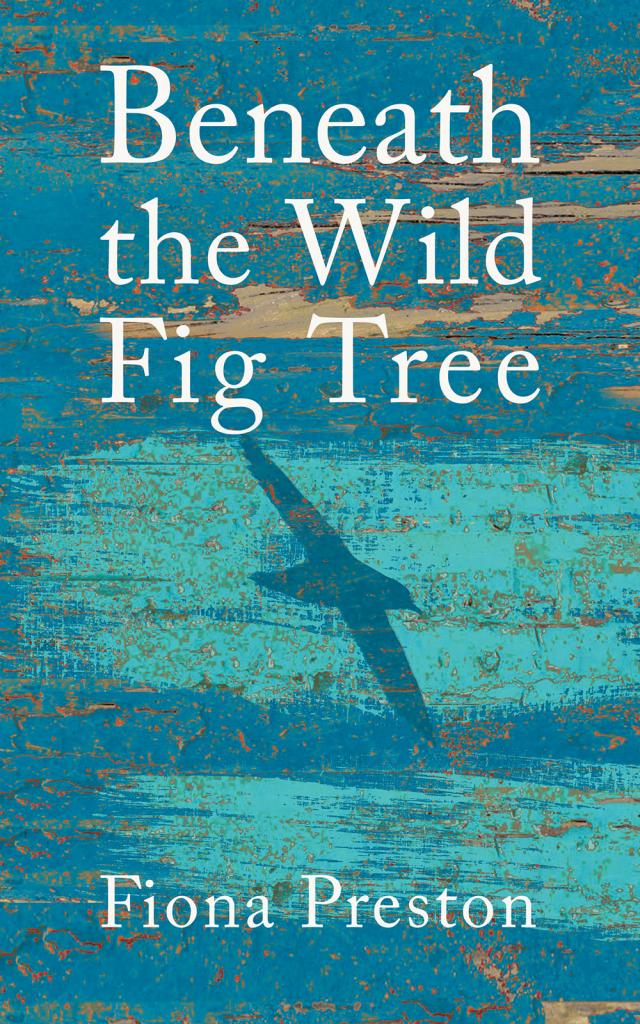
Cover design by Andy Banks. Moonbird on the Wing
Typeset in 11/20 pt Minion Pro by Post Pre-press Group
ISBN 978-1-7635886-0-8 (paperback)
ISBN 978-1-7635886-1-5 (hardback)
ISBN 978-1-7635886-2-2 (e-book)
This is a work of fiction. Characters are the product of the author’s imagination, with the exception of some of the animals. Any resemblance to actual persons, living or dead is entirely coincidental.
FOR HANNAH
Contents
1: Continental Drift, 1984
2: Cool Enigma
3: L’Heure Exquise
4: In the Bunker
5: Pink Fish and a Eucalypt Leaf
6: Complicated Relationships
7: Hope
8: Fast, Dark River
9: Geographic Rights
10: Sanctuary
11: Constitution Dock
12: Time’s Illusions
13: Crossing Water
14: The Cellar
15: Tentative Connections
16: Lighthouse
17: The Island Orchestra of Light and Sound
18: Not Alone
19: Sails, Wings and Dreams
20: Uncomfortable Recognition
21: Learning How to Drown
22: Sapphire City
23: Not Mr Popular
24: Coastline, Moon, and Stars
25: Encounter at Honeymoon Cove
26: Shostakovich and Shearwaters
27: A Boy and His Fishing Rod
28: A Tender Business
29: Lost and Broken, Rich and Strange
30: Parents Should Never Be Trusted
31: Guilt, Promises, and Betrayals
32: The Gaslight Flickering
33: Thwarted
34: Tangled Web
35: Lighthouse Privileges
36: Silly Adult Games
37: A Different Perspective
38: Beneath the Aurora, Phosphorescence
39: Beneath the Apple Tree
40: Finding the Map
41: The Gadfly
42: Fat Turkey Cove
43: Arrivals and Departures
44: Circumnavigation
45: Bittersweet
46: Too Much to Bear
47: Headwinds
48: Suffused With Light
49: Low Tide
50: Jewels and Binoculars
Author’s Note
Acknowledgements
1
Continental Drift, 1984
I was born beneath a wild fig tree one humid afternoon. My arrival cut short my parents’ camping trip and within minutes a hard rain baptised me. Rivers burst their banks. Drought transformed into flood, but the van, inclined to falter in the slightest drizzle, staggered up a collapsing pass, and carried us home to Armidale.
My birth is a family legend. The story has been repeated so many times, with so many details thrown in, that it’s not clear where truth ends and fantasy begins. Dad said the afterbirth was seized by ravens. Mum said it was left to nourish the tree. He said my hair was wild and orange, she said I was bald and calm, but neither of them told me I’d been born into a web of deceit that contributed to the endless years of our continental drift.
They said I learned to walk on the dunes of K’gari, that I first spoke on Bama Country near Cairns, and that my first attempt at swimming was on the Great Barrier Reef. I began school in the sweaty heat of Darwin, and in Top End towns like Kununurra Dad found work on cattle stations. The years we lived near Albany were my happiest. There, on the Great Southern Ocean’s coastline, forests seemed endless and small granite islands basked in a turquoise ocean. I made my first friend when I was ten, but my parents insisted on moving on.
Dad played guitar in Coorong pubs and we lived in a houseboat on the Murray River. He took to carpentry and boatbuilding and plied these skills as we moved slowly across Victoria. Back in New South Wales, he helped friends build a mud brick house in the Snowy Mountains. But whatever he did and wherever we went, he had poetry in his rucksack and his guitar on the back seat.
Mum’s archaeology textbooks sat in neat stacks while she worried daily about our bank balance. In the gaps between casual work and studying long distance, she sometimes home-schooled me. And as for me? I knew nothing yet of the promise in my past or the island in my future.
Our aimless wandering coincided with Mum’s earth mother phase and although our unsteady lifestyle tired her, when I got anxious about starting at new schools, she said it would give me backbone. It didn’t. I longed for stability. My parents yearned for the next place along the scenic route.
In Bermagui, when I was twelve, Dad and his workmates formed a syndicate and won big on TattsLotto, so we visited his family in Scotland, then went to Aotearoa, to the skinny South Island, Te Waipounamu, with its ridge of snowy mountains, where we camped in their shadow, beside a glacial river.
One impeccable morning, with the sun lighting up the long, wet grass, we went for a walk. Foxgloves splashed purple along the path that ran beside the riverbank and up to the clifftop, high enough to alarm my mum. I tried to join Dad at the edge, but I didn’t anticipate the giddiness that would overcome me. As I lurched against him, Mum whipped me back. Transfixed with terror, we watched as in slow motion Dad teetered against the big blue sky then with an anguished yell, vanished over the edge.
That elongated moment haunts me still. Whenever I hear a sound like pebbles tumbling or a large splash, or encounter purple foxgloves, I’m back there at that river.
Moment as ghost, is what Nan called it.
‘Wheeler!’ Mum screamed.
‘I’ve killed him,’ I howled, as we watched him being swept away, and, panicking, rushed down that path, to where we could help him out. He collapsed on the grass, blue-skinned, teeth chattering, grazed all over. Blood spurted from a gash on his leg.
Back at the van, I sat beside him sobbing and apologising. Mum bandaged him and covered him in all the clothes and blankets we had to prevent hypothermia. She gave him whisky and insisted he sleep, then she and I lay in the sunshine discussing the debacle. I believed we were both thinking about how in that one elongated moment we had realised how important we were to each other, but she had our lifestyle on her mind.
‘I’m going to assert myself, Nicky. It’s time.’
The next day we left the campsite. Dad had cracked some ribs, so Mum drove. We followed the river past rapids he was lucky he hadn’t gone over. I was lucky too, because then I’d have been a murderer.
Downstream that river became a loose, liquid plait, all silvery along the wide valley floor. I was thinking how serene it seemed here when I heard Mum having a serious conversation with Dad.
‘We’re going to settle down in Hobart and live like a conventional family. Going home is hard for me, but I want stability and Nicky needs it.’ She looked across at him. ‘This adventuring life hasn’t always been fun. It’s been difficult, especially for Nicky,’ and she smiled at me in the rear-view mirror. ‘Sweetheart, we’ll find you a good school. And here’s my promise – we will never move again. And Wheeler,’ she added, ‘you’re wasting your talents and your degree. You must start teaching.’
That is exactly what she said. She was a new person.
My throat felt too tight for speech. Yesterday I’d cried because of what I’d done. Now I was crying with relief because our travelling days were ending, even though more than once during that long conversation, Dad said through gritted teeth that the way she’d gone about it wasn’t fair. We were driving slowly, the road was winding. He said, ‘Maybe for a year or two, Freya,’ and we both said, ‘No, forever!’
‘Talk about getting stuck into a bloke when he’s down,’ and he winced as we went over another bump.
Mum smiled at me conspiratorially. ‘The girls finally get a win,’ she said, and I leaned back and started dreaming about making real friends and finally getting to know my nan.
The fact is, if we hadn’t gone to Aotearoa, Dad wouldn’t h
‘Probably out on the scrounge for a new life,’ said Dad. ‘Like you two.’
The dog sat beside me, gazing out the window. His feathery tail waved, and whenever he opened his mouth, he broke into a smile. Mum wanted to drop him off at a pound. She thought his owner might be looking for him and worse, he might infect us with hydatids.
Dad and I agreed he was a little bit collie, a wee bit kelpie, perhaps a sheepdog gone AWOL, and Dad said his snoz was distinctly Afghan, lending him a certain aristocratic air. The dog kept looking out that window, then glancing quickly back at me as though he wanted to share a joke and as we’d been taking turns reading Kes by Barry Hines, and as this hitchhiker had a kestrel’s eye for the sky, his name was decided.
Mum insisted on silence as we swooped down to the bridge. Across that wide and beautiful estuary with Storm Bay beyond it, I saw the city nestled in the foothills of the purple mountain.
‘Home,’ she sighed, touching a finger to her eye.
Dad sadly hummed ‘Goodbye Yellow Brick Road’. I hugged Kes, bursting with happiness. The city was exquisite.
At first we stayed with Nan and then we rented a house. Dad found temporary teaching jobs and charmed his way into a band, and Mum was excited she could study archaeology on campus. Home was sunlit and warm and full of music, with Dad bashing about on his guitar and Mum happy to go exploring with me and Kes, up and down the mountain she knew so well and along the river. I made friends. Nan was wonderful. I even learned to sail on the river with my best friend, Sally, who lived down the road.
After a year or two, tiny tensions began to grow. Mum said that by staying in one place, we were simply finding a new balance, and I believed her.
I hadn’t yet learned that parents should never be trusted.
2
Gadigal Country (Paddington, Sydney) 2000
Cool Enigma
I didn’t want the phone call, and it couldn’t have been more poorly timed. Sydney was sweltering. The air conditioner had failed again in the offices of Riley & Blair Corporate Lawyers. Moods were brittle, the pressure intense, and the most impatient man in the firm was at my door, jabbing his finger at his watch.
‘One moment, Max.’
‘We’re late, goddammit!’
‘It’s Sally Jones,’ said the caller. ‘It’s been a while! I told Freya you’d be thrown, but I’d love to catch up and she’s given me a parcel for you.’
We made hasty arrangements to meet on Friday evening, but after putting down the phone, I realised she didn’t mean next Friday, she meant this Friday, as in two days from now, exactly when Arno was getting back from Italy. I’d struggle to make the airport in time.
‘Damn,’ I muttered.
‘Damn bloody hurry,’ said Max, striding off ahead of me.
He marched me to the lift, briefing me all the way up to the boardroom. The more miserable I feel the straighter I hold myself.
‘Good afternoon, gentlemen,’ I said and took my seat, posture perfect.
~
At home, I tried phoning Arno at his parents’ place in Rome, but the call rang out. Instead, over a glass of wine, I reviewed the day.
The meeting had been tense, had resulted in yet another contract to write while other matters compounded on my desk. The new senior partner had been patronising each time he interrupted me, and at the end of the meeting the boys’ club closed ranks. The year 2000 was disappointing me. Time to move on, whispered the voice in my head.
Right now, there were more pressing matters, like Sally’s visit. I regretted suggesting we meet at my place, but as I didn’t have her number, I couldn’t reschedule. Today my poise, so carefully cultivated, had given way to distractibility and I hated not living up to my own expectations.
I knew Arno would return with perfume. It had become a thing after he’d once bought me a fragrance called Cool Enigma. Lying on my bed with his arms behind his head he’d watched me spray it on my wrists.
‘The name suits you, Nicky.’
He saw me wince and reassured me. The next time he went away he bought me Coco, but that comment lingered.
Later, I stood on my balcony, anxiously planning how to reach the airport on time after seeing Sally. Across the road neighbours moved like shadows behind their blinds and in the dark sky overhead I saw the lights of a plane. Arno’s absence felt endless. I desperately wanted him back.
~
Sally stood on my doorstep, a bottle of wine in one hand and a bouquet of irises in the other. Her dress picked up their colour and the bracelet on her arm matched their lime stalks, yet she looked as though she’d got ready in a rush, her long blonde hair wild, and her sandals scuffed.
‘Nicky!’ She moved to embrace me. ‘Love this Victorian terrace. A pity there aren’t any trees on your street, though.’
‘Lovely to see you, Sally.’ I accepted the flowers and ushered her in.
‘I so enjoyed my walk here. Love Sydney – all those avenues of wild figs and paperbarks.’
‘And jacarandas,’ I said, searching for a vase while she studied my living room. ‘Don’t be harsh. It’s a short-term rental snapped up in a hurry.’
‘I remember how much you loved the ocean. I imagined you’d be on the edge of the harbour.’
I live on a narrow Paddington road congested with traffic during the week – the lifeblood of Sydney rushing through this small, constricted capillary. My house is like a cell down in the guts of a shape-shifting monster. Inconsequential it and I may be, but we are a part of a greater thing, the city, that moves and breathes, spreading in all directions simultaneously. It’s true there are no trees on my street and it’s easy to believe it’s on no bird’s flight path. In fact, the only thing that isn’t man-made is the sky, and increasingly that wears a human stain.
‘I happen to like the inner city.’ And time is a trickster; I’d forgotten how effusive yet blunt you can be, I thought, putting the vase on the kitchen counter.
Sally studied me. ‘I guess we’re typical Tasmanians, heading off to the mainland or overseas in search of different experiences. My share house isn’t nearly as tidy as this, but it’s fun. We’re a bunch of musos and a few of us have green fingers, so we harvest a good vegie crop. We’re in the Adelaide Hills, not far from your mother. It’s more like you and I were used to. The bush, you know.’
I poured the wine. ‘Tell me about your music.’
She settled herself on a stool and chatted while I prepped the food, then set the table. Apart from two recordings, her musical career was not unfolding the way she’d hoped, but the landscaping business she’d started, hoping to bring in some extra cash, was thriving; the problem was that it ate into the time she had to focus on songwriting.
She got up to investigate my music collection. ‘I’ve got a thing for Van Morrison,’ she said. ‘Do you mind?’ And she swapped the reggae I’d put on for one of his albums.
‘When did we last see each other?’ I wondered, wine glass in my hand.
‘Honestly?’ She adjusted the volume. ‘Towards the end of those years you spent at your grandmother’s home, when you barely left your room, and everyone was concerned about your depression and your behaviour.’
Enough! said the voice inside my head.
‘It was awkward because often you didn’t seem to want to see me. And it was sad, because I missed the old you, Nicky, I really did, and I know our paths parted ways but I guess because our parents were good friends, it did feel like something precious was broken.’
‘We might have mixed in different circles, Sal, but I depended on your friendship more than I let on. You’d been on the island. You knew what was eating me.’
She leaned back to regard me, and I hastily served up the pasta I’d thrown together, remembering how back when we’d declared ourselves sisters, Sally always, annoyingly, seemed to know more about my life than I did.


