

She's not there: An award winning thriller., page 1


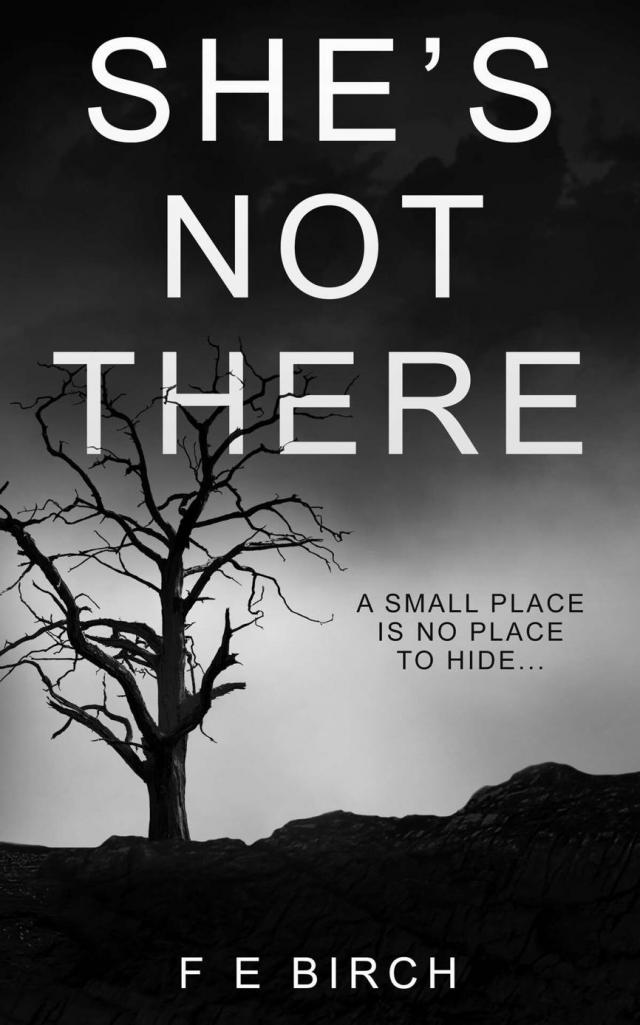
SHE’S NOT THERE
F E BIRCH
Copyright © 2023 FE BIRCH
The right of FE BIRCH to be identified as the Author of the Work has been asserted by him in accordance with the Copyright, Designs and Patents Act 1988
All rights reserved. No part of this book may be reproduced, stored in or introduced into a retrieval system, or transmitted in any form or by any means (electronic, mechanical, photocopying, recording or otherwise), without the written permission of the publishers.
Red Dragon Publishing LTD
ISBN: 978-1-7393036-0-0
This book is a work of fiction. Any resemblance between these fictional characters and actual persons, living or dead, is purely coincidental
Dedication
For Joan and Edward Harrington, my grandparents
for the giving me the love of books.
Prologue
It was in the man’s eyes as he looked into hers, and she knew. Men like him spotted kids like her because it was there, always in their eyes. Men like him knew when they’d found one and wouldn’t let them go. It was always telling, in the eyes.
‘Come with me, pretty,’ he said, grabbing her puppy-fat hand in his rough paw.
She imagined his hand as a glove because it didn’t feel like any hand she knew. It was hard and bumpy on the inside in that bit where his fingers started. Bumpy like speed bumps, sleeping policemen who never woke up, who could never rescue her. They couldn’t stop him, wouldn’t stop him, and she would feel his long, long fingers touching her forever. She would feel his calloused hands upon her for a lifetime.
He took her by the swings, near to the shuggy horse with the metal handles which were too hot to hold on a baking summer day, gusseted in a gold sheen that looked like a pool of fabric draping the beast.
The expressionless gardener, a sullen man who wore no other face, didn’t glance or bother to see. He’d seen it on similar days with similar girls. Different faces, but all had the same eyes. He turned away, closed his own eyes and his mind, and left the park, leaving her alone with him.
‘I don’t like the bushes,’ she squealed, tugging away from the man as he pulled her into an area where white flowers with thick petals hung with a perfume that clogged up her nose. A magnolia tree.
He squeezed her hand tight and she gasped, couldn’t breathe as she felt her pulse in her wrist and her head, thump-thump, thump-thump, like she might pop, burst like a balloon, and fritter away in the wind, scattered like the petals.
He grabbed her thin arm above the elbow, and gripped it like a mangle, twisting, pressing the blood from her limb until it tingled with a thousand pins.
‘Ouch! You’re hurting me!’ she squealed, a tinny tiny mouse-squeak.
He showed her his yellow horsey teeth, lips parted with a smile that wasn’t a smile; a door that wasn’t a door, but an entry to another world, a different place, somewhere behind the white-petal bush. Somewhere like a Narnia through a wardrobe but not. Somewhere she knew she didn’t want to go, didn’t have a choice but to step into.
He bent down, his face to hers, and he breathed sour cigarette breath at her. She saw his thick tongue, a slimy slab of ham, wet, with a smell like a taste that made her gag.
‘My little warm dumpling child…you…you will do as I tell you. Naughty girls like you deserve all you get.’ He turned her around and pushed her in the low of her back above her school skirt waistband.
She juttered forward, stuttering steps into the soft dark earth with her black gym plimsolls. He pushed her down, palm flat on her shoulder so her knees buckled like one of the collapsing donkey toys her granny had bought her for Christmas, all jangly joints held taut and tight until she pushed up the little round bottom base to make the poor donkey quiver and wobble and fall.
And she fell.
Like donkey.
Her round, pudgy, baby-fat knees pushed into the soft earth, two little dimples like the dimples in her cheeks and two little dimples in the small of her back. She knew she’d go home dirty and mother would have to Brillo pad her in the bath to make the stains disappear from her knees. And she’d have tears in her eyes as mother told her off. Again. For playing in the bushes. But she couldn’t, mustn’t, tell because it would all be too bad.
The man told her to turn around and lay down, so she lay flat on the soft earth. As he touched her with his bumpy lumpy hands, she imagined his fingers leaving prints on her skin. She was six now, a big girl, not a baby anymore, even though she still had baby rolls. She was a big girl who knew about fingerprints because she’d heard mother say that’s how they caught the burglar who stole Mrs Fraser’s television and ornaments and money from the secret biscuit tin she kept hidden in the coal house. The burglar lived over the road from them; an incomer who mother said had been to prison and had come to their village to hide. But mother said there were no secrets in their village, and it was no place to hide.
The man squidged her cheeks to make the kissing lips so he could put his tongue into her mouth. When he’d finished kissing her, he did other things. Other things she wouldn’t want to remember, not ever, so she closed her eyes to not see and closed up her nose so she couldn’t smell. She lay on the soft, brown, clumpy earth like it was a princess bed scattered with long white petals. She sniffed the air that wasn’t full of him and she smelt soft talcum smells from the flowers. She dreamt of floating away on a blanket of earth with white flowers in her hair and wearing a pretty dress made by her mother with baby butterfly stitches, barely seen.
As the man did his thing, she listened to a bird singing a song, an old lament, an inquisitive tone, just like the robin who sat on their gate in autumn, cocking his head, watching, twittering, and trilling some more.
When the bird stopped singing and the man had finished, she opened her eyes. He dragged her up by her curly ponytail and pulled up her laddered school tights. He pulled down her school skirt and said, ‘You made me do it. You made me do this thing. It’s your fault. Don’t you forget. It’s your fault. Say nothing. Nothing. You know what will happen, child. Don’t you? Don’t you?’
He poked his horny-nailed finger into her face. She looked up at him from under thick eyelashes. She looked into his eyes. It was there in his eyes. And now it was in hers. The telling was always in the eyes, if you knew to look there.
She nodded, trying not to let him see her wet eyes, trying hard not to let the wet drip down her ruddy face. The bird watched, cocked his head, flew off. She would see him another day, she was sure.
Chapter 1
Jed landed face to face with a smack, straight onto the skull, squashing his cheek against the decomposing body. He heard the squelch and felt the sponge of decaying flesh as the gut-wrenching stench seeped up his nose and into his mouth. His arms lay outstretched, redundant, unable to help him in the moment between seeing the remains and tripping over them. His brain screamed. I’ve killed her! I’ve killed her!
He scrabbled in the earth, trying not to touch the bones. He spat bile and earth and slime. No! No. No, he hadn’t killed her. Sharp air stung his chest and he caught his next breath in a coughing fit. He hadn’t killed her. Not this one. Not this body, this person, whoever they were.
That was Cassie.
Cassie.
Like a cliché from one of his books, he’d stumbled upon a body while walking on the hillside, a jaunt aimed at clearing the alcohol-fug. The tree with flaking bark, and dead branches, and defiant budding leaves, half-dead half-alive, beginning to bloom, uprooted but not yet fallen. The bulge in the earth at the foot of the tree looked inconsequential as he strode up the hill and he hadn’t seen the protruding roots. Until he tripped.
He brushed down his trousers, smearing the mud on the knees of his jeans. He hand-washed his face and spat out bits of earth and rotten flesh. He bent down and gripped onto his kneecaps to help steady his ankles, so he didn’t slip a second time. The damp earth mingled with sodden bark, and Jed couldn’t shake the reek of death nor blink it away. He stared at the carcass, saw the decomposing skeleton half-buried, half-sheeted, left to the elements, and exposed to beetles, rodents, birds and other creatures. He saw a body long abandoned and presumably forgotten. Tweed material mimicked a two-piece, and from what he could see without touching, it had been a skirt and matching jacket, one flat black shoe, lace-up with a rounded toe, size small, much smaller than his, the other one missing, and a necklace, a broken silver chain with a locket. Female, then, he presumed.
Rex, Jed’s crossbreed terrier, bounded over to him from a dead bird he’d been scavenging. The dog cocked his leg against the tree trunk, spray-back reaching both Jed, the body, and the dog as he nosed in the wet earth. He crouched.
‘Rex! No!’ Jed reached for the dog and pushed him away, stronger than he’d intended. Rex yelped, sniffed again, and scratched at the soil with his back legs, bullets of earth flying behind him.
Jed stood upright, slapped his hand hard against his thigh, firecracker loud, but lost into the air as the dog persisted in digging up clods like coins spewing forth from a jackpot win; three lemons and a gold bar.
‘Come on, boy. Come on, Rex.’
Jed had hit the jackpot, all right. A coil of anxiety started in his groin as he deliberated running, simply packing up and disappearing. He was good at that, going on the run, mingling in crowds, hiding in plain sight, vanishing. Why? Why now? Why him?
Why not?
Lethargic clouds teased, scuffing the sky, grey and sullen. Jed felt the first few spits on his face and closed his eyes. Pinpricks dotted him, sharp darts stinging his cheeks, blurring his eyes, his cheeks beginning to burn as the rain came. It was the first time he’d cried since Cassie. An involuntary shiver covered his shoulders like a shroud and he tried to shrug it off. He rubbed his face again and whistled for Rex. This time the dog came, obedient and eager. Jed grabbed his collar, his hand hesitating, eyes red-rimmed and hung-over.
As he hovered over the remains, he knew he couldn’t do it, couldn’t leave this woman. He had to do the right thing. She was somebody, someone who had a life, and someone must be responsible for her. Her story wouldn’t be a good one, it never was, and whoever she was, she didn’t deserve a shallow grave. He dug into his combat jacket for his phone. He checked it for charge and a signal, shaking it as if it might prompt a connection. One bar. Oh, how he wished he could be in a bar right now, anywhere in the world, anywhere but here.
He pressed nine three times.
It was supposed to be paradise, a beautiful place to grow up, if you were fortunate to be born, or move, there. It was a palliative place to retire if you were lucky enough to afford it. Jed Gillespie loved places like Glendargie, with imposing pines and proud Munros. They’d called to him like a mermaid’s lament ever since he’d visited one lost summer weekend. He’d been passing through on his way somewhere, anywhere, then a few months later upped bags from his flat in the Borders and took himself and his dog, Rex, to become members of the Glendargie community.
The tiny, two-bedroomed cottage was tucked up on the estate of a family called Struan. The paint on the rotting door was flaking, like the paint on the walls inside, slivers of eggshell cracked that broke away when touched. The little house smelt of damp, and mice, and soggy rotten plants that had been allowed to grow unbidden in the stone walls and through the crumbling window frames. Bats had made the belfry into their personal roost, up in the eaves above his bedroom window and, as they were now a protected species, regular visits from the Bat Conservation Trust meant they were there to stay. Unlike him.
Jed, settled for now, savoured the space, the quiet fresh air, unfiltered as it came through the many cracks in the stone house. He’d had to buy oil for the heating, and a thicker duvet for his bed, but he liked the quirky place. Despite the pitfalls of a sudden move, Glendargie was a beautiful place with stunning views, and it gave him somewhere to rest his head, lay himself down, try to forget. None of the problems with the house mattered. He’d put it right and make it a home, in time, and he had plenty of that. Time enough to forget.
A rush of flames from the open wood burner gushed as he walked into a bar of friendly faces. No hushed silences here, not like the last place, where a stranger was a stranger until you’d lived there fifty years or more. Jed was being given a good welcome, embraced by natives who’d done their research on this stranger. They wanted to know who walked among them and who could blame them? He hadn’t reckoned on that and he didn’t usually confess to anything, but when they wanted to know where he found inspiration for his bestselling novels they’d read from the public lending library that still existed in their tiny town, and when they filled him full of praise, Pale Ale, and the best malt, he coalesced.
Bolly, the pub cat, sauntered over and coiled himself around his legs, black and white fur brushing around him as he stretched out by the fire. A few minutes spent eyeing him up was enough and Bolly strolled off to curl up with Rex, who lay at his master’s feet and didn’t flinch other than to cock an eye, letting him know who was boss, a warning flash not to try anything.
For a while Jed was a local celebrity, supplied with kind words and plenty of drinks by locals who warmed to him, this tall, strange stranger who wrote books for a living. They embraced him and he returned the compliments, tot after tot.
It was the next afternoon, a couple of hours after waking late, three cups of black coffee, and a pounding head he deserved, that Jed and Rex took to the hillside behind the cottage. The path was supposed to lead up into the high trees that shielded the big estate house, but he never got that far. The weather was foul, cold to the bone; the air hanging with ghosts. Jed blamed the hangover.
He wondered where the path would lead, if it would peter out somewhere at the top of the woods or wind back on itself and disappear into the woods where no one trod and no one heard the sounds. Would he discover some place different? He was enjoying the discovery. It had been a long time since he’d felt the freedom to walk, to think, to explore something new. He told anyone who would listen that he’d retired from writing but perhaps inspiration would kick him after all. Fresh air nipped across his cheeks like summertime midges, and the fug began to sweep from his head.
Ten minutes later the discovery of a decomposed body meant Jed couldn’t stay; not in this town, not now, despite the friendly faces and free drinks. It was another reminder there’s nowhere to run. He should have known better. He’d now exposed someone else’s secret and knew there would be plenty more of them with this discovery. Someone else’s secrets, he scoffed, as if he didn’t have enough of his own. It had taken only three weeks for the shine to tarnish. Three weeks was all it had taken for him to be embroiled in what he knew would be a full-on police investigation.
Jed returned to his cottage once he’d finished giving his statement to a young, uniformed officer. Slivers of ice rattled in his fat whisky tumbler, a present from a crime writing conference back when he topped all the credible book charts. The malt tinkled into the glass, generously covering the ice. He blamed himself, it was his own fault, he’d gone looking for escape. He was always looking for escape. It’s what he did for a living. A professional escape artist, piss artist, a man who wrote about other people’s lives, other people’s problems, and what he knew, or should have known from experience, was that a small place is no place to hide.
So why did he keep trying?
Because there was always the thought of a paradise out there somewhe
Chapter 2
Kat Dubois reached into the back of her car for her boots. Pristine and too tight, they nipped at her heels as she pulled the laces taut. She’d been back in Scotland for a month, and it was only her second week in the job. This was her first dead body. She hadn’t expected one so soon.
There were ten murders a year in Tayside, roughly. There were many more suicides, and plenty of road traffic accidents, or collisions, as they now had to be called. Accident implied no blame but there was always someone to blame, as the persistent and annoying television adverts for compensation solicitors confided, like a well-known secret. Gun crime and knife crime was plentiful in the East End of London but here she was expecting drugs and petty gangs led by big fish swimming in a small pond, who Kat knew wouldn’t last a weekend on the harsh streets of Hackney, Whitechapel, or Forest Gate. Twenty years at the coalface had given her plenty of experience and knowledge and although knowledge was power, police fought a battle that would never be won until society changed, and so did some police officers.
Where once she’d thrived, enjoyed every day on the job, she’d become fed up with persistent cases of mundane murders, gang warfare, and relentless battles on streets that bred attitude. And when one lynchpin was taken down, there were five vying to take the helm. She knew the minute she thought of a murder as mundane, she was becoming hardboiled, and she didn’t want to be that sort of cop.
The last murder investigation was tough, and enough. A girl, just sixteen, had been stabbed at a party. As she lay dying a youth had sex with her, turned on by the rush of blood from her wound and the rush of blood in his head and between his legs. He stood in the dock and wept, a pathetic creature whose only remorse was for himself. He hadn’t killed her, he wasn’t the one who wielded the serrated knife that had stabbed and twisted her in the gut, but he hadn’t helped her either. Instead, he’d taken advantage of the dying girl in the most horrific way. The jury couldn’t decide if he was evil and sick, or a liar, or as he protested, an innocent youth who just didn’t realise.


