

Stella, page 23
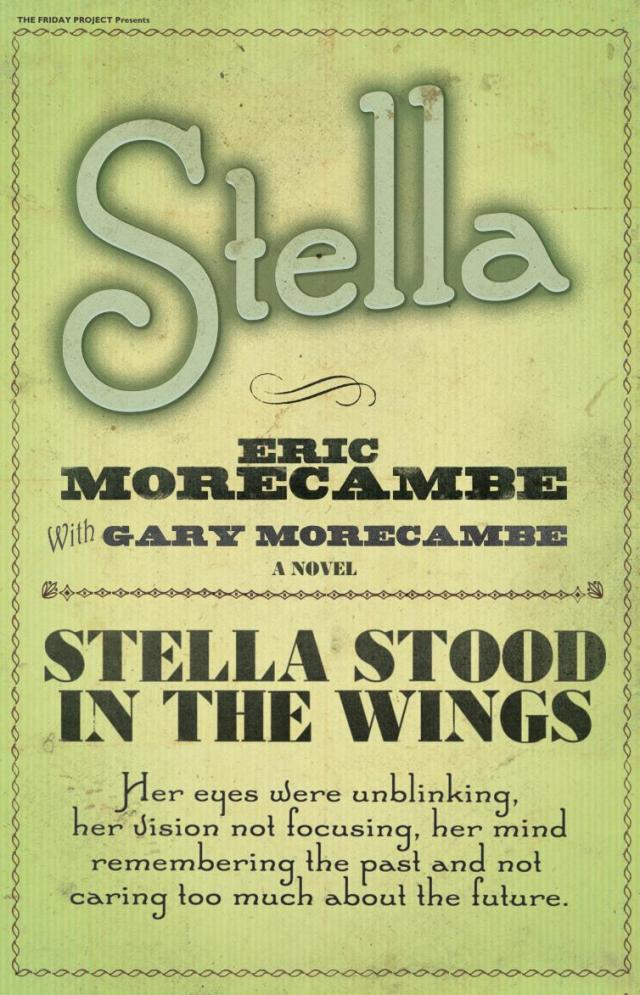


She paid the driver. ‘And don’t forget; pick me up here at four thirty – no later.’
‘Yes, Miss Raven,’ he smiled. He thought it was clever to show her he knew who she was.
She went inside the flat. Annie was out shopping and Bernard was out seeing Mike Farrow, though she had no idea why.
She drifted over to the largest pane of glass that kept vigil over the bustling streets. It was a miserable day, and as she stared out on to the grey afternoon she wiped a finger across the window, picking up a film of dirt. Doing this she found it wasn’t as dull outside as she first thought, and she made a mental note to instruct Annie to wash down the windows.
She moved into her bedroom. The flat seemed deadly without Annie or Bernard there. She paused to examine herself in the dresser mirror. She thought her eyes were showing premature wrinkles at the corners, and so tutted. ‘Your Royal Highness,’ she said, holding her hand out and taking a short, delicate curtsey.
She turned sideways and, placing her fingers on her abdomen, checked her figure. She decided it wasn’t too bad. Or as Bernard would say, ‘Pretty hot stuff, angel.’ She stopped her self-examination.
Now what will I be needing tonight? she asked herself. I think I’ve got everything at the theatre. Oh, wait a bit. What about earrings? The ones Bernard gave you for your birthday? He’d appreciate you wearing them tonight – and they do look lovely.
She went on a massive earring hunt, but failed to find them. She was sure he wouldn’t have put them in his own drawer – unless by mistake. It was worth checking. It was a simple enough error to have made if he’d been in a hurry to go somewhere.
She pulled back his drawer and rummaged inside. Within moments her attention was taken by the hand-delivered letter of the other night. She pulled it free from the other piles of papers and forms. As she opened it she sensed it had nothing to do with property. That was confirmed when she saw the Charles and Farrow Management heading.
The cab driver couldn’t believe it. Five o’clock and not a sign of her. She’d been the one moaning about the time. No later than four thirty, she’d told him. He pressed once again on his car horn. Nothing. He tried the door-bell. A shabby-looking woman answered. ‘What’s to do with you, then?’ asked Annie. He was a little startled that someone had come to the door. When he’d tried a short while back, no one had been in.
‘Is, er, Miss Raven ready?’ He gave a single nod at the car to explain who he was.
‘She’s gone,’ she said, and pulled the sort of face that said, are you sure you haven’t lost your marbles?
‘Bloody marvellous,’ he cursed, but beneath his breath.
‘She went out about four fifteen. She looked in a hurry. I presumed she was late for her show.’
‘Four fifteen,’ sighed the driver. ‘Thanks, ma’am.’ He doffed his flat cap and returned to his vehicle. ‘Bloody stars. All the bloody same.’ The car coughed into life, and he drove away in an angry mood.
Henry’s gold-plated Swiss clock hammered out six rings from where it was stationed in the corner of his office. He looked at Mike, who returned the look. ‘I think we appear quite dashing,’ he considered, with a broad smile.
‘Perfection,’ exaggerated Mike. Henry gave his younger partner a hefty thwack across the back which nearly jarred his spine. Henry was always full of high spirits and generous comments on the night of a Royal Show. It was the cream-on-top-of-the-cake part of the business. He revelled in it.
‘Fingers crossed the show will be a big success tonight,’ said Henry.
‘I’m sure it will be,’ said Mike. ‘After all, that’s why we went to Bradford first.’ Henry grunted his agreement. Mike wiped his hands on his trouser legs for the third time in as many minutes. ‘We’d better get going,’ he said. ‘We don’t want to keep the King waiting.’
‘I think you’re right,’ said Henry, and then added, when seeing that Mike looked a little ashen, ‘and you don’t want to worry yourself too much. Tonight will be just wonderful.’
It wasn’t ‘tonight’ that worried Mike. It was wondering if Bernard had decided to break the bad news to Stella before the show or after.
Henry took one last look at himself in the office mirror. He adjusted to the same pose he would adopt for any press or publicity photographers. No one caught Henry’s ‘bad side’.
He straightened his bow-tie and, when satisfied, turned to face Mike. ‘Come on then,’ he beckoned. ‘Let’s get the wives and follow the road to the Windmill.’
Bernard watched at a gracious distance as King George was led through a line of theatre-management handshakes. He continued watching as he was then taken by Vivian Van Damm into a private room to be entertained until the commencement of the show. Henry and Mike plus their wives were also inside. Van Damm’s wife, Natalie, joined them a minute later. The King was unaccompanied except for his equerry, who had the ability to be only a step behind him yet without seeming to intrude.
When the initial excitement of his arrival had quelled, Bernard rushed backstage to ask the performers if there had been any sign of Stella. There hadn’t been. He grabbed a doorman who was whistling by him. ‘I need a phone,’ he demanded. The man pointed down the winding corridor.
‘Second left, first right. Can’t miss it.’
He ran up to it and clasped it as if it was the source of all life. He rang his home number for a full minute. Finally it was answered – by Annie. No. She wasn’t there. She’d left hours ago.
Bernard told himself she’d probably turn up at any second, but failed to convince himself. He made in the direction of the private room where the King was being entertained. Naturally, being the husband to the star, he had been invited to join the private gathering.
He prayed that it was her cab that had broken down and caused this delay. He had the premonition that it wasn’t that at all; that it was the news of her sister. But how had she found out? Only Mike knew. But there were her parents. Yet he hadn’t seen any mail in from them. No. It had to be the letter.
My God, he thought, if she’s found that then there’s no telling what she could do. We must have been crazy not to have told her straight away and got everything over and done with then and there. We acted cowardly. We were scared of what she would say and do.
By coincidence, Henry emerged from the room as Bernard went by it. ‘Henry,’ he called out. ‘We’ve a problem with Stella. She hasn’t turned up.’
‘Hasn’t turned up?’ he repeated, in a loud whisper. ‘She’s due on in half an hour for the opening number.’ Didn’t he just know it.
Bernard swayed on his feet. The tension was driving him frantic. ‘Well, she hasn’t turned up and she was aiming to be here for five, would you believe?’
Henry tried not to reveal how panic-stricken he was. Dignity at all times, was his motto. ‘Okay, now. I’ll rescue Mike and the three of us will make a dash back to your place and see . . .’
‘I’ve tried that. I rang. Annie said she’s not there. She saw her leave.’
‘Dammit!’
‘But wait a bit.’ Bernard’s mind was racing as fast as the time until the curtain was due up. ‘What if Annie was told to say she wasn’t in?’ Henry looked puzzled.
‘What on earth would she do that for?’ Obviously he hadn’t been told about Sadie, thought Bernard.
‘It’s a long story. I’ll tell you on the way there. Go and get Mike.’
‘I’ll do that now. And Van Damm can take care of things this end.’
He slipped back into the cordial atmosphere of Van Damm’s private room. If only they all knew, he thought. He managed to disengage Van Damm from the King and left His Majesty talking to Mrs Charles. They were talking about shooting. She told him how Henry had once taken her to Norfolk, but she’d been such an encumbrance he had banned her from any such further excursions. Having told Van Damm the problem, Henry said, ‘Start without her.’
‘But she comes out with the whole cast to sing, “Welcome to our merry little show.” ’
‘It doesn’t matter,’ said Henry, emphatically. ‘She’s the star of the show. They don’t necessarily expect to see her in the opening sequence.’
‘I’ve just been talking to your wife about shooting, Mr Charles,’ said the King.
‘Er, yes, Sir. I took her along once: with dire consequences I’m afraid.’
Lord, don’t trap me now, he said to himself.
The King gave him a knowing smile. ‘I think one’s wives are prone to excitement when on a shoot. Must be the heat of the moment. The thrill of the kill.’
‘I think that must be it, Sir.’
Van Damm quickly intercepted with the champagne bottle, and Henry was able to excuse himself, saying he had to check up on various matters. His Majesty quite understood. ‘Could you spare me a moment, please, Mike?’ Mike put down his half-filled glass. He sensed things weren’t running too smoothly by his partner’s rare show of agitation.
‘Tell me more about this Stella Raven, Mr Van Damm,’ said the King. ‘I’ve heard some splendid reports on her. She’s done remarkably well for someone so young, wouldn’t you say?’ Van Damm told him everything he knew about Stella Raven – omitting, by choice, the fact she was perilously close to missing her first Royal Gala show.
As the curtain lifted to loud applause, Henry, Mike, and Bernard fell into the flat. Annie was shocked by all these men tumbling in on her. She recognised who they were, fortunately, or she may have started screaming rape. ‘Ooh, Mr Goldman.’
‘Hiya, Annie. Has Stella been back yet?’ He was looking for flaws in her natural expression; signs perhaps that she was hiding her in one of the other rooms. But no. There wasn’t even a hint that she was anything more than genuinely surprised by their bursting in.
‘I told you when you rang. She left here at about four fifteen. I’m sure that was the time. You see, I had a cake in the oven and I had to . . .’
‘Did she say where she was going?’ interrupted Henry Charles. He was glad his wife didn’t have a live-in help. Two women in one house were two women too many, in his mind.
‘No. I thought she was going to the theatre.’
There was a frailty in her voice, and her face was starting to show the same concern that theirs were. ‘Miss Stella. She’s all right, in’t she?’
‘That we don’t quite know as yet,’ said Henry, discouragingly.
‘Maybe she has a favourite haunt; somewhere she likes to escape to,’ suggested Mike. A cool breeze filtered through the hallway, making them all shudder: all, that is, except for Henry. He never felt the cold. He put it down to being overweight.
‘Not bad thinking,’ congratulated Bernard, and he gave Annie a hopeful look. ‘Do you know of anywhere she’d go if she were, say, a little down in the dumps?’ Annie prodded her bottom lip as she thought.
‘Nowhere special, like. If she’s ever really upset or in a bad mood about something she goes to see a picture.’
There was a brief pause before all three men gave a sullen sigh. ‘We’d never find her in a movie house,’ said Bernard. ‘Not even if we knew which one she was at.’
Mike said, ‘Surely she wouldn’t have gone to see a film with her own show starting and her sister dead. She may be devastated, but she wouldn’t do that.’
Annie’s eyes widened. ‘Dead?’ she whimpered.
Bernard rested an arm on her shoulder, but it wasn’t a particularly affectionate one; more a dutiful arm. ‘Let’s get back to the theatre,’ Henry said, resigning himself to the truth: his artiste had let him down and he’d have to make an announcement. He would probably say that she was ill. Audiences forgave illness. It’s about the only excuse they do forgive: that and death. Van Damm would do the explaining to the King.
There was nothing else to be done. They went outside to the waiting cab. Annie closed the door and realised that she was trembling. ‘Oh, Miss Stella. Don’t do anything silly,’ she implored the empty room.
Stella sat down on a bench overlooking the river from the Victoria Embankment. She stared as the sunset took the light from the water and left behind it a dark, ruffled blanket. As she watched, an old man in rags approached. His trousers were held up by a piece of rope and his hands were clasped lovingly around a bottle of label-less wine. His hair was long and uneven; evidence he didn’t have too many barbers as friends. He sat down beside her.
‘Hello. You on your own?’ She nodded, but continued looking blankly out across the Thames. ‘And me,’ he said. ‘Always on my own. Mind you, I like my own company.’
Now she glanced at him. She thought he seemed a sweet, gentle man and she felt sorry for him. His face was stained with ingrown dirt from a lifetime of rummaging through dustbins and sleeping in gutters, and his hands were covered in calluses for the same reason. ‘Down on your luck, are you dear?’ She nodded again.
Then she said, ‘That’s about the truth of it.’ She found her voice didn’t sound like it belonged to her. It was more like listening to one of her own recordings at the studios.
‘Here you go, love,’ he said, forcing the bottle into her hands. ‘Have a swig. It’ll warm you up.’
It tasted sour and unpleasant, but she was surprised at how soothing it was. She didn’t dare ask him what it was – she was too afraid to know; or, perhaps, too afraid that he might not know. ‘Thanks,’ she said, and passed it back.
‘That’s okay.’ He prodded his chest with it. ‘I’m always down on my luck.’ Then he added with a note of optimism, ‘But I have big plans, though. Big plans. I’ll get myself together one day.’ He raised his head with dignity and pride. ‘It wasn’t always like this. Used to have a proper job, I did. Worked at Waterloo Station.’
‘Did you?’ She tried to sound interested, and in a strange sort of way she was; it was just that she was a little distracted at the moment. She had run away for some peace and quiet:to escape her problems – the reality. To consider her life.
He moved up closer to her, and began examining her face as if she was a portrait on show in a gallery. ‘I’m sure I’ve seen you somewhere before,’ he said, with a trace of suspicion in his voice. ‘You’re not on the run from the beak, are you?’
‘No,’ she said. ‘I’m on the run from myself. I’m supposed to be on-stage in a minute.’
‘Ah, that’s it,’ he said, excitedly. ‘I’ve seen you in newspapers and on billboards and things.’
His mood suddenly changed. No longer was he hospitable. He felt cheated and now regretted having shown her kindness by giving her a drink of his all-too-precious wine. ‘So you’re not that much down on your luck, then?’ he said, bitterly. She could feel his bitterness, and it upset her. She couldn’t understand why he should have become nasty towards her just because it turned out she was well known. She’d taken him on face-value; couldn’t he do the same?
She wondered if he really had had a proper job once, and by letting things slip he’d ended up in this sad and sorry state. She could see herself in his place, and sensed how easily it could happen. You become unpredictable, emotional, unreliable, argumentative. Then, perhaps, you begin to drink and your friends laugh at first. Then after a while, they don’t like being associated with a drunk, so they desert you.
It was a terrifying thought, and one that seemed to propel her back into reality. ‘I must go now,’ she said. ‘Thanks for the drink.’ How silly that sounded.
She didn’t expect a smile from her friend-turned-enemy, but she gave him one just the same. She thought about leaving him some money, but presumed he was too proud. With her hands dug deep into her pockets, she strode along the Embankment and took an eventual left turn towards Piccadilly.
It was nearing the end of Milton’s act. One of his duties was to lead into Stella, who came on to close the first half. It was an idea Woody had had so as to give the audience a taster of what was to come later. Leave them wanting more. It was also good to close the first half on big applause. It was said to have a good effect on the critics who were watching. They’d be less inclined to make derogatory comments if the show was being received so well.
Milton made a meal out of taking his bow: first to King George in his privileged singular position and then to the sea of anonymous faces. He received good applause; far better than he’d had in Bradford. He deserved it. His act was much tighter since Bradford.
The clapping subsided. He wished it could have gone on all night. ‘Your Royal Highness, Ladies and Gentlemen. I now have great pleasure in giving you the star of our show; indeed, our country’s most popular female star: Miss Stella Raven.’
Huge applause followed while Milton skipped off the stage, leaving it open for Stella to bounce out onto.
At the rear of the single-tier theatre, Henry, Mike and Bernard burst in. ‘Christ! They’ve let them think she’s here,’ said Henry, through the machine-gun clapping of hands. ‘They’ll go berserk when they find out the truth.’
. . . and so Stella was standing in the wings, the applause sweeping over her like gentle summer rain.
I can see you now Sadie. No. I don’t like this Mission Hall either. We’ll never work here again. We’ll tell Mam and Dad about it.
‘Go on, Stella,’ urged Milton. He saw the vague, distant look in her eyes. ‘Are you feeling okay?’ She gave a single nod, but wasn’t really aware she had. Her enthusiastic reception was starting to wane, and in certain corners slow hand-clapping could be heard.
Sadie and Stella were watching Pop shelling shrimps and digging deep into his endless pockets for green arrows. And there was Mrs Bunting: what was she doing at the market? Probably shopping for her husband’s tea.
The picture blurred and changed.
Stella, Sadie, and Tommy were climbing into a tram, cursing their luck at not winning the competition. Then they were hunched over a local paper, reading about themselves; broad smiles across their confident, young faces.


