

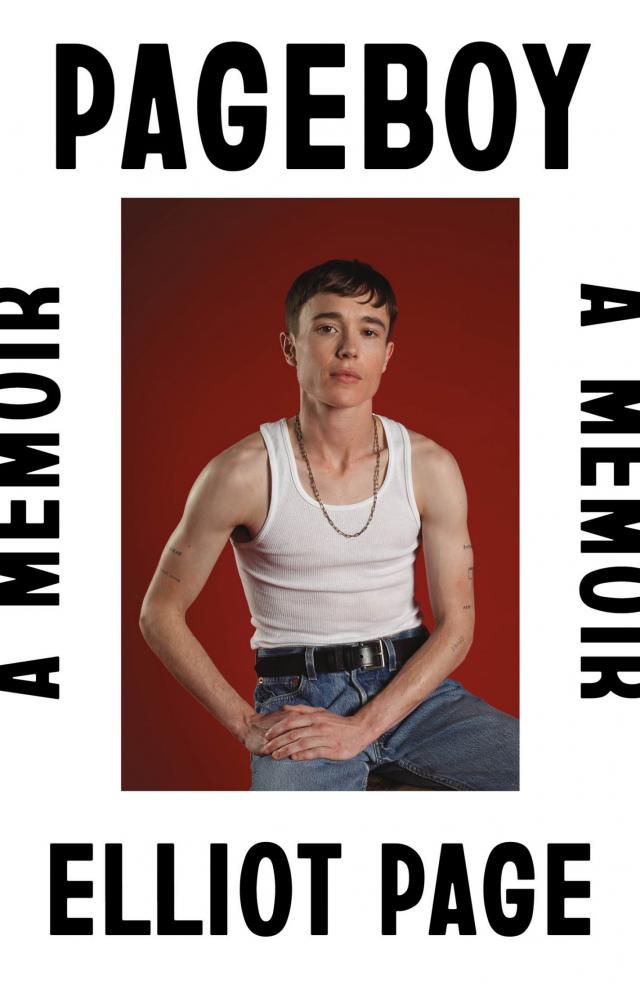
Pageboy, page 5


“Yeah?” I took a right out of my room and entered her office. The original hardwood floors creaked under the feet, the house already eighty years old at that point. She swiveled in her chair to look at me, pale, an email open on the monitor.
Hi, I’m a good friend of Ellen’s and I’d really love to surprise her in Toronto. I haven’t seen her yet since she moved …
A friend then called, telling me she got the same email and thought it suspect. Another pal forwarded his email. He was homing in.
He had virtually all of my contacts. I’d been working since I was ten, having filmed in places as close as Charlottetown, Prince Edward Island, and as far as Saskatoon, Saskatchewan, Berlin, and Lisbon. I could easily imagine a friend in Halifax thinking it was a pal of mine in Ontario. I raced to email everyone I knew, attaching an image of him. He had sent it not long before. A selfie as they are now known, his face filled the screen. Eyes disturbed, he leered at me. Wiebke called the police.
I was relieved when a woman arrived at the door. The officer walked in the house, head rotating, eyes searching every corner, a glance up the stairs. She said hardly anything initially. I imagined her in cop school being taught how to enter a place. The body language, stiff and solid and intentional. The tone flat. The face expressionless. Barely any eye contact at first. She combed the surroundings, assessing the danger. We showed her the emails, the photos, the links, and the lyrics. All of it. She was alarmed. I found myself looking out the window, imagining him suddenly across the street. A quick cut, the jump scare.
They phoned my father to explain the situation. It was a relief to have him know, for my parents to know. I was exhausted from the ceaseless state of disquietude. I took the phone, pressing it to my ear, my heart rate finally beginning to slow. “I’m going to come to Toronto and kick your ass,” was the very first thing he said to me.
He was furious. Livid at what I had done, befriending an older man online when I was a kid. I went numb after that, his angry voice fading away, but I will never forget those words. I’m going to come to Toronto and kick your ass. All the emails from my stalker paling in comparison.
When the police later went to the stalker’s house, he simply asked, “Does this mean I get to see Ellen in court?” Their presence didn’t faze him, if anything it titillated him more.
Between that comment, the emails, and his collection of photographs and other material pertaining to me, I was able to get a restraining order.
Every day I’d wait on Ossington Avenue just north of Queen West to catch the 63A to go to school, about a thirty-minute ride. I went to Vaughan Road Academy, where they had a program called Interact. It was one of the main reasons I moved to Toronto.
If you are involved in dance, theatre, music, or athletics, we offer you our unique integrated program with timetables that are built around your auditions, rehearsals, performances, and competitions … This is the only program in Ontario that offers you this type of flexibility. Our focus is to provide you an education that works with your outside interests.
Flashes of him taunted me. Coming up from behind with a knife, stabbing my back. Stepping onto the bus, charging at me, blade penetrating my chest. Waiting when I got off the bus, that last short walk to school, a bullet to the head.
I had to bring his picture to school, handing copies out to my teachers, who presented the photo to the rest of the class in a morbid show-and-tell. I was filming the television show ReGenesis at the time, with Mark, who had first told me about Interact. We’d met a year before and become inseparable. When leaving set for the day, the driver would take an obscure route, making sure no one followed. Still, it would be easy to find out where the studio was located. Again, pictures were shown at work. I couldn’t stop visualizing him ending my life.
Shortly after, I was walking east down Queen Street West toward Yonge Street where I would catch Line 1 at Queen station, across from the Eaton Centre, Toronto’s largest mall. I’d take the nine-stop journey north up to Mark’s house, exiting at Eglinton station.
I was on the north side of the street, across from what was the MuchMusic building. For my non-Canadian readers, MuchMusic launched in 1984 and was essentially the Canadian MTV. I felt a hand on my right shoulder, it stroked down to my elbow.
“You look familiar.” I turned and saw his face.
He stood in front of me, casual, a hint of a smile. I pictured a knife entering me, shimmering in the sun each time he pulled it out to stab again, a sacrifice. He had made it clear on multiple occasions that no one was going to get in the way of us, our connection, our love. Not my father, not the police.
“Come with me and let’s talk.”
I noticed a little white dog at his feet. This seemed unusual, he lived almost an hour from the city.
I could not move. I could not speak. You’re going to die now, I thought. This is it.
“Come on, just come with me, we can go talk,” he said, trying to persuade me with a gentle tone.
An intoxicating smell of refined sugar wafted out of Cafe Crepe’s take-out window, a sweet buckwheat treat. The iconic café with its giant red neon sign was locked in my peripheral vision. Never had I felt that frozen, Encino Man waiting to be found. My chest unlocked. Rise and fall. My lungs returned to their function.
“You can’t be here.” All I managed to get out, a record skipping. “You can’t be here, you can’t be here, you can’t be here.”
People swiped by, flashes behind him, one of the busiest stretches of Toronto. I tried to pull out my focus, dolly back. I raised my voice.
“You can’t be here, you can’t be standing there!”
Nobody looked.
“Just come with me, we can go for a walk.” He took a small step, gesturing toward me.
“Don’t hurt me! Don’t hurt me!” I shouted, bidding on don’t hurt me to attract pedestrians’ attention. Stepping back, I put my hands up. “Don’t hurt me, don’t hurt me!”
Passersby craned their necks. No one interfered but it was sufficient, causing him to retreat. He took off, the little dog marching at his feet.
I fled. Running, I wove in and out, zigzagging through streets. In retrospect a fruitless endeavor, assuming he had discovered my address. I called my father the moment I got home. At first he didn’t believe me.
The police were notified. The man was arrested, having not complied with the restraining order. I didn’t press charges.
It turned out he had undiagnosed schizophrenia. We came to a settlement of sorts. He would live with his father and begin mental health treatment. He would not come near me or contact me in any shape or form, which he has not. It all ended rather abruptly. And if there is a tiny morsel of goodness in all of this, it’s that he was finally seen. He could now receive support for his pain. Perhaps that was all he was asking for? I hope he got the help he needed, I hope he never did this again.
I managed to forgive him, but it wasn’t easy. There was a lot at play when I would abuse my body, having done it since I was a small child. This event hurled it all forward. As if I was running through an unconscious checklist:
People cut themselves, I’ll try that.
People get wasted, I’ll try that.
People stop eating, I’ll try that.
People repress, I’ll try that.
I would take a small knife to my room, place the tip on my upper arm, close to the shoulder. Pressing down, dragging it slightly, enough to see that red, enough for that relief. That did not last long. I got wasted one night by myself in Toronto, this is something people do to help, my brain divulged. I drank vodka straight from a juice glass at the small blue chrome dining table in the kitchen. Sipping, then tipping the bottle for more. Poor Wiebke came home to a wasted, emo teenager, Broken Social Scene’s “Anthems for a Seventeen-Year-Old Girl” on repeat.
Used to be one of the wretched ones and I liked you for that
Now you’re all gone, got your makeup on and you’re not coming back
Can’t you come back?
Number three is what stuck. It seemed to be the solution, food restriction my new norm. This all coincided with puberty, my body continuing to develop, but not like Mark’s. Reality settled in, I would never see myself in the mirror, I’d forever feel this disgust, and I punished my body for it. Research has shown that transgender and gender-nonconforming youth are four times more likely to struggle with an eating disorder.
My brain became consumed by counting calories, time passing, how to make myself full without making myself full. When to make the clear herbal tea that satiated my gut just enough. Endless gum chewing. Avoiding. I’d measure my All-Bran in the morning, the soy milk, too. Dismissing Wiebke’s concerns, I’d bring a protein bar to school for lunch and allow myself to eat only half of it. At least the flashes of him had dissipated. At least walking down the street I could stress about bread instead of the residual terror. A knife in the back. Putting my fear in a sandwich so I could control it. So I could forget it.
It is not as easy to forgive my father. I’m going to come to Toronto and kick your ass. When his kid needed safety, when his kid needed love, when his kid needed protection, he threatened violence. Outraged because I had the audacity to communicate with an older man on the internet when I was a minor. If I didn’t deserve care in that moment, if I didn’t deserve safety and love, when would I ever? That sentence has lived in my body much longer than the man’s threats, his obsession, his fingers fondling my arm.
7
LEECHES
I learned early on I could not have my parents at work with me. Sitting on a small wooden swing, I was filming a scene of Pit Pony in the front yard of the MacLean family home in Cape Breton. I was acting with Shaun Smyth, an astute actor, understated and nuanced. We swayed gently as his character consoled mine, his hands dirty from coal. I liked him; he was handsome, slightly gruff but kind. Working with kids can be a lot, and I appreciated his generosity and patience.
My father was in my periphery. My focus went from the moment in the scene to my dad with his 1970s Nikon taking black-and-white photographs. I clamped shut, that freezing again. Whatever that thing was I could supposedly do—create an honest emotion with an expressiveness that the adults said translated to the screen—abruptly stopped when I felt his presence.
A similar sensation occurred when my mom would watch. This was around when I was arriving at the age where being a tomboy was no longer a cute look. The lurking pressure to change was omnipresent, a consistent state of disapproval. I imagine she may have prayed for me to not be gay. I needed some space.
At eleven, I had asked them to hide if I was shooting, but that wasn’t enough. No longer could I release myself to the emotion, that sensation, the rush that I loved, it would stop. Eventually I suggested they not come at all. They did not take it personally, even though I was unable to articulate the why of it all. It shocked me that I had asked for what I needed, despite being afraid, and that someone had listened. Perhaps they were relieved. They both worked full-time and often it wasn’t even possible for them to show up.
For the second season of Pit Pony, the horse wranglers, Lee and Jerry, and their sixteen-year-old daughter, Fallon, were my chaperones. They were kind and let me live with them. They had a house that was close to the soundstage and a ranch about a twenty-minute drive from Sydney in Leitches Creek. We would swim in the river on their property, and I would practice flipping my wet hair to the right like the other boys did when they emerged from the water. We would pick leeches from our bodies, just grabbing and yanking, unbothered. It made me feel like the young guys in Stand by Me, except they were terrified of the leeches and I was not. It made me feel brave. Did that up my chances to achieve my dream, to look like River Phoenix in a white T-shirt?
Despite playing and having to dress like a girl in 1904 while working, these times let me be closer to the boy I was. I was somewhere new, with adults, people who had not known me before. I was making friends, real ones, the kind who encouraged my feelings, championing that little guy, letting him breathe. I had an opportunity to exist as myself, start from scratch, the cool loner on the ranch. This freedom on and off set transferred to the work. I loosened up. I was happy.
My parents almost never came to work with me ever again. If they did, it was just a visit, but I would not allow them to come to set. This increased my vulnerability in ways, I’m sure, but having witnessed some of the worst stage parents you could imagine, I am glad I experienced the other version. I’ve watched adults slowly chip away at their children, their overprotection a form of neglect. If they were a character in a screenplay the first note would be “too much,” but they aren’t actually watching, they aren’t really listening. All the value wrapped up in work, in image, in followers. The opposite of what acting should be, a disintegration of ego, not the stroking of one. It ends careers.
Even though I preferred my path, my lack of healthy boundaries still did not bode well. As puberty transmuted me into a character I had no interest in playing, my isolation, insecurity, and unknowing grew. I desperately needed to anchor myself. In new cities, with no friends, alone in hotel rooms, it was not hard for someone to prey. I’m sure they sense that. Like the man I met online. A lonely kid is a perfect target.
There was the director who groomed me when I was a teenager. His frequent texts made me feel special, as did the books he gifted me. He took me to dinner at Swan on Queen West. Stroking my thigh under the table, he whispered: “You have to make the move, I can’t.”
On a project not long before, a crew member had done the same. In between takes he would talk to me about art and films, Kubrick naturally. He invited me to hang out on a Saturday afternoon. After a walk in the rain he grabbed me, asserting we go upstairs. Pulling me in to his body, I could feel his hard cock against me.
Just before I turned eighteen, I filmed my first movie in Los Angeles. I hadn’t made a film in America before, and it was the first time I’d been to LA. I stayed at the Oakwood Apartments in Burbank, tucked into a hill right off Barham Boulevard. Famous for all the child stars who have passed through, Neil Patrick Harris, Kirsten Dunst, Jennifer Love Hewitt. The property was always teeming with stage parents.
Hard Candy begins with a successful photographer named Jeff, played by the illustrious Patrick Wilson, chatting with a fourteen-year-old girl online. The plot hard to believe considering what had just transpired with my stalker. The banter is flirty, youthful. They meet up, he takes her home in his Mini, we are concerned for Hayley. They are drinking. Jeff wants to take photos, his tone shifts to frustration, aggression peeking through. However, the tables turn. A spiked screwdriver brings him to the floor and he wakes up tied to a chair.
Hayley believes he is involved in the kidnapping and murder of a girl her age, and makes it clear to him that if he doesn’t confess, she will castrate him, a shockingly simple surgery that she has taught herself to do as an honors student. She freezes his dick with a giant bag of ice. Jeff is in agony, hands turning blue, pleading desperately, swearing he had no involvement. He screams, but it’s useless. Hayley performs the procedure and dumps his testicles down the kitchen sink. Jeff can hear the garbage disposal masticating his balls.
Ultimately, she doesn’t really perform the surgery, but Jeff does admit to being involved. “I just took pictures,” he says. Just a pedophile.
We shot the film, almost all of it, in a small studio close by the Oakwood Apartments. Burbank, often considered the media capital of the world, is home to Walt Disney Studios, Warner Bros., Nickelodeon Animation Studio, and a massive porn industry. The majority of Hard Candy was filmed on a set. The interior of Jeff’s house was sleek, minimal, that mid-century cool. The ever-hip professional, Mini-driving, sensitive guy. The friend who could never.
There was a man working on the film who always carried a small book of crosswords, the most formidable ones, I was told. He has since gone on to make films of his own. He was funny and strange, and he was kind to me. We spoke about books, discussed films and obscure, depressing graphic novels. A glint in his eyes made me feel seen, supported. He had a sweetness even.
We made the film in eighteen and a half days, an all-consuming, emotional sprint. I was giddy with exhaustion by the end. The Hard Candy wrap party was held in downtown Los Angeles, an elevator ride up a tall building. There was a rare camaraderie among all of us, what you hope for when creating something. We drank and danced and had tearful goodbyes.
My crossword puzzle friend gave me a ride back to the Oakwood Apartments. We drove through the cluster of downtown skyscrapers that towered over us ominously. It was very late, and I laid my head against the window as we got on the 101. I loved the glow of the freeways at night.
Pulling up to the Oakwood, I watched him type in the security code and the gate opened slowly. He walked me to the apartment, followed me in. He stood noticeably close, his body brushing my behind. His voice sweet, his hands on my shoulders, he guided me to the bedroom. I went stiff with a smile. Unsure what to do as he stood tall and removed his glasses. He laid me down on the bed. Starting to remove my pants, he said, “I want to eat you out.” I froze. After it was over, he tried to stay in the bed with me. I had thawed marginally and told him he couldn’t, to get out. He slept on the couch.
Turning eighteen further frayed my boundaries, an unspoken permission slip I didn’t consent to. At the start of a project, a crew member offered to take me apartment hunting on the weekend. It was a nice gesture, but something felt odd. It was far beyond a typical action for someone in her job position. I’d been staying in a hotel up until that point and needed out, a proper fridge at least, so I said yes. She picked me up in her black Audi.


