

Marilyn in Manhattan, page 1


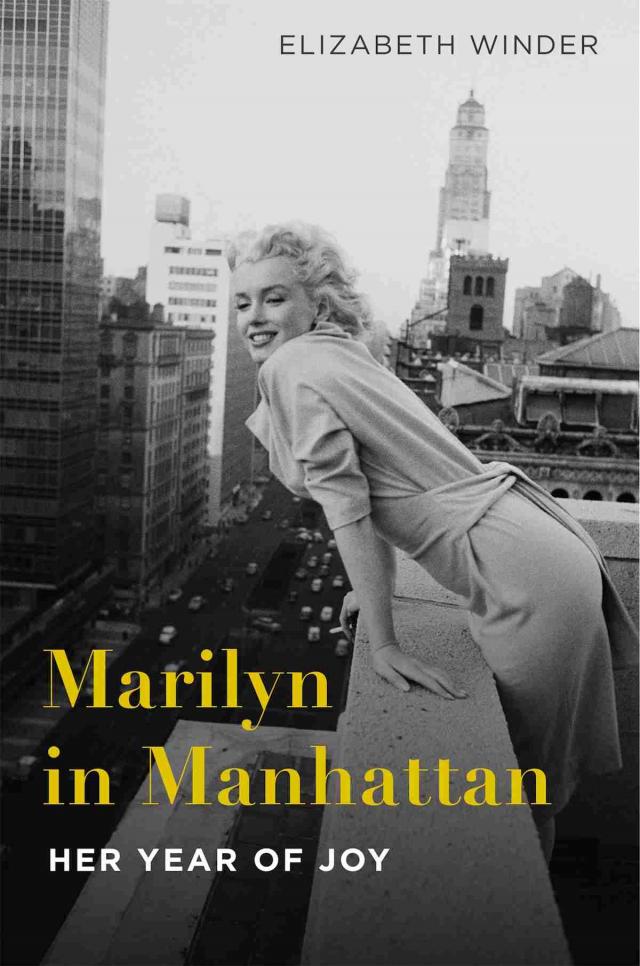
Begin Reading
Table of Contents
About the Author
Copyright Page
Thank you for buying this
Flatiron Books ebook.
To receive special offers, bonus content,
and info on new releases and other great reads,
sign up for our newsletters.
Or visit us online at
us.macmillan.com/newslettersignup
For email updates on the author, click here.
The author and publisher have provided this e-book to you for your personal use only. You may not make this e-book publicly available in any way. Copyright infringement is against the law. If you believe the copy of this e-book you are reading infringes on the author’s copyright, please notify the publisher at: us.macmillanusa.com/piracy.
for Mary Angelo
Cast of Characters
(in order of appearance)
MILTON GREENE — Fashion photographer; Marilyn’s best friend and business partner from 1954 to 1956
AMY FRANCO GREENE — Marilyn’s close friend; married to Milton Greene
SHELLEY WINTERS — Hollywood friend of Marilyn’s; a member of the Actors Studio and Marilyn’s classmate in 1955
DARRYL ZANUCK — Executive producer and studio chief of Twentieth Century Fox
JANE RUSSELL — Marilyn’s friend and costar in Gentlemen Prefer Blondes
JOE DIMAGGIO — Major League Baseball player; Marilyn’s husband for nine months in 1954
CHARLIE FELDMAN — Marilyn’s agent in 1954
BILLY WILDER — Directed Marilyn in The Seven Year Itch
JAY KANTER — Marilyn’s agent from 1955 to 1956
FRANK DELANEY — Marilyn’s lawyer in 1955 and 1956
MICHAEL CHEKHOV — Marilyn’s Stanislavski-trained drama coach in 1953 and 1954
SAMMY DAVIS JR. — Actor, singer, entertainer, and friend of Marilyn’s
ELSA MAXWELL — Gossip columnist, professional hostess, and friend of Marilyn’s
KITTY OWENS — The Greenes’ cook; befriended Marilyn in late 1954
GEORGE NARDIELLO — Fashion designer; met Marilyn in late 1954
NORMAN NORELL — Fashion designer; met Marilyn in late 1954
ELI WALLACH — Member of the Actors Studio; befriended Marilyn in 1955 and remained a close friend until her death
BEN GAZZARA — Member of the Actors Studio and Marilyn’s classmate in 1955
DEAN MARTIN — Actor, singer, entertainer, and friend of Marilyn’s
JERRY LEWIS — Actor, singer, entertainer, and friend of Marilyn’s
MILTON BERLE — Actor, television personality; Marilyn’s friend and former lover
CARSON MCCULLERS — American writer; befriended Marilyn in 1955
TRUMAN CAPOTE — New York author; befriended Marilyn in 1955
CONSTANCE COLLIER — English actress and theater coach; Marilyn’s first drama coach in New York
CHERYL CRAWFORD — Influential theater producer and director; befriended Marilyn in 1955
LEE STRASBERG — Creative director of the Actors Studio and Marilyn’s mentor
LEO LYONS — New York journalist; befriended Marilyn in 1955
EARL WILSON — New York journalist and a friend of Marilyn’s
ROBERT STEIN — Journalist; spent time with Marilyn in March 1955
ED FEINGERSH — Photographer; spent time with Marilyn in March 1955
EDWARD R. MURROW — Prizewinning journalist and television personality; interviewed Marilyn in March 1955
ELLEN BURSTYN — Member of the Actors Studio; Marilyn’s classmate in 1955
DELOS SMITH — Member of the Actors Studio; Marilyn’s classmate in 1955
MARLON BRANDO — Member of the Actors Studio; Marilyn’s friend and classmate in 1955
JACK GARFEIN — Member of the Actors Studio; Marilyn’s classmate in 1955
CARROLL BAKER — Member of the Actors Studio; Marilyn’s classmate in 1955
MAUREEN STAPLETON — Member of the Actors Studio; Marilyn’s classmate in 1955
LOUIS GOSSETT JR. — Member of the Actors Studio; Marilyn’s classmate in 1955
KIM STANLEY — Member of the Actors Studio; Marilyn’s classmate in 1955
JACK LORD — Member of the Actors Studio; Marilyn’s classmate in 1955
MARGARET HOHENBERG — Marilyn’s psychoanalyst in 1955
PAULA STRASBERG — Former stage actress; married to Lee Strasberg; Marilyn’s surrogate mother and confidante
SUSAN STRASBERG — American actress; daughter of Lee Strasberg and a friend of Marilyn’s
JOHNNY STRASBERG — Lee and Paula Strasberg’s son
SAM SHAW — New York photographer and a friend of Marilyn’s; they met in 1954 while filming The Seven Year Itch
NORMAN ROSTEN — New York poet; friend of Arthur Miller’s; befriended Marilyn in 1955
HEDDA ROSTEN — Norman’s wife; befriended Marilyn in 1955
MAURICE ZOLOTOW — Journalist; interviewed Marilyn in spring and summer 1955
JIMMY HASPIEL — Teenage fan who befriended Marilyn in 1955
THE MONROE SIX — Six teenage fans who befriended Marilyn in 1955
ARTHUR MILLER — American playwright; Marilyn’s lover in 1955 and her husband from 1956 to 1961
ELIA KAZAN — Stage and film director; Marilyn’s friend and former lover
JOHN GILMORE — Actors Studio member; Marilyn’s classmate in 1955
JOSHUA LOGAN — American stage and film director; directed Marilyn in the film adaptation of Bus Stop
JAYNE MANSFIELD — American actress and Marilyn’s supposed blonde rival
TERENCE RATTIGAN — British dramatist, writer of The Sleeping Prince; met Marilyn in January 1956
LAURENCE OLIVIER — British actor; Marilyn’s director and costar in The Prince and the Showgirl
CECIL BEATON — British fashion and portrait photographer; photographed Marilyn in February 1956
DON MURRAY — American actor; Marilyn’s costar in Bus Stop
Preface
“In a dream you saw a way to survive and you were full of joy.”
JENNY HOLZER
In late November 1954, a woman who identified herself as Zelda Zonk drove quietly to the LAX airport and boarded the evening’s last plane to New York. Accompanied by a young photographer named Milton Greene, the woman wore no makeup, a man’s oxford shirt, and Jax cigarette pants under a full-length black mink. She wore a black wig cut in a blunt pageboy and, though it was nearly midnight, black Wayfarers. She lit cigarettes and bit her nails like any other jittery twenty-eight-year-old about to jettison marriage, home, and career in the course of one midnight flight. Soothed by the revving engine, she slipped off the wig, revealing a tangle of fluffy blonde curls.
She was Marilyn Monroe.
As the plane took off, Marilyn watched LA’s glitter diminish beneath her and thought about all she had abandoned: Joe DiMaggio and their broken fairy-tale marriage; her contract with Twentieth Century Fox; her agent, Charlie Feldman; her acting coach, Natasha Lytess; her Hollywood apartment and its closets crammed with gabardine skirts and merry widows from Juel Park. As the city shrank to a bright speck, Marilyn began to relax. Milton poured her a drink, and they discussed their exciting new project—an independent film company to be named Marilyn Monroe Productions.
By the time they landed at Idlewild Airport, flush with scotch and excitement, Zelda Zonk’s true identity had been leaked. Fans and photographers swarmed and screamed, though the temperature had dropped below freezing. Milton’s wife, Amy Greene, was waiting. She wrapped Marilyn in a blanket and rushed her into the trunk of a black Cadillac. Lying on her side in the frozen dark, Marilyn listened to the screams fade as Amy began the two-hour drive past miles of forested rocky bluffs to her country house in Connecticut.
The sun rose as Marilyn sank into the violet sheets and plummy pillows of the Greenes’ guest bedroom. She drifted to sleep, dreaming of her future. She’s safe now. She’s with friends. She’s in New York.
* * *
Marilyn’s year in New York was a magical time of artistic discipline and self-discovery. It was about looking inward, taking her power back, and determining the course of her own career. It meant being a student again and learning the Method at the Actors Studio. It was also where she educated herself and developed her tastes in literature, music, and art. She formed friendships with writers and intellectuals such as Carson McCullers and Truman Capote. And it was where she began her relationship with Arthur Miller.
Unlike the usual portrayals of childhood abuse and downward spirals, this Marilyn isn’t a victim. Nor is this the Hollywood Marilyn we know so well—dripping in diamonds and swathed in mink. This is a furtive, fuzzier, happier Marilyn—clad in dark Wayfarers, a bandeau scarf, and a boyish black polo coat.
This book lifts that veil to show the real, flesh and blood Marilyn—a strong, savvy woman who took control of her life. The New York Marilyn jogged undisturbed in Central Park and popped into Elizabeth Arden’s Red Door Spa for a leg wax. She admired Rodin’s Hand of God at the Met. She mewed and stretched on the floor, pretending to be a kitten in acting class. She dined at Gino’s with Frank Sinatra, then swilled cheap scotch at the Subway Inn down the street. She stretched out in her bathrobe on the floor of the Waldorf-Astoria, scrawling poems on crisp hotel stationery.
New York centered Marilyn. It revitalized her and provided a stimulating haven for reinvention and self-inquiry. For the first time, Marilyn
One
Miss Lonelyhearts
“Who can think about art in this miserable city?”
KATHY ACKER
Summer, 1953.
Of course, the surface looked sexy enough—parties on Doheny Drive, martini (no olives) in hand, wet red lips, hair like a platinum cloud, white halter top, skintight toreador pants, red peep-toe Ferragamos, and matching cherry polish. Always pale, a milkmaid among Malibu tans.
At twenty-seven, Marilyn Monroe was at the peak of her stardom. Gentlemen Prefer Blondes—her highest-grossing film to date—had launched her into the stratosphere of absolute icon. In less than five years, she’d gone from orphanage waif to child bride to factory girl to car model to GI pinup to studio underling to down-and-out extra to mogul’s mistress to Playboy centerfold to BAFTA nominee. She’d been Sweetheart of the Month, Artichoke Queen, Miss Cheesecake of the Year, Girl Most Likely to Thaw Alaska, Photoplay’s Fastest Rising Star, Redbook’s Best Young Box Office Personality, Look’s Most Promising Female Newcomer, and The Best Friend a Diamond Ever Had. She’d done twenty-one films, three hundred magazine covers, and won three Golden Globes. Marilyn was now Hollywood’s most bankable actress. Not bad for a dirt-poor orphan who’d grown up in foster care and dropped out of high school at sixteen.
But grueling schedules, dawn call times, and constant travel were taking a toll on her. Breakfast of raw eggs whipped in hot milk with lashings of sherry, carrot-juice breaks at Stan’s Drive-In. Giuseppa, her Chihuahua, soiling the carpet. Lonely lunches of raw hamburger and crackers, fights with her agent at Schwab’s. Blowups with boyfriends at La Scala and Romanoff’s. Nightly battles with insomnia, relieved only occasionally by Seconals and Nembutals.
After awards shows she’d flee like Cinderella, skipping the after-party and vanishing by midnight. Alone in her studio dressing room, she’d kick off her heels, strip off her gloves, and unzip a gown that wasn’t hers to begin with. She’d peel off her false lashes, wipe off her makeup with tissues dipped in Pond’s cold cream. Barefoot in jeans and a polo shirt, she’d throw her Ferragamos in the back of her car and drive west on an empty Wilshire Boulevard, speeding at up to 80 miles per hour. Safe at home, she’d drink a glass of sherry, pop a few pills, and sink into blurry sleep.
On set she was known as ditsy and distant, always darting away with a book between takes. Whenever someone would make a friendly overture, Marilyn would clam up. She was too earnest for idle chitchat and considered it a waste of time. As for gossip, she knew too well the havoc it wreaked. While sitting in hair and wardrobe, she’d tune out the whispers and jabs about who had bad skin and who was sleeping with whom and who had just had an abortion. Attempts to squeeze out juicy tidbits were shut down. “I don’t know any,” she’d say with a sigh, “because I don’t get out.”
Studio gossip and cocktail chatter were the pillars of Hollywood friendships, which were often forged at clannish house parties. Marilyn hated these—what would she even talk about?—it wasn’t as if anyone was dying to know which Turgenev novel she was reading. “I didn’t go out because I couldn’t do polite conversation,” Marilyn remarked. “I couldn’t make table talk, small talk, so I said, ‘What the hell, I’ll just stay home.’” Whenever she did feel like socializing, Marilyn preferred nightclubs such as Crescendo and Mocambo, where she could slink in and out at will and avoid catty banter and boisterous parlor games.
This made for an especially lonely life in Hollywood—which was about cliques, connections, and friends of friends. In Manhattan it was fine to bar-hop on your own, check out your usual spots and see who’s there. In LA, everyone went to people’s houses: Charlie Chaplin’s in Calabasas or Jack Warner’s on Doheny Drive. They all seemed to have their own group—except Marilyn, who found herself alone even one New Year’s Eve: “Everybody has a date tonight except me. If you’re not doing anything, could we have dinner together?”
“Fundamentally unsure of herself, inclined to be suspicious of people because of past hurts she’s suffered, Marilyn isn’t easy to know,” wrote Rita Malloy in Motion Picture magazine. And she wasn’t. Hollywood would always be a bit baffled by her—skipping studio parties to ride roller coasters at Ocean Park or dreamily reading aloud from Kahlil Gibran’s The Prophet whenever she broke for lunch. Who was this warm-blooded space creature who lugged around dictionaries, spoke like a drugged-up puppy, and looked like a French pastry? And how could they make sense of a girl who got lost on her way to the bathroom, took sixty takes to learn a line, then went home alone to read Heinrich Heine?
* * *
Like most other shy, imaginative misfits, Marilyn retreated into books. Back in ’49 she opened her first charge account, at Martindale’s bookshop, an odd choice for a starving starlet. Books kept her company during those long afternoons at Schwab’s, spending her last nickel on a malted and eating it with a spoon to make it last. She’d leaf through Walden or Camille, waiting to be picked up by some modeling scout, then cab back to her dingy little room, switch on a lamp, and console herself with Look Homeward, Angel.
As her star power rose, Marilyn nourished her mind as best she could. She took yoga with Indra Devi, audited classes at UCLA—Backgrounds in Literature and Renaissance Art. Desperate to find her niche, she attended the Actor’s Lab on Crescent Heights Boulevard. Even then she’d been an outsider—plopped in the back absorbed in a book, hungry, shoulder-length hair box-bleached and uncombed. Her classmates rarely invited her for coffee at Barney’s Beanery or drinks at Musso & Frank’s on Hollywood Boulevard. Perhaps the writer William Saroyan was right when he had prophesied, Grim Reaper–like, “You’re a loner, Marilyn, and you’ll always be alone.”
Only one or two friends sensed Marilyn’s depth, including the actress Shelley Winters, who shared an apartment with her in 1951. One late spring evening Dylan Thomas was in town, and Shelley volunteered to cook him dinner. She roasted a crispy pork loin with wedges of garlic, mashed some potatoes with green onions and sour cream, and tossed a salad with Roquefort dressing. She didn’t expect much help from her roommate: “If you gave her a rack of lamb, she just stared at it.” Shelley had assigned her the applesauce—open jar, pour in saucepan, heat, add dash of Cointreau—but Marilyn got mixed up and poured in the whole bottle.
While Shelley cooked, Marilyn gathered white wildflowers from the empty lot next door, stuffed them in drinking glasses, and arranged them on the card tables she’d placed on their tiny balcony. She strung Japanese lanterns along the awning, lit candles, mixed gin martinis in milk bottles, and set out juice glasses to pour them in.
Marilyn and Shelley had one martini each—Dylan Thomas drank the rest straight out of the milk bottle. He downed a bottle of red wine, a bottle of white, and six bottles of beer he’d bought at a grocer’s. (Back in Wales, grocers didn’t sell cigarettes or alcohol—for this alone he might move to Los Angeles.) Naturally, Dylan didn’t mind when they served the liquored-up applesauce as if it were a cocktail.
“Although Mr. Thomas teased and kidded me with his risqué Welsh wit,” Shelley wrote, “he was quiet and respectful to Marilyn. Dylan Thomas seemed aware that behind the platinum hair and terrific body, there was a fragile and sensitive girl.… He was obviously a horny Welshman, but he never once made any kind of pass at Marilyn. Not even a verbal one.… I think this poet sensed that she very badly needed not to be thought of as just a tits-and-ass cutie.” By the end of the meal Marilyn was smitten, though refused to jump into Dylan’s green Hornet and join him at Chaplin’s home in Calabasas. Before Dylan left that candlelit balcony, with its view of glittering Hollywood night, he sang a Welsh melody in minor key, which moved Marilyn to tears: “Come all ye fair and tender maids, who flourish in your prime/ Beware, beware, keep your garden fair, let no man steal your time/ A woman is a branch, a tree—a man a clinging vine/ And from her branches carelessly he takes what he can find, find, he takes what he can find.”


