

The Blood Confession, page 45


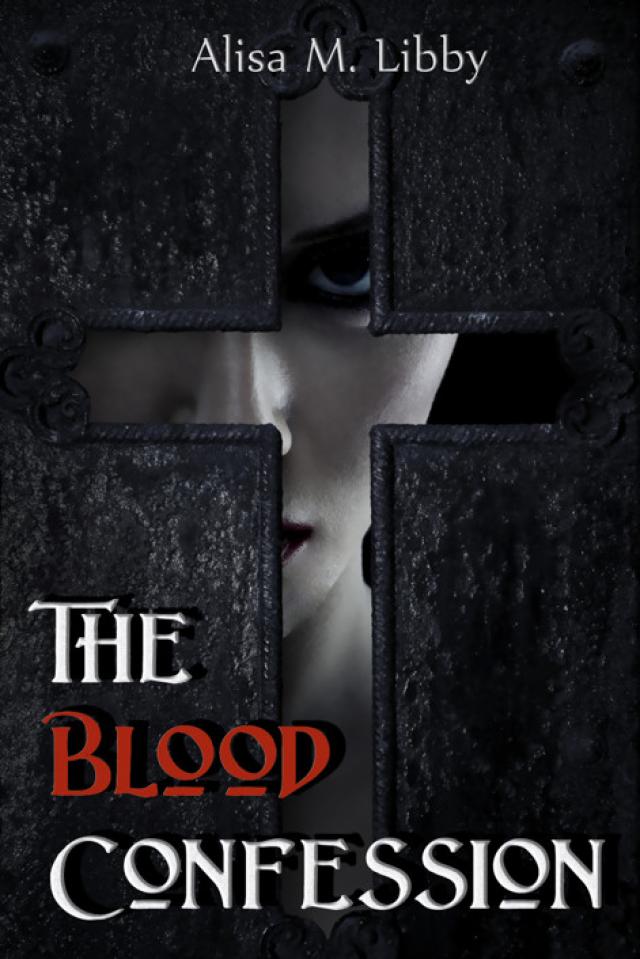
The Blood Confession
Alisa M. Libby
The Blood Confession
Alisa M. Libby
Copyright © 2006 by Alisa M. Libby
Published by Red Hound Press at Smashwords
All rights reserved. No part of this publication may be reproduced or transmitted in any form or by any means, electronic or mechanical, including photocopying, recording, or any information storage and retrieval system now known or to be invented, without permission in writing from the author, except by a reviewer who wishes to quote brief passages in connection with a review written for inclusion in a magazine, newspaper, or broadcast.
This book is dedicated to the memory of my father,
Bertram Moskowitz, my first reader, critic, and fan.
Table of Contents
Acknowledgments
About the Author
Part One—Castle
For the life of the flesh is in the blood: and I have given it to you upon the altar to make an atonement for your souls: for it is the blood that maketh an atonement for the soul.
Leviticus 17:11
I
Day three, tower, late in day
A small sharp blade is required for sharpening the point of a quill. I sit close to the fire in this dim chamber, honing the point of a feather to ready it for the awaiting page.
"I can do that for you, my lady." A young servant steps into my light, her face flushed and urgent.
"No need," I mutter, but she moves closer and holds out her hand.
"Please, my lady," she repeats. She is a young woman, but there is a deep crease between her eyes. She looks at me steadily with her hand outstretched.
"Does it make you nervous," I ask her, "to see me hold a knife?"
I balance the slim blade between my thumb and forefinger. She does not answer, but all of the servants watch us, their eyes gleaming in the dimness. Obediently, I rest the blade and quill in her open palm.
Settling back in my chair by the fire, I watch the servant work. She struggles to hold the quill steady while paring the edges to a fine point.
"I'm going to write a statement of confession before they bring me to trial." I watch how my words are reflected in their faces. "Don't you think that's wise?"
"I suppose that would be, Countess," one servant ventures cautiously, "unless you would rather wait for the prince to arrive."
"I'm tired of waiting; he takes too long," I inform them restlessly. The five young women sit in a crescent around me upon silk-cushioned sofas and chairs—assembled like an audience, I muse, and I am on the stage. None of them look at me, their noses buried in embroidery in the flickering light of the fire, their eyes creased with strain.
"I can tell you all a story, while we wait. You do like stories, don't you?" I ask them. A few acknowledge my question with a flash of their eyes. Others stare dutifully at the mending upon their laps. One young girl begins to nod, but is cut down by a harsh look from the woman beside her. I smile at this girl especially.
"You've heard this story before, I'm sure. It's the story of the evil queen," I begin, my voice a bit louder than before, "who sees a girl far more beautiful than she, the girl's face appearing in the queen's mirror."
The women say nothing, but I know they are listening. I hear the guard shift nervously outside the door of the tower.
"The evil queen sends a hunter to kill the beautiful child and bring back her heart, so that she may make a feast of it for her dinner. The taste of the girl's blood will give the queen's envious heart peace, for it will make her again the most beautiful. You do know this story, don't you?"
I look again at the girl who nodded and I smile. She begins to smile but blushes and looks back to her mending, fearing any repercussions. It's inappropriate to smile at a madwoman.
"Yes, I remember," she murmurs.
"It teaches a valuable lesson. Beauty can be transferred through the blood, from one woman to another."
A log cracks upon the flames and a shower of sparks fall over the hearth.
"There is danger in beauty, as well as power. Wouldn't you agree?"
No one answers. One servant purses her lips and sighs, setting aside her embroidery. She walks to lift a tapestry from a narrow window, to check the hour. From where I'm seated I can see the pink light of sunset reflected upon her pale face.
When night falls I will remain in this tower, and two guards will stand at my door. The rest of the servants will tramp gratefully down the spiral stairs and sigh into bedchambers on the first floor of the castle. Despite their seeming indifference, these stories will rise in the darkness, while they lie in bed not sleeping. My voice will repeat these words in their heads. When they wake and trudge up the stairs to this tower tomorrow their shoulders will be hunched; their eyes will look bruised.
It is this way in the village, as well, where such stories were born. This castle lies in the distance, sprawled upon the mountains like a great, sleeping lion. In the daytime the peasants of Novoe Mesto will spit angrily in its direction and warn their children to look away. But at night, in the darkness, the image of Castle Bizecka will rise before them and the words of legends will lie upon their bodies like lead.
"Ah!" the servant beside me gasps and a hiss of air escapes her clenched teeth. The quill and knife lie on her white apron as she inspects the cut on her finger: a bead of blood, like a ruby, rises from the wound. The sight of it warms, satisfies me.
The taste of the girl's blood will give the queen's envious heart peace. Some of those old stories are true.
Day four, tower, mid-morning
This tower is where the bleedings took place. As soon as the charges made against me became public, I was sequestered here by force, per order of Stephan, Prince of Poland and distant cousin of my father. We are waiting for his arrival, for the prince is eager to have the trial take place under his watchful gaze in the small town of Novoe Mesto, before word of it spreads over the borders of this provincial Hungarian town. I suppose I cannot blame him—he desires to be king someday.
"Are you sure I cannot leave here, with supervision, of course?" I ask, feeling claustrophobic in the circular tower room. A group of female servants arrives every day to keep close watch over me, but none of them bend to my will, as I am accustomed.
"We are under strict orders, my lady. You are not to be released." A girl with round cheeks and mouse-brown hair offers a clipped bow at my feet, then resumes her arrangement of the tea tray.
"Not even for a walk in the garden? You could come with me—the garden is lovely, even in the winter."
"I'm sorry, Countess. We are under orders from the prince." She offers me a teacup. With a wave of my hand I smash the cup to the floor. The servant says nothing. I watch as she carefully picks up each shard, then I move to my dressing table and sit before the oval mirror.
I lift a hand to affix a loose curl with a pin and lean forward to look closely at my face. My skin is still smooth and white as the porcelain pitcher on my nightstand. I must keep a close eye on it, especially during my imprisonment: my beauty rituals are not accessible to me while I'm watched by servants and guards in this tower room. Until my release I can only inspect my face carefully, wary for any blemish, any change.
At my age, many women of beauty are already long past their prime. But my face has not changed since my portrait was painted at the age of sixteen: fair skin, sparkling black eyes, a long narrow nose, and high cheekbones. My face and body are elegantly angular; a long white neck, long thin limbs. I pin up a lock of shining dark auburn hair, enjoying how it shines glossy in the firelight. The light in this chamber reflects off the golden tissue of my grand gown: a rich, lustrous skirt and bodice of red satin overlaid with a delicate lace of gold. I watch my movements in the mirror, the way the dress seems to twinkle like a star in this light, as though it might suddenly blaze forth in vivid glory. The prince will visit me any day now; it's important for me to look my best. I remain wary of the servants' grim, nervous faces reflected in the background.
When I look back at my own reflection in the mirror, it is not my face I see: a flash of dark hazel eyes, a cloud of curly black hair. I gasp and grip the back of a chair, to steady myself. In a moment the vision fades, and I'm relieved to see my own face again. But my face is different, pale as parchment, black eyes wide with fear. I laugh lightly, hoping the twinge of pain in my chest will subside.
My mother was right after all: a mirror remembers every face it has reflected.
Day four, tower, night
I don't like the servants, but when they leave at night, I am lonely. The stone walls of this tower feel like ice against my skin. Wind seeps through the narrow casements, lifting the heavy tapestries and shifting shadows upon the floor.
I have nothing to do in this chamber but remember. Beyond the door to this tower is a stairwell, where two guards remain through the night. At the bottom of those stairs is a wide hallway, where white patches of sunlight shine upon the flagstone floor. At the end of the hallway is the dining hall. This room connects to the main kitchen, where the kettle is boiling over the hearth, the cook is kneading dough for bread, and the eggs are stacked in the larder. I imagine all of this clearly, with my eyes shut to the dark: my daintily slippered feet tapping upon the flagstones, the heavy tapestries pressed beneath my palm, the smells of paprika lifting my nose. No one can see me. My memory moves through the halls of this castle like a ghost.
My memory wanders back to this tower and climbs down the spiral staircase to the dungeon below. I don't want to go here, not even in my head, but memory is stubborn and often brings you places you don't want to go. I walk through the main chamber and into one of the dark, adjoining rooms.
This chamber is where the box of dead girls is kept. I'm so close to them, stuck as I am in the tower all day. These old ghosts pull me to their crypt at night. But tonight something is wrong in this room, something is different; I can feel it.
They found you, didn't they? They know that you're here?
I ask them. Suddenly the splintered box is roiling with movement from within—jostling, elbowing one another out of the sleep of death. They lift the lid—dozens of pale hands skitter anxiously through the gap like a troop of white spiders. A mess of limbs pushes the lid aside and kicks over the side of the box. In a haphazard, desperate effort, they gradually disentangle from one another and tumble from the box onto the dirt floor below them.
Their eyes are pale and flat and seem to glow with a bright whiteness in the dim of the dream. I am both repulsed and fascinated by their struggle back to life, watching omnisciently, placidly, until I realize again why they have come back—they know that I'm here, imprisoned in this tower. They have come back for me. Their white eyes are blinkless; they recognize their surroundings with resignation and disdain (this, the scene of the crime, the stage of their last act). They lift their noses to the air, not speaking; they sniff the air like dogs.
When I open my eyes, the candles flicker, weakly. Threads of smoke unravel into the darkness. The mirror is watching me, I can feel it; the slick silver surface like a wide-opened eye. Can I trust the mirror to show me my own face? I stand warily and peer into the glass: the same arched brow, full lips, and inky-black eyes I recognize. I lift a hand to touch my own face when suddenly I notice the scene reflected behind me. The room glows with the light of hundreds of candles and this chamber is full of faces, eyes and lips glistening in the warm, golden light. Women lounge on the divan, the thick rug at my feet, the brocade chairs. They are sipping wine from my goblets, their necks and fingers sparkling with my jewels. Laughter crackles like sparks of flame. All of the women in this tower are smiling at me, even though they are dead.
"They found you, didn't they?" I ask them, but they only laugh at me in response, "They found the boxes, in the dungeon."
Your girls showed them where to find us. They answer as one, many voices melded into a perfect unison.
"My girls?" I ask, and the words pull the breath from my chest. Mary, Elizabeth, Sarah, Althea... my girls revealed where the dead lay buried. The thought makes me feel very lonely, surrounded by ghosts. The faces in the mirror smile at me.
"Don't they know any better," I demand, "than to wake up the angry dead?"
One face slowly emerges from the mirror's shadows, stepping around and over the outstretched legs and arms of lounging girls and approaching where I stand. The sight of her stops my heartbeat, but I dare not look away from the glass. Marianna stands beside me, our faces reflected side by side, just as I had seen the day before, but now startlingly clear. Dark curls frame her face and cascade over her shoulders. A warm blush makes her cheeks vivid with color. When my gaze meets hers I wince; her dark eyes are bright as blades.
Why did you do it? she asks me. The girls seated behind her rustle upon their silk cushions and lean forward, eager for my answer.
"You will never understand." A rusty whisper squeezes from my throat, startling me. The warm flames of the reflection fade; the faces recede into darkness. I turn and look behind me: the room is empty, but doesn't feel empty. Distant laughter shivers down my spine.
Why did you do it? Marianna's voice echoes. She is the first to ask me this. I move to a small table in the center of the room and touch a wooden bowl. It has long been empty; the ruddy stain at the bottom is bone-dry. A Bible rests beneath my palm. The blank pages at the back are petal-smooth beneath my fingertips. The crooked quill lies upon the table beside a small inkhorn. The knife, of course, has been confiscated.
What were the words I planned to use for the prince, for the trial, to explain? I'm too far away for even God to hear. But your voice, Marianna, echoes off every stone in these walls. This tower remembers you as well as I do.
I offer you my confession. May God have mercy on your soul.
My soul is not your concern.
Part Two—Tower
But of the fruit of the tree which is in the midst of the garden, God hath said, Ye shall not eat of it, neither shall ye touch it, lest ye die.
And the serpent said unto the woman, Ye shall not surely die: For God doth know that in the day ye eat thereof, then your eyes shall be opened, and ye shall be as gods, knowing good and evil.
Genesis 3:3
II
I came into this world in the winter of 1572, in a castle constantly prepared for attack. On the night of my birth, a star tore free from the firmament and shot a bright blaze of orange fire across the sky. Stars were believed to be angels, fixed into heaven and burning in the immense darkness. Prophets and astrologers saw this clearly as a sign that the world would soon end. They marked this day on their calendars, charted the stars, and filled rolls of parchment with urgent predictions. As prophets warned of the wrath of God, I rested peacefully in a small oak cradle, the whispers of worried servants a distant current in the background of my dreams.
From infancy, a host of servants crowded my nursery and attended to all of my earthly comforts. There was always a young woman there to dress and feed me, straighten the furs upon my bed, mend my silk nightclothes, and ready me for sleep each night. As years progressed and no more angels came loose from their heavenly throne, fears of the impending Apocalypse were put aside for the more mundane matters of village life. I lay in bed with my eyes closed and was entertained by tales of vile husbands, wayward daughters, and the occasional recipe for mutton stew.
Despite their kind treatments, the attentions of servants were not what I craved. Every day, once I had been properly dressed and my glossy hair perfectly braided, I asked if I could visit my mother. The countess was a tall, willowy woman with long, milky-blond hair and wide blue eyes. Her fingers were long and delicate and her touch, though rare, was gentler than that of my nursemaids. She was often busy tending to her official household duties: selecting fabric for new dresses and creating detailed lists of produce to be purchased at the market in the nearby village. When these tasks could be put aside, I would sit on a small stool before the mirror in her bedchamber, where she would play with my hair and sing songs she had known since her own childhood. As I grew from a plump baby into a pretty child, these visits involved less gentle touching, less singing, and more focus upon my reflection in her newest looking glass.
On one such visit I perched upon a large chair by the fire, watching as a new mirror was installed in her chamber. The old mirror had begun to warp, she explained, though I was not certain she was addressing me directly. I sat quietly, my small feet tucked demurely beneath my gown, my still-pudgy white hands folded serenely upon my lap. Even at the age of five I appreciated fine fabrics and I admired the way the fire reflected golden light upon the rich satin. I hoped that Mother would comment upon the new gown, but she was too distracted with overseeing the hanging of the new mirror— an oval monstrosity with trumpeting cherubs carved into the edges of the frame—to pay me any mind.
Once it was properly placed, we turned to look into the slick surface; it glistened like water. I enjoyed seeing our faces reflected side by side.
"A mirror is a magic thing, Erzebet," she told me that day, tapping an elegant finger against the glass. "It remembers all the faces it has reflected."


