The Position of Spoons, page 6



Lynne Turner asked us all to report back to her. I said, ‘Roger communicated very well. He’s definitely someone I’d like to meet and get to know.’ ‘Excellent,’ said Lynne Turner in the voice she had learned in the first four days of her life. ‘Could Professor Wilson please show us how he made eye contact with his partner.’ So Roger, watched by everyone in the group, stood up and walked towards me. He was shaking and his hands were sweaty. This time he closed his blue eyes and just held on to my hand. The replicant Lynne Turner, whose eyes were made in a laboratory, frowned and wrote something down on her clipboard.
And I thought about the replicant Lynne Turner standing in the middle of a road alone in the rain. She takes out the creased faked photograph of a six-year-old girl in her mother’s arms, and she stares at it for a long time. As the rain falls on her DNA, she practises saying, ‘This is my mother. Her name is Elsa. She is a war correspondent and in great danger at the moment.’
‘So,’ said Lynne Turner, ‘do you feel happy with the eye contact Professor Wilson made with you just then?’
I explained that eyes are like that, they open and close.
MONA LISA
Her hair looks uncared for under her hood. She probably has lice. I know she’s too thin. If she took off her dress, you’d see her ribs. Her breath smells of sour milk. Her lips scare me. Her face is irradiated with light. I want to kiss her just under her mad right eye.
She says one day, when da Vinci was three years old, a bird flew in through the window and landed on his crib. It turned its back on him and stroked his lips with its tail feathers. The bird might have been the spirit of his father who abandoned him, then wrenched him away from his mother to live in his house.
Her voice sounds very foreign to me.
She says she’s not unhappy or happy. She says she’s all right. Today is all right and yesterday was all right.
I say, Mona Lisa, where were you born? No one knows who you are. She says, what sort of question is that? I was made in Leonardo da Vinci’s head.
I can feel her breath under her dress.
ENSLAVED TO THE EVIL FLOWER OF FAME AS TOLD BY A DOG
(With thanks to Charles Baudelaire)
I have cultivated my hysteria with delight and terror; I have felt the wing of madness pass over my eyes and an orgy of words pour from my lips; I voice my lament with full ardour at the feet of writers who are nothing but beautiful prisoners enslaved to the evil flower of fame which like a log in the fireplace always smokes the room; my thoughts roam like syphilis amongst the wild boar and jasmine. I tell you I tell you I can barely conceive of any writer in whom there is not a longing for both oblivion and applause; my childhood is the bone that broke my teeth and from which I gnaw at shards of memory in the green grass by the lake where I compose my lament to recite (not Sundays) to beggars and pigeons; irony is my sister, my callous mother is cadence, my father haunts the drains, the moon is my hollow-cheeked dandy brother; I tell you I tell you once again, it is tedious to represent what exists, for everything that exists has already been written.
THE POSITION OF SPOONS
Surveillance is a creepy word. It suggests the cold, unblinking eye of various disembodied technologies. At least a human spy has eyes that cry. When I was twenty-six I lived on the upper floor of a house divided into two flats. The neighbour who lived on the lower floor was called Mr John. We shared a main front door and a tiny communal hallway to get to our respective flats. I did not know if John was his surname or his first name, and anyway, the mail addressed to his flat was inscribed with a different name altogether.
* * *
Mr John was already something of a mystery because his eyes were always hidden behind John Lennon-style purple-tinted spectacles. He was about fifty and had a shocking abundance of shoulder-length bone-white hair. It was as if the hormones that promote hair growth had accelerated rather than declined in his middle years. He told me he was a philosopher.
* * *
One morning, when we were both sorting out the post that flipped through the letterbox of the main door, I asked him what he thought of the German philosopher Friedrich Nietzsche’s lament that he could not ‘believe in a God who wants to be praised all the time’.
Mr John smiled. His lips were wide and thin and slightly purple like the lenses of his spectacles. ‘Ah,’ he said, ‘but it is so encouraging to be praised. Perhaps Nietzsche was envious?’ I thought that was a magnificent answer. No doubt about it, Mr John was a philosopher of the first order. The few other occasions we spoke in the hallway, he told me it was important to boil an egg for four and not five minutes and the spoon must be laid on the plate pointing towards the egg and not away from it.
* * *
At the time, I had a boyfriend who lived in Rome and who visited me every other weekend. When Matteo rang the bell on a Friday, I would run down the stairs to open the door, only to find that Mr John, unfailingly, always got there first.
It was as if my neighbour knew the exact time ‘my Roman friend’ would arrive and was as excited as I was to see him. The worst thing was that Matteo was excited to see Mr John, too. They would talk in the cramped hallway about all sorts of things – how to cook an artichoke, religious music, traffic problems in Rome and London – while I lurked on the stairs feeling like a gooseberry. Sometimes when we returned to the flat late at night from seeing a movie, Mr John would be hoovering the tiny patch of carpet in the hallway. On these occasions he wore pyjamas and a pair of laceless Oxford brogues. My neighbour never hoovered the hallway carpet when Matteo was not there.
* * *
Then, one Thursday evening, Mr John invited me into his flat for ‘a glass of red and a plate of crackers and cheese’. I was curious because I had never seen the inside of his apartment. The only book in his living room was a copy of the A–Z of London. He gestured to me to sit on one of the two armchairs. When he was certain that I was sitting and not standing, he told me to please bear with him (as if he intuited he was unbearable) while he prepared the crackers and cheese.
As soon as he was out of the room, I got up from the armchair and walked over to the shelf above his fireplace to look at the postcards that were displayed there. One in particular had caught my eye. It was a blank white card, inked in black fountain pen with the words miss you – miss you – miss you. I knew it was an imitation of a letter that had been written by Man Ray to Lee Miller when they were having an affair in Paris, so I turned the card over to see who was missing Mr John.
It was addressed to me and not to him.
* * *
That night I called Matteo in Rome to thank him for his card.
He told me that he had been quite hurt that I’d said nothing about it. We decided that my neighbour, with his all-too-human eyes hidden behind his tinted spectacles, was more of a voyeur than a spy.
Matteo was talking about Mr John so tenderly. I wondered if they might both be in love with each other? While he spoke I could hear an advertisement for a brand of washing-up liquid on his television in Rome. After a while, Matteo said, ‘Most of all, I feel encouraged by the way he praises my route from Heathrow to your flat in the rush hour.’
THE MORTALITY PROJECT 2050
After Blade Runner
As the oldest female in this establishment for the vintage product (I was made in 1934), it is my greatest regret that I am wise and sane. Please give me a break and let in some fresh mad air. I have always thought the sane are overrated and that I should have been designed with an occasional get-out clause. Alas, I am in full possession of all my marbles. If I had more courage I would roll a few of them into the dark night and see what happens in the morning. All the same, it is very hard to let go of all the known knowns. I know you are holding on tight to your own.
* * *
The most urgent thought preoccupying me here in my chair is that you might hold my unglamorous address against me, despite the minor chandelier. I am aware that a residence for the elderly has often been used as a setting to give voice to duller thoughts than my own. It is Christmas Eve. Green tinsel has been draped over the frames of all the pictures on the walls, mostly watercolours of cows grazing in the shires. The youngest carer (he tells me he was made in 1996) has wrapped a string of silver lametta around his wrists.
* * *
Every few hours I am brought tea, the liquid cosh that stops the English from speaking their minds. If you suspect my declaration of full sanity (with the seatbelt fastened) is a trick, let me tell you that would be incorrect. No, your wish to obsessively and compulsively disorder my mind and suggest it has been burgled is the wrong way to proceed. My mind is well made. However, it would be true to note that the mirror into which I gaze curiously, at what appears to be myself, presents to my own eyes a countenance that is more serene than myself. The gas is on full flame and the toast is burning in my lucid mind, despite it being assembled at a time when technology was less advanced.
* * *
It is precisely 16.00 GMT in the afternoon, 17.00 in Germany, 11.00 in New York, 23.00 in China – though I have not yet connected with Shanghai time. All day I have observed an assortment of relatives arrive with Yuletide gifts and cards. The cost of managing the mortality of their kin is immense. They do not say this out loud, but they are heard anyway. If only I’d had the strength to escape to a rock on the edge of one of Earth’s warmer oceans to soak up the sunlight and moonlight. I understand that my sanity would have been questioned had I been found wheezing under the stars, yet I wonder if lemon drizzle cake and tea is truly a less insane option.
* * *
These relatives know where their house keys are kept and remember where they parked the car. They know the day of the week and can name their prime minister. I have observed a senior manager (made in 1980) amongst them. His name is Thomas. He regards his wife as his cook and cleaner and needs an abundance of what he calls ‘emotional support’ at all times. Rumour has it that she has swapped their mattress stuffed with silk and cashmere for a floor in a shed in a forest in France. Every morning she cycles to a nearby coastal town to fish for small brown shrimp and weep away the years she wasted avoiding her wants. What a relief it would be if he unlocked his jaw and allowed it to speak freely to his staff (Team Zero Hours) in regard to their Christmas bonus. Might I help him with his first line?
I will write it now.
* * *
Alas, the nurse assigned to put me to bed has interrupted my script for Thomas’s speech. Her blue eyes (made in 1974) are bright; her helmet of brown hair is her armour. The good thing is that her skin smells of onions. Her small, glossed lips are alive, like a water rat. The festive eyelashes glued to her upper eyelids suit her. Every time she moves nearer to me, my shoulders slump voluntarily.
‘How are you today, Monica?’ She sits near my knees and reaches for my hand.
‘I am a vintage product, otherwise I would not be a resident in this establishment.’
‘But you have your cat here with you,’ she says consolingly.
‘Indeed. But my cat (made in 2017) is young and shy and does not like to be spoken about out loud.’
The nurse slyly nudges my slice of lemon drizzle closer to her lively lips.
‘You were something big in shipping – is that correct, Monica?’
‘I was captain of my family’s commercial vessel from the age of twenty,’ I reply, reaching deep into my biographical data.
‘The things you must have seen.’ She widens her eyes in the manner of eyes that were made in 1974. ‘Shall I wash you before you go to bed?’
‘Please,’ I wave my hand at the wallpaper that was made in 1963, ‘ask me if I am afraid of dying and what kind of accommodation I have made with endless sanity.’
‘Cheer up,’ says the sane nurse.
‘Since you ask,’ I reply, ‘I do have some terror of leaving the port for the final voyage out. It is not just a matter of never seeing a flower open again or my cat yawn for the last time. No, it is the erasure of the small victories in my existence that makes me reluctant to set sail. The times I dared to be bolder than my maker thought possible, those occasions in which I extended my own reach and flew closer to the moon.’
She nods humanely and tells me it is time.
‘Time for what?’
‘To rest,’ she says. ‘It’s the big day tomorrow.’
I lift the blue blanket from my lap and hand it to the nurse while I raise my small but perfectly made body from the chair.
‘Oh God! No!’ she shouts as I detour from my vertical position and attempt to lower myself to the ground.
‘Please stop that,’ she pleads in plain and direct English. ‘You’ll never get up again. What are you doing?’
‘I am taking the knee with the National Football League of America and with Stevie Wonder. Please hold my walking stick. Thank you.’
* * *
That night I met an angel with eyes that imperceptibly changed colour while we engaged in silent conversation using strange and beautiful hand gestures.
It is a silvery dawn. All is calm. All is bright.
WATERY THINGS
I have measured out my life with coffee spoons
—T. S. ELIOT, ‘THE LOVE SONG OF J. ALFRED PRUFROCK’ (1915)
Ihave measured out my life with anchovies on buttered bread. It’s all ha-ha eating anchovies in Hackney, oh yes, like a wind blowing in from Capri. I have measured out my life with whelks, mussels, clams, oysters, winkles and crab, but not the scallop, which is like eating the human earlobe.
I have measured out my life swimming in various rivers and lakes with dragonflies and humble ducks. But what about the plump carp basking in that weedy warm lake in August 2012? Oh no, that was not a good swim. There was a summer house painted green on the edge of that lake, and a rowing boat moored between two submerged trees. When I look back on that swim with the carp I can now see my life was about to change for ever. Why was the furniture smashed in the summer house? Why was the rowing boat tied to trees that were underwater? I know why. It was the end of one sort of life and the start of another. The fat carp were like the lies I had told myself to keep love alive.
Of all the oceans in which I have swum (including the Atlantic and Indian Oceans) the most inspiring is the Bay of Angels in Nice, the fifth biggest city in France. I have never glimpsed one single fish or felt it flick my feet in that stretch of water and often wonder why.
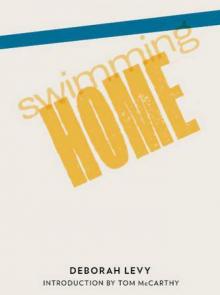
Swimming far out from shore that summer, then turning round to face the town, I saw the rooftops were covered in snow. At that moment I decided to write a novel called Swimming Home, set in the French Riviera.
Yet when I look at early drafts of this book, I can see it’s not all ha-ha amongst the waves and cypress trees and casinos. There are notes I have made on war. The ambulances have no fuel, the hospitals have no water, a child is smuggled through a Polish forest in 1943. He will arrive safely in Whitechapel, London. This child is now an adult man and he is on holiday in the French Riviera. What happened to his mother, what happened to his father? He tells us they are night visitors, meaning he only meets them in dreams. He wonders if he will ever make it home. But where is home?
Also, in these early drafts, there is a quote from Sylvia Plath (The Bell Jar) in which a nurse says to an unhappy young woman, ‘Show us how happy it makes you to write a poem.’ In Swimming Home there is a fragile young woman with fierce intelligence and long red hair (her mother is a cleaner) who writes a poem. Maybe she’s happy, maybe she’s not. You will find her collecting pebbles on the beach of the Bay of Angels in a summer dress, the sky is always blue and the rooftops of the houses are carpeted in the seagulls that I first mistook for snow.
* * *
I have measured out my life with the sea urchins that have pierced my feet with their spines. I have now lost my fear of sea urchins. I don’t know why. There are other fears I would prefer to lose, after all. I know they have to survive in the wilderness of the ocean; their cousins are the sea star and they can grow for centuries. There are sea urchins that are almost immortal, older than the mortal mothers and their mortal children fleeing from wars on boats that sometimes sink. Life is only worth living because we hope it will get better and we’ll all get home safely. If we were to measure the love of mothers for their children with coffee spoons, there would never be enough spoons for that kind of love.
LETTER TO A STRANGER
For Philippa Beatrice, my mother
Dear Stranger,
As I write this letter my elderly mother is perhaps fatally unwell in hospital. I have to be careful because if she becomes well enough to read this, maybe I will feel totally foolish. She is not a stranger after all, though at the moment I don’t think my mother currently feels like herself, as the saying goes.
I have found a few ways of coping.
It’s a long walk to get to her ward. I walk down the corridors very fast like a soldier. I tell myself that if I slow down I might just turn around and run away. And I have made a rule that I will always look very smart when I visit my mother. So I take time putting on clothes I like wearing and doing my hair and it makes me laugh because I look like I’m going to an important meeting with a lot at stake. But this is an important meeting and there is a lot at stake.
Yesterday I was wearing a red dress and boots and did the usual soldier walk to the ward, clip clop clip. I can see why armies practise the art of marching. It resembles a steady heartbeat even if we are scared and our hearts are going berserk. When I enter the ward, I change the metabolism of that pace, walk softly, slowly.